
Humid summer weather transforms even the most carefully applied makeup into a streaky, shiny mess within hours. When moisture hangs thick in the air and temperatures climb, traditional foundations often fail—sliding off, oxidizing, or settling into fine lines. The key to staying fresh from morning to evening isn’t just about touch-ups; it starts with choosing the right foundation formula. Not all foundations are created equal under high humidity, and understanding what works—and why—can make the difference between confidence and constant blotting.
The ideal foundation for summer isn’t necessarily the one that performs best in air-conditioned offices or dry climates. It must withstand sweat, oil production, and environmental pollutants while maintaining a natural finish. This means prioritizing breathability, longevity, and skin compatibility over full coverage or rich textures. With so many options on the market—from water-based tints to matte powders—navigating the choices can be overwhelming. But by focusing on specific formulation traits and application techniques, you can build a base that stays put without suffocating your skin.
Understanding Humidity’s Impact on Makeup
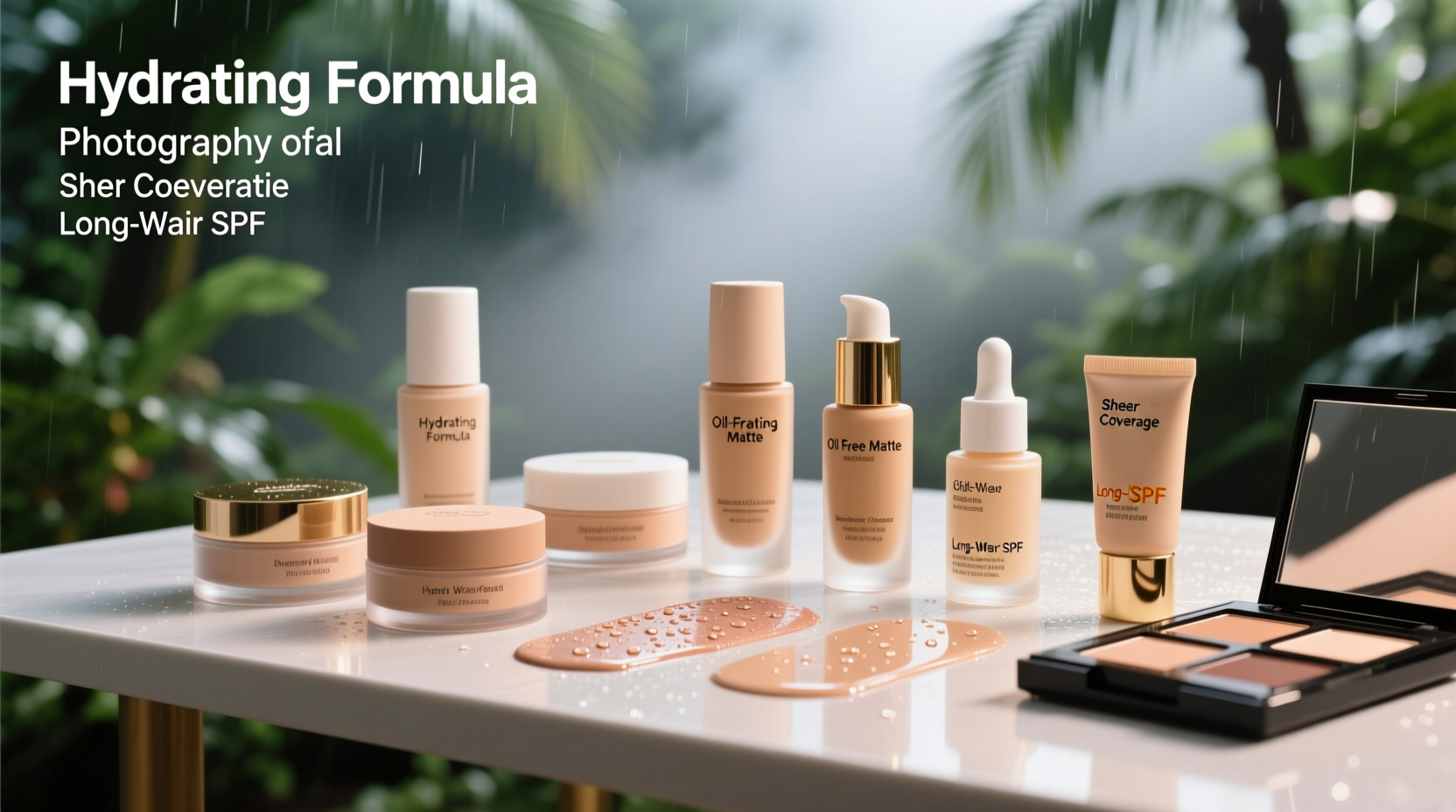
Humidity affects both your skin and your makeup at a molecular level. In high-moisture environments, pores dilate and sebum production increases. This creates a slippery surface where liquid and cream products struggle to adhere. Foundations can emulsify when they interact with sweat and natural oils, leading to patchiness or complete breakdown.
Additionally, humid air slows down the evaporation of volatile ingredients in makeup. This means setting sprays take longer to dry, and powder may not absorb oil as efficiently. As a result, makeup feels heavier and looks less refined throughout the day. Some formulas also react chemically with moisture in the air, causing oxidation that darkens the shade after application—a common complaint among wearers of silicone-heavy or high-pigment bases.
Dermatologist Dr. Lena Park explains:
“In humid conditions, occlusive ingredients like heavy silicones trap heat and moisture against the skin, which can lead to clogged pores and breakouts. Lightweight, breathable formulations are not just cosmetic preferences—they’re skincare necessities.”
Key Ingredients to Look For (and Avoid)
The ingredient list is your roadmap to a humidity-proof foundation. Certain components enhance stability and comfort in heat, while others sabotage performance and skin health.
Ingredients That Help
- Water or Aqua-Based Formulas: These provide lightweight coverage and evaporate quickly, reducing slip and shine.
- Niacinamide: Regulates oil production and strengthens the skin barrier, helping makeup last longer.
- Clay or Kaolin: Naturally absorb excess oil without overdrying, offering a soft-focus matte effect.
- Hyaluronic Acid (Low Molecular Weight): Delivers hydration deep into the skin without sitting on top and mixing with sweat.
- Dimethicone (in moderation): Provides a smooth canvas and helps resist moisture transfer—but only if balanced with breathable agents.
Ingredients to Avoid
- Heavy Oils (e.g., mineral oil, coconut oil): Can mix with sweat and cause foundation to slide off.
- Alcohol Denat. (High Concentration): Dries out skin over time, prompting rebound oiliness.
- Thick Silicones (e.g., Cyclopentasiloxane-heavy formulas): Create a film that traps heat and promotes breakouts.
- Fragrance and Essential Oils: May irritate skin under sun exposure and increase inflammation.
Choosing the Right Foundation Type for Heat
Not every foundation category performs equally in humidity. Here’s a breakdown of popular types and their suitability for summer conditions:
| Foundation Type | Pros in Humidity | Cons in Humidity | Best For |
|---|---|---|---|
| Water-Based Tint/Lotion | Breathable, lightweight, blends easily | May require touch-ups; lower coverage | Oily, combination, sensitive skin |
| Matte Liquid (Silicone-Water Hybrid) | Long-wearing, controls shine, resists sweat | Can feel tight if dehydrated | Oily, acne-prone skin |
| Mineral Powder | Oil-absorbing, buildable, SPF-friendly | Can look dry or cakey on textured skin | Very oily skin, outdoor events |
| Cream-to-Powder | Transitions smoothly, sets quickly | Limited shade ranges; harder to blend | Normal to oily skin |
| Hybrid Tinted Moisturizer | Hydrating, dewy finish, easy to apply | Less durable in extreme heat | Dry-normal skin with minimal concerns |
For most people facing hot, humid summers, a **water-based tint** or a **lightweight matte liquid** offers the best balance of wearability and protection. These formulas typically contain film-forming polymers that create a flexible, breathable layer resistant to moisture disruption.
Step-by-Step Guide to Selecting & Applying Summer Foundation
Finding the right foundation involves more than reading labels—it requires a strategic approach from selection to application.
- Assess Your Skin Type in Context: Determine whether your skin tends toward oiliness, dehydration, or sensitivity during summer months—not just in winter. Oil production often increases with temperature.
- Check Shade Match Under Natural Light: Swatch two shades along your jawline—one matching your neck, one your face. Step outside. The seamless blend is your true match.
- Prioritize Longevity Over Coverage: Opt for medium coverage that can be built selectively rather than full-coverage formulas that tend to be thicker and more prone to melting.
- Test for Transfer Resistance: After applying, press a tissue gently against your cheek. Minimal pigment transfer indicates good adherence.
- Layer Strategically: Use a mattifying primer on the T-zone and a hydrating one on cheeks. Apply foundation with a damp sponge for sheerer control or a brush for precision.
- Set Smartly: Use a translucent powder only on areas that get shiny—typically the forehead, nose, and chin. Finish with a humidity-resistant setting spray.
Real-World Example: Maria’s Outdoor Wedding Survival
Maria was set to attend an outdoor wedding in Miami in July. Temperatures were near 90°F (32°C), with 80% humidity. She had previously worn her usual full-coverage foundation only to find it separating by midday, emphasizing pores and fading unevenly.
This time, she switched strategies. Two weeks before the event, she tested a new water-based matte foundation known for humidity resistance. She paired it with a niacinamide-infused primer and used a lightweight concealer only where needed. On the big day, she applied her makeup two hours before leaving, allowing it to settle into her skin. She set her T-zone with loose powder and finished with a dual-phase setting spray.
Throughout the ceremony and reception, Maria touched up only once—blotting oil with a tissue, then spritzing her face lightly. Her foundation remained intact, even during dancing and hugging in the heat. “I finally found something that didn’t make me feel like I needed a makeup emergency kit,” she said later. “It stayed natural, not cakey, and didn’t oxidize.”
Essential Checklist for Humidity-Proof Foundation Selection
Before purchasing or wearing any foundation in summer, run through this checklist:
- ✅ Is it labeled “oil-free” or “matte” without being overly drying?
- ✅ Does it contain sweat-resistant or transfer-proof claims backed by reviews?
- ✅ Is the finish appropriate for your skin type (dewy for dry, matte for oily)?
- ✅ Have you tested it for oxidation and pilling with sunscreen?
- ✅ Does it allow your skin to breathe? (Avoid heavy, greasy feel.)
- ✅ Is the SPF sufficient if it's included? (At least SPF 30, but never rely solely on foundation for sun protection.)
- ✅ Can it be layered without looking thick or caked?
Frequently Asked Questions
Can I use a dewy foundation in humid weather?
You can—if you have dry or normal skin and are using it sparingly. However, dewy finishes amplify shine in humidity. If you prefer radiance, opt for a luminous (not glossy) formula and avoid applying it on oily zones. Consider using a glow-boosting serum underneath a matte foundation instead.
Do setting sprays really help in humidity?
Yes, especially those formulated with polymers that form a flexible film over makeup. Look for keywords like “long-lasting,” “humidity-proof,” or “transfer-resistant.” Dual-phase sprays (containing water and oil components) tend to perform better than single-phase ones because they balance hydration and hold.
Should I switch to powder foundation in summer?
Powder foundations excel in extreme humidity and for very oily skin types. They offer immediate oil control and are less likely to migrate. However, they may emphasize dry patches or fine lines. If you choose powder, prep skin well with a light moisturizer and consider using a hydrating mist throughout the day instead of additional product.
Final Thoughts: Build a Base That Works With Your Environment
Selecting the ideal foundation for humid summer weather isn’t about chasing trends or replicating Instagram looks. It’s about aligning your makeup choices with your environment and skin’s seasonal needs. The best foundation won’t feel like a mask—it should disappear into your skin while defending against sweat, oil, and UV exposure.
Remember, no foundation will survive extreme conditions without proper prep and maintenance. Pair your formula with a consistent skincare routine, non-comedogenic sunscreen, and smart touch-up habits. And don’t hesitate to simplify: sometimes, a tinted moisturizer with SPF and a swipe of blush does more for your summer glow than a full face ever could.




 浙公网安备
33010002000092号
浙公网安备
33010002000092号 浙B2-20120091-4
Comments
No comments yet. Why don't you start the discussion?