
Choosing the right Apple Watch band isn’t just about aesthetics—it’s about comfort, durability, functionality, and how well it complements your daily life. With Apple Watch Series 6, 7, and 8 sharing the same case design and band compatibility, you have access to one of the most versatile ecosystems of wearable accessories. But that freedom can quickly become overwhelming with so many styles, materials, and price points available. This guide cuts through the noise, offering real-world advice to help you make a confident, informed decision.
Understand Compatibility First
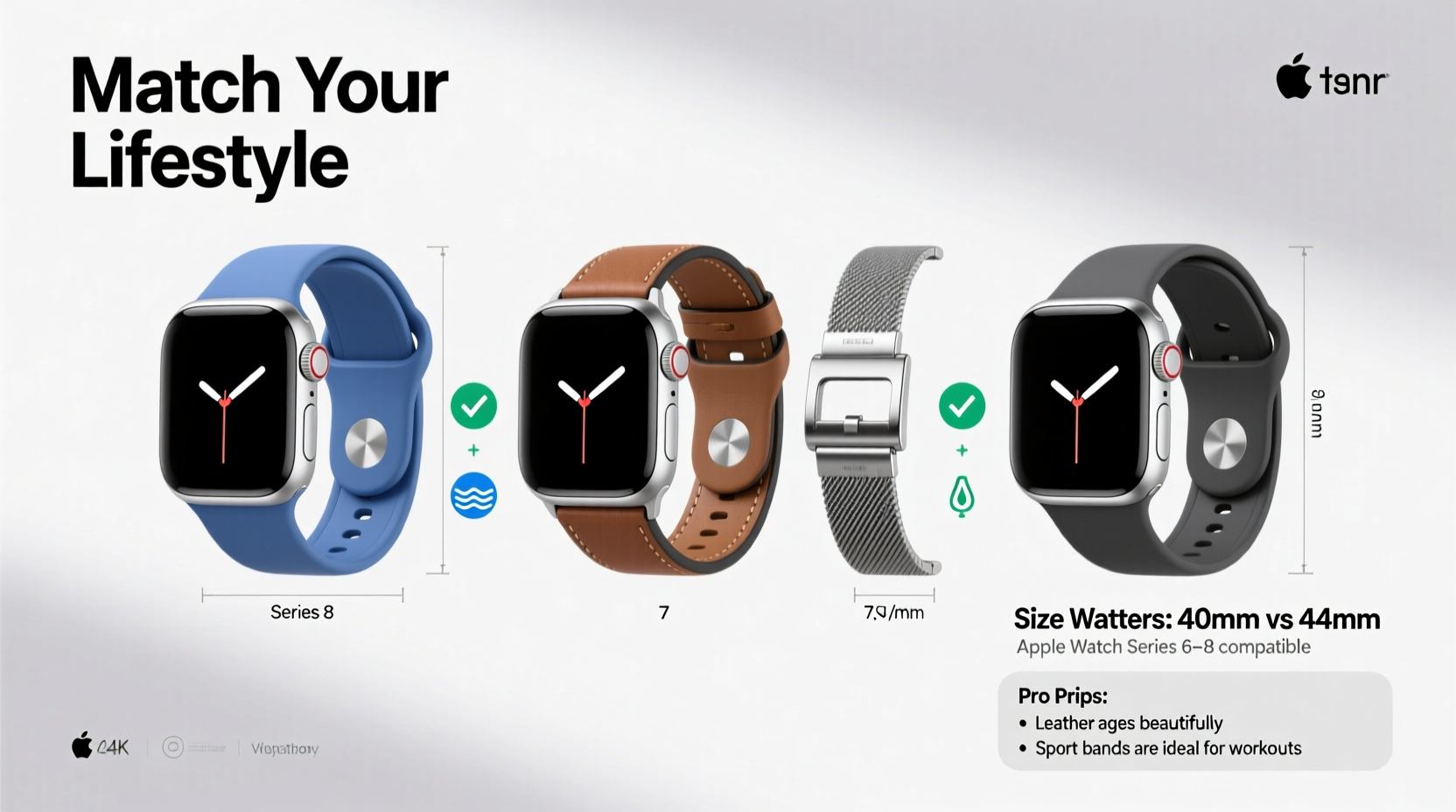
All Apple Watch bands released since Series 4 are compatible across Series 6, 7, and 8—provided you match the case size. These models come in two sizes: 41mm/40mm and 45mm/44mm. The newer Series 7 and 8 use the updated 41mm and 45mm dimensions, but they retain backward compatibility with older bands designed for 40mm and 44mm cases.
Apple uses a standardized pin system, meaning third-party bands from reputable brands also adhere to this standard. Whether you choose an OEM band or a high-quality alternative, ensure it specifies compatibility with your exact model size.
Compare Band Materials: Pros, Cons, and Best Uses
The material of your band affects everything from breathability to longevity. Below is a comparison of the most common types available for Series 6, 7, and 8.
| Material | Best For | Pros | Cons |
|---|---|---|---|
| Sport Band (Fluoroelastomer) | Athletes, active users | Sweat-resistant, lightweight, easy to clean | Limited breathability over long wear, can attract lint |
| Sport Loop (Nylon weave) | All-day wear, sensitive skin | Breathable, soft, adjustable, eco-friendly options | Can absorb odors if not cleaned regularly |
| Leather (Classic, Modern Buckle) | Formal settings, office wear | Elegant aging, premium feel, molds to wrist | Not water-resistant, requires conditioning |
| Stainless Steel (Link Bracelet, Milanese Loop) | Dress events, professional environments | Durable, luxurious look, magnetic closure (Milanese) | Heavier, more expensive, can scratch |
| Woven Nylon (Newer eco-friendly option) | Casual, everyday versatility | Lightweight, colorful, made from recycled bottles | Less structured, may loosen during intense activity |
If you lead an active lifestyle, prioritize moisture-wicking materials like the Sport Band or Sport Loop. For office professionals, a leather or stainless steel band elevates the device’s appearance without compromising sophistication.
Fit, Comfort, and Skin Sensitivity Considerations
Finding a band that fits securely without pinching or slipping is crucial. Bands should allow room for airflow but remain stable during movement. The Sport Loop excels here due to its velcro-style adjustment, accommodating swelling or temperature changes throughout the day.
Some users report skin irritation from silicone bands, especially in hot climates. This reaction is often due to trapped sweat rather than the material itself. If you're prone to rashes, opt for breathable textiles like nylon or mesh, and rotate bands regularly to let your skin breathe.
“Rotating between two or three different bands can prevent both skin irritation and premature wear.” — Dr. Lena Torres, Dermatologist specializing in wearable tech contact dermatitis
Step-by-Step: How to Choose Based on Your Lifestyle
- Assess your daily routine: Do you work out daily? Attend meetings? Work outdoors?
- Identify 2–3 primary use cases: Gym, office, weekend outings, sleep tracking.
- Select one band per scenario: Sport Band for workouts, Leather for work, Woven Nylon for weekends.
- Test for comfort: Wear each band for at least four hours to evaluate pressure points or heat buildup.
- Evaluate long-term maintenance: Can you easily clean it? Does it resist stains and odor?
Mini Case Study: Sarah’s Multi-Band Strategy
Sarah, a project manager and weekend trail runner, struggled with discomfort from her default Sport Band. After switching to a Sport Loop for work and a rugged third-party nylon band for runs, she noticed fewer skin issues and greater confidence in her watch staying secure during hikes. She now owns five bands and rotates them based on activity, season, and outfit—proving that investment in multiple bands pays off in usability and longevity.
Her key insight: “I stopped thinking of bands as accessories and started seeing them as tools. Each one serves a purpose.”
Expert-Approved Checklist Before Buying
- ✅ Confirm your Apple Watch size (41mm or 45mm)
- ✅ Determine primary use (fitness, formal, casual, sleep)
- ✅ Check material breathability and care requirements
- ✅ Ensure clasp or closure type suits your dexterity (magnetic vs. buckle vs. pin)
- ✅ Read verified customer reviews focusing on long-term durability
- ✅ Verify return policy—especially when buying online
- ✅ Consider color coordination with your wardrobe or other devices
Third-Party vs. Apple-Branded Bands: What’s Worth It?
Apple’s official bands offer seamless integration, premium materials, and reliable build quality—but at premium prices. A Nike Sport Loop costs $49, while the Modern Buckle Leather Band exceeds $200.
Third-party alternatives from brands like Nomad, Satechi, or MaxBands often deliver comparable performance at lower price points. Many use similar materials and include reinforced connectors to prevent fraying. However, cheaper knockoffs may use inferior adhesives or loose tolerances, leading to accidental detachment.
“The sweet spot for value is $25–$50. You’ll avoid the risk of ultra-cheap bands failing while skipping Apple’s luxury markup.” — Mark Lin, Tech Accessory Reviewer at GadgetFlow
When considering third-party options, look for reinforced anchor points, user-reviewed UV resistance, and certifications like OEKO-TEX (for non-toxic fabrics).
FAQ
Can I use an Apple Watch SE band on my Series 8?
Yes. The SE shares the same case design and band interface as Series 6, 7, and 8. As long as the size matches (40mm/41mm or 44mm/45mm), the band will fit perfectly.
Do all bands work with Nightstand Mode or Sleep Tracking?
Yes, band choice doesn’t affect functionality. However, tighter bands like the Sport Loop or Woven Nylon are better for accurate sleep tracking due to consistent sensor contact.
How often should I replace my band?
Every 6–12 months with daily use, depending on material. Inspect for fraying, discoloration, or stretched closures. Regular cleaning can extend lifespan by several months.
Final Thoughts: Build a Band Rotation That Works for You
The perfect Apple Watch band isn’t a single item—it’s part of a thoughtful rotation tailored to your habits. By understanding your needs, testing for comfort, and investing in quality materials, you enhance both the utility and enjoyment of your device. Whether you prioritize performance, elegance, or sustainability, there’s a band that aligns with your lifestyle.




 浙公网安备
33010002000092号
浙公网安备
33010002000092号 浙B2-20120091-4
Comments
No comments yet. Why don't you start the discussion?