
Selecting a bracelet isn’t just about aesthetics—it’s about harmony between design, material, and fit. A bracelet that's too tight can restrict circulation; one that’s too loose may slip off or look sloppy. The ideal piece should feel like an extension of your personality and anatomy. Whether you're shopping for yourself or gifting someone special, understanding how wrist size influences choice is essential for both comfort and confidence.
Jewelry has long served as a personal signature. From delicate chains to bold cuffs, bracelets frame the wrist with intention. But without proper sizing, even the most exquisite piece can fall short. This guide breaks down the science and style of fit, offering practical steps to ensure your next bracelet purchase feels intentional, secure, and effortlessly elegant.
Understanding Wrist Anatomy and Measurement Basics
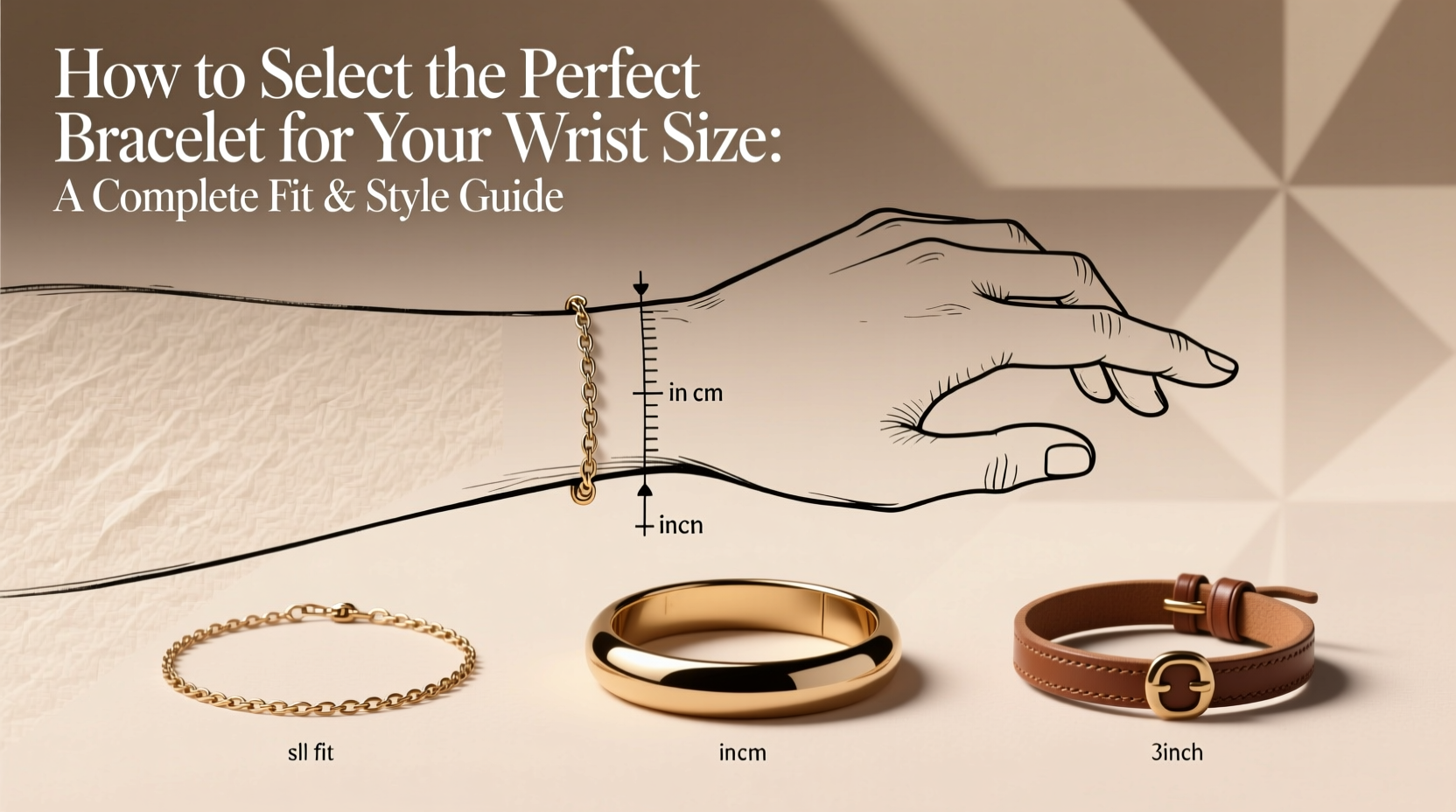
The first step in selecting the right bracelet is knowing your exact wrist size. Unlike rings or shoes, wrist measurements aren't standardized across brands, so relying on guesswork often leads to disappointment. Begin by using a flexible measuring tape—like a tailor’s tape—or a strip of paper and a ruler.
Wrap the tape snugly around the narrowest part of your wrist, just below the wrist bone. Don’t pull tightly; the goal is a comfortable fit that allows room for movement. Record the measurement in inches or centimeters. Most adult wrist sizes range from 6 to 7.5 inches (15 to 19 cm), though variations exist based on build and gender.
Once you have your measurement, add length depending on the desired fit:
- Snug Fit: Add 0–0.25 inches (ideal for bangles or rigid styles)
- Comfort Fit: Add 0.5 inches (standard for chains and leather bands)
- Loose Fit: Add 0.75–1 inch (for layered looks or adjustable styles)
Bracelet Types and Their Sizing Requirements
Not all bracelets follow the same sizing logic. Different styles demand different allowances. Understanding this prevents frustration and returns.
| Bracelet Type | Fitting Style | Recommended Length Adjustment | Best For |
|---|---|---|---|
| Bangle | Slips over hand | Add 1–1.5 inches | Formal occasions, stacked looks |
| Chain Bracelet | Closes with clasp | Add 0.5 inch | Daily wear, layering |
| Cuff | Open-ended, slips on | Measure inner gap + wrist size | Bold statements, wider wrists |
| Leather Wrap | Wraps multiple times | Length varies by wraps (e.g., 20–30\") | Casual, bohemian styles |
| Adjustable | Sliding knots or extenders | Choose mid-range size | Gifting, variable swelling |
Bangles require extra consideration—they must pass over the knuckles. If your hand is significantly larger than your wrist, measure your widest hand dimension and compare it to the bangle’s internal diameter. A good rule: the bangle should slide over your hand with slight resistance but not force.
“Many customers return bangles not because they’re wrong-sized, but because they didn’t account for hand width. Always test clearance before buying.” — Lena Torres, Master Jeweler at Atelier Noir
Step-by-Step: How to Choose Your Perfect Bracelet
Follow this sequence to confidently select a bracelet that fits flawlessly and complements your lifestyle.
- Measure your wrist accurately using a soft tape.
- Determine your preferred fit: snug, comfort, or loose.
- Choose a style based on occasion and wardrobe (e.g., office vs. evening).
- Calculate total length by adding adjustment to your wrist size.
- Check product specs: Look for internal diameter (bangles) or chain length (closures).
- Consider material flexibility: Rigid metals need precise sizing; woven or elastic bands allow more give.
- Try before you buy, if possible—visit a boutique or request a sample size.
Real-Life Example: Finding the Right Fit for Daily Wear
Sophia, a graphic designer in Portland, wanted a minimalist gold chain bracelet for everyday use. She measured her wrist at 6.25 inches and preferred a comfortable fit. Following the guide, she added 0.5 inches, aiming for a 6.75-inch bracelet. She chose a 7-inch Cuban link chain with a secure lobster clasp.
At first, she worried it might be too long. However, after wearing it during work hours—typing, commuting, exercising—the 7-inch length proved ideal: it didn’t dig into her skin during activity nor slide past her hand when removed. The extra quarter inch allowed for natural wrist movement without sacrificing elegance.
When she later tried a 6.5-inch version, it felt restrictive, especially after lunch when her wrist swelled slightly. Her experience confirmed that comfort fit isn’t just preference—it’s functional necessity.
Style Meets Fit: Matching Bracelets to Your Wardrobe and Lifestyle
Finding the right size is only half the equation. The bracelet should also align with your aesthetic and daily routine.
- Office Professionals: Opt for sleek chains or thin bangles under 7 mm wide. These don’t snag on keyboards and project polish.
- Creative Types: Layered chains, mixed metals, or artisan cuffs make expressive statements.
- Athletes or Active Lifestyles: Silicone bands or secure tennis bracelets stay put during motion.
- Formal Events: Diamond-studded bangles or linked eternity bracelets elevate evening attire.
Proportion matters. Petite wrists (under 6.25\") suit slender designs (2–4 mm). Larger wrists (over 7\") can carry broader pieces (8 mm+) without overwhelming the arm. Avoid overly bulky styles on small wrists—they can dominate rather than accentuate.
Frequently Asked Questions
How do I know if a bracelet is too tight?
If you can’t slide it slightly or notice indent marks on your skin after removal, it’s too tight. Restricted blood flow or numbness are clear warning signs.
Can I resize a bracelet after purchase?
Some can. Chain bracelets may be lengthened or shortened by a jeweler. Solid bangles usually cannot be resized without compromising integrity. Elastic or leather bands with knots can sometimes be re-tied.
What’s the average bracelet size for women and men?
Women typically wear 7–7.5 inches, while men average 8–8.5 inches. However, individual variation is significant—always measure rather than assume.
Final Checklist Before Buying
📋 Bracelet Selection Checklist- ✅ Measured wrist accurately
- ✅ Chose appropriate fit type (snug/comfort/loose)
- ✅ Selected style suited to daily activities
- ✅ Verified sizing details (length, diameter, adjustability)
- ✅ Considered material durability and care needs
- ✅ Checked return policy (especially for online purchases)
- ✅ Ensured clasp security or ease of wear (important for seniors or dexterity issues)
Conclusion: Wear Confidence on Your Sleeve—Or Wrists
The perfect bracelet doesn’t just catch the light—it catches attention because it belongs. It moves with you, complements your gestures, and reflects your taste without demanding attention. By respecting the relationship between wrist size and design, you invest not just in jewelry, but in self-expression backed by precision.
Take the time to measure, research, and visualize how each piece integrates into your life. Whether it’s a gift, a milestone splurge, or a simple accent to elevate your daily look, let fit be your foundation. When comfort and beauty align, what you wear becomes unforgettable.




 浙公网安备
33010002000092号
浙公网安备
33010002000092号 浙B2-20120091-4
Comments
No comments yet. Why don't you start the discussion?