
Every morning begins with a ritual: boiling water, grinding beans, or steeping tea leaves. But no matter the beverage, the vessel matters just as much as the drink itself. The right mug enhances flavor, keeps your drink warm longer, and fits comfortably in your hand. Yet, many people overlook the material when selecting one. Ceramic and porcelain are two of the most common options, but they’re not interchangeable. Understanding their differences is essential for making an informed choice that aligns with your lifestyle, aesthetic preferences, and daily habits.
The Material Matters: Ceramic vs. Porcelain
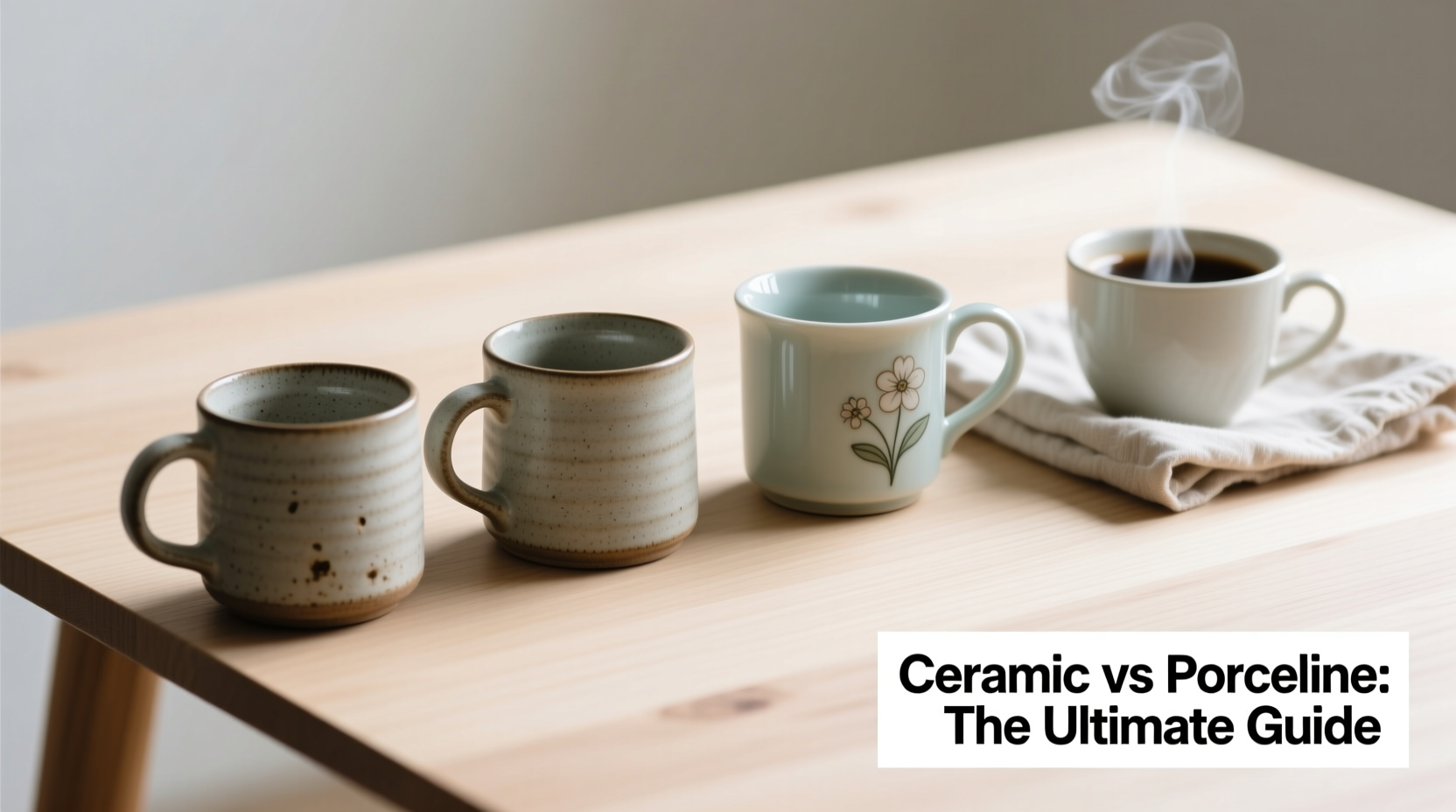
Ceramic and porcelain are both types of fired clay, but their composition, density, and manufacturing process set them apart. Ceramic mugs are typically made from earthenware or stoneware clay, fired at lower temperatures (around 1,000–1,250°C). This results in a porous, slightly heavier product that often requires glazing to become liquid-resistant. The texture tends to be more rustic, and the walls are generally thicker.
Porcelain, on the other hand, is crafted from kaolin clay and fired at much higher temperatures (up to 1,450°C). This vitrification process makes it non-porous, smooth, and exceptionally durable despite its delicate appearance. Porcelain mugs are usually thinner, lighter, and have a translucent quality when held up to light. They also retain heat better due to their dense structure.
“Porcelain’s strength lies in its refinement—it’s both elegant and resilient, making it ideal for daily use if handled with care.” — Dr. Lena Park, Materials Scientist specializing in ceramics
Heat Retention and Functionality
How long your coffee stays hot depends significantly on the mug’s material. Porcelain excels here. Its high density minimizes heat loss, allowing beverages to stay warmer for longer periods—often up to 30 minutes more than standard ceramic mugs. This makes porcelain a top choice for slow sippers or those who enjoy multiple cups over a leisurely breakfast.
Ceramic mugs, especially stoneware varieties, do retain heat reasonably well but tend to cool faster due to microscopic pores and thicker walls that absorb some thermal energy. However, this can be beneficial if you prefer your drink to cool slightly before sipping, particularly with very hot beverages like freshly brewed espresso or herbal infusions.
Comparative Analysis: Ceramic vs. Porcelain Mugs
| Feature | Ceramic | Porcelain |
|---|---|---|
| Durability | Moderate; prone to chipping if dropped | High; resistant to scratches and chips under normal use |
| Weight | Heavier, substantial feel | Lighter, more refined |
| Heat Retention | Good | Excellent |
| Aesthetic Range | Broad—matte finishes, bold colors, artisanal textures | Elegant—glossy, smooth, often minimalist or classic designs |
| Microwave & Dishwasher Safe | Most are, unless decorated with metallic paint | Generally yes, but avoid sudden temperature changes |
| Price Range | Affordable to mid-range | Mid to premium |
Choosing Based on Lifestyle and Use
Your ideal mug should reflect how you live. Are you someone who enjoys a quiet morning with a book and a slowly cooling latte? Or do you need a sturdy companion for busy mornings, school drop-offs, and office commutes?
For family homes with children or high-traffic kitchens, ceramic mugs offer practical advantages. Their weight provides stability, reducing spills, and their forgiving nature means small chips or fading designs don’t render them unusable. Many ceramic mugs also feature ergonomic handles and larger capacities, making them suitable for generous servings.
Porcelain shines in formal settings or for personal indulgence. A thin-rimmed porcelain cup elevates the experience of drinking fine loose-leaf tea or a carefully brewed pour-over. Because of its smooth interior, porcelain doesn’t absorb flavors or stains easily, preserving the purity of each brew. However, it demands more careful handling—avoid stacking without protection and never expose it to rapid temperature shifts, such as moving directly from fridge to microwave.
Mini Case Study: The Home Barista’s Choice
Sophie, a home barista in Portland, Oregon, used thick ceramic mugs for her morning coffee for years. While she appreciated their durability, she noticed the crema on her espresso faded too quickly. After switching to a set of double-walled porcelain mugs, she found her drinks stayed hotter longer, and the thinner lip allowed her to fully appreciate the nuanced flavor profile. “It’s like tasting coffee for the first time,” she said. “The porcelain doesn’t interfere—it enhances.”
Step-by-Step Guide to Selecting Your Ideal Mug
- Assess your primary use: Is it for daily commuting, office work, or quiet moments at home?
- Consider capacity: Standard mugs hold 8–12 oz; larger sizes suit lattes or all-day hydration.
- Evaluate grip and comfort: Test the handle size and shape—can you wrap your fingers around it easily?
- Check material quality: Tap the mug lightly; porcelain produces a clear, ringing sound, while ceramic has a duller tone.
- Inspect the glaze: Ensure it’s smooth and free of cracks or bubbles, which can harbor bacteria.
- Determine care requirements: Will it go in the dishwasher daily? Avoid hand-painted or gold-trimmed porcelain if so.
- Match to your aesthetic: Choose a finish that complements your kitchen or workspace—matte earth tones for warmth, glossy white for minimalism.
Frequently Asked Questions
Is porcelain more fragile than ceramic?
Despite its delicate appearance, porcelain is actually denser and more chip-resistant than most ceramic mugs. However, it can crack under extreme thermal shock—like pouring boiling water into a cold mug—so gradual temperature changes are recommended.
Can I use a porcelain mug every day?
Absolutely. High-quality porcelain is designed for everyday use. Just avoid dropping it on hard surfaces and refrain from using abrasive cleaners that could scratch the glaze.
Do ceramic mugs stain more easily?
Lower-fired ceramics with imperfect glazes may absorb liquids over time, leading to staining—especially with dark teas or coffee. Fully glazed stoneware and porcelain resist staining far better. Always check that the interior is completely sealed.
Final Checklist Before You Buy
- ✅ Microwave and dishwasher safe (if needed)
- ✅ Comfortable handle and balanced weight
- ✅ Smooth, fully glazed interior
- ✅ Appropriate size for your typical serving
- ✅ Free of cracks, warping, or rough edges
- ✅ Matches your cleaning habits and lifestyle
Make Your Morning Ritual Better, One Mug at a Time
The perfect mug isn’t about luxury or brand names—it’s about alignment. It should feel natural in your hand, support your daily routine, and bring a small moment of joy each time you use it. Whether you lean toward the hearty reliability of ceramic or the refined elegance of porcelain, the decision ultimately comes down to what serves you best. Now that you understand the science, function, and feel behind each material, you’re equipped to choose wisely. Don’t settle for whatever’s on sale. Invest in a mug that honors your ritual, protects your drink’s integrity, and lasts for years of satisfying sips.




 浙公网安备
33010002000092号
浙公网安备
33010002000092号 浙B2-20120091-4
Comments
No comments yet. Why don't you start the discussion?