
Tweed jackets are timeless pieces that blend heritage craftsmanship with modern versatility. Whether worn for countryside walks or city strolls, the right tweed jacket enhances both comfort and character. Yet one of the most overlooked details—often decisive in both utility and aesthetic—is the pocket style. More than just functional openings, pockets define silhouette, influence proportion, and reflect personal taste. Selecting the ideal pocket configuration requires understanding fabric behavior, intended use, and sartorial tradition. This guide breaks down the key considerations so you can choose a pocket style that aligns perfectly with your lifestyle and look.
Understanding Common Tweed Jacket Pocket Styles
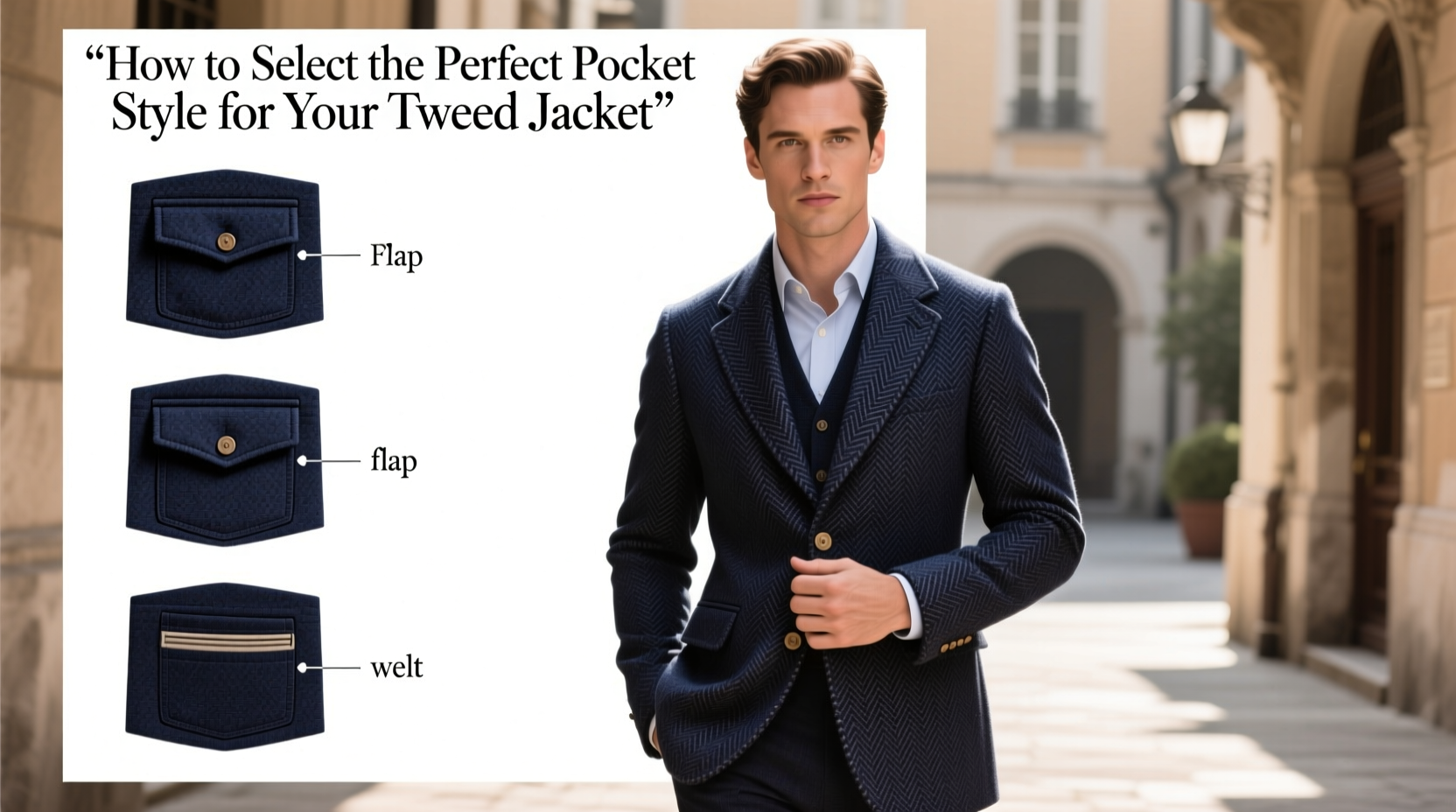
Pockets on tweed jackets fall into several classic categories, each with distinct visual and functional traits. Knowing these types is the first step toward making an informed decision.
- Flap Pockets: The most traditional option, flap pockets feature a hinged cover over the opening. They offer weather protection and a structured appearance, commonly seen in country wear.
- Jetted Pockets: Sleek and minimal, jetted (or slit) pockets consist of narrow horizontal openings reinforced with stitching or piping. Favored in formal tailoring, they provide a clean line but limited capacity.
- Patch Pockets: These sit on top of the jacket body, sewn directly onto the fabric. Often square or rounded, they’re casual, utilitarian, and popular in sporty or relaxed tweed designs.
- Double-Breasted Flap Pockets: A variation with additional depth and sometimes angled placement, typically found on double-breasted models for enhanced symmetry and volume.
- Handwarmer Pockets: Positioned higher on the hips, these allow hands to slide in comfortably during cold weather. Usually angled and often combined with a flap.
The Role of Function vs. Form
Selecting a pocket isn’t merely about aesthetics—it’s a balance between how the jacket will be used and how it should appear. A shooting jacket worn on moorland demands durability and accessibility; a city-tailored tweed blazer prioritizes elegance and line.
For outdoor enthusiasts, patch or large flap pockets provide ample room for field essentials—ammo, maps, or a compact camera. Their raised profile adds bulk but increases usability. In contrast, urban professionals may prefer jetted or slanted flap pockets, which maintain a streamlined silhouette under overcoats and avoid disrupting the drape of trousers when seated.
“Pocket design is where utility meets expression. In tweed, it’s not just about carrying things—it’s about signaling intent.” — Julian Hartwell, Bespoke Tailor & Textile Historian
Matching Pocket Style to Jacket Cut and Occasion
The cut of your tweed jacket influences how pockets interact with your frame. A full-cut Norfolk jacket, designed for movement, traditionally features bellows-style patch pockets with expansion pleats. These accommodate gear while preserving freedom of motion. Conversely, a fitted single-breasted sports coat benefits from flaps set at a slight angle, directing the eye along the torso for a flattering effect.
Consider the occasion:
- Countryside outings: Patch or bellowed flap pockets enhance practicality.
- Business-casual settings: Angled flap pockets maintain professionalism without rigidity.
- Formal country events: Jetted or piped pockets paired with a velvet collar convey refinement.
| Pocket Type | Best For | Style Impact | Durability |
|---|---|---|---|
| Flap Pockets | All-season wear, moderate storage | Classic, balanced | High – reinforced stitching |
| Patch Pockets | Active use, casual styling | Rustic, bold | Moderate – prone to sagging if overloaded |
| Jetted Pockets | Formal occasions, minimalist look | Sharp, tailored | Lower – less structural support |
| Handwarmer Pockets | Cold climates, extended outdoor time | Functional, dynamic | High – integrated into side seams |
Step-by-Step Guide to Choosing Your Ideal Pocket Style
Follow this sequence to ensure your choice aligns with both need and taste:
- Assess your primary use: Will the jacket be worn for walking, commuting, or social events? High-activity use favors patch or flap pockets.
- Evaluate existing wardrobe: Do your other jackets lean formal or casual? Consistency in pocket style creates cohesion.
- Consider climate: Wet or windy environments benefit from flap coverage to keep contents dry.
- Try before deciding: Wear sample jackets with different pockets. Notice how hand placement feels and whether items fit securely.
- Consult your tailor: If ordering bespoke, discuss pocket angle, depth, and reinforcement based on your posture and habits.
A Real-World Example: Choosing Pockets for a Scottish Estate Visit
David, a London-based architect, commissioned a Harris Tweed jacket for a weekend stay at a Highland estate. He needed warmth, weather resistance, and room for a pocketknife, notebook, and gloves. After consultation, he selected a single-breasted jacket with large patch pockets featuring leather trim and interior zip liners. The leather reinforces stress points and repels moisture, while the open tops allow quick access. Though slightly more rustic, the design suited the rugged setting and received compliments for its authenticity. “I didn’t realize pockets could make such a difference,” David later noted. “They turned a good jacket into one I reach for constantly.”
Expert Tips for Long-Term Wear and Care
Pockets endure significant stress—especially when loaded regularly. To preserve shape and stitching:
- Avoid overstuffing, particularly with heavy items like phones or keys.
- Empty pockets before hanging the jacket to prevent sagging.
- Use pocket bags or inner linings to distribute weight evenly.
- Rotate between multiple jackets to reduce wear on any single set of pockets.
“Tweed is resilient, but poor pocket habits can distort even the finest weave. Treat them as part of the structure, not just storage.” — Fiona MacLeod, Heritage Textile Conservator
Frequently Asked Questions
Can I change the pocket style on an existing tweed jacket?
Altering pocket style post-construction is complex and often impractical. Replacing patch pockets with jetted ones, for example, requires re-cutting the fabric and risks weakening the garment. It’s best addressed during initial tailoring or when commissioning a new piece.
Are patch pockets considered less formal?
Generally, yes. Patch pockets project informality and are associated with country attire. However, in tweed—a fabric rooted in rural tradition—even formal interpretations embrace them in moderation. A well-proportioned patch pocket on a finely woven Donegal tweed can be stylishly appropriate for smart-casual events.
What’s the ideal pocket height for ease of use?
The top edge of the pocket should sit just above the hip bone, allowing natural hand insertion without pulling the jacket out of shape. For handwarmer pockets, position them 1–2 inches higher to facilitate comfortable resting while walking.
Final Checklist Before You Decide
- ✅ Define primary use (casual, outdoor, professional)
- Aligns pocket function with lifestyle.
- ✅ Check pocket depth and lining quality
- Deep pockets with sturdy linings last longer.
- ✅ Confirm angle and placement
- Angled flaps improve ergonomics; centered patches can look bulky.
- ✅ Evaluate reinforcement (leather corners, bar tacks)
- Essential for longevity, especially in high-stress areas.
- ✅ Try with typical carried items
- Ensure phone, wallet, or gloves fit without distorting the fabric.
Conclusion: Make Your Pockets Work for You
The perfect pocket style on a tweed jacket does more than hold belongings—it completes the story the garment tells. Whether you value heritage functionality or understated elegance, your choice shapes both comfort and impression. By considering environment, anatomy, and intention, you transform a simple detail into a signature element. Don’t settle for default designs. Engage with tailors, test configurations, and prioritize what matters most to your daily rhythm. When your pockets feel natural and look intentional, you’ve achieved sartorial harmony.




 浙公网安备
33010002000092号
浙公网安备
33010002000092号 浙B2-20120091-4
Comments
No comments yet. Why don't you start the discussion?