
Selecting a watch is more than just choosing a timepiece—it’s about curating an accessory that complements your lifestyle, wardrobe, and daily routines. While dial design and movement matter, the band plays an equally crucial role in comfort, longevity, and aesthetic appeal. A poorly chosen strap can lead to irritation, premature wear, or mismatched style. The right one enhances both function and fashion. With materials ranging from leather to silicone, metal to fabric, understanding their strengths and weaknesses helps you make a confident decision tailored to your needs.
Understanding Key Selection Criteria
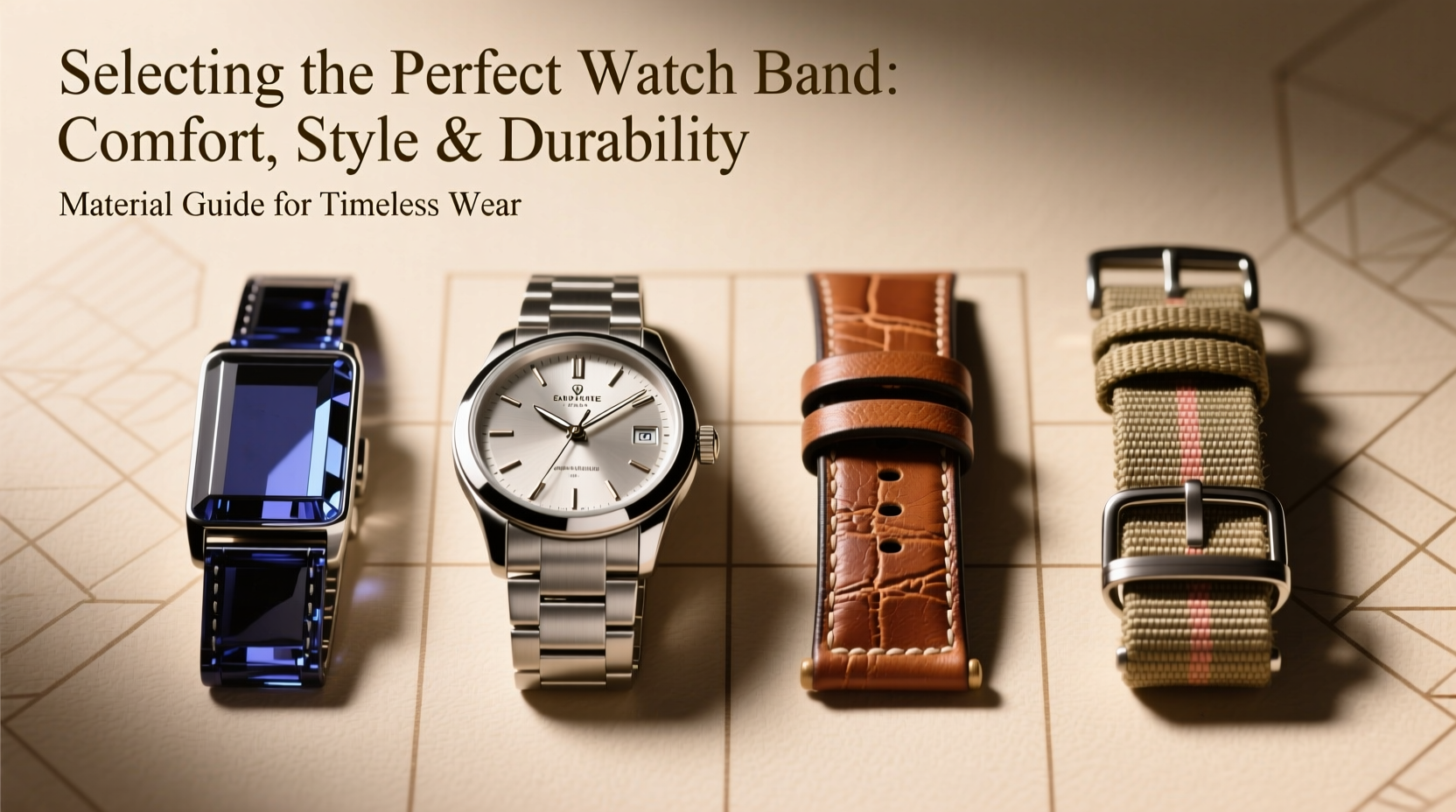
Before diving into specific materials, it’s essential to evaluate what matters most in your daily life. Three core factors should guide your choice: comfort, style, and durability. Each influences the others, and prioritizing them depends on your environment, activities, and personal taste.
- Comfort: How the band feels during extended wear—breathability, weight, flexibility, and skin sensitivity.
- Style: How well the band matches your wardrobe, occasion (formal, casual, sport), and personal expression.
- Durability: Resistance to sweat, UV exposure, moisture, abrasion, and aging over time.
A banker attending meetings may prioritize a sleek leather strap, while a triathlete might need a rugged silicone band. There’s no universal “best” material—only the best fit for your routine.
Comparing Common Watch Band Materials
The market offers a wide range of materials, each with distinct advantages and trade-offs. Below is a detailed comparison to help clarify which option aligns with your priorities.
| Material | Comfort Level | Style Flexibility | Durability | Best For |
|---|---|---|---|---|
| Leather | High (softens over time) | High (classic, elegant) | Moderate (sensitive to moisture) | Formal wear, office settings |
| Stainless Steel | Moderate (can be heavy/cold) | High (versatile, modern) | Very High (resists scratches, water) | Daily wear, professional environments |
| Silicone/Rubber | Very High (lightweight, flexible) | Moderate (sporty, casual) | High (water & sweat resistant) | Fitness, swimming, outdoor use |
| NATO/Textile | High (breathable, soft) | Moderate (military/casual vibe) | Moderate (absorbs moisture) | Casual wear, layering, humid climates |
| Titanium | High (lighter than steel) | High (sleek, premium) | Very High (corrosion-resistant) | All-day wear, sensitive skin, luxury models |
This table highlights why material selection isn’t one-size-fits-all. For example, while leather exudes elegance, it degrades faster with frequent water exposure. Conversely, silicone thrives in active scenarios but rarely suits black-tie events.
Matching Material to Lifestyle
Your daily routine should heavily influence your band choice. Consider where and how you’ll wear your watch most often.
Office Professionals & Formal Wear
Leather bands—especially full-grain or Horween leather—offer timeless sophistication. They pair seamlessly with dress shirts, suits, and smart-casual outfits. Oiled or padded leather increases comfort during long workdays. However, avoid wearing them in the shower or during intense workouts, as moisture weakens stitching and causes cracking.
Fitness Enthusiasts & Outdoor Adventurers
Silicone or fluoro rubber straps are ideal. Brands like Garmin and Apple use proprietary elastomers designed for breathability and resistance to salt, chlorine, and UV rays. These materials don’t trap sweat and dry quickly, reducing odor buildup. Some high-end dive watches use vulcanized rubber for superior resilience under pressure.
Everyday Wear & Versatility Seekers
Stainless steel bracelets offer unmatched longevity and adaptability. With proper care, they can last decades. Modern designs include micro-adjustment clasps and brushed finishes to reduce visible scratches. Titanium provides a lighter alternative without sacrificing strength, making it ideal for those who find metal bands cumbersome.
“Many customers overlook how much a band affects perceived value. A titanium bracelet on a chronograph elevates both comfort and prestige.” — Daniel Reyes, Master Watchmaker at Chrono Studio
Step-by-Step Guide to Choosing Your Ideal Band
Follow this practical sequence to narrow down your options efficiently:
- Assess your primary use case: Is the watch mainly for sports, business, travel, or mixed purposes?
- Evaluate your skin sensitivity: Do you react to nickel in stainless steel? Consider hypoallergenic titanium or nylon.
- Check lug width: Measure the space between your watch lugs (e.g., 20mm, 22mm) to ensure compatibility.
- Test seasonal suitability: Will the band perform well in heat, humidity, or cold weather?
- Review maintenance needs: Are you willing to condition leather monthly or rinse silicone after workouts?
- Try before buying: If possible, swap bands temporarily or purchase from retailers with return policies.
Common Mistakes to Avoid
- Ignoring clasp quality: A flimsy butterfly or deployant clasp can fail unexpectedly. Opt for secure, branded mechanisms.
- Overlooking strap thickness: Thick bands may not fit under shirt cuffs or cause discomfort when typing.
- Using inappropriate cleaners: Alcohol wipes can dry out leather; harsh detergents degrade rubber. Use manufacturer-recommended products.
- Forgetting about lug design: Curved horns or integrated lugs require specific band shapes for a flush fit.
Real-Life Example: Sarah’s Switch to All-Day Comfort
Sarah, a project manager in Seattle, wore her stainless steel watch daily but found it heavy and cold in rainy weather. After developing mild wrist irritation, she switched to a perforated silicone band with a titanium buckle. The new strap was lightweight, breathable, and didn’t retain moisture from constant drizzle. She kept her original steel band for client presentations, rotating based on the forecast and schedule. Within weeks, her watch became more comfortable and practical—without sacrificing professionalism.
FAQ
Can I wear a leather strap every day?
You can, but expect reduced lifespan due to natural oils, sweat, and friction. Limit daily wear if you live in a humid climate or work outdoors. Conditioning every 2–3 months helps preserve integrity.
Are NATO straps durable enough for long-term use?
Yes, especially those made from ballistic nylon. They’re designed for military use and resist tearing. However, they absorb sweat and should be washed regularly to prevent odor.
How do I clean a metal bracelet?
Soak in warm water with mild soap, then gently scrub links with a soft toothbrush. Rinse and dry thoroughly. For deeper cleaning, ultrasonic machines at jewelers remove grime from crevices.
Final Checklist Before Buying
- ✅ Compatibility:
- Lug width and taper match your watch.
- ✅ Intended Use:
- Band suits your primary activity (office, gym, travel).
- ✅ Skin-Friendly:
- No allergic reactions to metals or adhesives.
- ✅ Maintenance Fit:
- You’re willing to care for the material appropriately.
- ✅ Aesthetic Harmony:
- Color and finish complement your watch case and wardrobe.
Conclusion
Choosing the perfect watch band isn’t about chasing trends—it’s about aligning material properties with your real-world habits. Whether you value the refined grain of leather, the resilience of titanium, or the flexibility of silicone, each option serves a purpose. By evaluating comfort, style, and durability through the lens of your lifestyle, you transform a functional component into a seamless extension of your identity. Don’t settle for a band that merely fits—choose one that enhances every moment you wear it.




 浙公网安备
33010002000092号
浙公网安备
33010002000092号 浙B2-20120091-4
Comments
No comments yet. Why don't you start the discussion?