
Sending money has never been easier—or riskier. With digital platforms, global remittance services, and cryptocurrency options flooding the market, knowing which method is both fast and secure can be overwhelming. Whether you're helping a family member overseas, paying a freelancer abroad, or splitting rent with a roommate, the right transfer method can save time, fees, and potential fraud. This guide breaks down every major way to send money, evaluates their security protocols, processing times, costs, and offers actionable advice to ensure your funds arrive safely and swiftly.
Understanding Security and Speed in Money Transfers
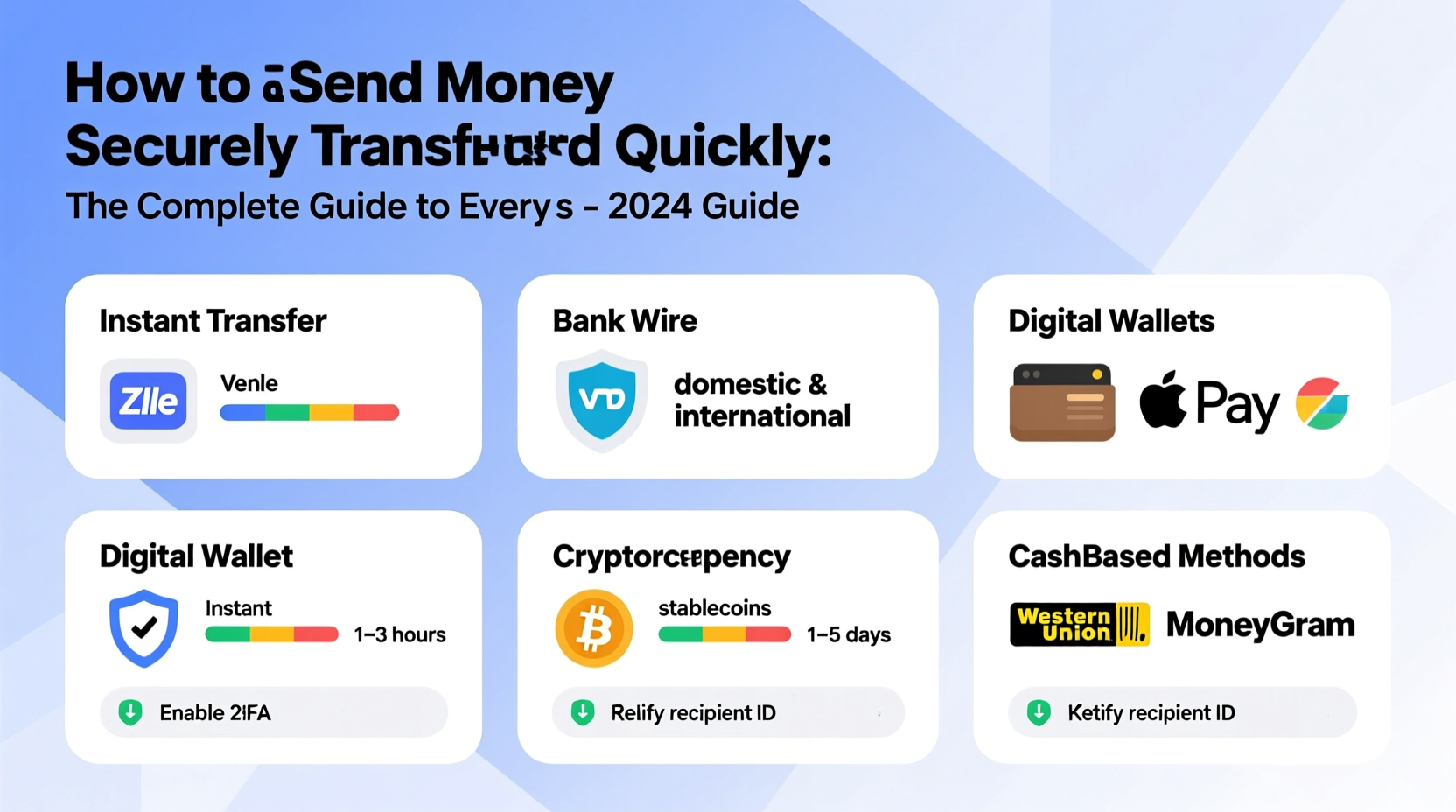
When choosing a money transfer method, two factors dominate: security and speed. A secure transfer protects your personal and financial data from theft, phishing, and unauthorized access. Speed refers to how quickly the recipient receives usable funds. These two elements often trade off—some of the fastest methods carry higher risks, while ultra-secure options may take days.
Security depends on encryption standards (like TLS/SSL), two-factor authentication (2FA), fraud monitoring, and regulatory compliance (such as PCI-DSS or GDPR). Speed is influenced by network processing times, intermediary banks, verification requirements, and whether the transfer occurs within a closed system (e.g., Venmo to Venmo) or crosses financial institutions.
Top Methods for Sending Money: Comparison & Best Uses
Different situations call for different tools. Below is a detailed comparison of the most common money transfer methods, including their average speed, typical fees, security features, and ideal use cases.
| Method | Avg. Transfer Time | Fees (Typical) | Security Features | Best For |
|---|---|---|---|---|
| Bank Wire Transfer (Domestic) | Same day – 1 business day | $15–$30 | Bank-level encryption, SWIFT/BIC verification | Large, one-time payments (e.g., real estate) |
| Bank Wire Transfer (International) | 1–5 business days | $30–$50 + intermediary fees | SWIFT network, identity verification | High-value international transfers |
| ACH Transfer | 1–3 business days | Free or $1–$3 | NACHA rules, encryption, limited exposure | Bills, payroll, recurring payments |
| Venmo / Cash App / Zelle | Instant (Zelle), 1–3 days (others) | Free (standard); 1.5%–1.75% for instant | Biometric login, transaction limits, fraud alerts | Peer-to-peer, small amounts, U.S.-only |
| PayPal | Instant (to balance), 1–3 days (bank) | 2.9% + $0.30 per transaction | Buyer/seller protection, 2FA, encrypted vault | Online purchases, freelancers, cross-border |
| Western Union / MoneyGram | Minutes – 1 business day | $5–$100+ based on amount/location | ID verification, PIN-based pickup, tracking | Cash pickup in remote areas, no bank needed |
| Cryptocurrency (e.g., Bitcoin, USDT) | 10 mins – 1 hour | $1–$10 (network-dependent) | Blockchain immutability, private keys, no chargebacks | Uncensored transfers, tech-savvy users, global |
Step-by-Step Guide to Securely Send Money Online
No matter which platform you choose, following a consistent process reduces errors and enhances security. Use this checklist every time you initiate a transfer.
- Verify the recipient’s details: Double-check account numbers, phone numbers, or wallet addresses. One typo can send funds to the wrong person permanently.
- Confirm transfer limits: Ensure your chosen method allows the amount you intend to send. Some apps limit daily transfers for security.
- Use official apps or websites: Never click links in emails. Type the URL directly or download the app from official stores.
- Enable two-factor authentication (2FA): Use an authenticator app (Google Authenticator or Authy), not SMS, if possible.
- Send a test amount first: For new recipients or unfamiliar platforms, send $1 first to confirm delivery.
- Keep a record: Save confirmation numbers, timestamps, and receipts. Screenshot successful transactions.
- Monitor your account: Check your bank or app activity within 24 hours to confirm the transfer completed as expected.
Real-World Example: Sending Emergency Funds Abroad
Lena, a nurse in Chicago, needed to send $800 to her sister in Guatemala after a hurricane damaged their home. She considered several options:
- Her bank’s wire service: Secure but would take 3 days and cost $45 in fees.
- Western Union: Her sister could pick up cash in 10 minutes at a local agent, with a $28 fee.
- Remitly (digital remittance app): Funds would arrive in 5 minutes via mobile wallet, costing $19.99.
Lena chose Remitly after verifying its license with the U.S. Financial Crimes Enforcement Network (FinCEN) and confirming her sister had a verified account. The transfer completed in under 8 minutes. This case highlights how newer fintech platforms combine speed, lower cost, and strong security when properly vetted.
“Speed should never compromise verification. Legitimate services will always require ID checks for large or international transfers.” — David Lin, Cybersecurity Analyst at FinTrust Advisors
Pro Tips for Maximum Security Across All Platforms
Even the safest platforms become risky if used carelessly. Follow these best practices to protect yourself:
- Update software regularly: Outdated apps may have unpatched security flaws.
- Use strong, unique passwords: Avoid reusing passwords across financial accounts.
- Avoid public Wi-Fi for transfers: Use cellular data or a trusted home network.
- Set up transaction alerts: Get instant notifications for any outgoing funds.
- Watch for social engineering: Urgent requests (“I’m locked out of my hotel!”) are common scam tactics.
Frequently Asked Questions
Is Zelle really safe for sending money to strangers?
No. Zelle lacks buyer protection. It’s designed for people who know each other. Once sent, funds cannot be reversed, making it a target for scams involving fake invoices or impersonation.
Can I reverse an international wire transfer?
Possibly, but only if caught within hours and before the receiving bank processes it. After that, recovery requires legal action and cooperation from foreign banks—often impossible. Always verify recipient details before sending.
Are cryptocurrency transfers truly anonymous?
No. While wallet addresses don’t show names, blockchain transactions are public and traceable. Exchanges require KYC (Know Your Customer) verification, linking identities to transactions. True anonymity requires advanced tools like mixers—often associated with illicit activity.
Final Checklist Before Every Transfer
Before hitting “send,” run through this final checklist to ensure safety and accuracy:
- ✅ Recipient name matches bank/wallet records
- ✅ Account number, IBAN, or wallet address double-checked
- ✅ Transfer amount correct (especially decimal points)
- ✅ Fees and exchange rates confirmed
- ✅ Device is secure (no malware, updated OS)
- ✅ 2FA is active on the sending platform
- ✅ You’re not under pressure from someone demanding urgency
Conclusion: Make Every Transfer Smart, Safe, and Swift
Sending money doesn’t have to mean sacrificing speed for safety—or vice versa. By understanding the strengths and risks of each method, using strong authentication, and following a disciplined process, you can move funds confidently across town or across continents. Technology has made transfers faster than ever, but human vigilance remains the strongest defense against fraud. Choose the right tool for the job, stay alert, and protect every transaction like it’s your last.




 浙公网安备
33010002000092号
浙公网安备
33010002000092号 浙B2-20120091-4
Comments
No comments yet. Why don't you start the discussion?