
Navigating family relationships can be one of the most rewarding aspects of life—but when a family member consistently displays toxic behavior, it can erode your mental health, self-esteem, and peace of mind. The idea of cutting them off may feel like the only solution, but many people want to preserve some level of connection while protecting their well-being. Setting firm, compassionate boundaries is not only possible—it’s essential for maintaining dignity, emotional safety, and long-term relational balance.
Boundaries are not walls; they’re guidelines that define how you will allow others to treat you. When applied thoughtfully, they create space for respect, reduce conflict, and prevent resentment from building. This guide walks through practical, sustainable ways to establish and maintain boundaries with toxic family members—without severing ties entirely.
Understanding Toxic Family Dynamics
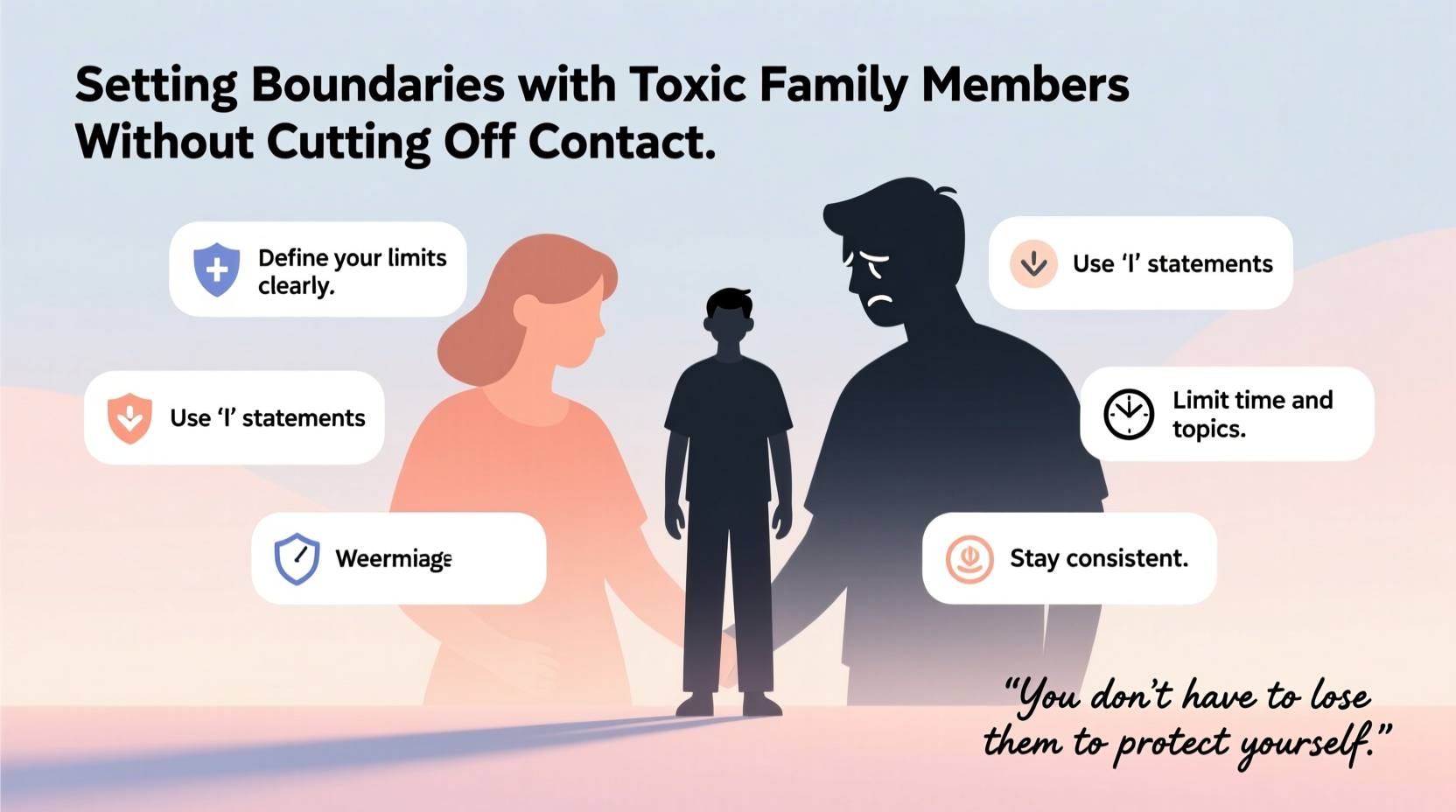
Toxicity in family relationships often manifests as manipulation, emotional blackmail, chronic criticism, guilt-tripping, or boundary violations. These behaviors aren’t always intentional, but their impact is real: anxiety, exhaustion, and a sense of walking on eggshells during interactions.
It’s important to recognize that “toxic” doesn’t mean “bad person.” Many individuals who display toxic traits were raised in dysfunctional environments themselves and may lack emotional regulation skills. However, understanding their background doesn’t obligate you to tolerate harmful behavior.
Common signs of a toxic family member include:
- Regularly dismissing or minimizing your feelings
- Using sarcasm or passive-aggression instead of direct communication
- Demanding attention or emotional labor without reciprocation
- Invading your privacy (e.g., showing up unannounced, reading messages)
- Creating drama or triangulating other family members
Recognizing these patterns is the first step toward reclaiming control over your emotional space.
Why Boundaries Are Necessary (And Not Selfish)
Many people hesitate to set boundaries because they fear being labeled selfish, unkind, or disloyal. But healthy boundaries are a form of self-respect—not rejection. They clarify expectations and protect both parties from resentment and misunderstanding.
Dr. Nedra Glover Tawwab, therapist and author of *Set Boundaries, Find Peace*, explains:
“Boundaries are not about changing someone else—they’re about communicating your needs so you can show up as your best self in relationships.”
Without boundaries, you risk burnout, emotional numbing, or even adopting toxic behaviors yourself. On the flip side, clear limits can actually improve relationships by reducing confusion and fostering mutual accountability.
For example, if your mother calls daily at 10 p.m. to vent about her problems—leaving you stressed and sleep-deprived—a boundary such as, “I care about you, but I can’t take calls after 8 p.m. because I need to wind down,” sets a respectful limit without shutting her out.
Step-by-Step Guide to Setting Effective Boundaries
Establishing boundaries with a toxic family member requires preparation, clarity, and consistency. Follow this six-step process to increase the likelihood of success:
- Identify Your Limits: Reflect on which behaviors drain you or make you uncomfortable. Is it constant advice-giving? Financial demands? Unwanted childcare requests? Be specific.
- Clarify Your Goal: Decide what outcome you want. Do you need less frequent contact? More respectful conversations? No involvement in certain topics (politics, parenting, etc.)?
- Choose the Right Time and Medium: Don’t deliver a boundary during an argument. Instead, schedule a calm conversation—ideally in person or via video call. For high-tension dynamics, a written message may be safer.
- Use Clear, Non-Accusatory Language: Focus on your experience, not their character. Say, “When I get criticized during family dinners, I feel hurt and withdraw,” instead of, “You’re always so negative.”
- State the Boundary and Consequence: Example: “I won’t engage in conversations that include name-calling. If it happens, I’ll end the call and reconnect tomorrow.”
- Follow Through Consistently: Enforcement is key. If they cross the line, calmly apply the consequence every time—even if it feels harsh at first.
This approach removes ambiguity and shows that your limits are serious, not negotiable based on mood or guilt.
Do’s and Don’ts When Communicating Boundaries
| Do’s | Don’ts |
|---|---|
| Use “I” statements (“I feel,” “I need”) | Use “you” accusations (“You always,” “You never”) |
| Be specific about the behavior and expectation | Generalize (“You’re so toxic”) |
| Stay calm and grounded, even if they react strongly | Engage in arguments or defend your right to have boundaries |
| Repeat your boundary if challenged (“I’ve already shared my limit on this”) | Apologize for setting a boundary |
| Offer alternative ways to connect (“Let’s talk about neutral topics”) | Threaten punishment or cut-off unless compliance is immediate |
Remember: You cannot control how someone reacts, but you can control how you respond.
Real-Life Example: Managing a Criticizing Parent
Sophia, a 34-year-old graphic designer, grew up with a mother who frequently commented on her weight, career choices, and parenting style. While she loved her mom, each visit left her feeling small and anxious.
After therapy, Sophia decided to set a boundary. She scheduled a phone call and said: “Mom, I love you and value our relationship. But when you comment on my appearance or decisions, it hurts me and makes me want to pull away. From now on, I’m going to gently stop the conversation if those topics come up. I’d love to focus on things we enjoy, like cooking together or talking about books.”
The first few interactions were tense. Her mom responded with, “I’m just trying to help!” But Sophia stayed consistent: when criticism arose, she said, “I know your intention is good, but I’m not comfortable discussing this,” then changed the subject or ended the call.
Over time, her mother adapted. Their relationship didn’t become perfect, but it became more peaceful. Visits were shorter but more enjoyable. Sophia regained confidence and stopped dreading family time.
Strategies for Maintaining Boundaries Long-Term
Setting a boundary once isn’t enough. Toxic patterns are deeply ingrained, and family members may test limits—especially if your new assertiveness disrupts the status quo.
To sustain your boundaries:
- Expect pushback—and prepare for it. They might accuse you of being cold, dramatic, or influenced by others. Remind yourself that discomfort is part of growth.
- Enlist support. Share your goals with a trusted friend or therapist. Having witnesses reinforces accountability.
- Adjust as needed. Some boundaries may need refining. If limiting calls to once a week still leads to emotional overload, consider switching to text-only communication for a period.
- Practice self-validation. You don’t need their approval to deserve respect. Repeat affirmations like, “My needs matter,” or “I am allowed to protect my peace.”
- Use technology wisely. Mute notifications, block spam numbers, or use auto-replies to manage unwanted contact without confrontation.
Checklist: How to Set and Maintain Boundaries
Use this actionable checklist to guide your process:
- ✅ Identify the specific behaviors that affect your well-being
- ✅ Determine the boundary you need (time, topic, physical space, emotional labor)
- ✅ Plan how and when you’ll communicate it
- ✅ Draft your message using non-confrontational language
- ✅ State the boundary clearly and calmly
- ✅ Define a natural consequence for violations
- ✅ Apply the consequence consistently
- ✅ Reassess monthly: Is the boundary working? Does it need adjustment?
- ✅ Prioritize self-care before and after difficult interactions
- ✅ Celebrate small wins—each act of boundary-setting builds resilience
Frequently Asked Questions
What if they refuse to respect my boundary?
If someone repeatedly crosses your boundary despite clear communication, you have the right to adjust your level of contact. This might mean reducing visits, ending calls early, or taking a temporary break. Respect goes both ways, and you’re not obligated to remain accessible to those who disregard your limits.
Will setting boundaries ruin the relationship?
Sometimes, yes—if the other person equates closeness with control. But often, boundaries improve relationships by creating honesty and reducing tension. A true connection should survive mutual respect, not dependency or manipulation.
How do I handle guilt after setting a boundary?
Guilt is common, especially if you were taught that putting others first is virtuous. Reframe it: setting boundaries isn’t abandonment—it’s responsibility. You’re modeling healthy behavior, which may even inspire positive change in the family system over time.
Conclusion: Protect Your Peace Without Ending the Relationship
Setting boundaries with toxic family members isn’t a one-time event—it’s an ongoing practice of self-awareness, courage, and consistency. You don’t have to choose between suffering in silence and complete estrangement. There is a middle path: one where love and limits coexist, where connection doesn’t require compromise of your dignity.
Every time you enforce a boundary, you reinforce your worth. You teach others how to treat you. And slowly, you create space for more authentic, balanced relationships—within your family and beyond.




 浙公网安备
33010002000092号
浙公网安备
33010002000092号 浙B2-20120091-4
Comments
No comments yet. Why don't you start the discussion?