
Transform your holiday display into an immersive experience by syncing festive lights to the epic soundtracks of popular video games. From the nostalgic chiptunes of classic Nintendo titles to the cinematic scores of modern RPGs like The Legend of Zelda or Final Fantasy, gaming music offers rich dynamics perfect for visual storytelling through light. With the right tools and planning, you can create a neighborhood attraction that delights gamers and non-gamers alike.
Why Gaming Soundtracks Work for Light Shows
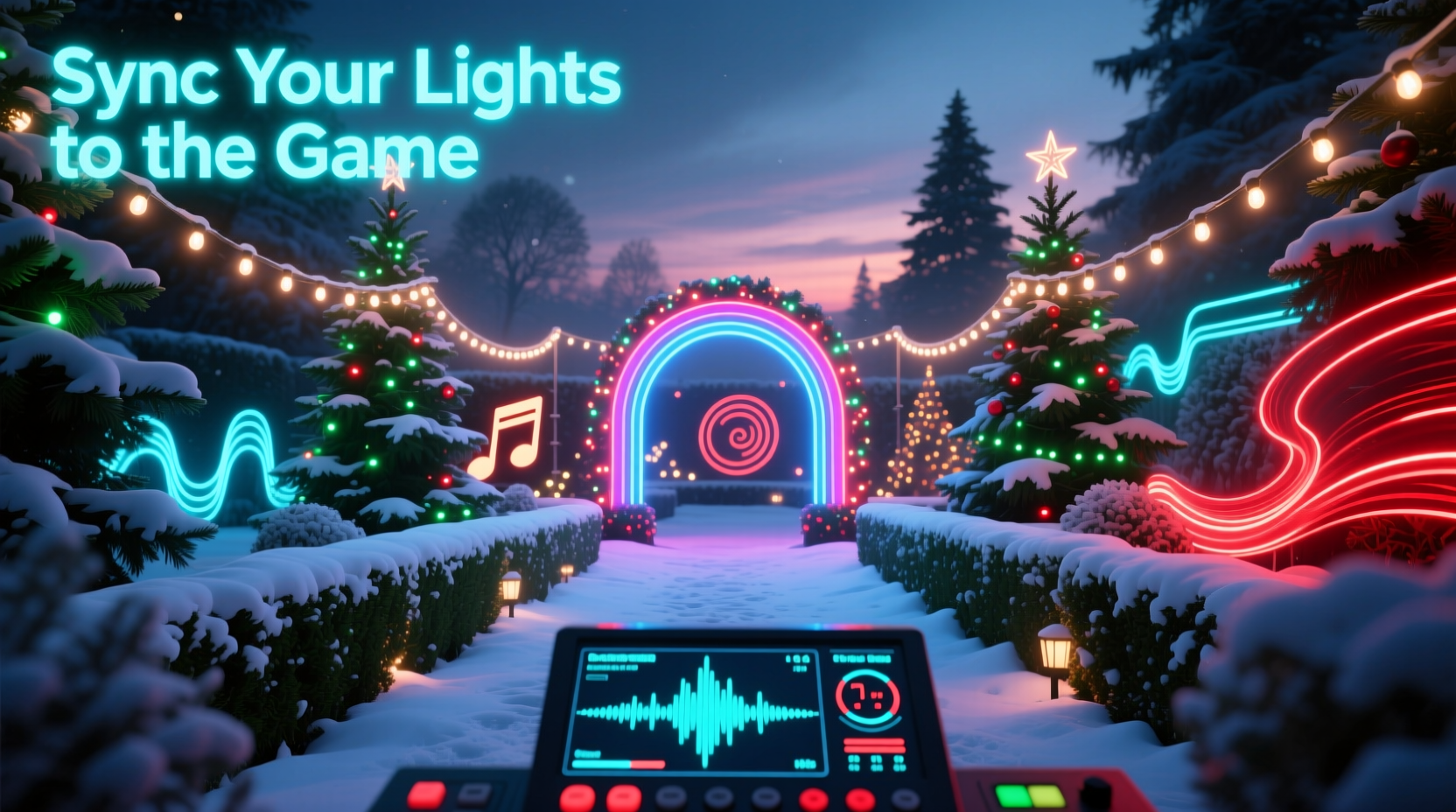
Gaming music is uniquely suited for synchronized light displays. Unlike traditional Christmas carols, which follow predictable patterns, game soundtracks are composed to evoke emotion, tension, and triumph—often with dramatic crescendos, rhythmic pulses, and evolving instrumentation. These musical characteristics provide excellent cues for lighting effects such as strobes, color shifts, fades, and motion sequences.
Games like Celeste, Hollow Knight, and The Elder Scrolls V: Skyrim feature atmospheric compositions that build gradually, allowing for subtle transitions in lighting. Meanwhile, high-energy tracks from franchises like Metal Gear Solid or Doom offer intense beats ideal for rapid-fire light animations. This variety gives creators artistic freedom to match lighting behavior precisely to the mood and tempo of each piece.
Essential Equipment and Software Setup
Creating a synchronized light show requires both hardware and software components working together seamlessly. Below is a breakdown of what you'll need to get started.
Hardware Components
- Smart LED Lights: Use addressable LEDs like WS2812B (NeoPixels) or commercial-grade LOR (Light-O-Rama) pixels. These allow individual control over brightness, color, and animation.
- Controllers: Devices such as Falcon F16v3, ESPixelStick, or LOR controllers translate digital signals into physical light changes.
- Power Supplies: High-wattage, regulated DC power supplies (5V or 12V depending on strip type) ensure stable operation across long runs.
- Network Infrastructure: Ethernet cables, wireless access points, or RF bridges to connect controllers to your main system.
- Amplified Audio System: Outdoor-rated speakers capable of playing game audio clearly at volume without distortion.
Software Tools
- XLights (formerly Falcon Pi Player): Free, open-source software used to design and sequence light effects. It supports beat detection, audio waveform visualization, and real-time preview.
- Audacity: Audio editing tool to clean, loop, or trim game soundtrack files before importing into XLights.
- ShairBridge or AirConnect: Optional tools if streaming from Apple devices or integrating smart home systems.
- Path Planning Tools: Some users sketch their layout using CAD software or even graph paper to map pixel locations accurately.
“Gaming scores are some of the most rhythmically complex and emotionally dynamic music available—they’re perfect for pushing creative boundaries in light art.” — Daniel Reyes, Interactive Light Designer and former theme park technician
Step-by-Step Guide to Building Your Show
Follow this structured timeline to go from concept to execution over 4–6 weeks, depending on complexity.
Week 1: Conceptualize and Select Music
- Pick 2–4 game tracks (each 2–4 minutes long).
- Ensure copyright compliance—use royalty-free arrangements or original compositions when possible.
- Analyze tracks for structure: intro, verse, chorus, bridge, climax.
Week 2: Design Physical Layout
- Map out where lights will be installed (roofline, trees, driveway arches).
- Count total pixels needed per zone and assign controller ports.
- Plan cable routing and weatherproof enclosures for electronics.
Week 3: Set Up Controllers and Test Network
- Flash firmware onto microcontrollers (e.g., ESP32-based boards).
- Assign static IPs or use mDNS naming for reliable connectivity.
- Run test patterns via XLights to verify all pixels respond correctly.
Week 4: Sequence the First Track
- Import a trimmed version of your chosen track into XLights.
- Use the beat detection tool to mark downbeats automatically.
- Create layers: one for background colors, another for chasing effects, and a third for strobing on drum hits.
- Preview in virtual matrix mode to refine timing.
Week 5: Refine and Expand
- Add secondary effects like twinkles during quiet passages or rainbow wipes during builds.
- Incorporate props (e.g., pixel-mapped snowmen, animated signs) tied to thematic elements in the music.
- Test full sequence outdoors under real conditions.
Week 6: Finalize and Automate
- Schedule daily playback using cron jobs (Linux), Task Scheduler (Windows), or dedicated Raspberry Pi.
- Set up remote monitoring via webcam or SSH access.
- Install fail-safes: automatic shutdown on overheating or signal loss.
Optimizing Synchronization: Matching Light to Musical Cues
Precise synchronization separates amateur displays from professional-quality shows. Here’s how to align lighting effects with key moments in gaming soundtracks:
| Musical Element | Recommended Lighting Effect | Example Game Track |
|---|---|---|
| Drum Kick / Percussion Hit | White strobe or sudden color flash | \"Snake Eater\" – Metal Gear Solid 3 |
| String Crescendo | Slow fade-up across multiple zones | \"Dragonborn\" – Skyrim |
| Chiptune Arpeggio | Pixel chase moving left-to-right | \"Overworld Theme\" – Celeste |
| Vocal Entry | Warm glow (amber/white) spreading outward | \"Hopes and Dreams\" – Undertale |
| Electronic Bass Drop | Full-array pulse with blue/purple flash | \"Night City Life\" – Cyberpunk 2077 |
To enhance precision, zoom into the audio waveform in XLights and manually adjust effect start times down to the millisecond. For orchestral tracks, consider layering ambient glows beneath sharp beat-driven flashes to maintain emotional continuity.
Real Example: A Zelda-Inspired Front Yard Display
Jason M., a software engineer in Portland, Oregon, built a fully synchronized light show themed around *The Legend of Zelda: Breath of the Wild*. He selected three tracks—\"Main Theme,\" \"Shrine of Resurrection,\" and \"Battle with Dark Beast Ganon\"—and mapped them across 2,400 pixels arranged on his roof, garage door, and two flanking pine trees.
For the serene \"Shrine\" track, he programmed slow blue-to-white gradients mimicking healing energy, with gentle pulsing on harp notes. During the battle theme, red flashes pulsed in sync with war drums, while zigzag lightning effects ran along the roofline. He embedded a small pixel-mapped Triforce symbol above his door that lit up during the final chord.
Using a Raspberry Pi running XLights, the entire sequence played nightly from December 1st to 26th. Neighbors reported children dressing as Link and Sheikah to watch the show, and local news covered it as a “geek-friendly twist on holiday tradition.” Jason spent approximately $900 on materials and about 80 hours building and refining the setup.
Checklist: Pre-Launch Verification
Before going live, run through this checklist to ensure reliability and safety:
- ✅ All power supplies are grounded and protected from moisture
- ✅ Each controller has been tested independently
- ✅ Audio file matches the exact version used in sequencing
- ✅ Lighting effects begin 0.5 seconds before audio starts (to offset network latency)
- ✅ Backup sequence file stored on separate device
- ✅ Emergency shut-off switch accessible and labeled
- ✅ Neighbor notifications sent; comply with local noise ordinances
- ✅ Wi-Fi signal strength verified across all controller locations
Frequently Asked Questions
Can I use copyrighted game music legally?
You may face takedown risks if broadcasting publicly or monetizing the event. To stay compliant, use royalty-free covers, Creative Commons-licensed remixes (e.g., from OverClocked ReMix), or obtain permission from rights holders. Many fans use music under \"fair use\" for non-commercial, personal displays—but always check local laws.
How do I reduce lag between audio and lights?
Lag often stems from network delays or audio buffering. Use wired Ethernet instead of Wi-Fi where possible, pre-render sequences in XLights, and route audio directly from the same machine controlling the lights. Introduce a slight delay (100–300ms) in the speaker output to compensate for pixel response time.
What if my lights go offline mid-show?
Program fallback modes: configure controllers to default to a simple breathing pattern or solid color if they lose signal. Use ping monitors or scripts that restart services automatically. Keep spare fuses, data lines, and a multimeter on hand during peak viewing nights.
Final Thoughts and Call to Action
Combining Christmas lights with gaming soundtracks merges nostalgia, technology, and seasonal joy into something truly unique. Whether you're paying homage to the soundtrack that got you through late-night raids or introducing your kids to the magic of retro gaming, these synchronized displays foster connection and wonder.
The process demands patience and technical attention—but every flicker aligned to a violin swell or drum hit makes it worthwhile. Start small, learn incrementally, and don’t hesitate to share your work online. Communities like r/lightshow on Reddit or Discord servers dedicated to holiday tech thrive on collaboration and inspiration.




 浙公网安备
33010002000092号
浙公网安备
33010002000092号 浙B2-20120091-4
Comments
No comments yet. Why don't you start the discussion?