
A Christmas tree is more than just a centerpiece—it’s a canvas for storytelling through light and color. While traditional all-white or multicolored lights remain popular, a growing number of decorators are embracing the sophistication of dual tone lighting. This approach combines two complementary colors of LED string lights to create depth, contrast, and mood. When done right, it elevates your tree from seasonal decoration to interior design statement. Whether you’re aiming for a warm winter glow or a modern icy contrast, setting up a dual tone scheme requires planning, balance, and attention to detail.
Understanding Dual Tone Lighting: More Than Just Two Colors
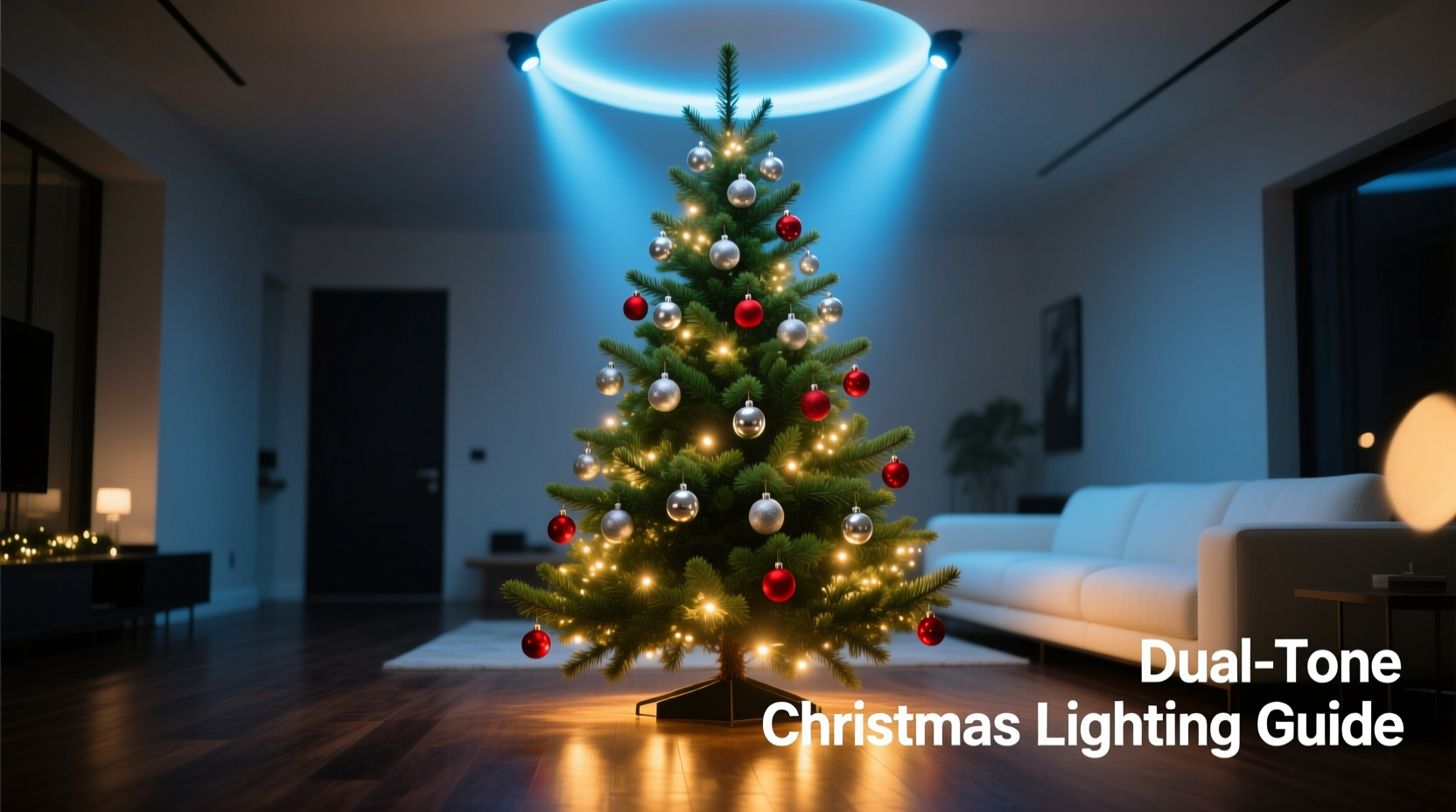
Dual tone lighting isn’t simply about wrapping two different colored lights around a tree. It’s a deliberate pairing that enhances visual rhythm and emotional tone. The most effective schemes use colors that either harmonize (like warm white and gold) or contrast (such as cool white and deep blue), creating layers of illumination that draw the eye without overwhelming it.
The key lies in proportion and placement. A poorly balanced mix—say, 70% red and 30% green—can appear lopsided or chaotic. But when each color is given intentional space and purpose, the result is cohesive and elegant. For example, using warm white as a base layer with silver accents can evoke candlelight on snow, while blending violet and teal mimics twilight over frozen lakes.
Choosing Your Color Pair: Principles of Harmony and Contrast
Selecting the right two tones is foundational. Consider both the atmosphere you want to create and the existing décor of your room. Here are three guiding principles:
- Complementary colors – Opposite on the color wheel (e.g., blue and orange) create dynamic contrast. Best used sparingly to avoid visual fatigue.
- Analogous colors – Adjacent on the wheel (e.g., warm white and amber) produce a smooth, unified look ideal for cozy spaces.
- Monochromatic variations – Different shades of the same hue (e.g., cool white and soft blue) add subtle dimension without clashing.
Popular dual tone combinations include:
- Warm white + gold – Classic elegance, perfect for traditional homes.
- Cool white + silver – Crisp and modern, evokes a frosty forest.
- Amber + green – Rustic charm, ideal for cabins or nature-inspired themes.
- Blue + violet – Mystical and serene, great for contemporary settings.
- Red + warm white – Festive yet balanced; red provides pops of cheer against a gentle glow.
“Lighting is the soul of holiday décor. A well-executed dual tone scheme doesn’t compete with ornaments—it frames them.” — Lena Pruitt, Interior Stylist & Holiday Design Consultant
Step-by-Step Guide: Installing Your Dual Tone Lights
Success depends not just on what you use, but how you apply it. Follow this sequence for professional results.
- Measure your tree: Determine total height and circumference at widest point. As a rule, use 100 lights per foot of tree height. For a 6-foot tree, that’s 600 lights—split evenly between your two tones (300 each).
- Test all strings first: Plug in every strand before installation. Replace any with dead bulbs or flickering sections.
- Start with the base color: Choose the dominant tone (usually the warmer or more neutral one) as your foundation. Begin at the trunk and work outward, spiraling up the branches. Tuck wires into the center of limbs to hide them.
- Layer the accent color: Once the base layer is complete, weave in the second color. Instead of following the same spiral, place these lights more randomly—nestled deeper in inner branches or clustered near the outer tips for emphasis.
- Vary density intentionally: Use the accent color more heavily in focal areas (top third of tree, front-facing side) to guide attention.
- Step back frequently: View the tree from multiple angles during installation. Adjust clusters where one color overwhelms the other.
- Secure connections: Use twist ties or floral wire to fasten plug ends to a central branch, keeping them off the floor and reducing tripping hazards.
Essential Tools and Materials Checklist
Gather everything before starting to avoid interruptions mid-project.
| Item | Purpose | Notes |
|---|---|---|
| Dual color LED string lights | Main illumination | Choose same length and bulb count for consistency |
| Extension cords (indoor-rated) | Power access | Use low-profile cords if running under rugs |
| Twist ties or floral wire | Securing lights | Green or clear blends with foliage |
| Ladder or step stool | Reach upper branches | Stable base required |
| Screwdriver or ornament hook tool | Adjusting hard-to-reach strands | Helpful for fine-tuning placement |
| Spare bulbs and fuses | Maintenance | Many LED sets come with extras |
Real Example: A Modern Urban Apartment Tree
Jessica, a graphic designer in Chicago, wanted her 7-foot pre-lit artificial tree to reflect her minimalist aesthetic. The living room features gray walls, black furniture, and natural wood accents. She chose a dual tone scheme of cool white and matte silver LED lights—not traditional colors, but ones that would complement her space without dominating it.
She began by removing the factory-installed multicolor lights. Then, she measured 700 cool white LEDs as the base layer, spiraling from bottom to top. Over that, she added 500 silver-tinted warm white LEDs (a softer alternative to pure silver, which can look harsh). Rather than even distribution, she concentrated the silver lights in the upper front quadrant, where evening light from the adjacent kitchen would catch them.
The result was a tree that glowed like moonlight on birch bark. Ornaments—crystal beads and brushed metal stars—reflected the layered lighting, enhancing the sense of depth. Neighbors commented that it looked “expensive and intentional,” which, Jessica noted, was exactly the goal.
Common Mistakes to Avoid
Even experienced decorators make missteps. These pitfalls can undermine an otherwise beautiful setup:
- Mixing incompatible color temperatures: Combining warm white (2700K) with daylight white (5000K) creates a jarring mismatch. Stick within 500K difference unless deliberately contrasting.
- Overloading one side: Letting one color dominate a single quadrant breaks symmetry. Rotate your position every few minutes while installing.
- Ignoring power sources: Running too many strings off one outlet risks tripping breakers. Use multiple outlets or a high-capacity power strip.
- Using damaged or tangled wires: Kinks weaken filaments and increase failure risk. Unwind lights slowly before use.
- Skipping the test phase: Never assume new lights work perfectly. Test each string individually before installation.
Enhancing the Effect: Ornaments and Tree Placement
Your lighting doesn’t exist in isolation. Ornaments should amplify, not distract from, the dual tone theme. Reflective or translucent decorations—glass balls, mirrored stars, frosted crystals—multiply the interplay of light. Matte finishes absorb it, so use them sparingly unless you want to mute certain areas.
Consider placement in the room. A tree against a dark wall will appear brighter and more focused. One near a window may compete with outdoor lighting at night. Position so the primary viewing angle captures both colors equally—often the living room seating area or entryway sightline.
If your ceiling is low, avoid placing tall toppers that force viewers to look upward at sharp angles, distorting the light balance. A wide wreath or cascading ribbon can spread visual weight horizontally instead.
Frequently Asked Questions
Can I mix incandescent and LED lights in a dual tone scheme?
Technically yes, but not recommended. Incandescents run hotter, consume more energy, and often emit a yellower light than LEDs, making color matching difficult. For safety and consistency, stick to one type—preferably LED.
How do I prevent one color from looking dimmer than the other?
This usually happens due to differing lumen output or poor battery/USB power sources. Always buy lights from the same brand and series. Test brightness side by side before installation. If one appears dim, check for loose connections or voltage drops in long daisy chains.
Is it possible to control each color separately?
Yes—with smart lighting. Use Wi-Fi-enabled LED strings (like Philips Hue or Govee) that allow individual color control via app. You can turn one tone on at dusk and the second at nightfall, or dim one for movie nights. This adds flexibility and extends the life of your bulbs.
Final Tips for Long-Term Success
A dual tone tree takes time to install, but proper care ensures it looks just as good next year. After the holidays, remove lights carefully—never yank. Wind each color on separate cardboard reels labeled by hue and length. Store in breathable fabric bins, not plastic bags, which trap moisture and degrade wires.
Keep a small notebook with your setup details: tree height, light counts, color names, and layout notes (“accent lights heavier on left front”). This saves guesswork in future years and helps replicate or refine the design.
Conclusion: Illuminate with Intention
Setting up a dual tone lighting scheme on one Christmas tree transforms a simple tradition into an act of creative expression. It asks more of the decorator—but rewards with a display that feels curated, balanced, and alive with nuance. By choosing harmonious colors, installing with precision, and supporting the design with thoughtful décor, you craft not just a lit tree, but a luminous experience.
The holiday season only comes once a year, but the memories it creates last far longer. This year, go beyond default settings. Plan your palette, layer your light, and let your tree tell a story worth remembering.




 浙公网安备
33010002000092号
浙公网安备
33010002000092号 浙B2-20120091-4
Comments
No comments yet. Why don't you start the discussion?