
Creating a thriving underwater garden doesn’t require hours of daily maintenance or advanced aquascaping skills. For beginners, a low maintenance planted tank offers the beauty of aquatic plants without the stress of constant pruning, CO2 injection, or complex lighting schedules. With the right setup, you can enjoy lush greenery, improved water quality, and a peaceful centerpiece in your home—all with minimal effort.
The key lies in selecting hardy plant species, using nutrient-rich substrates, and establishing a balanced ecosystem from the start. This guide walks through every essential step, from choosing the right tank size to maintaining stability over time. Whether you're new to fishkeeping or looking to simplify your current routine, this approach prioritizes sustainability, ease, and long-term success.
Selecting the Right Tank and Location
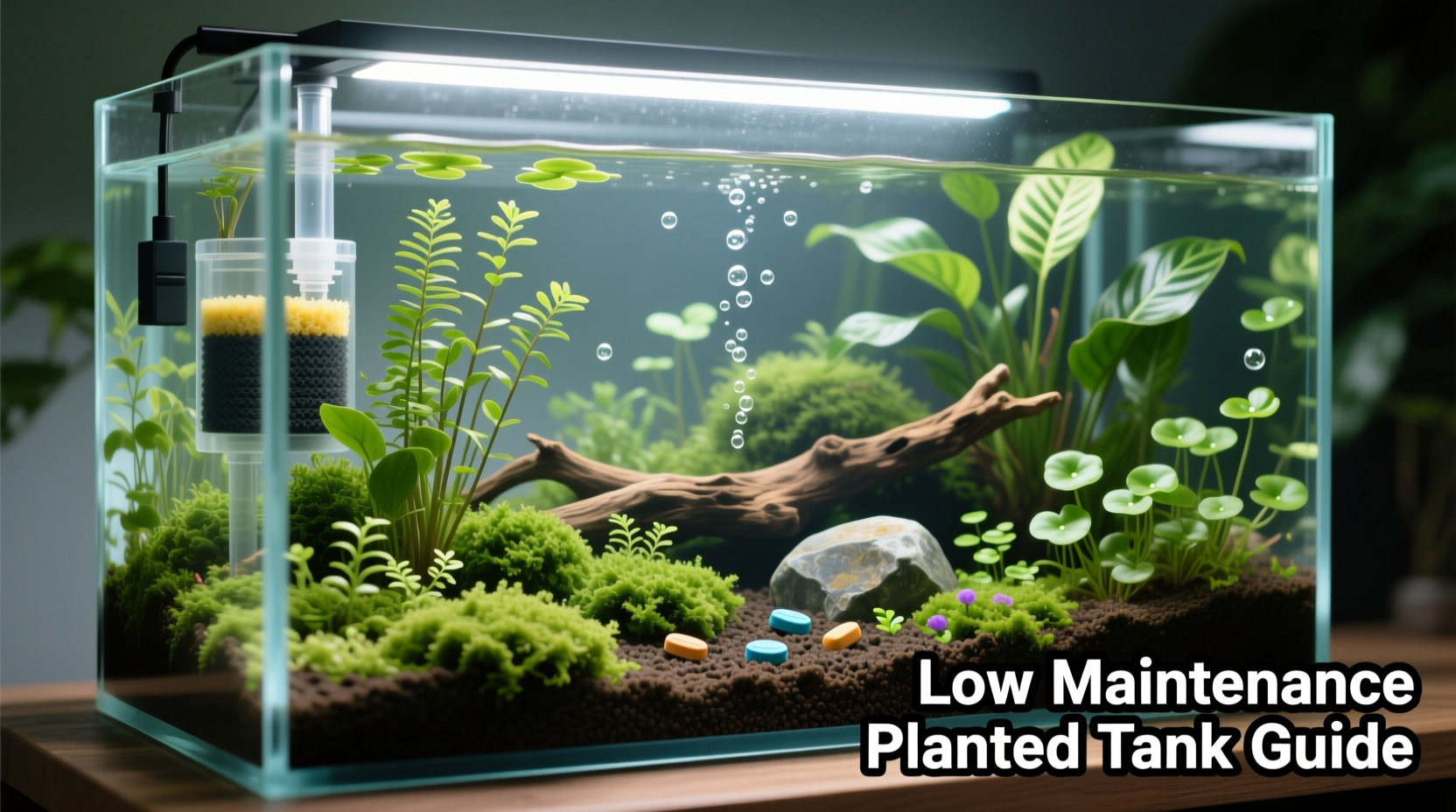
A successful planted tank begins with smart spatial planning. While larger tanks offer more stability due to greater water volume, a 10- to 20-gallon aquarium is ideal for beginners aiming for low maintenance. These sizes are large enough to buffer minor fluctuations in temperature and water chemistry but small enough to manage during cleaning.
Choose a location away from direct sunlight to prevent algae blooms. Sunlight encourages rapid algae growth, which competes with plants and increases maintenance demands. Also, avoid placing the tank near heating vents or drafty windows, as sudden temperature shifts stress both plants and fish.
Essential Equipment Checklist
- 10–20 gallon glass aquarium
- Submersible heater (if keeping tropical species)
- Hang-on-back or sponge filter with adjustable flow
- Fully enclosed LED hood or strip light with timer
- Gravel vacuum siphon
- Water test kit (ammonia, nitrite, nitrate, pH)
- Thermometer
For a truly low-maintenance system, opt for an all-in-one aquarium kit that includes built-in filtration and lighting. These streamlined setups reduce clutter and simplify operation.
Choosing Hardy, Low-Light Plants
Not all aquatic plants demand high-intensity lighting or liquid fertilizers. The foundation of a beginner-friendly planted tank is selecting species that thrive under moderate conditions and grow slowly enough to minimize trimming.
Anubias, Java fern, and Java moss are among the most resilient options. They attach naturally to driftwood or rocks rather than needing deep substrate planting. Cryptocoryne wendtii and Amazon sword tolerate a range of water parameters and spread gradually, filling out the midground over time. Vallisneria spirals upward with minimal care and helps oxygenate the water column.
“Beginners should focus on ‘set-and-forget’ plants like Anubias nana and Microsorum pteropus. These have survived in simple systems for decades.” — Dr. Lena Park, Aquatic Botanist
Plant diversity supports biological balance. A mix of foreground, midground, and background species creates visual depth while maximizing photosynthesis and nutrient uptake. Avoid fast-growing stem plants like Hygrophila or Rotala unless you’re prepared for weekly pruning.
| Plant Name | Light Needs | CO2 Required? | Growth Rate | Care Level |
|---|---|---|---|---|
| Anubias barteri | Low | No | Slow | Easy |
| Java Fern (Microsorum) | Low-Moderate | No | Slow | Easy |
| Cryptocoryne wendtii | Moderate | No | Medium | Easy |
| Vallisneria americana | Moderate | No | Fast (vertical) | Easy |
| Dwarf Sagittaria | Moderate | No | Medium | Moderate |
Building a Stable Substrate and Nutrient Base
While some beginners use plain gravel, a layered substrate significantly improves plant health and reduces long-term feeding needs. Start with a nutrient-rich base layer such as aquasoil or laterite, then cap it with inert material like sand or fine gravel to prevent cloudiness.
Aquasoils like ADA Aqua Soil or Fluval Plant & Shrimp Stratum release essential nutrients including iron, potassium, and trace elements over several months. They also lower pH slightly, which benefits soft-water plants like Cryptocorynes. However, they may initially darken the water—this tannin release is harmless and clears within a few weeks.
If you prefer a simpler, budget-friendly option, mix a small amount of laterite into the bottom third of your substrate before adding cap material. This provides root nutrition without altering water chemistry dramatically.
After planting, consider adding root tabs every 2–3 months instead of dosing liquid fertilizers weekly. Root-fed plants are healthier and less likely to encourage algae.
Step-by-Step Setup Timeline
- Day 1: Clean tank and place on stand. Add substrate layers (nutrient base + cap).
- Day 1 (cont.): Install filter, heater, thermometer, and lighting. Arrange hardscape (driftwood, rocks).
- Day 2: Fill tank slowly with dechlorinated water. Attach epiphytes (Anubias, Java fern) to hardscape.
- Day 3: Plant rooted species (Crypts, swords). Plug in heater and filter.
- Days 4–7: Run tank without fish. Monitor ammonia and nitrite daily. Perform 25% water change if ammonia exceeds 0.5 ppm.
- Day 10: After nitrite drops to zero, add 1–2 hardy fish (e.g., otocinclus or cherry shrimp) to begin cycling.
- Week 4: Once cycle completes (ammonia = 0, nitrite = 0, nitrate present), gradually add more livestock.
- Month 2 onward: Trim only when necessary. Dose root tabs quarterly. Test water monthly.
This gradual process allows beneficial bacteria to colonize the filter media and substrate, preventing “new tank syndrome” that kills sensitive species.
Managing Lighting and Algae Prevention
Lighting is often mismanaged in beginner tanks. Too much light leads to algae; too little causes plant decline. For low-tech setups, aim for 6–8 hours of LED illumination per day. Use a timer to maintain consistency—plants thrive on predictable photoperiods.
Start with 6 hours and observe plant response. If stems stretch or leaves pale, increase by 30-minute increments. Most low-light species do well at 20–30 PAR (photosynthetically active radiation), achievable with standard aquarium LEDs placed close to the water surface.
To combat algae naturally:
- Add algae-eating crew: Nerite snails, Amano shrimp, or Siamese algae eaters.
- Avoid overfeeding fish—the excess nutrients feed algae.
- Perform regular 20–30% water changes every 2–3 weeks.
- Remove visible algae manually with a magnetic scraper or soft brush.
Mini Case Study: Sarah’s 15-Gallon Beginner Tank
Sarah, a first-time aquarist, wanted a beautiful tank without spending hours each week on upkeep. She chose a 15-gallon rectangular tank with a built-in LED hood and hang-on-back filter. Her substrate consisted of a thin layer of laterite topped with black quartz sand.
She planted Anubias nana behind a piece of driftwood, attached Java fern to rockwork, and added three Cryptocoryne wendtii in the midground. Vallisneria was planted toward the back to create height. She introduced six neon tetras and two otocinclus after a four-week nitrogen cycle.
By limiting lighting to 7 hours daily and performing 25% water changes every three weeks, her tank remained stable. Eight months later, she reports only one minor algae outbreak—resolved by adding a nerite snail—and has never used liquid fertilizer. “It feels like I barely do anything,” she says, “but it looks amazing.”
Frequently Asked Questions
Can I keep a planted tank without a filter?
It’s not recommended. Even low-maintenance tanks produce waste from fish and decaying matter. A filter houses beneficial bacteria that break down toxins. At minimum, use a sponge filter driven by an air pump—it’s quiet, efficient, and safe for shrimp and fry.
Do I need CO2 injection for a beginner planted tank?
No. Many popular beginner plants thrive without supplemental CO2. Focus on low-light species and maintain good surface agitation to ensure natural gas exchange. CO2 systems add complexity and cost better suited for advanced layouts.
How often should I trim my plants?
In a low-maintenance setup, trimming may only be needed every 4–8 weeks. Slow growers like Anubias rarely need cutting. Fast vertical plants like Vallisneria can be trimmed when they reach the surface. Always remove yellowing or damaged leaves to prevent decay.
Conclusion: Simplicity Leads to Success
A low maintenance planted tank isn’t about doing less—it’s about designing smarter. By choosing resilient plants, setting up proper infrastructure, and establishing gentle routines, beginners can enjoy a living aquatic display that enhances their space and supports healthy fish life. The goal isn’t perfection but sustainability: a tank that thrives even when life gets busy.
Start small, stay consistent, and let nature do much of the work. Over time, you’ll gain confidence to experiment with new species or techniques—but for now, focus on balance, patience, and observation. Your underwater garden will reward you with calm, color, and connection.




 浙公网安备
33010002000092号
浙公网安备
33010002000092号 浙B2-20120091-4
Comments
No comments yet. Why don't you start the discussion?