
For parents navigating the digital world with young children, YouTube Kids offers a curated space designed to be safer than the main YouTube platform. However, even within this controlled environment, supervision and customization are essential. With children often using tablets, smartphones, smart TVs, and other devices, managing what they watch requires consistent parental controls across all platforms. Setting up these safeguards isn’t just about restricting content—it’s about creating a balanced, educational, and secure digital experience tailored to your child’s age and maturity level.
Understanding YouTube Kids and Its Parental Control Features
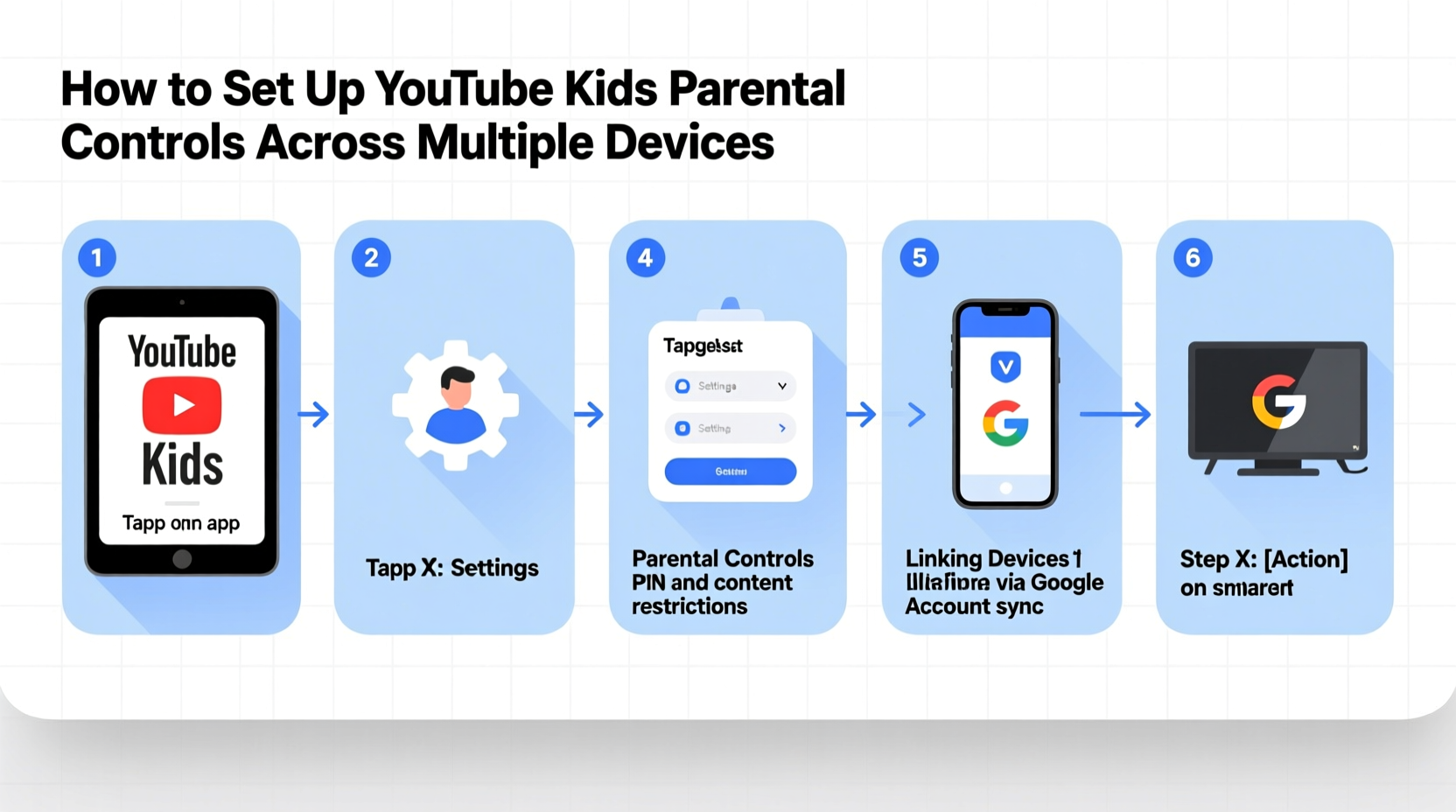
YouTube Kids is a standalone app developed by Google specifically for children aged 12 and under. Unlike regular YouTube, it features algorithmically filtered content, limited search functionality, and built-in parental settings. The app categorizes videos into sections such as “Shows,” “Music,” “Learning,” and “Explore,” helping guide younger viewers toward appropriate material.
The core of YouTube Kids’ safety lies in its parental control dashboard, accessible only through a PIN-protected section. From here, parents can:
- Set time limits for daily usage
- Approve or block specific videos, channels, or apps
- Filter content by age group (4 and under, 5–7, 8–9, 10–12)
- Disable search entirely, allowing only pre-approved content
- Monitor viewing history and activity
These tools are powerful, but their effectiveness depends on consistent configuration across every device your child uses—whether it's an iPad, Android phone, Amazon Fire tablet, or smart TV.
“Digital safety starts with proactive setup. Parents who configure controls early report higher confidence in their children’s online experiences.” — Dr. Linda Chen, Child Development & Technology Researcher, Stanford University
Step-by-Step Guide: Setting Up Controls on Different Devices
To maintain uniform safety standards, follow this step-by-step process for each type of device your family uses. While the interface may vary slightly between operating systems, the underlying parental control functions remain consistent.
1. Install and Launch the YouTube Kids App
- Download the YouTube Kids app from the Apple App Store, Google Play Store, or Amazon Appstore.
- Open the app and select “Create Profile” for your child.
- Choose the appropriate age range, which influences default content filtering.
2. Access the Parental Controls Section
- Tap the lock icon (usually in the top corner) labeled “Settings for Parents.”
- Create a four-digit PIN that only adults know. Avoid obvious combinations like “1234.”
3. Customize Content Filters by Age
Select the age group that best matches your child’s developmental stage. Each tier adjusts content availability:
| Age Group | Content Type | Search Functionality |
|---|---|---|
| 4 and under | Basic animations, nursery rhymes, simple learning clips | No search; only hand-picked videos |
| 5–7 | Educational shows, beginner science, storytime | Search limited to approved terms |
| 8–9 | Mild adventure themes, basic DIYs, music videos | Filtered search with monitoring |
| 10–12 | Pre-teen influencers, hobby tutorials, documentaries | Expanded search with manual approval option |
4. Set Daily Time Limits
- Navigate to “Daily Timer” in the parent settings.
- Choose a duration (e.g., 30 minutes, 1 hour).
- Enable “Ask to Extend Time” if you want your child to request more time instead of automatic shutdown.
5. Approve or Block Specific Content
- Go to “Approved Content” or “Blocked Content” sections.
- Add individual videos or channels by URL or title.
- Use this feature to allow trusted educational series (e.g., SciShow Kids) while blocking questionable ones.
Syncing Settings Across Multiple Devices
One of the biggest challenges parents face is ensuring consistency. A setting applied on a child’s iPad won’t automatically transfer to a shared Kindle Fire or a smart TV unless managed correctly.
YouTube Kids does not offer cloud-based profile syncing by default. This means you must manually replicate settings on each device. However, using a centralized approach reduces errors and saves time.
Best Practices for Cross-Device Consistency
- Create a master settings document: Note down your chosen age filter, PIN, allowed apps, and time limits. Keep it in a secure place (e.g., password manager or printed sheet).
- Label devices by user: Assign profiles based on who uses which device. For example, “Emma’s iPad – Age 6” or “Family TV – Shared Profile.”
- Update all devices simultaneously: When changing a setting (e.g., tightening search), apply it across every device within 24 hours.
- Use family accounts wisely: On Android and iOS, consider setting up Family Link or Screen Time restrictions alongside YouTube Kids for layered protection.
Device-Specific Notes
- iOS (iPhone/iPad): Combine YouTube Kids settings with Apple’s Screen Time to enforce app limits system-wide.
- Android: Use Google Family Link to remotely monitor and manage YouTube Kids usage, including pausing the app at bedtime.
- Amazon Fire Tablets: These run a modified version of Android. Ensure the YouTube Kids app is updated via the Amazon Appstore, and double-check that search is disabled if needed.
- Smart TVs (Samsung, LG, Android TV): The YouTube Kids app on TV lacks some mobile features, such as granular channel approvals. Rely more heavily on age filtering and timer settings.
“Parents often assume one-time setup is enough. But children adapt quickly—and so should your controls.” — Mark Rivera, Digital Wellness Consultant
Real-World Example: The Thompson Family Setup
The Thompsons have two children: Mia, age 7, and Leo, age 10. They use three devices: Mia’s iPad, Leo’s Android tablet, and the living room Samsung Smart TV.
Initially, they set up YouTube Kids only on Mia’s iPad, assuming the same rules would carry over. However, Leo discovered he could search for gaming videos on his tablet, and both kids occasionally watched longer than intended on the TV, where no timer was set.
After a week of inconsistent viewing habits, Mrs. Thompson took action. She created a spreadsheet listing:
- PIN: 8361 (not shared with kids)
- Mia’s profile: Age 5–7, no search, 45-minute daily limit
- Leo’s profile: Age 8–9, filtered search, 75-minute limit
- All devices: No autoplay, no unapproved channels
She spent one evening reconfiguring each device using the master plan. She also linked both children’s Android accounts to Family Link, enabling remote pause and usage alerts. Within days, screen time became predictable, and off-limit content requests dropped significantly.
Common Pitfalls and How to Avoid Them
Even well-intentioned setups can fail due to oversights. Here are frequent mistakes and their solutions:
| Pitfall | Consequence | Solution |
|---|---|---|
| Using the same PIN across devices | Kids guess it faster; security weakens | Use unique PINs or rotate them quarterly |
| Not disabling search on older age profiles | Exposure to borderline content | Review search logs weekly; disable if misuse occurs |
| Ignoring smart TV settings | Unmonitored extended viewing | Treat TV like any other device—apply timers and filters |
| Skipping updates | Security gaps or missing features | Enable auto-updates or check monthly |
FAQ: Common Questions About YouTube Kids Controls
Can I monitor what my child watches remotely?
Yes, if you link the child’s device to a Google Account managed through Family Link (on Android) or use Apple Screen Time reports (on iOS). While YouTube Kids doesn’t offer live viewing history dashboards, you can check recently watched videos directly in the app during the next session.
What happens when my child turns 12?
The app does not automatically expire. However, content becomes more mature as the age filter increases. Many parents transition their tweens to regular YouTube with restricted mode enabled and continued supervision. Consider having a conversation about digital responsibility before making the switch.
Is YouTube Kids completely safe?
No platform is 100% foolproof. Although YouTube Kids filters content aggressively, occasional inappropriate videos slip through. That’s why active parental involvement—regular check-ins, open dialogue, and customized blocking—is critical. The app is a tool, not a replacement for engagement.
Checklist: Complete Multi-Device Setup in 10 Steps
Follow this checklist to ensure full coverage across all devices:
- Download YouTube Kids on every device your child uses.
- Create individual profiles for each child, selecting correct age ranges.
- Set a strong, non-obvious PIN for parental access.
- Choose the appropriate content filter for each child.
- Disable search or enable filtered search based on maturity.
- Set daily time limits and enable “Ask to Extend” if desired.
- Manually approve educational channels and block unwanted ones.
- Repeat steps 2–7 on each device, using a master settings guide.
- Pair with device-level controls (Family Link, Screen Time, etc.).
- Review settings monthly and after major software updates.
Conclusion: Building a Safer Digital Environment Together
Setting up parental controls on YouTube Kids across multiple devices isn’t a one-off task—it’s an ongoing part of modern parenting. By taking the time to configure each device thoughtfully, maintaining consistent rules, and staying involved in your child’s digital journey, you create a foundation of trust and safety. Technology evolves rapidly, but your role as a guide remains constant. Start today, refine as you go, and remember: the goal isn’t to eliminate screen time, but to make it meaningful, balanced, and secure.




 浙公网安备
33010002000092号
浙公网安备
33010002000092号 浙B2-20120091-4
Comments
No comments yet. Why don't you start the discussion?