
Wool sweaters are timeless pieces—warm, breathable, and naturally moisture-wicking—but they’re also delicate. Even with careful handling, it’s easy for a favorite wool sweater to stretch out over time. Whether it’s from frequent wear, improper drying, or accidental machine washing, a stretched sweater can lose its shape and fit, leaving you wondering if it’s beyond repair. The good news is that in many cases, you can gently coax a wool sweater back to a closer-to-original size without causing damage. With the right technique, patience, and understanding of wool’s natural properties, you can restore your garment’s silhouette.
Understanding Wool and Why It Stretches
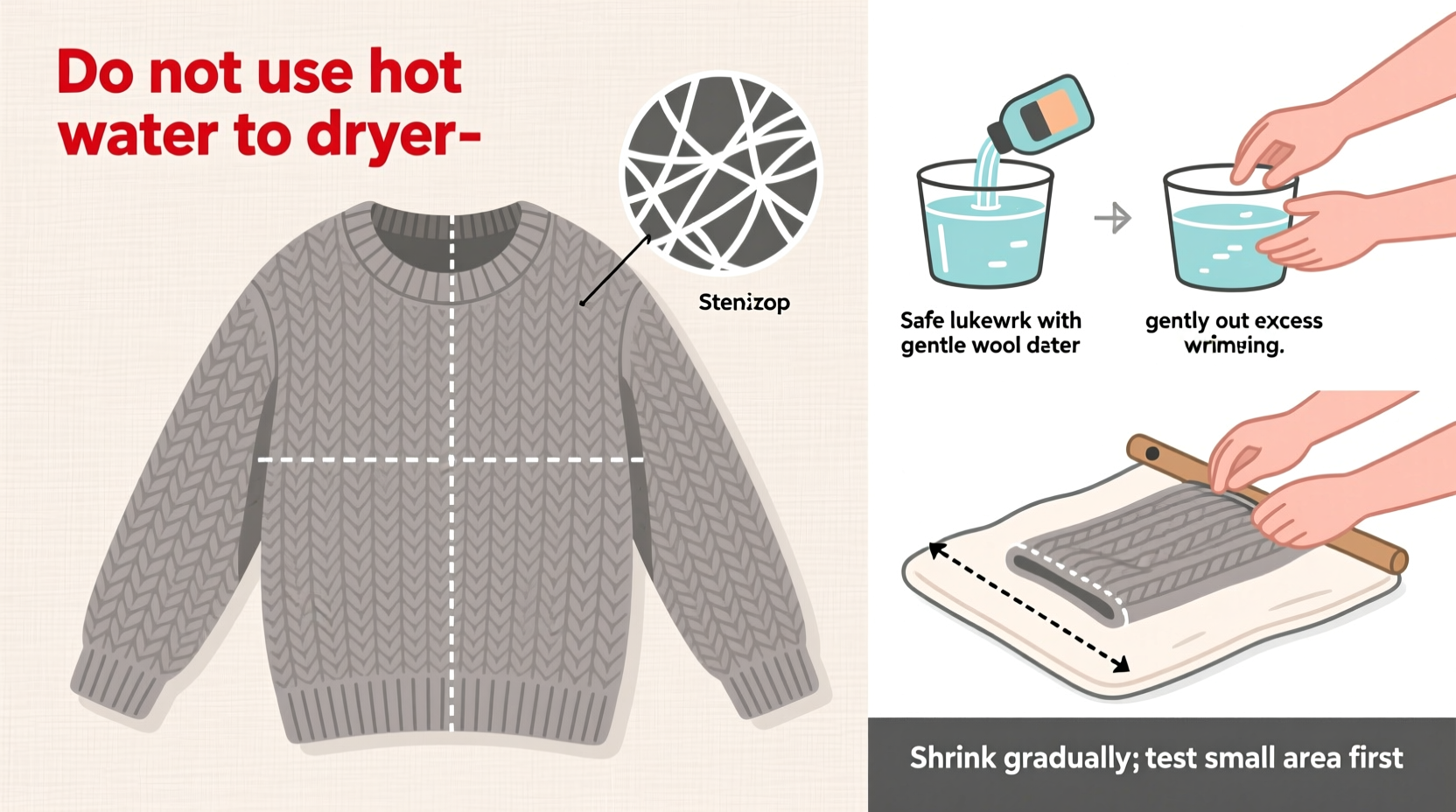
Wool is a protein-based fiber derived from sheep, known for its elasticity, insulation, and ability to recover from stress. However, this same elasticity makes wool susceptible to stretching when exposed to weight, moisture, or heat. When a wool sweater stretches, the fibers have been pulled beyond their natural resting point but not necessarily broken. This means they can often be coaxed back into alignment through controlled shrinking techniques.
The key lies in understanding how wool reacts to water and temperature. Wool fibers have microscopic scales on their surface. When wet and agitated—especially in warm or hot water—these scales can cling together and lock into place, a process called felting. Felting causes permanent shrinkage and is irreversible. While this might sound like a solution, uncontrolled felting can ruin a sweater entirely, making it stiff, misshapen, or unwearable.
The goal, then, isn’t aggressive shrinking but rather a controlled re-tensioning of the fibers. This involves relaxing the fibers with moisture, reshaping the garment, and allowing it to dry in the correct form. Done correctly, this method restores fit without compromising texture or integrity.
“Wool has memory, but only if treated with respect. Gentle heat and moisture can help it return to shape—but once felted, there’s no going back.” — Dr. Lydia Grant, Textile Scientist, Royal School of Needlework
Step-by-Step Guide: How to Shrink a Stretched Wool Sweater Safely
This method uses lukewarm water and careful reshaping to encourage the wool fibers to contract slightly while maintaining softness and drape. It avoids high heat and agitation, minimizing the risk of felting.
- Fill a basin with lukewarm water (30–35°C / 85–95°F)
Use enough water to fully submerge the sweater. Avoid hot water—it increases felting risk. Do not use boiling water under any circumstances. - Add a small amount of wool-safe detergent or hair conditioner
About one tablespoon of mild detergent or white hair conditioner helps relax the fibers. Conditioner contains proteins that can smooth and realign wool strands gently. - Submerge the sweater completely
Press it down gently to ensure even saturation. Let it soak for 10–20 minutes. Do not agitate, twist, or wring. - Drain the water and press out excess moisture
Do not rinse unless necessary. Gently press the sweater against the side of the basin to remove water. Never lift it while wet—that weight can cause further stretching. - Lay the sweater flat on a clean, dry towel
Roll the towel up with the sweater inside and press or step on it lightly to absorb more moisture. Repeat with a second dry towel if needed. - Reshape the sweater on a flat drying surface
Use a clean, dry towel or mesh drying rack. Measure the original dimensions if possible (check a similar-sized garment or label specs). Gently pull the sweater into shape, shortening sleeves, narrowing the body, and evening out the neckline. - Allow to air dry completely away from direct heat or sunlight
Drying can take 24–48 hours. Resist the urge to speed it up with a radiator, dryer, or hairdryer. Heat distorts fibers and may trigger unwanted shrinkage.
When and How to Use Mild Heat for Additional Shrinking
If the lukewarm soak doesn’t achieve enough contraction, a slightly warmer method can be attempted—but with caution. This approach carries a higher risk and should only be used if the sweater is already somewhat durable and not labeled as “superwash” or “machine washable,” which indicates chemical treatment that changes fiber behavior.
To apply mild heat:
- Follow steps 1–5 above, but increase water temperature to just below 40°C (104°F).
- Soak for no longer than 15 minutes.
- After towel-drying, reshape immediately while warm—heat increases pliability.
- Dry flat as before.
Note: This method may yield a 5–10% reduction in size, depending on wool type and original construction. Merino wool, for example, is finer and more sensitive than Shetland or Icelandic wool, so it requires extra care.
What Not to Do: Common Mistakes That Ruin Wool Sweaters
Many people attempt quick fixes that end up destroying their garments. Avoid these common errors:
| Action | Why It’s Harmful | Better Alternative |
|---|---|---|
| Putting the sweater in the washing machine | Agitation causes fibers to tangle and felt, leading to irreversible shrinkage and stiffness | Hand wash only in still water with minimal handling |
| Using hot water or boiling water | Triggers rapid felting; can reduce a sweater to half its size overnight | Stick to lukewarm or cool water (under 35°C) |
| Hanging the sweater to dry | Weight of water pulls down on fibers, especially at shoulders and sleeves | Always dry flat on a towel or mesh rack |
| Using regular laundry detergent | Alkaline formulas strip natural oils, weakening fibers and increasing brittleness | Use pH-neutral wool wash or hair conditioner |
| Tumbling in a dryer | Heat and tumbling action felt the fabric almost instantly | Air dry only—no exceptions |
Real Example: Restoring a Family Heirloom Sweater
Sarah from Vancouver inherited a hand-knit Fair Isle sweater from her grandmother. Worn frequently over decades, it had stretched significantly across the chest and dropped at the hem. The sleeves were two inches too long, and the fit was boxy and shapeless.
She tried laying it flat to dry after wearing, but that didn’t help. After researching safe methods, she followed the lukewarm soak technique with hair conditioner. She soaked the sweater for 15 minutes, pressed it dry in towels, then laid it on a blocking board. Using old photos of her grandmother wearing it, she estimated the original proportions and gently pulled the fabric inward along the sides and up at the cuffs.
After 36 hours of drying, the sweater had regained about 75% of its original snugness. The sleeves were shorter, the body less droopy, and the neckline sat properly again. It wasn’t identical to new, but it was wearable and respectful of its history. Sarah now stores it folded in a cedar drawer and avoids wearing it in rainy weather to prevent future stretching.
Checklist: How to Safely Restore a Stretched Wool Sweater
Follow this checklist to ensure you don’t miss critical steps:
- ✅ Confirm the garment is 100% wool or primarily wool (check the label)
- ✅ Gather supplies: wool-safe detergent or hair conditioner, clean towels, flat drying surface
- ✅ Fill basin with lukewarm water (never hot)
- ✅ Submerge sweater gently—do not agitate
- ✅ Soak 10–20 minutes
- ✅ Press out water without wringing
- ✅ Roll in towels to remove excess moisture
- ✅ Reshape precisely on a dry surface using measurements if available
- ✅ Allow full air drying (24–48 hours)
- ✅ Assess results—repeat only if necessary and with caution
Frequently Asked Questions
Can I shrink a wool blend sweater the same way?
It depends on the blend. If the sweater contains synthetic fibers like acrylic or polyester (e.g., 70% wool, 30% acrylic), shrinking will be less effective because synthetics don’t respond to moisture and heat like wool. The wool portion may contract slightly, but overall results will be limited. Always check the care label and proceed cautiously.
Will this method work on a felted sweater?
No. If the sweater has already undergone felting—meaning it’s stiff, dense, and no longer elastic—the fibers are permanently matted. You cannot “unfelt” wool. At that point, the best option is repurposing the fabric into patches, coasters, or craft projects.
How can I prevent my wool sweater from stretching again?
Store it folded, never hung. Hand wash gently every 3–5 wears, and always dry flat. Avoid carrying heavy bags on the shoulder while wearing wool sweaters, as constant weight pulls at the fabric. Rotate usage to reduce strain on individual garments.
Expert Insight: The Science Behind Wool Recovery
According to Dr. Elena Torres, a textile chemist at the University of Leeds, wool’s ability to partially rebound comes from its molecular structure.
“Keratin, the protein in wool, has both crystalline and amorphous regions. The amorphous zones allow flexibility and movement. When we introduce moisture and gentle heat, hydrogen bonds break temporarily, letting us reposition the fiber. As it dries, new bonds form in the desired shape. It’s not true shrinking—it’s strategic re-setting.” — Dr. Elena Torres, Textile Chemist
This explains why timing and temperature matter so much. Too much heat creates chaotic bond formation, resulting in felting. Controlled conditions allow intentional restructuring.
Final Thoughts: Patience Over Force
Restoring a stretched wool sweater isn’t about drastic measures—it’s about thoughtful intervention. There’s no magic trick to snap a garment back to factory condition, but there is a reliable, science-backed process to improve fit and prolong life. Success hinges on patience, proper tools, and resisting the temptation to rush with heat or machines.
Every wool sweater has a story. Maybe it’s been worn through winters, gifted between generations, or traveled across countries. Bringing it back to shape isn’t just practical—it’s an act of preservation. With the right care, a well-made wool sweater can last decades, adapting not just to your body, but to your life.




 浙公网安备
33010002000092号
浙公网安备
33010002000092号 浙B2-20120091-4
Comments
No comments yet. Why don't you start the discussion?