
Slicing a green bell pepper may seem like a simple kitchen task, but doing it correctly affects both safety and cooking performance. Whether you're preparing a stir-fry, stuffing peppers, or adding crunch to a salad, the way you cut the pepper influences texture, cooking time, and presentation. Many home cooks remove seeds and membranes inefficiently or risk injury with improper knife handling. Mastering this foundational skill ensures cleaner cuts, reduces waste, and enhances your overall culinary efficiency. This guide breaks down the precise method used by professionals, explains why each step matters, and provides practical advice for consistent results every time.
Definition & Overview
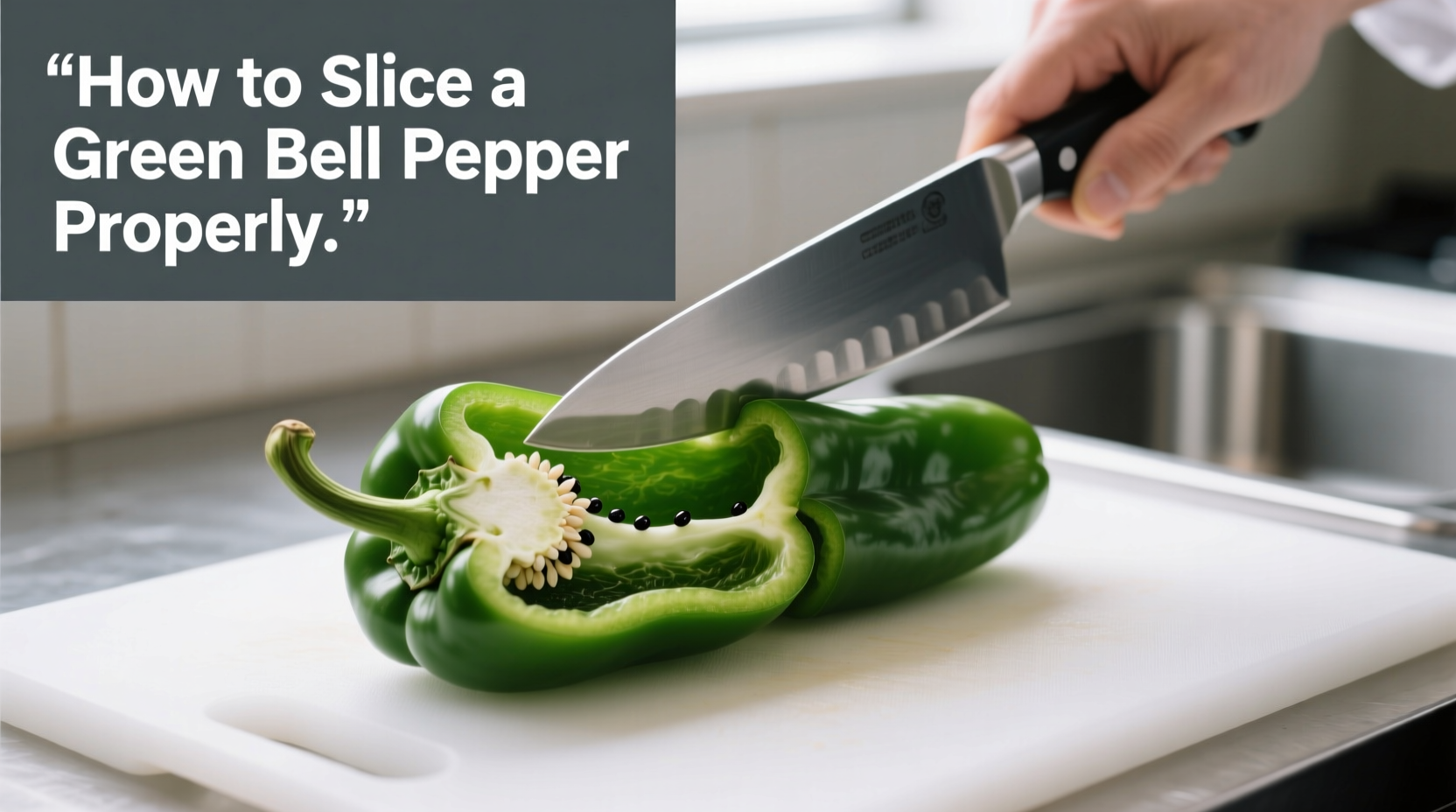
The green bell pepper (Capsicum annuum) is an unripe cultivar of the sweet pepper family, harvested before it matures into red, yellow, or orange varieties. Unlike hot chili peppers, it contains negligible capsaicin, making it entirely mild in heat. It belongs to the nightshade family and is botanically classified as a fruit, though used as a vegetable in savory cooking. Its firm, crisp flesh and slightly bitter, grassy flavor make it ideal for raw applications and high-heat methods alike. Green bell peppers are widely available year-round, prized for their affordability, versatility, and nutrient density—rich in vitamin C, vitamin K, and antioxidants.
In culinary contexts, slicing refers to cutting the pepper into flat, uniform pieces suitable for sautéing, roasting, grilling, or layering in casseroles. The goal is to produce even slices that cook uniformly while removing inedible components such as the core, stem, and inner membranes efficiently.
Key Characteristics
| Characteristic | Description |
|---|---|
| Flavor Profile | Grassy, slightly bitter, vegetal; less sweet than ripe (red/yellow) peppers |
| Aroma | Fresh, green, mildly pungent when raw; becomes sweeter when cooked |
| Color & Form | Vibrant green exterior; thick-walled, blocky shape with four lobes at base |
| Heat Level | Non-spicy (0–100 SHU on Scoville scale) |
| Culinary Function | Adds texture, color, and structure; serves as base ingredient in salsas, sauces, and sautés |
| Shelf Life (Whole) | 7–14 days in refrigerator crisper drawer |
| Shelf Life (Sliced) | 3–5 days when stored airtight in refrigerator |
Practical Usage: How to Slice a Green Bell Pepper Step by Step
Proper slicing begins with selecting a fresh, firm pepper free of wrinkles or soft spots. A well-cut pepper should yield clean, seed-free slices without jagged edges or wasted flesh. Follow these steps for optimal precision and safety:
- Wash and dry the pepper. Rinse under cool running water to remove surface residues. Pat dry with a clean towel to improve grip and prevent slipping during cutting.
- Trim the top and bottom. Place the pepper upright on a stable cutting board. Using a sharp chef’s knife, slice about ¼ inch off the stem end (top), then repeat at the blossom end (bottom) to create two flat surfaces.
- Stand the pepper upright. With both ends cut, the pepper can now stand firmly. This stability allows controlled, vertical cuts along the natural seams.
- Remove the core and ribs. Insert the tip of the knife near the center core and cut downward, following one of the outer ridges. Repeat around the interior to detach all four main sections from the central rib structure. Discard the core and attached seeds.
- Lay flat and slice. Take each quartered section and place it skin-side down. Trim any remaining white membrane from the inside. Then, depending on desired use:
- For julienne strips: Cut lengthwise into thin matchsticks (~¼ inch wide).
- For diced pieces: After julienning, rotate 90 degrees and cut crosswise to desired cube size.
- For flat slices: Cut horizontally across the width of the pepper section into rings or ovals.
- Store or use immediately. Use within two hours for peak freshness, or transfer to an airtight container lined with paper towel to absorb moisture.
Professional Tip: Always use a sharp knife. A dull blade requires more force, increasing slip risk and crushing cell walls, which leads to faster spoilage and loss of crispness. A 6–8 inch chef’s knife offers the best balance of control and reach for this task.
Variants & Types of Bell Peppers
While green is the most common form due to early harvest, bell peppers mature through a color spectrum that affects flavor, nutrition, and usage:
- Green Bell Peppers: Unripe stage; firmer texture, lower sugar content, slightly bitter taste. Best for dishes requiring structural integrity (e.g., fajitas, kebabs).
- Yellow Bell Peppers: Mid-maturity; sweeter than green, with citrus-like brightness. Ideal for salads, roasting, and blending into soups.
- Orange Bell Peppers: Transitional phase between yellow and red; balanced sweetness and acidity. Excellent for grilling and purees.
- Red Bell Peppers: Fully ripe; highest sugar content, richest in vitamins A and C. Preferred for sauces, marinades, and caramelized preparations.
All types share similar anatomy and slicing techniques, but riper peppers have thinner walls and greater juiciness, requiring gentler handling to avoid tearing.
Comparison with Similar Ingredients
Bell peppers are often confused with other members of the Capsicum genus. Understanding differences prevents substitution errors and improves dish outcomes.
| Ingredient | Difference from Green Bell Pepper | When to Use Instead |
|---|---|---|
| Poblano Pepper | Darker green, heart-shaped, slightly spicy (1,000–2,000 SHU); thinner walls | Chiles rellenos, mole sauces, roasted salsas |
| Jalapeño Pepper | Smaller, cylindrical, medium heat (2,500–8,000 SHU); lacks thick flesh | Spicy salsas, pickled toppings, infused oils |
| Shishito Pepper | Long, wrinkled, very thin walls; 1 in 10 is spicy | Blistered appetizers, Asian-inspired stir-fries |
| Cubanelle Pepper | Lighter green, elongated, milder than bell but not identical | Frying, sandwiches, Dominican-style pastelón |
| Raw Green Chili (e.g., Anaheim) | Much spicier, fibrous texture, less crunchy | Southwestern stews, chilis, stuffed with meat/cheese |
Unlike these varieties, the green bell pepper’s defining trait is its complete lack of heat and dense, watertight cell structure—making it uniquely suited for applications where neutrality and crunch matter.
Practical Tips & FAQs
Should I peel a green bell pepper before slicing?
No. The skin is edible, nutritious, and helps maintain shape during cooking. Peeling is only necessary if a recipe calls for a smooth texture (e.g., certain infant foods or refined purées). Roasting first loosens the skin for easier removal.
Can I slice a bell pepper without removing the seeds first?
You can, but it's inefficient and unsafe. Cutting around the core increases knife slippage risk and makes achieving uniform slices difficult. Removing the core first gives access to clean, flat surfaces for precise slicing.
What’s the best knife for slicing green peppers?
A forged stainless steel chef’s knife between 6 and 8 inches in length provides optimal leverage and edge retention. High-carbon blades stay sharper longer but require more maintenance. Avoid serrated knives—they crush rather than slice.
Why do my sliced peppers get soggy in storage?
Excess moisture accelerates degradation. Always pat dry after washing and store in a breathable container with a paper towel liner. Never seal wet slices in plastic wrap.
Is there a way to reduce the bitterness of green peppers?
Yes. Blanching for 30 seconds in boiling water followed by an ice bath mellows harsh notes. Alternatively, sauté with onions and garlic, or roast at 425°F (220°C) for 20 minutes to develop natural sugars.
Can I freeze sliced green peppers?
Yes, but expect texture changes. Frozen slices become softer upon thawing, making them unsuitable for raw applications. Best used in cooked dishes like soups, stews, or casseroles. Freeze in a single layer on a tray before transferring to bags to prevent clumping.
Are green bell peppers less healthy than red ones?
No—they offer different nutritional profiles. Green peppers contain more chlorophyll and slightly higher levels of vitamin K and fiber. Red peppers have triple the vitamin A and nearly twice the vitamin C. Each has value depending on dietary goals.
Efficiency Hack: When prepping multiple peppers, batch-process each step: wash all first, then trim tops/bottoms, then de-core, then slice. This assembly-line approach saves up to 40% prep time.
Common Culinary Applications
Sliced green bell peppers play key roles across global cuisines:
- Stir-Fries (Chinese, Thai): Julienned slices added late in cooking retain crunch and bright color.
- Fajitas (Tex-Mex): Strips sautéed with onions caramelize slightly, forming a flavorful base.
- Ratatouille (French Provençal): Thin rounds layered with zucchini and eggplant absorb herb-infused oil.
- Greek Salads (Horiatiki): Diced pieces add texture contrast alongside cucumber and tomato.
- Stuffed Peppers (Eastern European/Mediterranean): Halved and deseeded, they serve as edible vessels for rice, meat, or legume fillings.
- Antipasto Platters (Italian): Marinated slices contribute acidity and bite when paired with olives and cured meats.
In restaurant kitchens, consistency in slice thickness ensures even cooking. Line cooks are trained to produce no more than a 1/16-inch variance across all pieces—a standard achievable only through proper technique and attention to detail.
“Uniformity isn’t just aesthetic—it’s functional. A 3mm slice renders predictably in a wok. A misshapen chunk absorbs seasoning unevenly and disrupts the eating experience.”
— Chef Elena Rodriguez, Executive Sous Chef, Bistro Lumière
Summary & Key Takeaways
Slicing a green bell pepper properly combines science, safety, and skill. By understanding its structure and applying precise technique, home cooks can achieve professional-grade results. Key points include:
- Always begin with a clean, dry pepper and a sharp knife to maximize control and minimize waste.
- Remove the core and ribs first by cutting along the natural seams, creating stable, flat sections for slicing.
- Choose slice type—julienne, dice, or ring—based on the intended dish and cooking method.
- Store sliced peppers in moisture-absorbing containers to extend freshness by several days.
- Differentiate green bell peppers from spicy chilies to avoid unintended heat in mild dishes.
- Batch-prep for efficiency, especially when cooking for families or meal prepping.
Mastery of basic vegetable prep elevates everyday cooking. Once you internalize the rhythm of trimming, coring, and slicing, the process becomes second nature—freeing mental space for creativity and flavor development. Practice this method consistently, and you’ll notice improved textures, better seasoning distribution, and fewer kitchen mishaps.
Now Try It: Next time you cook with green bell peppers, apply this technique and compare the results to your previous method. Notice the difference in speed, safety, and final dish quality.




 浙公网安备
33010002000092号
浙公网安备
33010002000092号 浙B2-20120091-4
Comments
No comments yet. Why don't you start the discussion?