
The word “banshee” carries a haunting presence in both folklore and modern language. Often associated with Irish mythology as a spirit whose wail foretells death, the term has found its way into literature, film, and everyday conversation. Yet, despite its cultural prominence, many people struggle with how to spell *banshee* correctly. Mispronunciations and phonetic assumptions often lead to errors that can undermine credibility in writing. Whether you're crafting a story, preparing a presentation, or simply want to expand your vocabulary, mastering the correct spelling of “banshee” is both practical and empowering.
Understanding the Word: Origin and Meaning
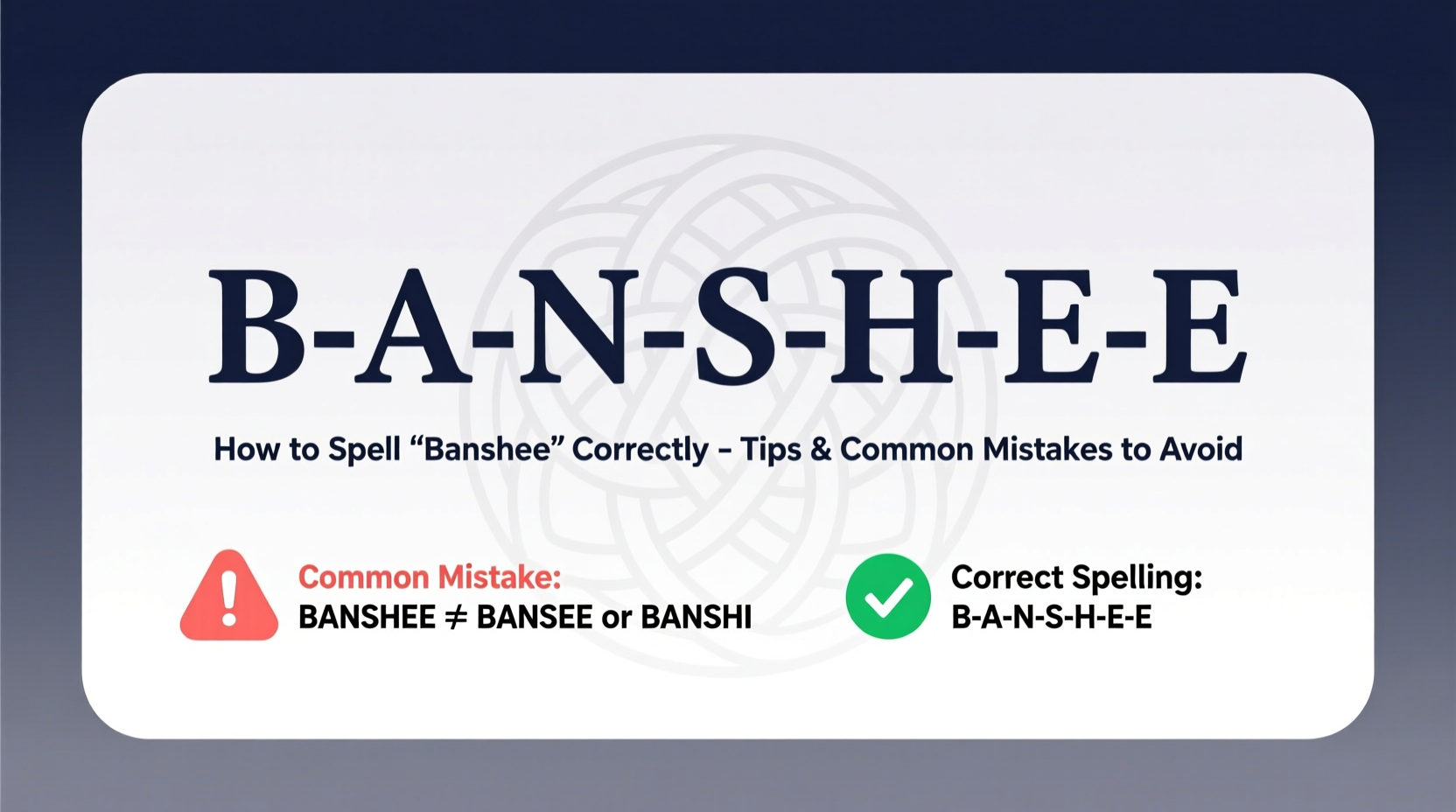
Before diving into spelling, it’s helpful to understand where the word comes from and what it means. “Banshee” originates from the Irish *bean sí*, which translates to “woman of the fairy mound” or “fairy woman.” In Gaelic tradition, the banshee is a female spirit known for her mournful cry, signaling an impending death in a family. Over time, the term evolved phonetically and orthographically into the anglicized “banshee.”
This etymological background explains why the spelling doesn’t follow typical English phonetic patterns. The double “e” at the end may seem redundant to some, but it reflects the elongated vowel sound in pronunciation — /ˈbænʃiː/. Recognizing the linguistic roots helps reinforce the correct spelling by linking sound, origin, and form.
Common Spelling Mistakes and Why They Happen
Spelling errors with “banshee” typically stem from mishearing the word or applying incorrect phonetic logic. Here are the most frequent misspellings and the misconceptions behind them:
- Banshy – This version replaces the double “e” with “y,” likely because “y” often makes a long “e” sound at the end of words (e.g., “lucky,” “baby”). However, “banshy” changes the word entirely and lacks any connection to the original term.
- Banshe – Dropping one “e” is a common truncation error. While some English words end in a single “e” after “sh” (like “cache”), “banshee” requires the double “e” to preserve pronunciation and authenticity.
- Banksee or Bansee – These variants attempt to phonetically represent the /ʃiː/ sound using “s” or “ks,” but they ignore the established spelling convention and create confusion.
- Bansheee – Adding an extra “e” may result from overemphasis on the long vowel sound, but three “e’s” at the end are unnecessary and incorrect.
These errors illustrate how reliance on sound alone can mislead even proficient English speakers. English spelling is notoriously irregular, and words borrowed from other languages often retain unique forms that defy simple phonetic decoding.
Proven Strategies for Spelling “Banshee” Correctly
To internalize the correct spelling of “banshee,” consider these evidence-based techniques used by linguists and educators:
- Visual Memorization: Write the word multiple times while saying it aloud. Engaging both visual and auditory memory strengthens retention.
- Mnemonic Devices: Create a memorable phrase such as “Beware A Noisy Spook Haunting Every Evening” to encode each letter.
- Etymology Awareness: Remember that “banshee” comes from *bean sí*. The “shee” part mimics the Irish “sí,” helping justify the unusual ending.
- Dictionary Drill: Look up the word daily for a week. Seeing it in print reinforces correct spelling through repetition.
- Use It in Context: Write sentences using “banshee” correctly. For example: “The wind howled like a banshee through the canyon.” Active usage builds confidence.
Checklist: How to Ensure You’re Spelling “Banshee” Right
- ✅ Starts with “ban” — not “bank” or “band”
- ✅ Contains “sh” — represents the /ʃ/ sound
- ✅ Ends with “ee” — not “y,” “e,” or “eee”
- ✅ Total letters: 8 (B-A-N-S-H-E-E)
- ✅ Pronounced /ˈbænʃiː/, not /ˈbænʃaɪ/
Do’s and Don’ts When Spelling “Banshee”
| Do’s | Don’ts |
|---|---|
| Spell it as B-A-N-S-H-E-E | Don’t write “banshy” or “banshe” |
| Pronounce the final “ee” clearly | Don’t assume it sounds like “shy” |
| Remember the Irish root: *bean sí* | Don’t add extra letters for emphasis |
| Use it in writing to reinforce memory | Don’t rely solely on autocorrect |
Real Example: A Writer’s Mistake and Recovery
Jessica, a freelance fantasy writer, once submitted a short story featuring a banshee character to a literary magazine. The editor returned feedback noting several instances of “banshy” throughout the manuscript. Though embarrassed, Jessica realized she had never double-checked the spelling, assuming the “y” was correct due to similar-sounding words like “pixie” or “butterfly.”
She took the correction seriously, adding “banshee” to her personal spelling journal and creating a mnemonic. She also began using a trusted dictionary plugin in her writing software. In her next submission, not only was the spelling perfect, but her improved attention to detail earned praise for overall professionalism. This small fix had an outsized impact on her credibility as a writer.
“Accurate spelling isn’t just about rules — it’s about respect for language and audience. One misspelled word can distract a reader from an otherwise powerful narrative.” — Dr. Alan Prescott, Linguistics Professor at Trinity College Dublin
FAQ: Common Questions About Spelling “Banshee”
Why does “banshee” have two e’s at the end?
The double “e” represents a long vowel sound (/iː/) and preserves the anglicized form of the Irish *bean sí*. It differentiates the word from others ending in “-y” or “-ey” and maintains consistency in pronunciation.
Is “banshee” spelled differently in British and American English?
No, “banshee” is spelled the same in both varieties of English. Unlike words such as “color”/“colour,” there is no regional variation in this spelling.
Can I use “banshee” as a metaphor in formal writing?
Yes, “banshee” is widely accepted in figurative contexts — for example, describing a piercing scream or relentless critic. Just ensure the spelling is correct to maintain tone and authority.
Conclusion: Mastering “Banshee” Builds Broader Language Confidence
Getting the spelling of “banshee” right might seem like a minor victory, but it reflects a deeper competence in navigating the complexities of English. Words borrowed from other languages, especially those with mythological or cultural weight, demand attention and respect. By learning not just how to spell “banshee,” but why it’s spelled that way, you equip yourself with tools that extend far beyond this single word.
Every time you pause to verify a tricky spelling, you strengthen your linguistic intuition. You become less reliant on guesswork and more confident in your written expression. That confidence shows in emails, essays, creative work, and professional communication.




 浙公网安备
33010002000092号
浙公网安备
33010002000092号 浙B2-20120091-4
Comments
No comments yet. Why don't you start the discussion?