
Quartz watches are often praised for their precision, affordability, and low maintenance. But not all quartz timepieces are created equal. While some last decades with minimal care, others falter within months due to poor materials or shoddy construction. Knowing how to distinguish a well-made quartz watch from a disposable one is essential whether you're building a collection, shopping for a gift, or investing in your first serious timepiece.
A high-quality quartz watch offers more than just accurate timekeeping—it reflects thoughtful design, durable materials, and reliable engineering. With so many options on the market, from luxury brands to fast-fashion accessories, understanding what sets premium models apart can save you money and disappointment in the long run.
Key Components of a High-Quality Quartz Movement
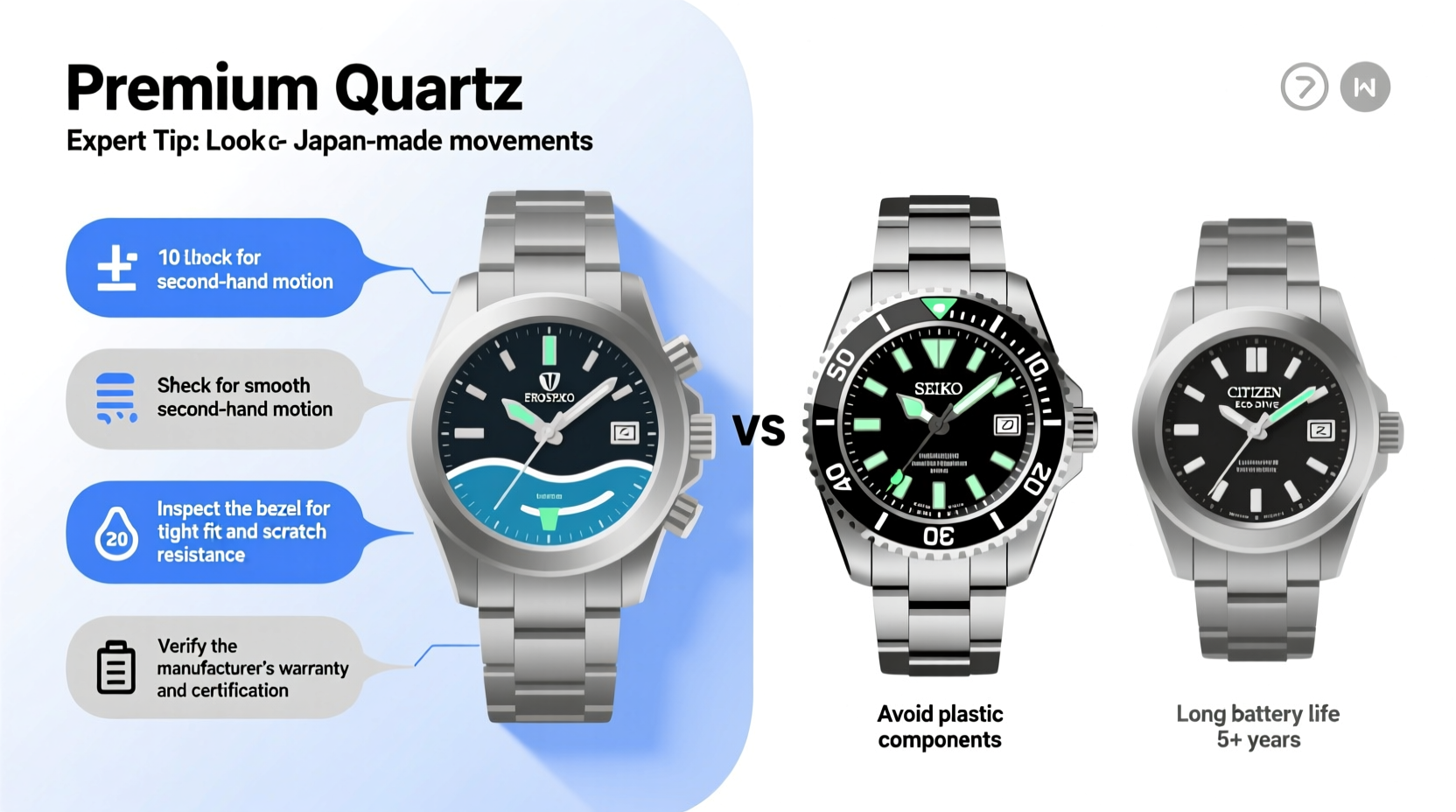
The heart of any quartz watch is its movement—the internal mechanism that powers the hands and complications. While most people assume all quartz movements are identical, there's a wide range in quality based on manufacturing standards, component sourcing, and finishing.
Premium quartz movements typically come from respected manufacturers like ETA (Switzerland), Seiko (Japan), or Miyota. These companies invest in tight tolerances, stable crystal oscillators, and extended battery life—often 3 to 5 years per battery. In contrast, budget movements may use generic components with inconsistent timing, leading to drifts of several seconds per month instead of the ideal ±0.5 seconds.
Look for watches labeled as \"high-accuracy quartz\" or those featuring thermo-compensation technology. This advanced feature adjusts for temperature fluctuations, which can otherwise affect timekeeping accuracy. Brands like Citizen (in their Chronomaster line) and Longines offer such precision in select models.
Build Quality: Materials That Matter
Beyond the movement, the physical construction determines longevity and comfort. A quality quartz watch should feel substantial without being overly heavy, indicating the use of solid materials rather than hollow or plated substitutes.
Case Material: Stainless steel (especially 316L or 304 grade) is the gold standard for durability and corrosion resistance. Avoid watches with “stainless steel plating” or unspecified alloys, as these wear off quickly. Titanium cases offer lightweight strength and hypoallergenic properties but are less common in entry-level models.
Crystal Type: The watch face is protected by a crystal, and the type used significantly impacts scratch resistance. Mineral glass is basic and affordable but prone to scratches. Sapphire crystal—used in most Swiss and Japanese premium brands—is second only to diamond in hardness and resists everyday abrasions far better. Some brands use synthetic sapphire with anti-reflective coating for improved legibility.
Strap & Clasp: Leather straps should be genuine or high-grade silicone/rubber with secure stitching. Metal bracelets need solid links and a locking clasp. Beware of flimsy butterfly clasps or glued strap attachments, which signal cost-cutting.
“Materials aren’t just about looks—they’re a direct indicator of how long a watch will survive daily wear.” — Daniel Reeves, Watchmaker and Horology Instructor at Boston School of Timekeeping
Water Resistance vs. Water Endurance: What You Need to Know
Many quartz watches advertise water resistance, but this doesn’t mean they’re built for swimming or diving. Ratings are measured in ATM (atmospheres) or meters, but real-world conditions like pressure changes, aging seals, and temperature shifts reduce effectiveness over time.
| Rating | Meaning | Suitable For |
|---|---|---|
| 3 ATM / 30m | Resists splashes | Handwashing, rain |
| 5 ATM / 50m | Withstands showering | Swimming (non-snorkeling) |
| 10 ATM+ / 100m+ | True water endurance | Snorkeling, diving* |
*Note: Even at 100m, regular seal checks and pressure testing every 1–2 years are recommended for active water use.
Step-by-Step Guide: How to Evaluate a Quartz Watch Before Buying
- Inspect the case back: Look for engravings indicating movement type (e.g., “ETA 955.112”), water resistance rating, and material (e.g., “Stainless Steel 316L”). A solid case back with detailed markings suggests transparency and pride in craftsmanship.
- Test the crown: It should turn smoothly without wobble. Pulling it out to set the time should engage clearly without sticking or looseness.
- Check the dial and hands: Alignment matters. Gaps between markers, crooked logos, or misaligned date windows indicate rushed assembly.
- Examine the lume: Apply light, then check in darkness. Genuine luminescent paint glows evenly and lasts several minutes. Painted-on strips that fade instantly are a red flag.
- Feel the weight: Compare similar-sized models. A heavier watch often means denser materials, though titanium exceptions exist.
- Review the brand’s service network: Even quartz watches need battery changes and occasional gasket replacements. Brands like Casio, Seiko, and Tissot have global support; obscure brands may not.
Real Example: Two Watches, One Price Point
Consider two $250 quartz watches: Brand A is an unknown label with a sapphire crystal and 100m water resistance claim. Brand B is a Seiko Solar chronograph with 100m rating and stainless steel case.
At first glance, both seem comparable. But upon inspection, Brand A’s case is marked “alloy,” the crown feels loose, and customer reviews mention fogging after pool use. Brand B has a textured dial, precise hand alignment, and uses Seiko’s solar-powered quartz movement—reducing battery waste and increasing reliability.
Within a year, Brand A develops condensation and requires costly repair. Brand B continues running flawlessly after five years, even surviving accidental drops and saltwater exposure. The difference? Proven engineering and honest specifications over marketing hype.
Expert Tips for Long-Term Care and Performance
- Clean the case and bracelet monthly with a soft cloth and mild soapy water—especially after sweat or salt exposure.
- Have water resistance tested annually if used near water regularly.
- Replace batteries at authorized centers to avoid damaging the movement during opening.
- Avoid extreme temperatures (above 60°C or below -10°C), which can impair circuitry and lubricants.
- Store in a dry place away from magnets—quartz movements contain small motors vulnerable to magnetic fields.
“Most quartz watch failures aren’t from the movement dying—they’re from neglected seals, corroded contacts, or impact damage due to poor case design.” — Lena Petrova, Senior Technician at Zurich Timeworks
Frequently Asked Questions
Do expensive quartz watches last longer than cheap ones?
Generally, yes—not because the quartz movement itself wears out, but because higher-end models use better sealing, stronger crystals, and more durable materials. A $300 Citizen Eco-Drive can easily outlast three $80 fashion watches over a decade.
Can a quartz watch be considered a “luxury” timepiece?
Absolutely. Brands like Breitling, Tag Heuer, and Grand Seiko produce quartz watches with hand-finishing, premium materials, and movements certified for chronometer accuracy. These are collectible and hold value better than standard models.
Is solar-powered quartz better than battery-powered?
Solar quartz eliminates frequent battery changes and reduces environmental impact. Models like Casio’s Tough Solar or Citizen’s Eco-Drive convert light into energy and often include power-saving modes. They’re especially reliable for outdoor enthusiasts or travelers.
Final Checklist: Is This Quartz Watch Worth It?
- ✅ Movement from a reputable manufacturer (Seiko, ETA, Citizen, etc.)
- Ensures consistent accuracy and serviceability.
- ✅ Solid stainless steel or titanium case
- Resists dents and corrosion over time.
- ✅ Sapphire or hardened mineral crystal
- Protects against scratches and maintains clarity.
- ✅ At least 5 ATM water resistance with clear labeling
- Provides real-world usability beyond splash protection.
- ✅ Balanced weight and smooth operation of controls
- Indicates attention to detail in build quality.
- ✅ Available service and warranty support
- Protects your investment and ensures longevity.
Conclusion
Spotting a quality quartz watch isn’t about brand names or price tags—it’s about recognizing the details that reflect enduring design and reliable performance. From the precision of the movement to the integrity of the materials and the realism of water resistance claims, every element contributes to a timepiece that serves you faithfully for years.




 浙公网安备
33010002000092号
浙公网安备
33010002000092号 浙B2-20120091-4
Comments
No comments yet. Why don't you start the discussion?