
The Samsung 25R 18650 battery is one of the most trusted lithium-ion cells on the market, widely used in vaping devices, flashlights, DIY power banks, and other high-drain electronics. With a nominal capacity of 2500mAh and a continuous discharge rate of 20A, it strikes an ideal balance between performance and safety. But its popularity has made it a prime target for counterfeiters. Fake 25R batteries are not only underperforming—they can be dangerous. Overheating, venting, or even thermal runaway have been reported with counterfeit cells. Knowing how to distinguish genuine Samsung 25Rs from clones isn’t just about value—it’s about safety.
Why Counterfeit 25R Batteries Are Dangerous
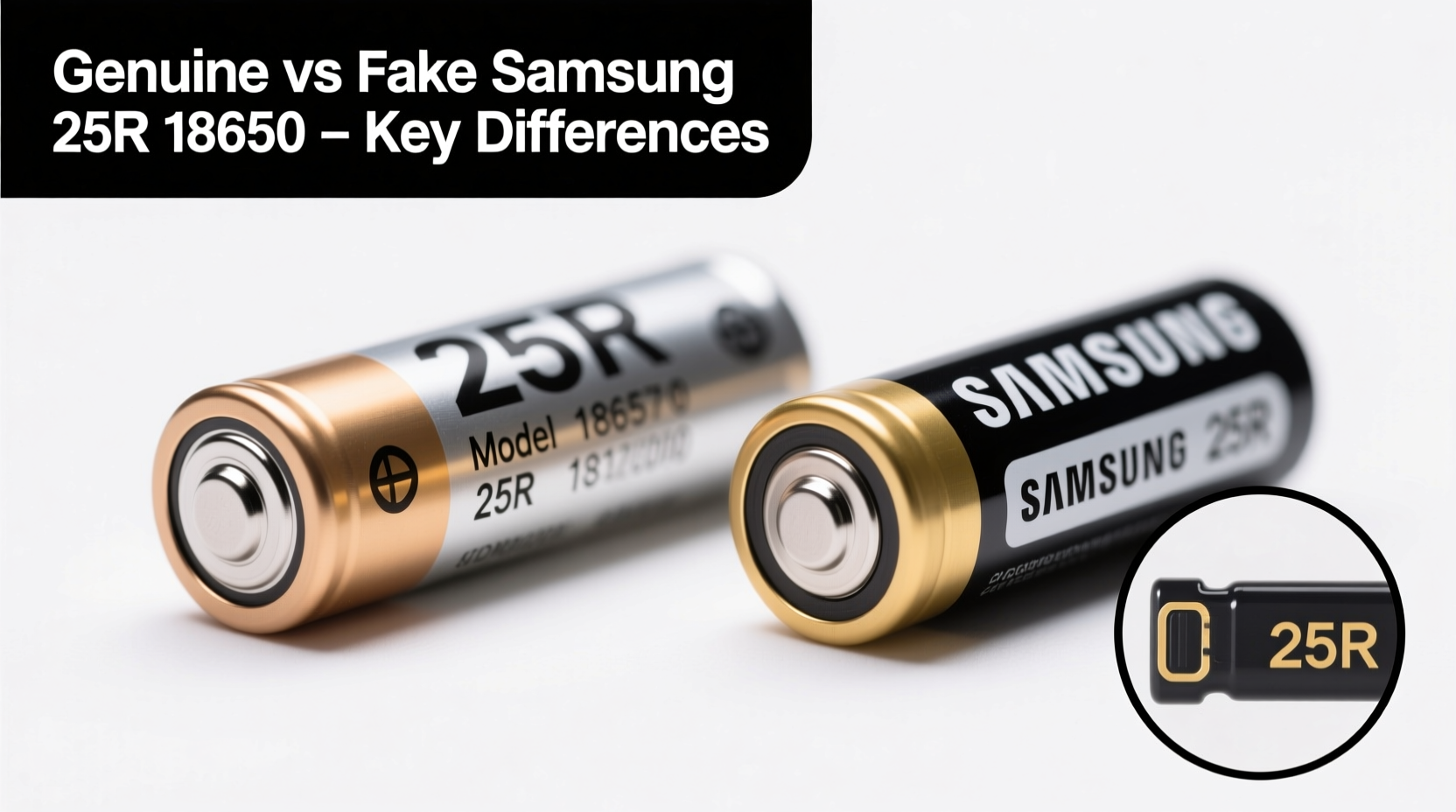
Fake 18650 batteries often use inferior materials, lack proper quality control, and misrepresent their electrical characteristics. A counterfeit cell labeled as a 25R might claim 2500mAh capacity and 20A discharge but actually deliver less than half that in both categories. Worse, these cells frequently omit essential protection circuits and fail under stress.
According to the U.S. Department of Energy, improperly manufactured lithium-ion cells account for over 30% of battery-related fire incidents in consumer electronics. Many of these cases trace back to counterfeit or rewrapped cells sold as premium brands.
“Using a fake 18650 is like driving a car with faulty brakes—you might get by for a while, but when it fails, the consequences can be severe.” — Dr. Alan Reyes, Battery Safety Researcher at the National Institute of Standards and Technology
Physical Markings: The First Line of Defense
The original Samsung 25R has precise, laser-etched labeling applied directly to the steel casing. Counterfeits often use printed labels that can be scratched off or appear blurry.
Here’s what to look for on a genuine Samsung INR18650-25R:
- Full model number: “INR18650-25R” clearly etched near the positive cap.
- Manufacturer ID: “Samsung SDI” or “Samsung” marked on the side.
- Batch code: A short alphanumeric code (e.g., E12345) stamped near the negative terminal.
- No stickers: Authentic 25Rs do not have adhesive labels covering the body.
- Color consistency: Uniform matte black wrap with clean white printing.
Fakes often misspell “Samsung,” use incorrect fonts, or place text too close to the edges. Some counterfeiters even add fake certification logos like CE or RoHS—these mean nothing on individual cells and are easily forged.
Weight and Dimensions: Precision Matters
Genuine 18650 batteries adhere to strict dimensional standards. Even slight deviations can indicate a fake.
| Feature | Authentic Samsung 25R | Common Fake Indicators |
|---|---|---|
| Diameter | 18.40 ± 0.10 mm | Less than 18.3 mm or inconsistent |
| Height | 65.00 ± 0.20 mm | Shorter than 64.8 mm or longer than 65.3 mm |
| Weight | 46.5 – 47.5 grams | Below 45g or above 48g |
| Terminal protrusion | Flat or slightly raised button top | Excessively tall or recessed terminals |
Weigh your battery with a precision scale. A noticeably lighter cell likely uses lower-density materials and reduced active content, meaning less capacity and higher internal resistance.
Step-by-Step Guide to Verifying Your Samsung 25R
Follow this systematic approach to confirm authenticity:
- Inspect the label: Use a magnifying glass to check if text is etched or printed. Run a fingernail over the surface—real etching won’t peel.
- Measure dimensions: Use digital calipers to verify diameter and length.
- Weigh the cell: Compare against the standard 47g range.
- Check the wrapper alignment: On genuine units, the black shrink wrap ends cleanly without overlapping or gaps.
- Test voltage under load: Use a smart charger or multimeter to measure voltage drop when drawing 1A. Fakes sag below 3.8V quickly.
- Capacity test (optional): Discharge fully using a battery analyzer. Real 25Rs deliver 2450–2500mAh; fakes often fall below 2000mAh.
Where You Buy Matters Most
No matter how well you inspect, purchasing from unreliable sources increases risk. Even experienced users have been fooled by sophisticated fakes.
Reputable suppliers include:
- Mistral Hi-Fi (UK)
- 18650BatteryStore.com (USA)
- DeepBlueC (Germany)
- Akku-world.de (Germany)
Avoid:
- Amazon third-party sellers without direct distribution rights
- eBay listings offering “bulk packs” at unusually low prices
- AliExpress, Wish, or generic Chinese e-commerce sites
- Vendors selling multiple “branded” cells in mixed lots
“We’ve tested hundreds of ‘Samsung’ 25Rs from online marketplaces. Less than 40% were authentic. The rest were either rewraps or complete clones.” — BatteryBro, Independent Battery Testing Lab
Mini Case Study: How One Vaper Avoided Disaster
Mark, a daily vaper from Colorado, bought two “Samsung 25R” batteries from a popular discount vape shop online. After one week, he noticed his mod was overheating during use. Curious, he measured the battery weight—each cell was only 44.2g. He compared them to an older 25R he’d bought from a trusted vendor: 47.1g.
He disassembled one of the suspect batteries (using proper safety gear). Inside, the electrode winding was loose, and the electrolyte smelled burnt. He immediately stopped using them and contacted the seller, who refused a refund. Mark later submitted the cells to a local battery lab—the report confirmed they were rewrapped Chinese generics rated for only 10A discharge.
His vigilance prevented a potential fire. Now, he only buys from certified distributors and tests every new batch.
Do’s and Don’ts: Quick Reference
| Do | Don't |
|---|---|
| Buy from authorized battery specialists | Trust listings with “OEM” or “Grade A” claims |
| Verify etching, weight, and size | Assume packaging or branding equals authenticity |
| Use a quality charger like Nitecore or Xtar | Charge batteries on soft surfaces like beds or sofas |
| Store in plastic cases or protective sleeves | Carry loose batteries in pockets with coins or keys |
| Retest old batteries annually | Use damaged, dented, or swollen cells |
FAQ
Can I trust Samsung 25R batteries sold on Amazon?
Only if sold directly by Amazon or a verified distributor like 18650BatteryStore. Third-party sellers frequently offer counterfeits, even with “Fulfilled by Amazon” labels. When in doubt, avoid.
Are there any apps or scanners that detect fake batteries?
No reliable app exists. QR codes or NFC tags on fake batteries are easily copied. Physical inspection and electrical testing remain the only accurate methods.
Is it safe to buy used 25R batteries?
Generally no. Used cells may have hidden damage, reduced capacity, or internal shorts. Given the low cost of new authentic 25Rs ($5–$7), the risk isn’t worth the savings.
Final Thoughts: Safety Starts with Verification
The Samsung 25R is a benchmark in 18650 performance, but its reputation has attracted countless imitations. Spotting the difference requires attention to detail—laser etching, correct weight, precise dimensions, and responsible sourcing. Never rely solely on appearance or price. Invest in basic tools like a scale and calipers; they pay for themselves in peace of mind.
Beyond personal safety, responsible battery use protects others. A malfunctioning cell in a crowded space could lead to injury or property damage. By choosing authenticity and spreading awareness, you contribute to a safer, more informed community.




 浙公网安备
33010002000092号
浙公网安备
33010002000092号 浙B2-20120091-4
Comments
No comments yet. Why don't you start the discussion?