
Anime’s global popularity has surged in recent years, with weekly releases becoming cultural events for millions. While many series deliver stunning visuals and fluid motion, others struggle under tight production schedules and budget constraints. The result? Inconsistencies that can break immersion and disappoint even casual viewers. Recognizing poor animation isn’t just about nitpicking—it’s about understanding the craft behind movement, timing, and visual storytelling. Whether you're a seasoned otaku or a new viewer, knowing what to look for helps you appreciate high-quality work and identify when a studio is cutting corners.
Understanding Weekly Production Pressures
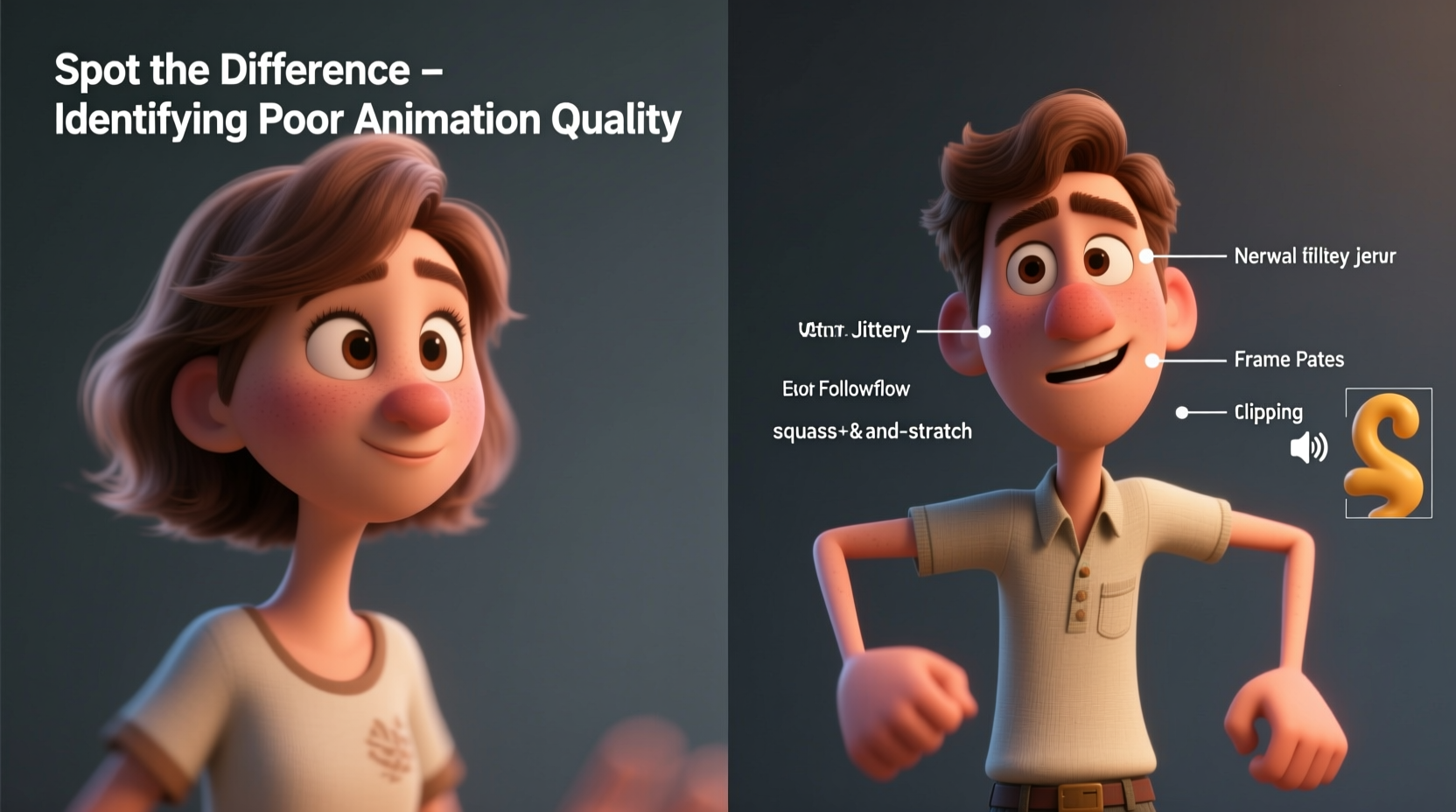
Most anime series follow a grueling production cycle. Episodes are often completed just days before airing, leaving little room for revisions. Studios operate under strict deadlines, limited budgets, and fluctuating workloads. This pressure frequently leads to compromises in animation quality—especially during mid-season slumps or climax arcs when demand peaks.
Unlike Western animation, which may use extensive pre-production and digital pipelines, Japanese studios often rely on traditional hand-drawn techniques combined with digital cleanup. When time runs short, shortcuts emerge: fewer frames, static backgrounds, repeated sequences, and heavy reliance on still images. These aren’t always signs of failure—they’re survival tactics in an industry notorious for overwork and underpayment.
“Animation isn’t just drawing; it’s the illusion of life. When that illusion breaks, audiences feel it—even if they don’t know why.” — Yuki Tanaka, Veteran Key Animator (Studio Ghibli, 2003–2015)
The key to spotting poor animation lies not in judging art style but in identifying where motion fails to support narrative intent. A minimalist aesthetic can be intentional and powerful. Poor animation, however, disrupts flow, weakens emotional impact, and signals technical shortcomings.
Visual Cues of Low-Quality Animation
Certain red flags consistently appear in subpar episodes. These aren't isolated mistakes but patterns that reflect systemic issues in execution. Here are the most common indicators:
- Limited frame count: Characters move in stiff, robotic motions. Natural gestures like blinking, breathing, or subtle facial shifts are absent.
- Off-model characters: Proportions shift dramatically between scenes. Eyes change size, limbs stretch unnaturally, or facial features drift from established designs.
- Reused animation cycles: Walk cycles, attacks, or transformations repeat without variation, sometimes lasting several seconds too long.
- Static camera angles during action: Fight scenes lack dynamic movement. Instead of tracking momentum, the camera stays fixed while sprites slide across the screen.
- Background-foreground disconnect: Backgrounds remain perfectly still while characters interact with objects that should move (e.g., doors opening, water splashing).
- Audio-video desynchronization: Lip flaps don’t match dialogue, or sound effects lag behind impacts.
Case Study: Episode 18 of \"Shinsekai Yori\"
In one infamous episode of the otherwise critically acclaimed series Shinsekai Yori, a crucial confrontation scene suffered from extreme cost-cutting measures. The characters stood frozen for nearly 40 seconds while voice acting and music carried the tension. Minimal eye blinks and slight head tilts were the only movements. Fans noted that the background—a forest clearing—was reused from earlier episodes with no parallax scrolling or environmental interaction.
While some defended this as artistic minimalism, closer inspection revealed inconsistencies: one character’s hair changed length between cuts, and shadows didn’t align with the implied light source. The studio later confirmed that the episode was completed 48 hours before broadcast due to staff illness and outsourcing delays. This real-world example illustrates how production stress directly impacts visual fidelity—even in high-budget projects.
Technical Indicators Beyond Movement
Poor animation extends beyond motion. It includes lighting, color consistency, and compositing choices that undermine believability.
| Indicator | What to Look For | Why It Matters |
|---|---|---|
| Color Bleeding | Colors spill outside line art, especially in dark scenes | Suggests rushed digital coloring or low-resolution assets |
| Flat Shading | No gradients or depth in skin, clothing, or objects | Reduces dimensionality; makes characters look like cutouts |
| Inconsistent Lighting | Shadows shift direction between frames or vanish entirely | Betrays lack of continuity planning |
| Missing Motion Blur | Fasts actions appear choppy instead of smoothed | Breaks realism in dynamic sequences |
| Overuse of CGI | 3D models (e.g., vehicles, creatures) clash with 2D style | Indicates budget allocation issues or integration failures |
These elements may seem minor individually, but collectively they erode visual cohesion. A well-animated show maintains internal logic: light sources stay consistent, textures react appropriately to movement, and transitions between scenes preserve spatial awareness.
Expert Tip: Watch the Hands
Hands are notoriously difficult to animate. They have complex joints, many moving parts, and expressive potential. In lower-quality episodes, animators often hide hands behind backs, inside sleeves, or out of frame entirely. When visible, fingers may fuse into mittens, rotate unnaturally, or disappear mid-scene. This isn’t just a quirk—it’s a telltale sign of skipped detail work.
Step-by-Step Guide to Analyzing an Episode
You don’t need formal training to evaluate animation quality. Follow this five-step process after watching any weekly release:
- Select a 2-minute segment – Choose a scene with moderate action or emotion (not just talking heads).
- Play at half speed – Use playback controls to slow down motion. Observe how many unique drawings occur per second.
- Check for lip-sync accuracy – Match mouth shapes to syllables. Mismatches indicate poor coordination between voice and animation teams.
- Inspect background integration – Do characters cast shadows? Does wind affect hair or clothing realistically?
- Compare to previous episodes – Note sudden drops in detail, such as simpler linework or reduced color palettes.
This method trains your eye to distinguish intentional stylistic choices from technical deficiencies. Over time, you’ll develop a sense for pacing, weight, and timing—core principles of believable animation.
Common Misconceptions About Poor Animation
Many viewers conflate art style with animation quality. A show with simple designs—like K-On! or Yotsuba&!—can feature excellent animation through precise timing and expressive subtlety. Conversely, a flashy series relying on rapid cuts and filters might mask shallow motion underneath.
Another myth is that all “still scenes” are lazy. In reality, strategic stillness can heighten drama, focus attention, or simulate theatrical staging. The difference lies in intentionality. Was the still image framed deliberately, with meaningful composition and lighting? Or does it feel like a placeholder dropped into a timeline?
Additionally, fan backlash often targets outsourcing studios unfairly. Some Korean and Chinese studios produce exceptional work under Japanese supervision. Blaming “foreign animators” ignores the collaborative nature of modern anime production and perpetuates harmful stereotypes.
Do’s and Don’ts of Critiquing Animation Quality
| Do | Don’t |
|---|---|
| Consider context: budget, schedule, studio reputation | Assume every flaw is due to incompetence |
| Separate art direction from animation execution | Confuse minimalism with poor quality |
| Credit strong individual scenes, even in weak episodes | Dismiss entire episodes based on one bad moment |
| Research production notes or animator credits | Spread unverified rumors about studio conditions |
| Use specific terms: “limited frames,” “off-model,” “color bleed” | Rely on vague insults like “lazy” or “trash” |
Checklist: How to Identify Poorly Animated Scenes
Keep this checklist handy when reviewing weekly episodes:
- ✅ Are character proportions consistent throughout the scene?
- ✅ Do movements feel weighty and grounded, or floaty and unnatural?
- ✅ Is there appropriate motion blur during fast actions?
- ✅ Do eyes blink at natural intervals, or remain frozen for too long?
- ✅ Are lip movements synchronized with speech?
- ✅ Does the background react to events (e.g., dust kicked up, reflections)?
- ✅ Are there repeated animation loops longer than 3 seconds?
- ✅ Is CGI integrated smoothly, or does it stand out awkwardly?
- ✅ Are lighting and shadows consistent across consecutive shots?
- ✅ Do hands and fingers move naturally, or are they hidden/missing?
Scoring below six affirmative answers suggests significant animation issues. However, always consider whether these flaws detract from storytelling or are simply stylistic choices.
Frequently Asked Questions
Can good storywriting compensate for poor animation?
Yes, in some cases. Series like Serial Experiments Lain or early Evangelion used still images and minimal motion to enhance psychological tension. However, sustained poor animation can weaken emotional payoff, especially in action or dramatic climaxes where timing is critical.
Why do some popular shows have bad episodes?
Even top-tier franchises face scheduling crunches. Major battle arcs, holiday delays, or staff turnover can force last-minute adjustments. Episodes near season finales or mid-courses are most vulnerable. Studios may prioritize key moments and simplify others to meet deadlines.
Is digital animation inherently worse than hand-drawn?
No. Digital tools streamline production and allow for greater precision. The issue isn’t the medium but how it’s used. Poorly executed digital animation—such as over-reliance on templates or low-frame-rate exports—can look cheaper, but skilled artists achieve remarkable results with software.
Conclusion: See With Knowledge, Not Just Eyes
Spotting poorly animated scenes isn’t about gatekeeping or elitism. It’s about developing a deeper appreciation for the labor-intensive art form that brings stories to life. Every flicker of motion, every shadow shift, represents hours of meticulous work—often under immense pressure. By learning to recognize the signs of strain, you gain insight into the realities of anime production and cultivate a more informed viewing experience.
Next time you watch a weekly release, pause, rewind, and observe. Ask not just *what* you’re seeing, but *how* it was made. Share your findings with fellow fans, credit standout animators, and advocate for better working conditions in the industry. Your awareness matters—not just as entertainment consumers, but as supporters of creative craftsmanship.




 浙公网安备
33010002000092号
浙公网安备
33010002000092号 浙B2-20120091-4
Comments
No comments yet. Why don't you start the discussion?