
Living with anxiety often means navigating unpredictable thoughts, racing minds, and emotional fluctuations that disrupt focus and daily structure. For many, the solution isn’t medication or therapy alone—but a blend of self-awareness, routine, and intentional reflection. Enter the bullet journal: more than just a planner, it’s a customizable system that combines organization with mindfulness, offering a tangible way to manage anxiety while staying on top of daily responsibilities.
Unlike pre-designed planners that force you into rigid formats, a bullet journal adapts to your needs. You decide what goes in it—whether it’s tracking moods, scheduling tasks, or processing emotions. When used intentionally, it becomes a tool for grounding, clarity, and gentle accountability. This guide walks through building a bullet journal specifically designed to support mental well-being and effective daily planning.
Why a Bullet Journal Works for Anxiety
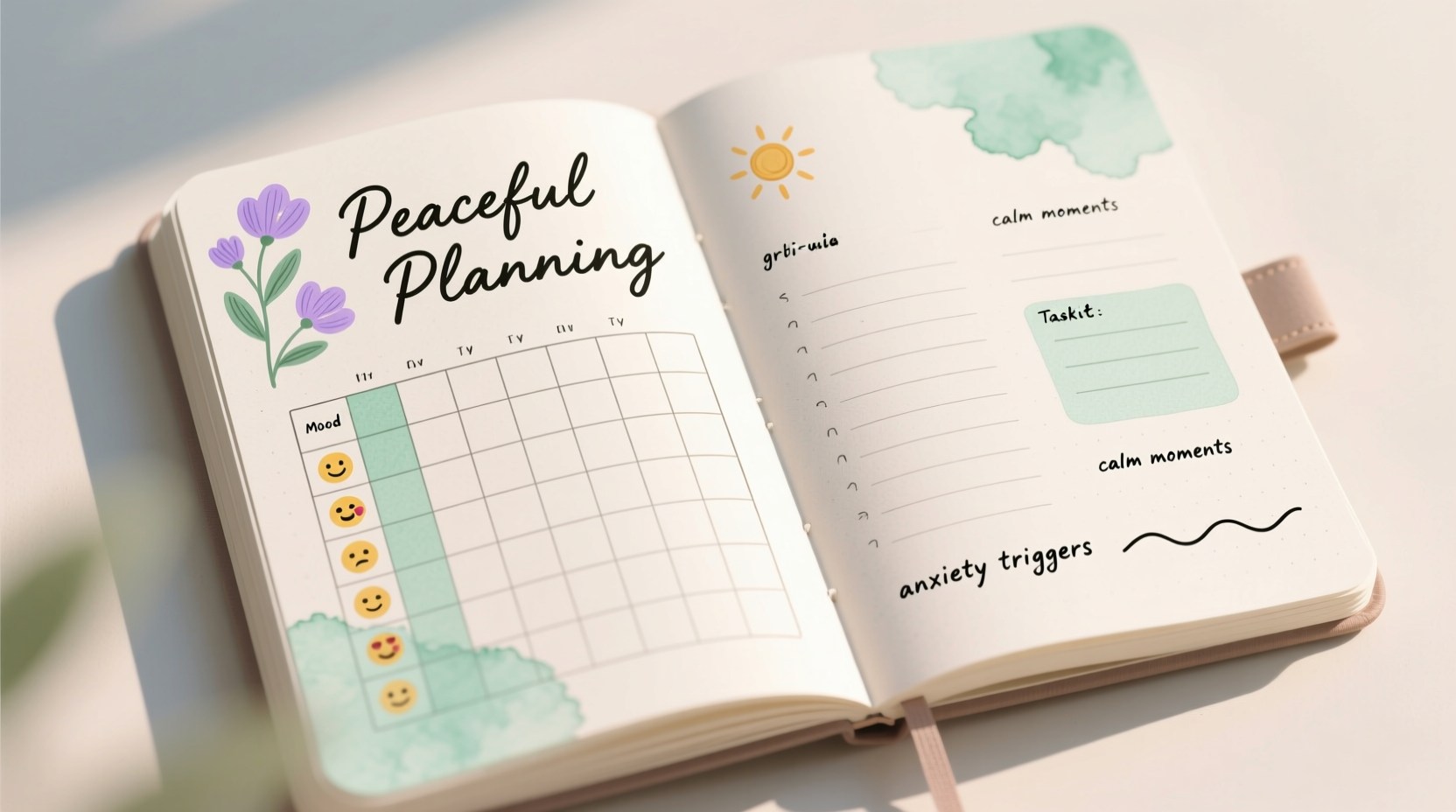
Anxiety thrives in uncertainty. The mind races when there’s no clear structure or outlet for thoughts. Writing things down externalizes internal chaos, creating space between you and your worries. Research shows that expressive writing can reduce intrusive thoughts and improve emotional regulation.
The bullet journal’s core strength lies in its simplicity and flexibility. It uses rapid logging—a method of short-form note-taking with bullets and symbols—to capture tasks, events, and notes efficiently. But beyond logistics, it allows for dedicated spaces to track mood, identify triggers, celebrate small wins, and reflect on progress—all critical components in managing anxiety.
“Journaling creates cognitive distance from overwhelming emotions. When we write, we shift from feeling to observing.” — Dr. Lena Patel, Clinical Psychologist
Step-by-Step Guide to Building Your Anxiety-Friendly Bullet Journal
Starting a bullet journal doesn’t require artistic skills or expensive supplies. What matters most is consistency and personal relevance. Follow these steps to create a functional, calming system tailored to your mental health and planning needs.
1. Gather Basic Supplies
- A dotted or grid notebook (Moleskine, Leuchtturm, or any blank book will work)
- A pen (preferably smudge-proof)
- A ruler (for clean lines)
- A highlighter or colored pen (optional, for visual cues)
2. Set Up Core Collections
These foundational pages form the backbone of your journal. Create them in order:
- Index: Reserve the first 2–4 pages. Label each entry as you add new sections.
- Future Log: A six- or twelve-month overview for long-term goals, appointments, or reminders.
- Monthly Log: One page for calendar view, another for monthly task list.
- Daily/Weekly Log: Where you plan each day. Choose weekly spreads if daily feels overwhelming.
3. Add Mental Health-Specific Pages
This is where your journal becomes a therapeutic tool. Include at least one of the following:
- Mood Tracker: A simple grid with days of the month on one axis and mood levels (1–5) on the other. Use colors or symbols to denote energy, anxiety level, or emotional state.
- Anxiety Triggers Log: Note situations, thoughts, or environments that increase anxiety. Over time, patterns emerge.
- Gratitude List: Three things you’re grateful for each day. Proven to rewire negative thinking patterns.
- Worry Window: A designated space to write down anxious thoughts during a set 10-minute window, reducing rumination throughout the day.
- Self-Care Menu: A list of quick, accessible activities (e.g., “walk outside,” “listen to jazz,” “text a friend”) to turn to when overwhelmed.
4. Design a Calming Layout Style
Your journal should feel like a safe space—not another source of pressure. Avoid overly complex designs if they cause stress. Instead:
- Use soft colors or grayscale to maintain visual calm.
- Leave white space; don’t overcrowd pages.
- Use consistent headers and bullet styles for familiarity.
- Incorporate breathing room with margin lines or gentle borders.
Sample Weekly Spread for Anxiety Management
A well-structured weekly layout balances planning with emotional check-ins. Here’s a realistic example:
| Section | Purpose | Example Content |
|---|---|---|
| Top: Weekly Goals (3 max) | Prevents overwhelm by focusing on essentials | 1. Finish project draft 2. Attend therapy session 3. Walk 15 min/day |
| Left Page: Daily Task Blocks | Simple checkboxes for tasks and appointments | ✔️ Email team update ✘ Call dentist (reschedule) ● Meeting @ 3 PM |
| Right Page: Mood + Notes | Track emotional shifts and reflections | Tuesday: Felt anxious before presentation → used box breathing Thursday: High energy, completed extra task! |
| Bottom: Gratitude Corner | End each week with positive reflection | Sunlight through the window, coffee with a friend, finished a book |
This format keeps planning practical while embedding emotional awareness into routine. Adjust spacing based on your handwriting and needs.
Real Example: Sarah’s Journey with Her Anxiety Journal
Sarah, a 34-year-old project manager, struggled with generalized anxiety disorder. She felt constantly behind at work and guilty about self-care. After reading about bullet journaling, she started one with three rules: no erasing, no judgment, and five minutes a day minimum.
Her first month was inconsistent—some days blank, others filled with frantic scribbles. But she persisted. By week three, she noticed a pattern: her anxiety spiked every Monday afternoon. She added a recurring reminder: “Monday 3 PM: Pause. Breathe. Hydrate.”
She also created a “Wins” log—small victories like “spoke up in meeting” or “said no to overtime.” Within two months, Sarah reported fewer panic episodes and improved sleep. “Writing it down made my anxiety feel manageable, not monstrous,” she said. “I finally had proof I wasn’t failing.”
“Tracking gives people agency. Seeing progress—even tiny—is powerful medicine for anxiety.” — Dr. Marcus Tran, Behavioral Therapist
Do’s and Don’ts for an Effective Anxiety Journal
| Do | Don’t |
|---|---|
| Write at the same time daily (e.g., morning or bedtime) | Force yourself to journal if you’re emotionally drained |
| Use symbols consistently (• = task, ○ = event, – = note, ✓ = done) | Overcomplicate layouts with excessive decoration |
| Review weekly to spot emotional or behavioral trends | Compare your journal to others’ online—yours is personal |
| Include kind self-talk (“You tried. That counts.”) | Use it as a tool for self-criticism or perfectionism |
| Keep it accessible (carry it or place it where you’ll see it) | Wait for the “perfect moment” to start |
Checklist: Launch Your Anxiety & Planning Journal in 7 Days
Follow this actionable checklist to establish your journal smoothly:
- Day 1: Choose a notebook and pen. Write your name and start the Index.
- Day 2: Create Future Log and first Monthly Log.
- Day 3: Design your first Weekly Spread with task blocks and mood tracker.
- Day 4: Add a Gratitude List and Self-Care Menu on a dedicated page.
- Day 5: Do a brain dump—write every thought, worry, or idea cluttering your mind.
- Day 6: Review what worked. Adjust layout if needed.
- Day 7: Reflect: What did you learn about your anxiety or routine this week?
Frequently Asked Questions
Can a bullet journal replace therapy for anxiety?
No. While journaling is a valuable complementary tool, it does not substitute professional treatment. If anxiety interferes with daily functioning, consult a licensed therapist. Journaling enhances therapy by providing material for discussion and self-insight.
What if I miss multiple days? Is it ruined?
Your journal is not all-or-nothing. Missing days is normal. Simply resume where you left off. Consider adding a “Catch-Up” section to record key events or feelings without pressure to backfill.
How detailed should my mood tracking be?
Start simple: rate your mood daily on a scale of 1–5. As you get comfortable, add brief notes (“felt anxious after email”), energy level, or sleep quality. Only track what feels sustainable.
Conclusion: Turn Pages Into Progress
A bullet journal for anxiety and daily planning isn’t about flawless execution—it’s about showing up for yourself, one page at a time. It offers structure without rigidity, reflection without judgment, and planning without pressure. In a world that moves too fast, your journal becomes a quiet corner where thoughts settle, intentions clarify, and small steps become visible progress.
You don’t need motivation to begin. You only need a notebook and the willingness to try. Start tonight. Write one sentence. Track one task. Name one emotion. These acts are quiet rebellions against anxiety’s chaos. With consistency, your bullet journal won’t just organize your days—it will help you reclaim your sense of control, one mindful entry at a time.




 浙公网安备
33010002000092号
浙公网安备
33010002000092号 浙B2-20120091-4
Comments
No comments yet. Why don't you start the discussion?