
Starting a new company is both exhilarating and daunting. Behind every successful business is a solid foundation built on clarity, planning, and execution. While passion drives the vision, it’s the structure beneath that determines long-term survival. This guide walks through the essential steps to launch your business with confidence, focusing on real-world actions rather than abstract theory.
Validate Your Business Idea First
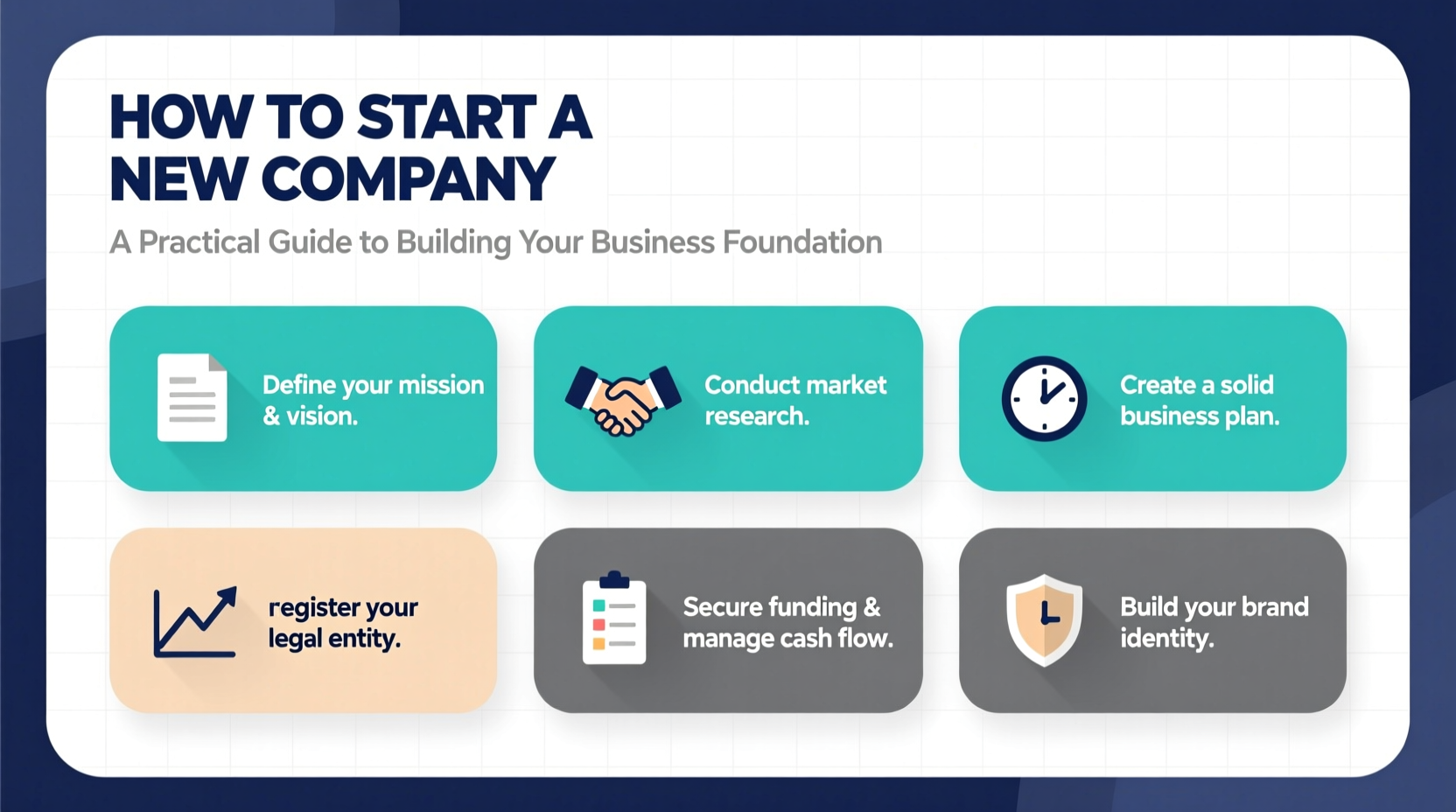
Before investing time and money, confirm that your idea solves a genuine problem. Many startups fail because they assume demand exists without testing it. Begin by identifying your target audience and asking direct questions: What frustrates them? What do they currently pay for? How would your solution improve their situation?
Conduct interviews with at least 20 potential customers. Offer a simple prototype or mockup—this could be a landing page, a sketch, or even a verbal description—and gauge interest. Look for willingness to pay, not just polite approval.
The Lean Approach: Build-Measure-Learn
Adopt the lean startup methodology: build a minimal version of your idea (Minimum Viable Product), measure how users respond, then learn and iterate. This cycle reduces waste and accelerates learning. For example, a food delivery app founder might start by manually connecting restaurants and drivers via phone calls before writing any code.
“We tested our subscription meal kit concept by preparing meals in our kitchen and delivering them ourselves. Only after 50 repeat customers did we incorporate.” — Lena Torres, Founder of FreshRoots Meals
Create a Realistic Business Plan
A business plan isn’t just for investors—it’s a roadmap for you. It forces clarity around your goals, strategy, and financial assumptions. Focus on four core sections:
- Executive Summary: One-page overview of your mission, product, and objectives.
- Market Analysis: Data on industry size, trends, and competitors.
- Operations Plan: How you’ll deliver your product or service.
- Financial Projections: Revenue, costs, and break-even timeline for the next 12–24 months.
Keep it concise—no more than 10 pages. Use clear language. Avoid jargon. Update it quarterly as you gather real data.
Do’s and Don’ts of Financial Forecasting
| Do’s | Don’ts |
|---|---|
| Base revenue on conversion rates from real tests | Assume 10% market share with no evidence |
| List all fixed and variable costs | Ignore hidden expenses like payment processing fees |
| Include a 6-month cash runway buffer | Predict profitability in month three with high overhead |
Choose the Right Legal Structure
Your business structure affects taxes, liability, and fundraising ability. The most common options for early-stage founders are:
- Sole Proprietorship: Simple but offers no liability protection.
- LLC (Limited Liability Company): Protects personal assets and allows flexible taxation.
- S-Corporation: Suitable for profitable businesses seeking tax efficiency.
- C-Corporation: Required if you plan to raise venture capital or go public.
For most first-time entrepreneurs, an LLC registered in your home state is the best starting point. It costs between $100–$500 depending on location, requires minimal paperwork, and separates personal and business finances.
Essential Registrations and Permits
- Register your business name (DBA if different from legal entity).
- Obtain an EIN (Employer Identification Number) from the IRS—free and required for banking and taxes.
- Check city or county requirements for business licenses or health permits.
- Set up sales tax collection if selling physical goods.
Build Your Operational Foundation
Once legally established, set up systems that allow your business to function smoothly. These include:
- Business Bank Account: Never mix personal and business funds. Open an account using your EIN and articles of organization.
- Accounting System: Use software like QuickBooks or Xero from day one. Track every transaction.
- Payment Processing: Integrate Stripe, PayPal, or Square so customers can pay easily.
- Branding & Communication: Secure a domain name, create professional email addresses, and design basic logos and templates.
Case Study: From Side Hustle to Full-Time Business
Jamal started a custom skateboard grip tape business from his garage. He validated demand by selling 30 units at a local skatepark for $15 each. After forming an LLC and opening a separate bank account, he reinvested profits into small-batch production. Within six months, he automated orders via Shopify, hired a freelance designer, and cleared $8,000 in monthly revenue. His key insight? “I treated it like a real business from day one—even when I was the only employee.”
Funding Your Startup: Bootstrapping vs. External Capital
Most companies begin with bootstrapping—using personal savings, revenue, or small loans. This approach maintains control and forces discipline. However, some ventures require upfront investment in inventory, technology, or talent.
If seeking external funding, consider these options in order of accessibility:
- Friends and Family: Fast but risky; treat it like a formal loan with written terms.
- Small Business Loans: SBA loans offer low rates but require strong credit and collateral.
- Grants: Non-dilutive funding from government or nonprofit programs—ideal for women, minorities, or green businesses.
- Angel Investors or Venture Capital: High expectations for growth and return; only pursue if scaling quickly is feasible.
“Raise money when you can, not when you have to. A healthy business has options.” — Rajiv Mehta, Early-Stage Venture Partner
Step-by-Step Timeline: First 90 Days
- Week 1–2: Validate idea, define target customer, draft value proposition.
- Week 3–4: Register business, open bank account, set up accounting.
- Month 2: Launch MVP, acquire first 10 paying customers, refine offering.
- Month 3: Finalize branding, establish online presence, analyze unit economics.
FAQ
Do I need a business license to start selling online?
It depends on your location and product type. Most states require a general business license if you operate under a trade name. Selling tangible goods usually requires a sales tax permit. Check your state’s Secretary of State website for specifics.
Can I start a company while working full-time?
Yes—most founders do. Just ensure your employment contract doesn’t restrict outside work or claim ownership of your ideas. Use evenings and weekends to test and build, but transition only when revenue supports it.
How much should I charge for my product or service?
Price based on value, not just cost. Research what competitors charge and assess customer willingness to pay. Start mid-range—you can always adjust later. Avoid underpricing, which signals low quality.
Conclusion
Building a company starts not with a grand launch, but with deliberate, practical steps taken consistently. Clarity of purpose, legal diligence, financial awareness, and customer focus form the bedrock of sustainable success. You don’t need perfection—just progress. Every great business began with someone deciding to act, despite uncertainty. Define your next step, take it, then take the one after. That’s how foundations are built.




 浙公网安备
33010002000092号
浙公网安备
33010002000092号 浙B2-20120091-4
Comments
No comments yet. Why don't you start the discussion?