
Starting a small business is more than just a dream—it’s a journey that begins with a single idea and grows through disciplined action. While passion fuels the vision, practical planning turns it into something sustainable. Whether you're launching a local bakery, offering freelance design services, or building an e-commerce brand, the path from concept to operation follows a consistent framework. This guide walks you through each phase with clarity and realism, helping you avoid common pitfalls and build a foundation for long-term success.
Validate Your Business Idea First
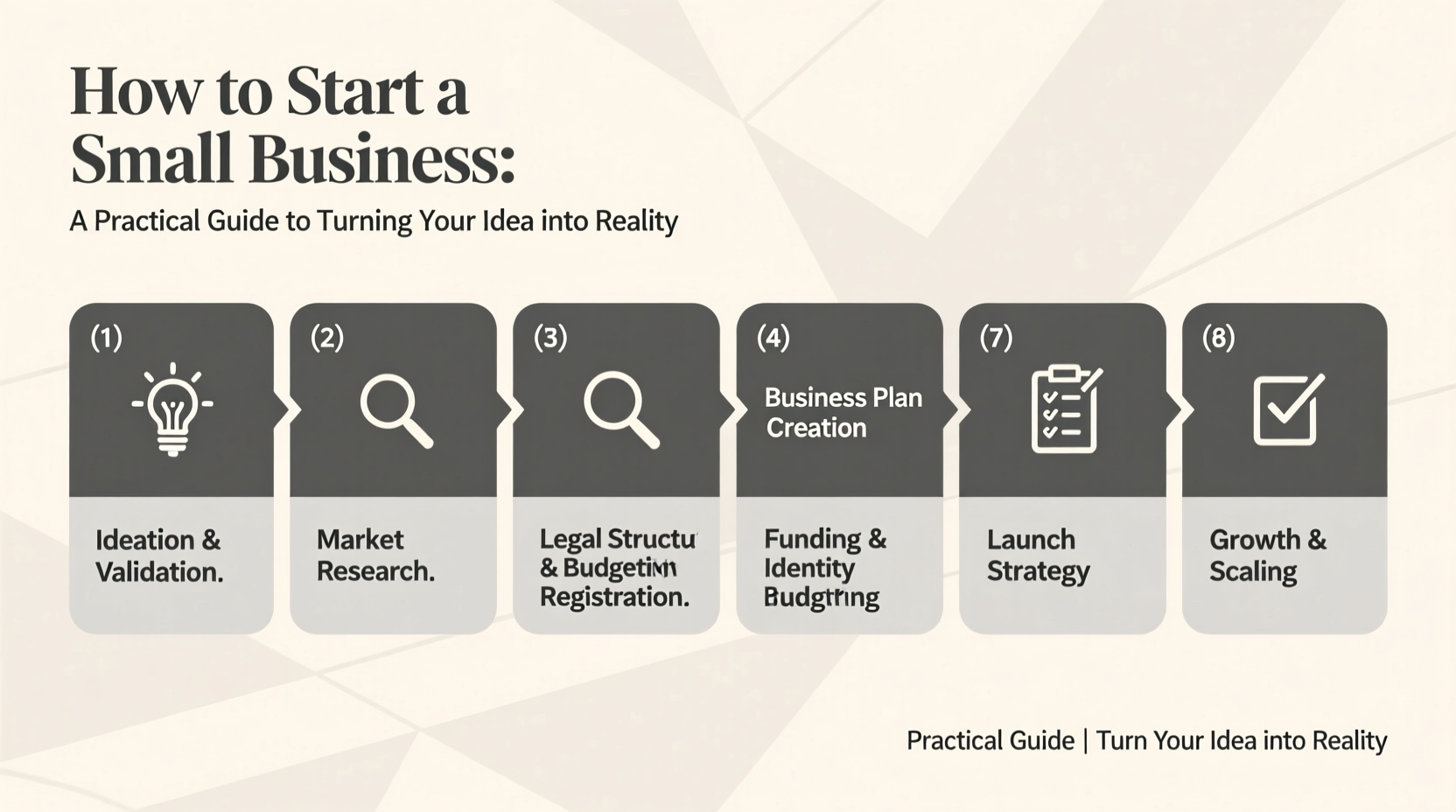
Before investing time and money, test whether your idea solves a real problem or fulfills a genuine need. Many entrepreneurs skip this step, assuming demand exists because they personally believe in the product. However, market validation separates viable businesses from wishful thinking.
Start by identifying your target audience. Who are they? What keeps them up at night? Conduct informal interviews, run online surveys, or create a landing page with a sign-up form to gauge interest. If people are willing to provide their email or pre-pay, you have early proof of demand.
A simple validation checklist includes:
- Defined customer persona (age, location, pain points)
- Competitive analysis showing gaps in current offerings
- At least 10 potential customers expressing interest
- Clear value proposition: Why choose you over others?
“Don’t fall in love with your idea. Fall in love with the problem you’re solving.” — Paul Graham, Co-founder of Y Combinator
Create a Lean Business Plan
You don’t need a 50-page document to get started. A lean business plan focuses on essentials: what you offer, who you serve, how you’ll make money, and what sets you apart. It should be flexible enough to evolve as you learn more about your market.
Key components include:
- Executive Summary: One paragraph describing your business.
- Products/Services: What you sell and its benefits.
- Market Analysis: Who your customers are and what competitors exist.
- Revenue Model: How you’ll earn (e.g., subscriptions, one-time sales).
- Operating Plan: Day-to-day logistics like suppliers, staffing, and tools.
- Financial Projections: Realistic estimates of income, expenses, and break-even point.
| Section | Purpose | Time Required |
|---|---|---|
| Executive Summary | Quick pitch for investors or partners | 30–60 minutes |
| Customer Research | Confirm demand and refine messaging | 2–5 hours |
| Revenue Model | Define pricing and profit margins | 1–2 hours |
| Financial Forecast | Estimate costs and when you’ll break even | 3–6 hours |
Choose the Right Legal Structure and Register Your Business
Your legal structure affects taxes, liability, and paperwork. The most common options for small businesses are:
- Sole Proprietorship: Simplest to set up; owner is personally liable.
- LLC (Limited Liability Company): Protects personal assets; flexible taxation.
- S-Corporation: More complex but can save on self-employment taxes.
For most early-stage entrepreneurs, an LLC offers the best balance of protection and simplicity. To register:
- Choose a unique business name and check availability in your state.
- File Articles of Organization with your Secretary of State (typically $50–$500).
- Obtain an EIN (Employer Identification Number) from the IRS—free and essential for banking and taxes.
- Apply for local permits or licenses if required (e.g., food service, cosmetology).
Build Your Operational Foundation
Once legally established, focus on systems that keep your business running smoothly. These include:
1. Open a Business Bank Account
Separating personal and business finances improves accounting accuracy and strengthens liability protection. Most banks require your EIN, formation documents, and ID.
2. Set Up Accounting Software
Tools like QuickBooks, Wave (free), or Xero help track income, expenses, and tax obligations. Connect your bank account for automatic transaction imports.
3. Establish Your Brand Identity
Create a professional presence with a business name, logo, website, and consistent tone of voice. Even a simple site built on Squarespace or Wix can establish credibility.
4. Secure Essential Tools
Depending on your industry, you may need invoicing software, scheduling apps, inventory systems, or customer relationship management (CRM) tools.
“A business without a system is just chaos with a cash register.” — Michael Gerber, Author of *The E-Myth Revisited*
Launch and Grow: A 90-Day Action Timeline
Rushing to launch often leads to oversights. Instead, follow a structured rollout over three months:
- Weeks 1–2: Finalize your offering, set pricing, and order initial supplies or develop digital products.
- Weeks 3–4: Build your website, set up social media profiles, and draft your first marketing messages.
- Weeks 5–6: Test everything—ordering process, payment gateways, customer support channels.
- Weeks 7–8: Run a soft launch with friends, family, or a small paid ad campaign to collect feedback.
- Weeks 9–12: Refine based on data, officially launch, and begin tracking key metrics like conversion rate and customer acquisition cost.
Track progress weekly. Adjust quickly if something isn’t working—agility is a startup’s greatest advantage.
Real Example: From Side Hustle to Full-Time Income
Jamie, a graphic designer in Portland, wanted to sell custom pet portraits online. She started by posting samples on Instagram and offering five free drawings in exchange for testimonials. Within two weeks, she had ten paying customers. She registered as an LLC, used Canva and Shopify to create a simple store, and reinvested early profits into Facebook ads targeting pet owners. By month four, she was earning over $3,000/month and hired a virtual assistant to handle orders. Her secret? Starting small, listening to customers, and iterating fast.
Frequently Asked Questions
How much money do I need to start a small business?
It depends on the type of business. Service-based ventures (like consulting or freelancing) can start under $500. Product-based businesses may require $2,000–$10,000 for inventory, packaging, and tools. Always budget for 3–6 months of operating expenses before expecting profits.
Do I need a business license?
Yes, in most cases. Requirements vary by city and industry. Check with your local government or use the U.S. Small Business Administration’s SBA.gov licensing tool to find out what applies to you.
Can I start a business while working full-time?
Absolutely. Many successful businesses begin as side hustles. Just ensure your employment contract doesn’t restrict outside work, and manage your time carefully to avoid burnout.
Conclusion: Turn Vision Into Action
Starting a small business isn’t about having the perfect idea or endless resources—it’s about taking the next right step, learning from real-world feedback, and persisting through uncertainty. Every major company began with someone deciding to try. You don’t need to scale immediately; you just need to start.




 浙公网安备
33010002000092号
浙公网安备
33010002000092号 浙B2-20120091-4
Comments
No comments yet. Why don't you start the discussion?