
Stepping into the world of anime can feel like opening a door to another universe—vibrant, emotionally rich, and endlessly diverse. But with thousands of titles across decades of production, it’s easy to freeze at the starting line. Where do you begin? Should you dive into long-running shonen epics? Explore quiet slice-of-life stories? Or try something experimental and surreal? The options are exhilarating but also paralyzing. The key isn’t to watch everything—it’s to watch *wisely*. With the right approach, you can build a meaningful entry point into anime that feels personal, enjoyable, and sustainable.
Start with Your Interests, Not the Hype
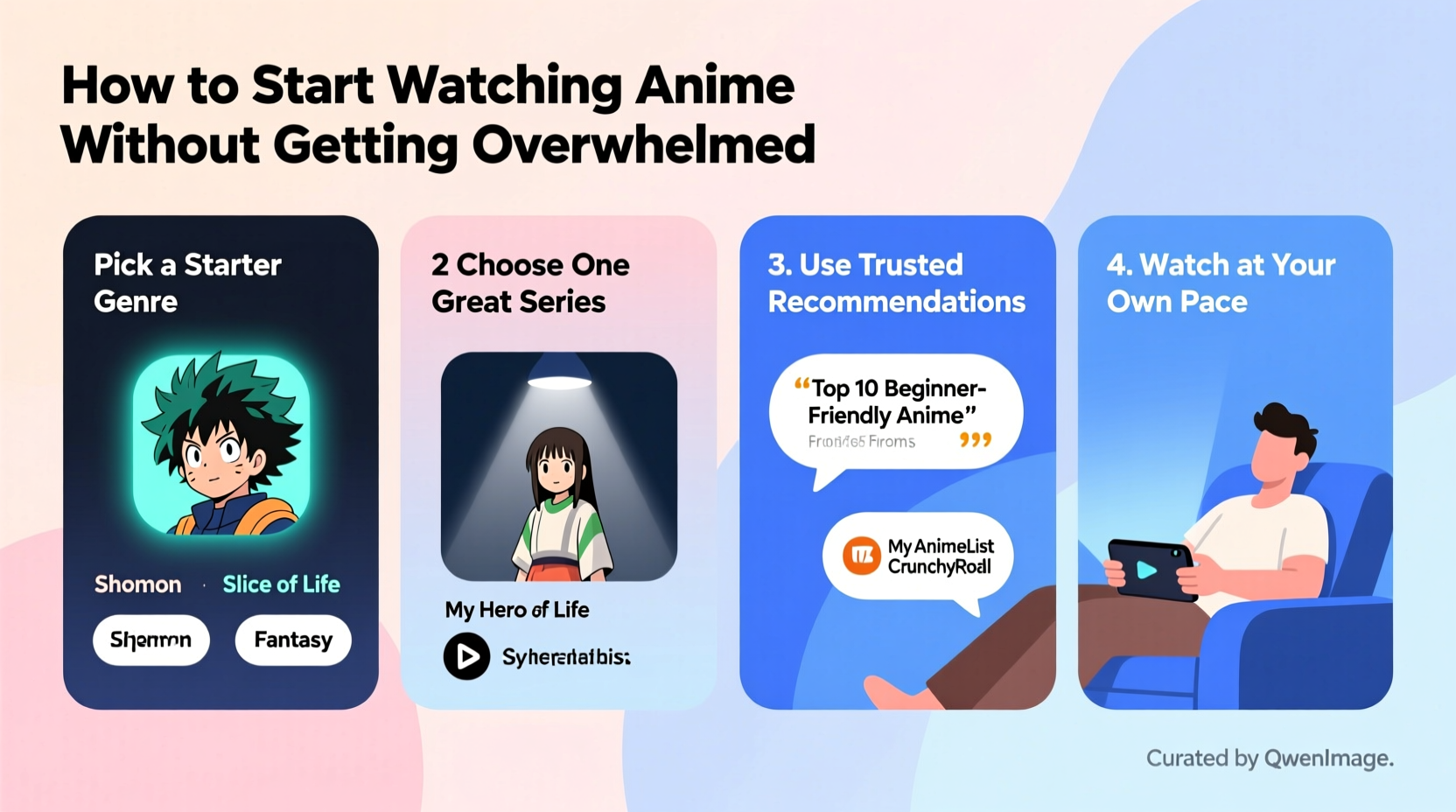
One of the most common mistakes new viewers make is chasing popularity. They assume that because a series has millions of fans or high ratings on ranking sites, it must be the best place to start. While some popular titles are excellent gateways, many are better suited for viewers who already understand anime conventions. Jumping into a 300-episode battle series with complex lore can be discouraging if you're not prepared.
Instead, reflect on what kinds of stories you already enjoy. Do you love character-driven dramas? Try a Studio Ghibli film. Are you drawn to sci-fi or futuristic worlds? Consider classics like *Ghost in the Shell* or *Cowboy Bebop*. If you’re a fan of romance or school life, anime has an entire genre dedicated to those themes. Matching your existing tastes to anime subgenres reduces guesswork and increases the odds of finding something you genuinely connect with.
Use the 3-Episode Rule to Avoid Commitment Traps
Anime series vary wildly in pacing. Some take off immediately; others build slowly over several episodes. However, most well-structured shows establish their tone, characters, and narrative direction within the first three episodes. This makes the “3-Episode Rule” a powerful tool for filtering out poor fits early.
If after three episodes you feel confused without intrigue, bored without hope, or frustrated by inconsistent animation or writing, it’s okay to stop. That doesn’t mean the show is bad—it just might not be right for you right now. This rule prevents you from sinking hours into something that ultimately won’t resonate.
Conversely, if you find yourself curious about what happens next—even if the animation isn’t perfect or the dialogue feels awkward at times—that’s a strong sign to keep going. Engagement matters more than polish when you’re starting out.
Follow a Step-by-Step Onboarding Plan
Entering anime without a plan is like wandering through a foreign city without a map. You might stumble upon hidden gems, but you’ll likely spend more time lost than discovering. A structured approach helps you explore efficiently and confidently.
- Week 1: Watch a critically acclaimed standalone film. Start with something self-contained, like *Spirited Away* or *Your Name*. These films deliver a complete story in under two hours and showcase the emotional depth and visual artistry anime is known for.
- Week 2: Explore a short, completed series (12–13 episodes). Series like *Barakamon*, *March Comes in Like a Lion*, or *Natsume’s Book of Friends* offer rich storytelling without requiring a months-long commitment.
- Week 3: Try a genre you wouldn’t normally choose. If you typically avoid action, give *Moribito: Guardian of the Spirit* a shot. If horror isn’t your thing, try *Monster*—a psychological thriller with minimal supernatural elements.
- Week 4: Revisit and reflect. Which story stayed with you? What themes or character types drew you in? Use these insights to guide your next picks.
This timeline builds familiarity gradually while exposing you to variety. It also creates space for reflection, helping you develop your own taste rather than mimicking crowd favorites.
Curate Your Watchlist with Trusted Filters
The internet is full of anime recommendation lists—but not all are created equal. Many are tailored to longtime fans or prioritize novelty over accessibility. To avoid drowning in options, use filters that align with beginner needs.
| Filter | Why It Helps | Examples |
|---|---|---|
| Completed Series (under 26 episodes) | Prevents mid-series burnout and ensures a satisfying conclusion. | Death Note, Tonari no Kaibutsu-kun, Paranoia Agent |
| High IMDb or MyAnimeList score (7.5+) | Indicates broad appeal and consistent quality. | Fullmetal Alchemist: Brotherhood, Clannad |
| No prior anime knowledge required | Ensures the story stands on its own. | Silver Spoon, Shouwa Genroku Rakugo Shinju |
| Available on major streaming platforms | Reduces friction in access and viewing. | Crunchyroll, Netflix, Hulu, HiDive |
Apply two or three of these filters simultaneously. For example: “A completed series under 26 episodes, rated 7.8 or higher, available on Netflix.” This simple system cuts thousands of options down to a manageable shortlist.
Avoid Common Beginner Pitfalls
Even with good intentions, new viewers often fall into traps that make anime feel inaccessible or frustrating. Recognizing these early can save time and preserve enthusiasm.
- Binge-watching long series too soon. Starting with *One Piece* or *Naruto* might seem exciting, but 500+ episodes require immense dedication. Save them for later.
- Ignoring subtitles for dub preference. While dubs have improved, not all series are well-dubbed. Sometimes the original Japanese audio with subtitles delivers a more authentic performance.
- Comparing anime art styles to Western animation. Anime embraces stylization—large eyes, exaggerated expressions, symbolic visuals. These aren’t flaws; they’re part of the language of the medium.
- Assuming all anime is for kids or all is explicit. Anime spans every age group and genre, from preschool shows to mature, philosophical works. Let go of stereotypes.
Real Example: How Sarah Found Her Anime Footing
Sarah, a 28-year-old librarian, had always been curious about anime but felt intimidated by forums filled with jargon and decade-long series commitments. She tried *Attack on Titan* because it was popular, but after episode four, she quit—overwhelmed by the violence and dense mythology.
Then she remembered loving *The Secret Garden* as a child. She searched for “anime like The Secret Garden” and found *Märchen Mädchen*, a story about girls bringing fairy tales to life. Though not a perfect match, it sparked her interest. From there, she watched *Non Non Biyori*, a gentle rural comedy, and fell in love with its quiet humor and pastoral beauty.
Encouraged, she explored Studio Ghibli and adored *Kiki’s Delivery Service*. Over six months, Sarah built a small, meaningful list of favorites—not by following rankings, but by trusting her instincts. Today, she runs a casual anime book club at her library, focusing on thematic connections between literature and animated storytelling.
Sarah’s journey wasn’t about consuming the “best” anime—it was about finding what resonated. That’s a far more sustainable path for most newcomers.
Expert Insight: Trust the Process, Not the Pressure
“New fans often feel they need to ‘catch up’ on decades of anime history. But anime isn’t a test—it’s an exploration. The goal isn’t completion; it’s connection.” — Akira Tanaka, Anime Studies Lecturer at Osaka University of Arts
Tanaka emphasizes that cultural context plays a big role in how anime stories are constructed. “Many Western viewers expect fast pacing and clear moral lines. But Japanese storytelling often values atmosphere, emotional nuance, and unresolved endings. Give yourself permission to adjust your expectations.”
Beginner-Friendly Anime Checklist
Use this checklist to stay focused and intentional as you begin:
- ☐ Identify 2–3 genres or themes I already enjoy in other media
- ☐ Watch one acclaimed anime film (e.g., *Spirited Away*, *Grave of the Fireflies*)
- ☐ Pick one short series (12–13 episodes) based on mood or theme
- ☐ Apply the 3-Episode Rule before continuing any show
- ☐ Limit my initial watchlist to 5 titles max
- ☐ Reflect weekly: What did I like or dislike? Why?
- ☐ Avoid comparison: Don’t measure my taste against others’ favorites
This checklist keeps you grounded in personal relevance rather than external validation. It turns passive scrolling into active discovery.
Frequently Asked Questions
Do I need to watch anime in a specific order or chronologically?
No. Most anime series are standalone. Even sequels or spin-offs usually recap essential backstory. Watch what interests you now—there’s no wrong entry point. Only multi-part series like *Fullmetal Alchemist: Brotherhood* or *Steins;Gate* require sequential viewing, and that will be clearly indicated.
Are there anime that don’t involve fantasy, robots, or school settings?
Absolutely. While those are common tropes, anime covers realistic workplace dramas (*Shirobako*), historical fiction (*Golden Kamuy*), culinary journeys (*Sweetness & Lightning*), sports (*Run with the Wind*), and even office romance (*Wotakoi: Love Is Hard for Otaku*). Use keywords like “slice of life,” “seinen,” or “drama” to find grounded stories.
How much time should I dedicate each week?
Start small. Even 2–3 hours per week is enough to finish a short series in a month. Consistency matters more than volume. Watching one episode per night is often more enjoyable than bingeing an entire season over a weekend.
Conclusion: Begin Where You Are, Not Where Others Expect You to Be
Starting anime isn’t about mastering a canon or ticking off a list. It’s about opening yourself to new ways of storytelling—one thoughtful choice at a time. The vastness of anime shouldn’t intimidate you; it should reassure you that somewhere, there’s a story made for someone exactly like you, even if you didn’t know you’d love it yet.
You don’t need to watch everything. You just need to watch what moves you. Start small. Stay curious. Trust your reactions. Whether it’s a quiet moment in a tea shop or a galaxy-spanning adventure, your anime journey begins not with the “right” title, but with the courage to press play.




 浙公网安备
33010002000092号
浙公网安备
33010002000092号 浙B2-20120091-4
Comments
No comments yet. Why don't you start the discussion?