
Finding a new job isn’t about applying to as many postings as possible—it’s about aligning your skills, values, and goals with the right opportunities. A scattergun approach leads to burnout and poor outcomes. Instead, a personalized job search strategy increases relevance, response rates, and long-term career satisfaction. This guide walks through how to build a tailored plan that positions you as the ideal candidate for roles that truly match your profile.
Define Your Career Goals with Precision
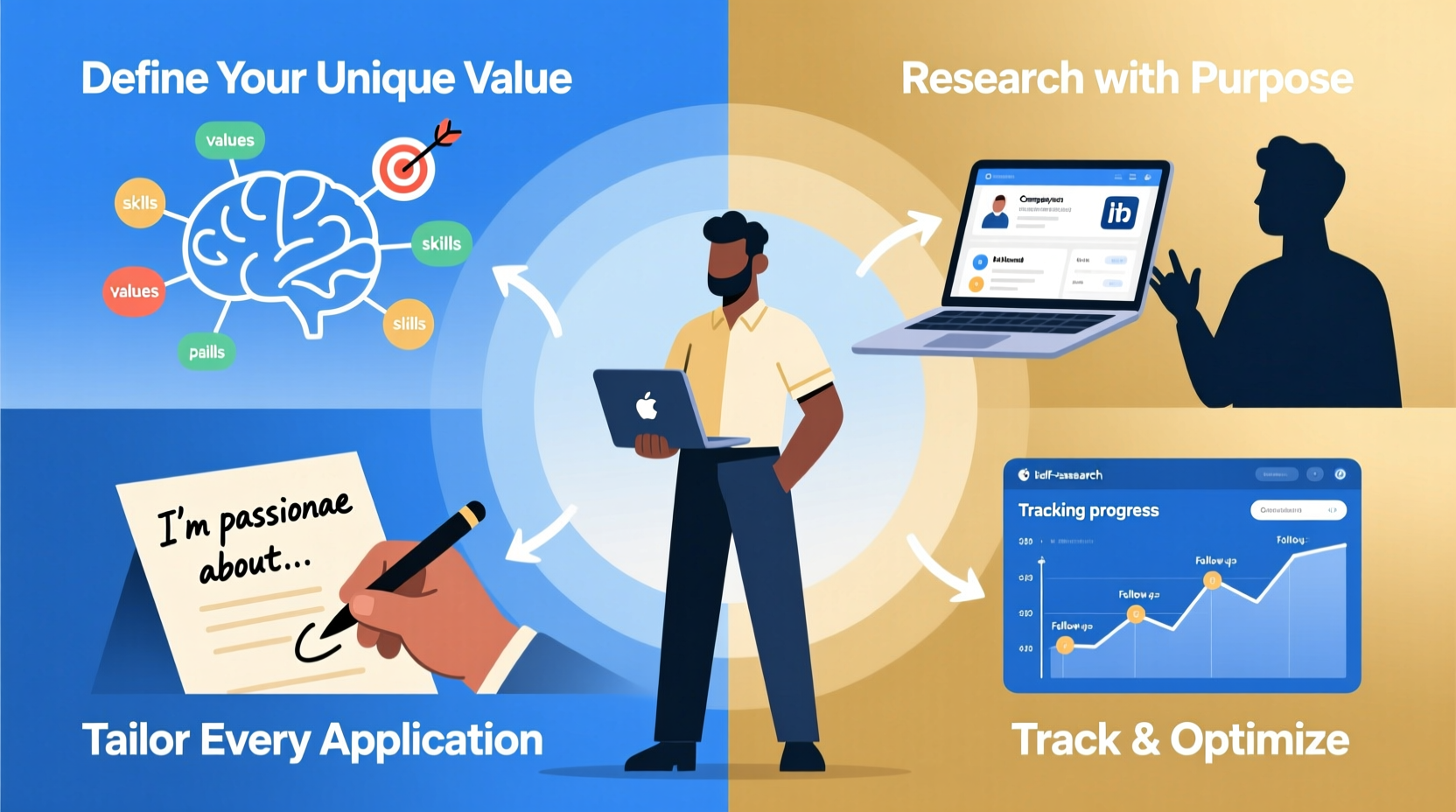
Before sending a single application, clarify what you’re looking for. Vague objectives like “a better job” or “more money” won’t guide your efforts effectively. Instead, break down your goals into specific dimensions:
- Industry: Are you staying in your current field or transitioning?
- Role Type: Do you prefer project-based work, leadership, technical execution, or hybrid responsibilities?
- Work Environment: Is remote, hybrid, or on-site essential? Does company culture matter more than size?
- Compensation & Growth: What salary range is acceptable? How important is mentorship or advancement potential?
Answering these questions helps filter out irrelevant opportunities and keeps your search focused. For example, someone aiming to move from retail management into tech product operations should prioritize companies with structured training programs and internal mobility, not just high-paying startups.
Conduct a Personal Skills & Value Audit
Your resume may list past duties, but a strategic job search requires deeper self-awareness. Identify not only what you can do, but what you deliver uniquely well.
Start by listing your core competencies—both hard skills (e.g., data analysis, CRM software) and soft skills (e.g., conflict resolution, stakeholder communication). Then assess which of these generate measurable value. Ask yourself:
- Which projects did I lead that had clear business impact?
- When have colleagues or managers specifically praised my contribution?
- What problems do people consistently come to me to solve?
This audit reveals your personal brand—what you’re known for and what employers would gain by hiring you. Use this insight to shape your messaging across applications and interviews.
“Job seekers who articulate their unique value proposition are 3x more likely to receive interview callbacks.” — Dr. Lena Torres, Career Strategy Researcher, Harvard Business Review
Build a Targeted Company List
Instead of searching job boards randomly, reverse-engineer your hunt: identify organizations where you’d thrive, then monitor for openings.
Start with 15–20 companies that meet your criteria based on industry, mission, culture, location, and growth trajectory. Research each thoroughly:
- Read employee reviews on Glassdoor and Blind.
- Follow their LinkedIn pages and note recent hires or expansions.
- Analyze press releases and earnings reports for strategic direction.
Track your target list in a simple spreadsheet. This becomes your proactive job pipeline—not reactive applications, but informed engagement.
| Company | Why It Fits | Contact/Connection | Status |
|---|---|---|---|
| TechFlow Inc. | Expanding UX team; values design thinking | Lisa Chen (former colleague) | Networking initiated |
| GreenStride | Sustainability-focused; remote-first | None yet | Research phase |
| NexaHealth | Healthtech innovator; strong mentorship | Attended webinar Q&A | Engaged |
Step-by-Step: Launch Your Personalized Search Plan
A structured timeline ensures consistency and prevents overwhelm. Follow this six-week roadmap to launch a targeted campaign:
- Week 1: Complete your career vision and skills audit. Draft your value proposition in two sentences.
- Week 2: Build your target company list. Begin following key decision-makers on LinkedIn.
- Week 3: Optimize your resume and LinkedIn profile to reflect your niche focus. Remove generic summaries.
- Week 4: Reach out to 2–3 contacts per week at target companies. Focus on learning, not asking for jobs.
- Week 5: Apply selectively to roles where you meet 70%+ of requirements. Customize cover letters using company language.
- Week 6: Schedule weekly review sessions. Track responses, refine messaging, and expand network outreach.
This phased approach turns job hunting from chaos into a deliberate process. You’ll apply less often—but with far greater impact.
Real Example: From Generic Applications to Strategic Offers
Maya, a marketing coordinator with three years of agency experience, spent six months applying to over 100 entry-level digital marketing roles—with no interviews. Frustrated, she shifted tactics.
She defined her goal: in-house marketing at B2B SaaS companies with strong content programs. She audited her background and realized her strength wasn’t just campaign execution, but turning complex topics into engaging customer stories.
She created a list of 18 SaaS firms, connected with content managers on LinkedIn, and shared thoughtful comments on their blogs. After two informational chats, one referred her to an unposted opening. She applied with a tailored portfolio showcasing case studies relevant to that niche—and received an offer in three weeks.
Her turnaround wasn’t luck. It was strategy.
Common Pitfalls to Avoid
Even well-intentioned job seekers make mistakes that sabotage their efforts. Watch for these:
- Using the same resume for every role: Tailoring increases relevance and ATS compatibility.
- Ignoring networking: Up to 70% of jobs are filled through referrals or unadvertised roles.
- Applying too quickly: Rushing leads to missed customization. Wait until you’ve researched the company.
- Overlooking small or mid-sized companies: They often move faster in hiring and offer broader roles.
FAQ
How many jobs should I apply to each week?
Focus on quality, not volume. 3–5 highly targeted applications per week are more effective than 20 generic ones. Prioritize roles where your background directly addresses the key challenges mentioned in the posting.
Is it worth applying if I don’t meet all the qualifications?
Yes—if you meet about 70%. Job descriptions often list ideal traits, not strict requirements. Emphasize transferable skills and achievements that demonstrate capability. A strong narrative matters more than checking every box.
Should I use AI tools to write my resume or cover letter?
Use them as assistants, not replacements. AI can help refine language, but your story must sound authentic. Over-reliance on templates creates generic content that fails to stand out. Always personalize tone and examples.
Final Checklist: Your Personalized Job Search Toolkit
Before launching your campaign, ensure you’ve completed these critical steps:
- ✅ Defined your ideal role and non-negotiables
- ✅ Completed a skills and value audit
- ✅ Written a clear, concise personal value statement
- ✅ Researched and listed 15–20 target companies
- ✅ Updated LinkedIn and resume with role-specific keywords
- ✅ Identified 3–5 professional contacts for outreach
- ✅ Created a tracking system for applications and follow-ups
Take Action Today
A personalized job search doesn’t require more time—it requires better focus. By aligning your efforts with your strengths and aspirations, you shift from being just another applicant to a compelling solution for an employer’s needs. Start small: spend one hour refining your career vision, then reach out to one connection at a company you admire. Momentum builds from action, not perfection. Begin now, stay consistent, and let strategy—not desperation—guide your next career move.




 浙公网安备
33010002000092号
浙公网安备
33010002000092号 浙B2-20120091-4
Comments
No comments yet. Why don't you start the discussion?