
Puppies explore the world with their mouths. It’s natural for them to nip, chew, and bite during play—it’s how they learn about boundaries, textures, and social interaction. However, when that playful mouthing turns into ankle-chasing and foot-biting, it can become more than just a nuisance. It can lead to discomfort, frustration, or even injury if left unaddressed. The key is not to punish or scare your puppy, but to guide them toward appropriate behavior using consistent, positive reinforcement.
Biting during play isn’t a sign of aggression in most young dogs; it’s a developmental phase rooted in instinct and curiosity. With patience and the right techniques, you can redirect this behavior before it becomes a habit. This article outlines effective, humane strategies that respect your puppy’s needs while teaching them what’s acceptable—and what’s not.
Understanding Why Puppies Bite Ankles
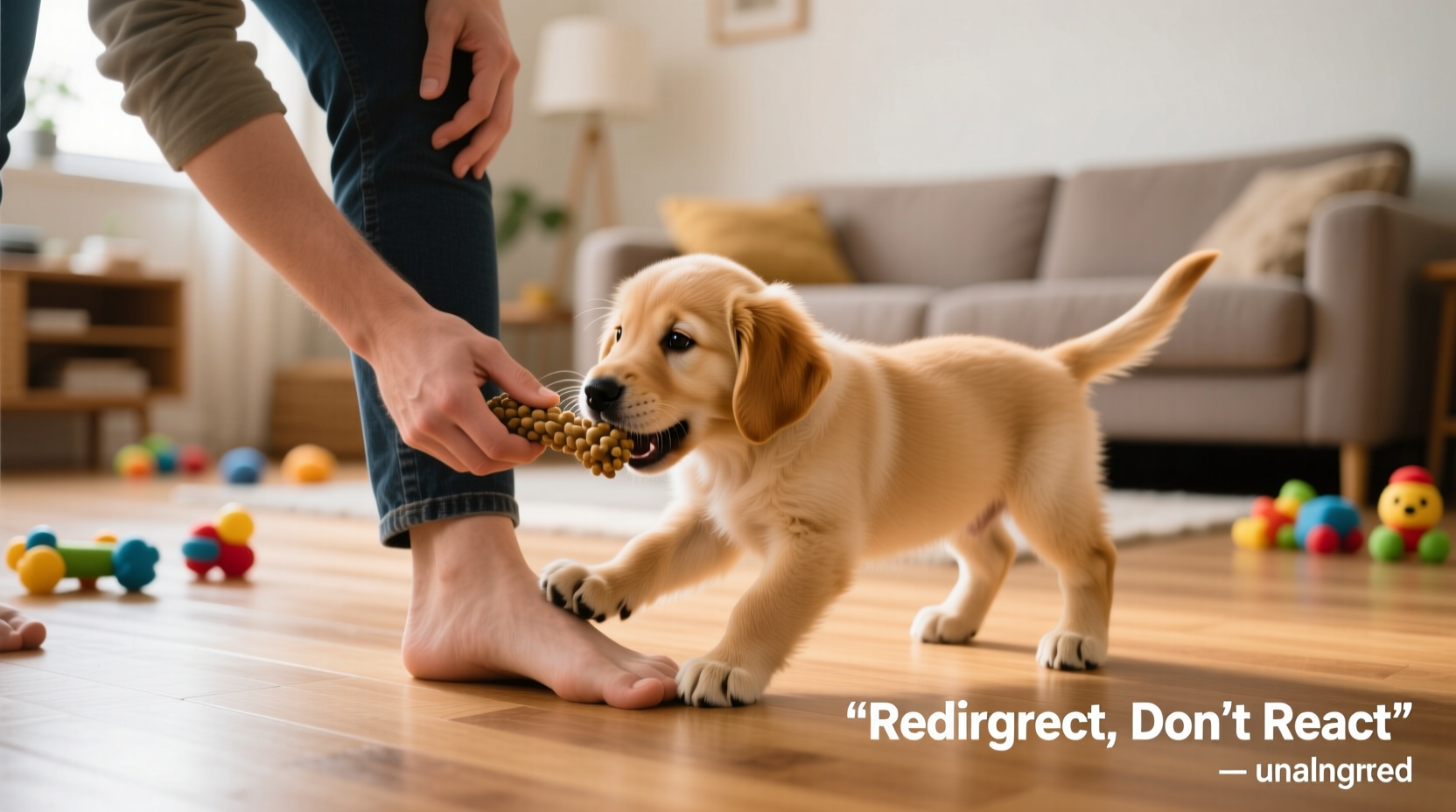
Puppy biting, especially targeting moving feet or ankles, stems from several natural instincts:
- Mouthing instinct: Like human babies, puppies use their mouths to explore objects, people, and movement.
- Prey drive: Fast-moving feet resemble prey. Sudden movements trigger a chase-and-bite reflex, especially in herding or high-energy breeds.
- Play behavior: In litter settings, puppies wrestle and mouth each other. Without siblings, they may transfer this playfulness to human limbs.
- Attention-seeking: If biting gets a reaction—even negative—the puppy learns it’s an effective way to engage.
Understanding these motivations helps shift your response from frustration to empathy. Your goal isn’t to suppress normal puppy behavior, but to channel it appropriately.
Step-by-Step Guide to Stop Ankle Biting During Play
Changing your puppy’s biting habits requires consistency, timing, and redirection. Follow this five-step process to gently teach bite inhibition and appropriate play:
- Recognize early signs of overstimulation. Watch for intense focus on feet, stiff body posture, or rapid tail wagging. These often precede biting episodes.
- Freeze and redirect. When your puppy lunges at your ankle, immediately stop moving. Stand still like a tree. Movement fuels the chase instinct. Once they pause, offer a toy or treat to redirect attention.
- Use time-outs, not punishment. If biting persists, calmly walk away or step behind a baby gate for 30–60 seconds. This teaches that biting ends fun interactions.
- Introduce structured play sessions. Use tug toys or flirt poles to satisfy their need to chase and bite—but only on appropriate items.
- Reinforce calm behavior. Reward your puppy with praise or treats when they choose a toy over your foot or remain calm during movement.
This method builds self-control gradually. Consistency across all family members is essential—mixed signals will slow progress.
Effective Alternatives to Biting: Toys and Substitutes
Redirecting biting behavior works best when appealing alternatives are readily available. Puppies need outlets for chewing, especially during teething (typically 3–7 months). Stock up on durable, safe toys that satisfy their urge to bite.
| Type of Toy | Best For | Recommended Examples |
|---|---|---|
| Rope toys | Tug-of-war, dental health | Cotton rope knots, braided hemp |
| Chew-resistant rubber toys | Heavy chewers, mental stimulation | Kong Classic, West Paw Zogoflex |
| Flirt poles | Chase instincts, energy burn | Dogsports pole with plush attachment |
| Frozen chew toys | Teething pain relief | Wet washcloth frozen, rubber toy filled with broth |
Keep multiple toys accessible during high-risk times—like when you’re walking around the house or sitting on the floor. When your puppy goes for your ankle, say “Oops!” and immediately swap in a toy. Over time, they’ll associate play with toys, not feet.
“Puppies don’t come pre-programmed with human rules. They learn through repetition and consequences we provide. Positive redirection works far better than suppression.” — Dr. Sarah Carter, Veterinary Behaviorist
Common Mistakes That Reinforce Biting
Even well-meaning owners can accidentally encourage ankle biting. Be mindful of these common pitfalls:
- Letting them bite during ‘fun’ moments: Allowing gentle nips while playing sends mixed messages. If it’s sometimes okay, the puppy won’t understand when it’s not.
- Using hands as toys: Wiggling fingers or playing keep-away with hands teaches puppies that human skin is part of play.
- Inconsistent responses: One person ignores biting, another yells. The puppy receives no clear rule system.
- Overexcitement during play: High-pitched voices and erratic movements can overstimulate a puppy, triggering more biting.
Avoid turning ankle-chasing into a game. Running away dramatically might seem funny, but it rewards the very behavior you want to stop.
Mini Case Study: Turning Around Max the Border Collie
Max, a 14-week-old Border Collie, was adopted by a young couple living in an apartment. Within days, they noticed he’d lunge at their heels whenever they walked, especially in the morning. Attempts to scold him only made him more excited. After consulting a trainer, they implemented a new routine:
- They replaced morning foot-chasing with a 5-minute flirt pole session before breakfast.
- When Max targeted ankles, they froze, then redirected with a stuffed Kong.
- They introduced short “quiet time” after play, rewarding calm lying down with treats.
- All family members used the same verbal cue: “Toys go on toys,” followed by offering a chew item.
Within three weeks, Max stopped chasing feet entirely. His owners reported not only reduced biting but improved focus and relaxation at home. The change wasn’t due to dominance or correction—it came from meeting his needs in structured, positive ways.
Checklist: How to Respond When Your Puppy Bites Ankles
Print or save this checklist to ensure consistent responses:
- ✅ Freeze movement the moment biting starts
- ✅ Wait 2–5 seconds for the puppy to release
- ✅ Calmly say “Uh-uh” or “Oops” (avoid shouting)
- ✅ Immediately offer an appropriate toy
- ✅ Praise or treat if they take the toy or disengage
- ✅ Walk away for 30–60 seconds if biting continues
- ✅ Repeat the same response every time—consistency is critical
Track progress weekly. Most puppies show improvement within 2–4 weeks when methods are applied consistently.
When to Seek Professional Help
Most ankle biting resolves with time and training. However, consult a certified dog trainer or veterinary behaviorist if:
- Biting becomes harder, drawing blood regularly
- Your puppy growls, pins ears back, or shows fear-based aggression
- Progress stalls despite consistent effort for over six weeks
- The behavior escalates after 6 months of age
Some underlying issues—like anxiety, overarousal, or lack of early socialization—may require tailored interventions. Early professional guidance can prevent long-term behavioral problems.
FAQ: Common Questions About Puppy Biting
Is it normal for my puppy to bite me during play?
Yes, especially between 8 and 16 weeks. Mouthing is a natural part of puppy development. The goal is not to eliminate it completely overnight, but to teach bite inhibition and redirect it to appropriate objects.
Should I ever say “no” when my puppy bites?
A calm, low-toned “no” or “ah-ah” can be used as a marker, but avoid yelling. Harsh tones may excite some puppies or frighten others. Pair the word with redirection—not isolation or punishment—for best results.
Will my puppy grow out of ankle biting?
Many do, but only if boundaries are taught early. Puppies who aren’t guided often carry mouthing habits into adolescence. Proactive training ensures safer, more enjoyable interactions as your dog matures.
Conclusion: Building Trust Through Gentle Guidance
Stopping a puppy from biting ankles isn’t about dominance or discipline—it’s about communication. Your puppy isn’t trying to dominate you; they’re trying to interact in the only way they know how. By responding with patience, clarity, and kindness, you teach them the rules of human coexistence without damaging trust.
Every time you redirect a bite to a toy, freeze instead of reacting, or reward calmness, you’re shaping a well-mannered adult dog. These small moments accumulate into lasting behavioral change. Remember, your puppy looks to you for leadership—not fear, but confident, consistent guidance.




 浙公网安备
33010002000092号
浙公网安备
33010002000092号 浙B2-20120091-4
Comments
No comments yet. Why don't you start the discussion?