
Nail biting isn’t just a bad habit—it’s a deeply ingrained behavior often rooted in stress, boredom, or subconscious routines. While many people dismiss it as harmless, chronic onychophagia (the clinical term) can lead to damaged cuticles, increased infection risk, dental misalignment, and even jaw pain. More importantly, it can chip away at self-confidence. The good news? Unlike quick fixes that only mask the symptom, behavioral techniques target the root cause. With consistent application, these methods rewire automatic responses and replace them with healthier alternatives.
Success doesn’t come from willpower alone. It comes from understanding triggers, redesigning habits, and reinforcing new behaviors through structured practice. This guide outlines evidence-based psychological strategies used by therapists and adopted by thousands who’ve broken free for good.
Understanding the Psychology Behind Nail Biting
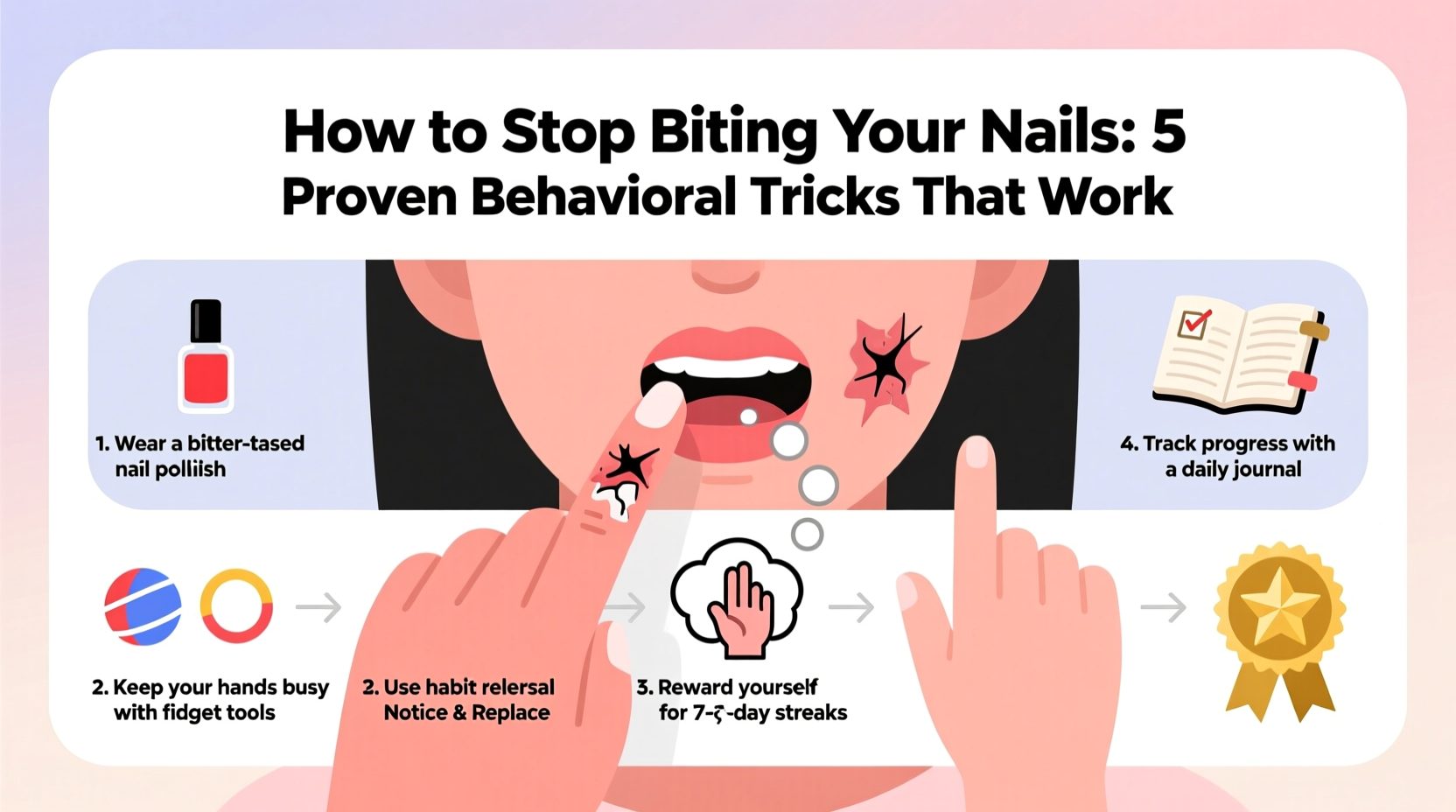
Nail biting typically begins in childhood and persists into adulthood when not addressed. It functions as a coping mechanism—a way to manage anxiety, focus attention, or relieve restlessness. For some, it’s triggered by concentration; for others, it flares during periods of emotional strain or idle time. What starts as occasional chewing becomes an automatic loop: a trigger prompts the urge, the person bites, and temporary relief reinforces the behavior.
This cycle is governed by what psychologists call the \"habit loop\": cue, routine, reward. To disrupt it, you don’t need more discipline—you need better design. By identifying personal triggers and inserting alternative actions, you can reroute the neural pathway responsible for the compulsion.
“Habit change isn't about white-knuckling your way through cravings. It's about engineering your environment and responses so the old behavior no longer fits.” — Dr. Rebecca Tran, Cognitive Behavioral Therapist
Step-by-Step Guide to Rewiring the Habit Loop
Breaking nail biting requires a systematic approach. Here’s a six-phase process grounded in cognitive-behavioral therapy (CBT) and habit formation research:
- Track Your Triggers (Days 1–3): Carry a small notebook or use a notes app. Each time you feel the urge to bite—or catch yourself mid-bite—record the time, location, emotional state, and what you were doing. Look for patterns: Is it while working at your desk? During phone calls? When feeling anxious?
- Create Awareness Cues: Once common triggers are identified, place visual reminders where those situations occur. A sticky note on your monitor saying “Hands down” or setting a recurring phone alert labeled “Check your fingers” interrupts autopilot mode.
- Replace the Routine: Choose a substitute behavior that satisfies the same sensory need without damage. Examples include squeezing a stress ball, chewing sugar-free gum, or using a fidget ring. The replacement must be accessible and satisfying enough to compete with the original habit.
- Modify Accessibility: Make nail biting physically harder. File nails short and smooth daily. Apply bitter-tasting polish like Thumbs Up or Mavala Stop. Some find success wearing cotton gloves at home or applying acrylic tips as physical barriers.
- Reinforce Progress Publicly: Share your goal with someone you trust. Daily check-ins increase accountability. Consider tracking streaks on a calendar—each day without biting becomes visible proof of progress.
- Reward Small Wins: After one week of consistent effort, reward yourself with something meaningful but unrelated—like a movie, a meal out, or a new book. Positive reinforcement strengthens motivation.
Behavioral Substitution Techniques That Work
The brain craves consistency. When you remove a familiar behavior, you must offer a viable alternative, otherwise relapse is likely. Effective substitutes mimic the physical sensation or mental function of nail biting.
| Trigger Type | Common Context | Recommended Substitute |
|---|---|---|
| Anxiety Relief | Before meetings, exams, or conflicts | Deep breathing + holding textured stone |
| Fidgeting / Boredom | Watching TV, commuting, waiting | Finger exerciser or pocket-sized puzzle toy |
| Concentration Focus | Working, reading, problem-solving | Chewing gum or doodling on paper |
| Idle Hands | At home, lying in bed | Cotton gloves or moisturizing hand cream ritual |
One particularly effective method is called “competing response training,” used in habit reversal therapy (HRT). When the urge arises, immediately engage a physically incompatible action—like clenching fists for 30 seconds or placing hands under thighs. Over time, this creates new muscle memory that overrides the biting impulse.
Real Example: From Chronic Biter to Smooth Nails in 8 Weeks
Sarah, a 29-year-old graphic designer, had bitten her nails since age 10. Her fingertips were often raw, and she avoided social situations requiring hand exposure. After years of failed attempts—bitter polish, bandages, verbal promises—she committed to a structured behavioral plan.
She began by journaling for three days and discovered her peak triggers: late-afternoon fatigue and nighttime scrolling. She placed a stress putty on her desk and switched to audiobooks before bed (removing screen time). She applied clear gel overlays to protect regrowth and painted one nail red each Sunday as a progress marker.
By week four, she experienced fewer urges. By week eight, her nails extended 5mm beyond the fingertip—the longest they’d been in two decades. “It wasn’t one big moment,” she said. “It was noticing I hadn’t bitten all day, then all week. That built real confidence.”
Essential Checklist to Stay on Track
- ✅ Identify your top 3 nail-biting triggers
- ✅ Choose 2 substitute behaviors and keep them nearby
- ✅ Apply bitter polish or wear protective coverings daily
- ✅ Set three daily phone reminders to check hand positioning
- ✅ Mark a calendar for each day without biting
- ✅ Schedule a weekly review to assess progress and adjust tactics
- ✅ Plan a non-food reward for reaching 7, 14, and 30-day milestones
Common Mistakes That Derail Progress
Many attempts fail not due to lack of desire, but because of predictable pitfalls. Avoid these:
- All-or-nothing thinking: One slip doesn’t erase progress. Relapses are part of learning. Analyze what triggered it and refine your strategy.
- Ignoring environmental cues: If you always bite while driving, keep a grip cushion or sunflower seeds in the car. Modify the context, not just the behavior.
- Underestimating early urges: The first 48 hours after starting are critical. Have your tools ready—don’t wait until the craving hits.
- Skipping rewards: Delayed gratification weakens resolve. Immediate, tangible rewards strengthen new pathways.
Another frequent error is focusing solely on stopping instead of building. Lasting change occurs when you shift identity—from “I’m trying not to bite” to “I’m someone who takes care of their hands.” Small rituals reinforce this: applying cuticle oil, filing neatly, admiring growth.
“You don’t rise to the level of your goals. You fall to the level of your systems.” — James Clear, author of *Atomic Habits*
Frequently Asked Questions
How long does it take to stop biting nails permanently?
There’s no fixed timeline. Research suggests habit extinction can take anywhere from 21 to 90 days depending on frequency, emotional roots, and consistency of intervention. Most see noticeable reduction within two weeks when using structured techniques. Permanent change comes from sustained replacement, not mere suppression.
Can nail biting return after quitting?
Yes—especially during high-stress periods or life disruptions. That’s why maintaining one or two substitute behaviors long-term is crucial. Think of it like fitness: once you build strength, you still need maintenance. Keep your tools accessible and remain aware of early warning signs.
Are there medical treatments for severe cases?
In persistent cases linked to OCD or anxiety disorders, professional support may be needed. Cognitive-behavioral therapy (CBT), particularly habit reversal training (HRT), has strong clinical backing. In some instances, doctors may recommend medication if underlying conditions are present. However, most cases respond well to behavioral self-management.
Conclusion: Build a Life Where Nail Biting No Longer Fits
Stopping nail biting isn’t about resisting temptation. It’s about designing a lifestyle where the habit no longer serves you. By mapping triggers, installing friction, and rewarding new routines, you create conditions for automatic success. The techniques outlined here don’t demand perfection—they require awareness, patience, and small, repeated actions.
Your hands are constantly visible, expressive tools of connection and work. Let them reflect the care you’re capable of giving yourself. Start tonight: file your nails smooth, place a stress ball by your couch, and commit to one day at a time. Growth begins not with flawless execution, but with consistent intention.




 浙公网安备
33010002000092号
浙公网安备
33010002000092号 浙B2-20120091-4
Comments
No comments yet. Why don't you start the discussion?