
Nighttime has become synonymous with screen glow. For millions, the ritual of lying in bed with a phone in hand turns into hours lost to endless social media feeds, news alerts, and viral videos. This behavior—commonly known as “doom scrolling”—is more than just procrastination. It’s a compulsive loop fueled by anxiety, dopamine dependency, and poor sleep hygiene. The consequences are real: disrupted circadian rhythms, increased stress, and diminished mental clarity the next day.
The good news is that breaking free from this cycle doesn’t require willpower alone. By understanding the psychological mechanisms behind doom scrolling, you can deploy targeted, evidence-based strategies that make putting the phone down not only possible but easier over time. This article outlines practical, neuroscience-informed techniques to help you reclaim your evenings and protect your mental health.
The Psychology Behind Doom Scrolling
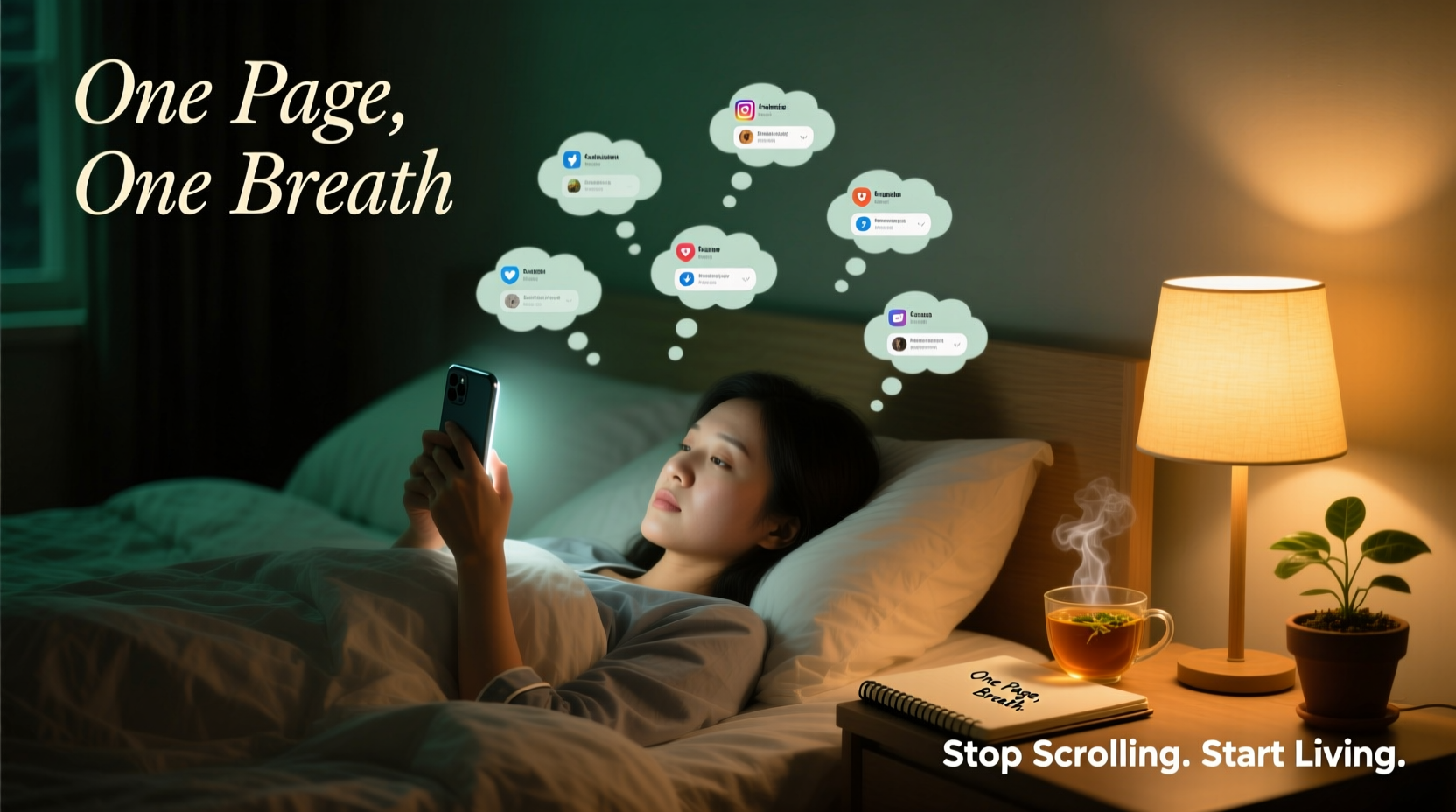
Doom scrolling isn’t simply a bad habit—it’s a behavioral pattern rooted in how our brains respond to digital stimuli. When we open an app like Instagram, Twitter (X), or TikTok, we’re immediately met with unpredictable rewards: a funny meme, a concerning headline, a friend’s vacation photo. This unpredictability mimics a slot machine, triggering dopamine release each time something new appears. Over time, the brain begins to crave this intermittent reinforcement, especially during periods of low stimulation or emotional discomfort.
At night, when the mind winds down and anxieties surface, scrolling becomes a form of emotional regulation—or avoidance. Instead of confronting feelings of loneliness, stress, or uncertainty, we distract ourselves with content. The problem? Most of what we consume is emotionally charged, often negative. News headlines amplify fear; social comparisons fuel insecurity. What starts as a five-minute distraction spirals into 45 minutes of heightened anxiety and alertness—exactly the opposite state needed for restful sleep.
“Doom scrolling exploits our brain’s natural vigilance system. We’re wired to pay attention to threats, and digital platforms deliver them in rapid, unrelenting streams.” — Dr. Lisa Feldman Barrett, Neuroscientist and author of *How Emotions Are Made*
Psychological Tricks to Break the Cycle
Changing this behavior requires more than setting a bedtime alarm. Lasting change comes from rewiring the triggers, routines, and rewards associated with nighttime phone use. Below are seven psychological strategies backed by cognitive science and behavioral psychology.
1. Use the 10-Minute Rule to Create Friction
One of the most effective ways to interrupt automatic behaviors is to introduce friction. The 10-minute rule works on this principle: before unlocking your phone at night, you must wait 10 minutes doing nothing else—no multitasking, no lying in bed thinking. Simply sit or lie quietly.
This pause disrupts the autopilot mode. In those 10 minutes, your brain shifts from impulsive reactivity to reflective awareness. Often, the urge to scroll fades. If it doesn’t, you’ve created space to ask: Am I bored? Anxious? Actually interested in what I’m about to view?
2. Reframe Your Phone as a Tool, Not a Companion
Many people unconsciously treat their phones like emotional support objects. They provide instant connection, entertainment, and information—functions once fulfilled by books, conversation, or quiet reflection. To reduce dependency, consciously redefine your relationship with the device.
Start by renaming your phone in your mind: instead of “my phone,” call it “the internet tool” or “communication device.” This subtle linguistic shift activates cognitive distancing, helping you see the object objectively rather than as an extension of yourself.
3. Implement the “If-Then” Plan (Implementation Intentions)
Research shows that specific action plans dramatically increase follow-through. Known as “implementation intentions,” these are structured as: If X happens, then I will do Y.
Examples relevant to stopping doom scrolling:
- If I pick up my phone after 9 PM, then I will place it in the other room and read a physical book.
- If I feel the urge to check social media in bed, then I will write down three things I’m grateful for instead.
- If I finish dinner, then I will charge my phone outside the bedroom.
These pre-decisions reduce decision fatigue at vulnerable moments. You’re not relying on willpower in the moment—you’ve already made the choice.
4. Leverage the Power of Environmental Design
Your environment shapes your behavior far more than motivation does. If your phone is within arm’s reach at night, odds are high you’ll use it. The solution? Redesign your space to support your goals.
Charge your phone in another room. Use a traditional alarm clock instead of your phone. Place a paperback book or journal on your nightstand as a visual cue for healthier alternatives.
Even small changes in layout create powerful behavioral nudges. A 2020 study published in *Nature Human Behaviour* found that participants who kept phones out of the bedroom reduced evening screen time by 47% on average.
A Step-by-Step Guide to a Scroll-Free Night
Changing habits takes consistency and structure. Follow this six-step timeline to transition from chronic doom scrolling to intentional disconnection.
- 6:00 PM – Set a Digital Curfew Reminder
Create a daily calendar alert titled “Phone Wind Down.” This signals the start of your transition period. - 6:30 PM – Disable Non-Essential Notifications
Turn off social media, news, and message alerts. Allow only calls and texts from key contacts. This reduces pull-to-check impulses. - 7:00 PM – Engage in a Replacement Activity
Replace screen time with a fulfilling offline activity: cooking, drawing, stretching, or talking with a partner. Habit substitution is more effective than pure elimination. - 8:30 PM – Begin Physical Wind-Down Routine
Dim lights, take a warm shower, sip herbal tea. These cues signal your brain that sleep is approaching, making screens less appealing. - 9:00 PM – Execute Your “If-Then” Plan
Place your phone in a designated charging station outside the bedroom. If you need it for emergencies, enable Do Not Disturb with exceptions. - 9:15 PM Onward – Practice Mindful Disconnection
Read fiction, journal, or practice light meditation. Avoid stimulating content. Focus on sensory experiences: texture of paper, warmth of tea, sound of breathing.
Do’s and Don’ts of Nighttime Phone Management
| Do | Don’t |
|---|---|
| Use blue light filters if screen use is unavoidable | Scroll social media in bed—even for “just a few minutes” |
| Keep a non-digital alarm clock | Use your phone as an alarm while keeping it nearby |
| Practice gratitude journaling before sleep | Consume news or intense content within one hour of bedtime |
| Set a consistent wind-down routine | Wait until you feel tired to start preparing for sleep |
| Use grayscale mode on your phone at night | Rely solely on self-control without environmental supports |
Real-Life Example: How Sarah Reduced Her Screen Time by 80%
Sarah, a 34-year-old marketing consultant, routinely spent 2–3 hours each night scrolling through LinkedIn, Twitter, and news sites. She’d wake up groggy, anxious, and unable to focus. After learning about the 10-minute rule and implementation intentions, she committed to change.
She started by charging her phone in the kitchen and replacing bedtime scrolling with reading novels. She set an “if-then” plan: If I feel overwhelmed by work thoughts at night, then I will write them in my journal instead of checking emails.
Within two weeks, her average screen time dropped from 168 minutes to 32 minutes after 8 PM. More importantly, her sleep quality improved, and she reported feeling “less reactive” to stressful content. “I realized I wasn’t missing anything important,” she said. “I was just feeding a habit that made me feel worse.”
Expert Insight: The Role of Emotional Regulation
Doom scrolling often masks deeper emotional needs. Dr. Judson Brewer, a psychiatrist and expert in habit formation, explains:
“Most addictive behaviors are attempts to regulate uncomfortable emotions. Instead of judging yourself for scrolling, get curious: What am I trying to avoid feeling right now? Boredom? Sadness? Uncertainty? Naming the emotion weakens its grip.” — Dr. Judson Brewer, author of *The Craving Mind*
This mindfulness-based approach encourages self-awareness over self-criticism. When you notice the urge to scroll, pause and label the underlying emotion. Often, simply acknowledging it—without acting on it—reduces its intensity.
Checklist: Build Your Anti-Doom Scrolling Routine
Use this checklist nightly to reinforce new habits:
- ✅ Set a digital curfew (e.g., 9 PM)
- ✅ Charge phone outside the bedroom
- ✅ Turn on Do Not Disturb mode
- ✅ Prepare a non-screen activity (book, puzzle, music)
- ✅ Dim lights and lower screen brightness earlier in the evening
- ✅ Practice a 5-minute breathing exercise before bed
- ✅ Reflect: Did I scroll tonight? What triggered it?
Frequently Asked Questions
Why is it so hard to stop doom scrolling even when I know it’s bad for me?
Your brain is responding to powerful psychological triggers: unpredictability, social validation, and threat detection. These activate ancient survival circuits that prioritize immediate engagement over long-term well-being. Breaking the cycle requires structural changes—not just willpower.
What if I need my phone for emergencies?
You can still keep your phone nearby without enabling distractions. Put it on Do Not Disturb mode, allowing only calls from specific contacts (e.g., family). Alternatively, use a secondary device like a smartwatch with emergency alerts. The goal is to minimize temptation while maintaining safety.
Does using grayscale mode really help?
Yes. Studies show that removing color from your phone display reduces its emotional appeal. Color stimulates the brain’s reward system; grayscale makes apps feel less engaging. Try enabling it one hour before bed via your phone’s accessibility settings.
Conclusion: Reclaim Your Nights, Reclaim Your Mind
Doom scrolling thrives in the absence of intention. When nights are unstructured and emotions go unexamined, the phone becomes a default refuge. But every minute spent mindlessly scrolling is a minute stolen from rest, reflection, and recovery.
The strategies outlined here aren’t quick fixes—they’re tools to rebuild your relationship with technology. By introducing friction, redesigning your environment, and understanding the emotional drivers behind your habits, you can break free from the cycle. Start small: implement one trick tonight. Then another tomorrow. Over time, you’ll find that silence is no longer uncomfortable, but deeply nourishing.




 浙公网安备
33010002000092号
浙公网安备
33010002000092号 浙B2-20120091-4
Comments
No comments yet. Why don't you start the discussion?