
It starts innocently enough: you pick up your phone to check the time or respond to one last message. Before you know it, an hour has passed. You’re deep in a loop of news alerts, social media feeds, and viral videos—none of which bring you joy, yet you can’t seem to put the device down. This is doom scrolling, and it’s especially destructive at night when your brain should be winding down for rest.
Doom scrolling isn’t just a bad habit; it’s a behavioral pattern fueled by anxiety, algorithmic design, and the brain’s craving for novelty. Over time, it erodes sleep quality, increases stress, and impairs focus the next day. The good news? With deliberate strategies, you can break the cycle. These aren’t vague suggestions like “use your phone less.” These are specific, actionable steps backed by neuroscience, psychology, and real-world success.
The Psychology Behind Nighttime Doom Scrolling
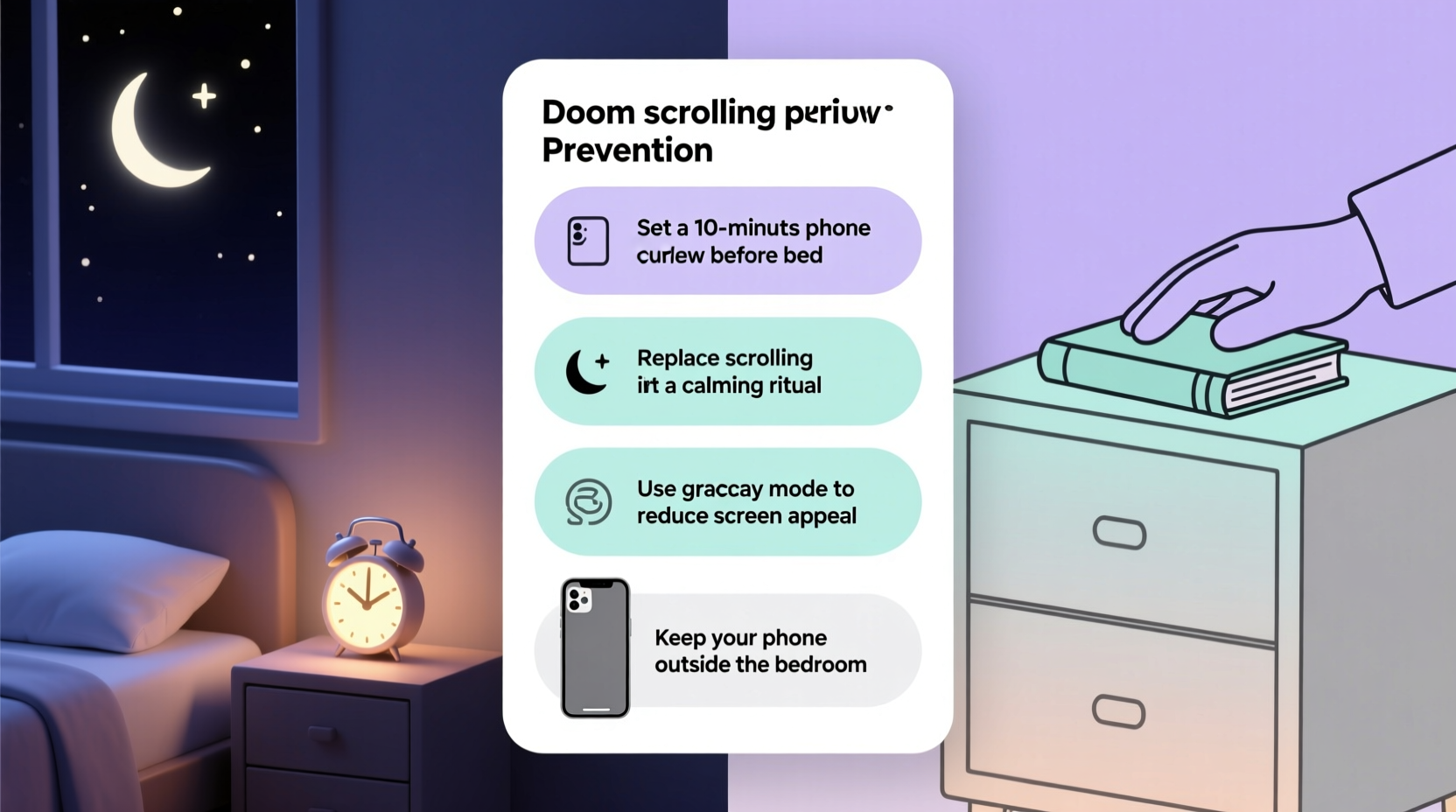
Understanding why we doom scroll is the first step to stopping it. At night, mental fatigue sets in. Willpower is depleted, making it harder to resist impulses. Meanwhile, your phone offers instant dopamine hits through likes, comments, and endless content—exactly what a tired brain craves.
Algorithms are designed to keep you engaged, often prioritizing emotionally charged or negative content because it triggers stronger reactions. A 2023 study from the University of California found that users exposed to negative headlines spent 40% more time on their devices than those shown neutral or positive content. This creates a feedback loop: the more anxious you feel, the more you scroll, which makes you feel worse.
Additionally, nighttime provides fewer distractions. Without work demands or social obligations, your attention defaults to the most accessible stimulus—your phone. It becomes a default coping mechanism for unresolved stress, loneliness, or rumination.
“Doom scrolling is not laziness—it’s a maladaptive response to emotional overload. The brain seeks control through information, even when that information is harmful.” — Dr. Lena Torres, Cognitive Behavioral Therapist
Step-by-Step Guide to Breaking the Cycle
Changing this habit requires structure. Willpower alone won’t cut it. Instead, follow this six-step plan over seven nights to rewire your evening routine.
- Set a digital curfew (7 days out): Choose a time 90 minutes before bed when all screens must be turned off. Use a physical alarm clock so you don’t need your phone to wake up.
- Night 1–2: Track your triggers: Keep a notebook by your bed. Each time you reach for your phone, write down the time, emotion (e.g., boredom, anxiety), and what you were about to do. Patterns will emerge.
- Night 3–4: Replace the habit: Identify a non-screen activity to do immediately after your trigger. Examples: read a book, stretch, journal, or sip herbal tea.
- Night 5: Optimize your environment: Charge your phone outside the bedroom. Place a book or journal where your phone used to be.
- Night 6: Install friction: Enable grayscale mode and disable non-essential notifications. Make scrolling less visually stimulating and more effortful.
- Night 7: Reflect and reset: Review your notes. What worked? What didn’t? Adjust your replacement activities accordingly.
Proven Tips That Actually Work
These aren’t generic “try meditating” suggestions. These are high-leverage interventions tested in clinical and real-life settings.
1. Use Grayscale Mode After Sunset
Color stimulates the brain. Switching your phone to grayscale removes visual appeal from apps, making them less engaging. On iPhone, go to Settings > Accessibility > Display & Text Size > Color Filters. On Android, use Digital Wellbeing > Wind Down. Activate it at 8 PM daily.
2. Create a “Scrolling Budget”
Instead of banning phones entirely, allocate a fixed amount of time—say, 15 minutes—for intentional scrolling. Use a timer. When it ends, the phone goes face-down. This reduces guilt and builds self-trust.
3. Practice the 5-Minute Rule
When you feel the urge to scroll, wait five minutes doing nothing else—just sit. Often, the impulse passes. If it doesn’t, allow yourself to scroll—but only after the wait. This builds mindfulness and weakens automatic behavior.
4. Curate Your Feed Ruthlessly
Unfollow accounts that make you feel anxious, inadequate, or angry. Mute keywords like “crisis,” “outrage,” or “breaking.” Follow calming creators: nature photographers, artists, or comedians who uplift without overstimulation.
5. Replace Scrolling with a “Wind-Down Ritual”
Your brain needs closure. Develop a 20-minute ritual: light stretching, writing three things you’re grateful for, sipping chamomile tea, or listening to a low-stimulus podcast. Consistency signals safety to your nervous system.
| Tactic | How It Works | Time to Effect |
|---|---|---|
| Grayscale Mode | Reduces dopamine response to visuals | Immediate |
| Phone Charging Outside Bedroom | Removes temptation and physical access | 1–3 nights |
| 5-Minute Delay Rule | Interrupts automatic behavior loops | 3–7 days |
| Scrolling Budget | Builds self-regulation without deprivation | 5–10 days |
| Wind-Down Ritual | Signals brain it’s safe to relax | 1–2 weeks |
Mini Case Study: How Sarah Reduced Her Nightly Scroll Time from 2 Hours to 20 Minutes
Sarah, a 34-year-old project manager, routinely scrolled until 1:30 AM, waking up exhausted. She felt trapped: anxious if she didn’t check updates, guilty when she did. After learning about doom scrolling, she implemented three changes:
- She moved her phone charger to the kitchen and bought a $12 alarm clock.
- She set grayscale mode to activate at 8 PM.
- She started reading fiction for 20 minutes before bed—something she hadn’t done since college.
Within five nights, her bedtime shifted from 1:30 AM to 11:15 PM. She reported feeling “less mentally cluttered” and more present at work. After two weeks, she stopped checking news sites altogether at night, opting instead for a gratitude journal. “I realized I wasn’t staying informed—I was feeding my anxiety,” she said. “Now I feel in control again.”
Checklist: Your 7-Day Action Plan to Stop Doom Scrolling
Follow this checklist each night to build sustainable change:
- ☑ Set a digital curfew (90 minutes before bed)
- ☑ Charge phone outside the bedroom
- ☑ Enable grayscale mode automatically
- ☑ Turn off non-essential notifications
- ☑ Prepare a non-screen wind-down activity (book, journal, tea)
- ☑ Unfollow 5 anxiety-inducing accounts
- ☑ Use a physical alarm clock
- ☑ Write down your top trigger (boredom, stress, etc.)
- ☑ Practice the 5-minute delay rule when urges arise
- ☑ Reflect weekly: what improved? What needs adjusting?
What Not to Do: Common Mistakes That Keep You Stuck
Many people fail because they rely on motivation or extreme restrictions. Avoid these pitfalls:
| Do’s | Don’ts |
|---|---|
| Gradually reduce scroll time | Try to quit cold turkey |
| Use environmental design (e.g., charging outside bedroom) | Rely solely on willpower |
| Replace scrolling with a satisfying alternative | Leave a void—doing nothing invites relapse |
| Track progress with a simple log | Ignore patterns or skip reflection |
| Be kind to yourself after setbacks | Guilt-trip or shame yourself into change |
Deprivation backfires. Telling yourself “no more phone” creates tension. Instead, focus on adding better habits. The goal isn’t to eliminate screen time—it’s to reclaim agency over your attention.
FAQ
What if I need my phone for emergencies?
If you’re responsible for someone (e.g., a caregiver or parent), keep your phone on silent but accessible—just not in your hand. Place it across the room. You’ll still hear urgent calls, but the distance reduces temptation. Consider using a smartwatch for emergency alerts only.
Does doom scrolling really affect sleep quality?
Yes. Beyond blue light disrupting melatonin, the *content* matters. Negative or stressful information activates the amygdala, increasing cortisol levels. A 2022 study in Sleep Health found participants who engaged in doom scrolling took 30% longer to fall asleep and reported lower sleep satisfaction—even when screen time was limited.
Can I scroll earlier in the evening instead?
Timing matters. Scrolling before 8 PM may be less disruptive, but monitor how you feel afterward. If you notice increased rumination or difficulty focusing on relaxing activities, limit total consumption. Quality and emotional impact matter more than timing alone.
Conclusion: Reclaim Your Nights, One Minute at a Time
Doom scrolling doesn’t have to be your nightly default. By understanding the triggers, designing your environment, and replacing the habit with meaningful rituals, you can break free. This isn’t about perfection—it’s about progress. Some nights you’ll succeed; others, you might slip. What matters is showing up again the next day with intention.
Start tonight. Move your charger. Pick up a book. Sit with the discomfort of not knowing what’s happening online for a few minutes. In time, you’ll rediscover quiet, presence, and the deep rest your mind and body crave.




 浙公网安备
33010002000092号
浙公网安备
33010002000092号 浙B2-20120091-4
Comments
No comments yet. Why don't you start the discussion?