
It starts innocently enough: you pick up your phone to check the time or respond to one message. Minutes turn into an hour. The screen glows in the dark as headlines, social updates, and endless videos pull you deeper. You're not alone. Doomscrolling—the compulsive consumption of negative or distressing online content—has become a modern epidemic, especially at night when willpower is low and emotional vulnerability is high.
Nighttime scrolling disrupts sleep, increases anxiety, and dulls mental clarity the next day. But understanding the habit isn’t enough. What works are deliberate, sustainable changes grounded in behavioral psychology and neuroscience. This guide offers proven strategies—not just theory—that real people use to break free from the cycle and regain control of their evenings.
The Psychology Behind Nighttime Doomscrolling
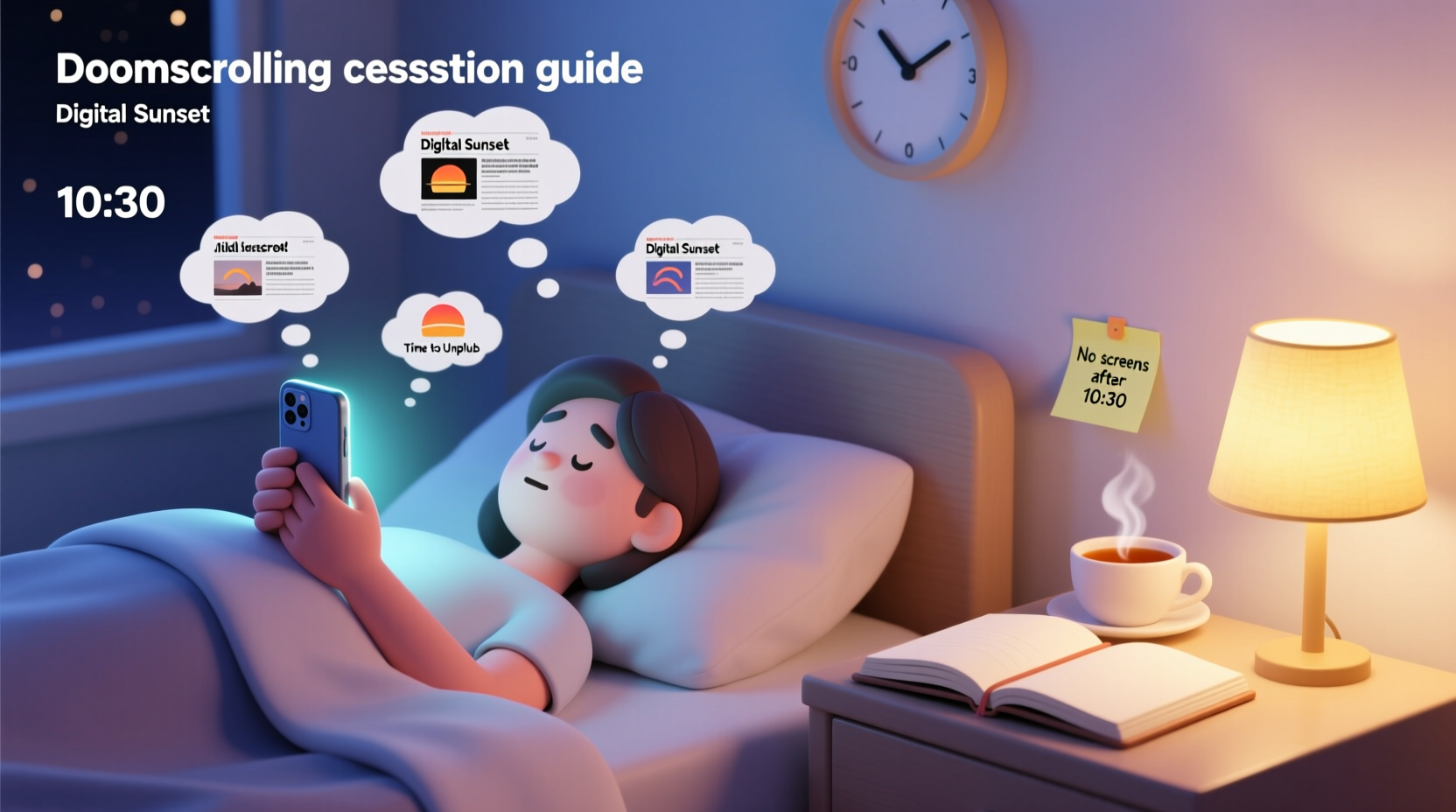
Doomscrolling isn’t simply a lack of discipline. It’s a complex interplay of emotional regulation, dopamine-driven feedback loops, and circadian biology. At night, stress hormones like cortisol may still be elevated, especially after a demanding day. The brain seeks relief. Social media, news feeds, and algorithmic content offer instant distraction—a temporary escape from discomfort.
However, this relief comes at a cost. Negative content activates the amygdala, the brain’s threat center, increasing alertness when it should be winding down. Simultaneously, the constant stream of micro-rewards (likes, reactions, new posts) reinforces compulsive checking. Over time, the behavior becomes automatic, triggered by fatigue, loneliness, or even boredom.
“Doomscrolling is less about information-seeking and more about emotional avoidance. People scroll to numb, not to learn.” — Dr. Lena Torres, Cognitive Behavioral Therapist and Digital Wellness Researcher
Breaking the cycle requires replacing the habit with healthier alternatives that meet the same underlying needs: connection, stimulation, and emotional release—without the neurological toll.
Practical Habits That Actually Work
Success doesn’t come from sheer willpower. It comes from designing your environment and routine to support better choices. Below are seven evidence-based strategies used by individuals who’ve successfully reduced or eliminated nighttime doomscrolling.
1. Create a Phone-Free Wind-Down Routine
Your evening routine sets the tone for your relationship with screens. Replace the last 60 minutes of screen time with activities that signal safety and relaxation to your nervous system.
- Read a physical book under warm lighting
- Practice gentle stretching or yoga
- Journal three things you’re grateful for
- Brew herbal tea (chamomile, passionflower, or valerian root)
These activities lower cortisol, increase melatonin, and reduce cognitive arousal—preparing your brain for rest without digital interference.
2. Set a “Digital Sunset” Time
Choose a fixed time each night—ideally 90 minutes before bed—to stop using all screens. Treat it like a curfew. Consistency strengthens the habit over time.
Use built-in tools like iOS Screen Time or Android Digital Wellbeing to schedule app limits and downtime. Enable grayscale mode after sunset to make the screen visually unappealing.
3. Replace Scrolling With a “Closing Ritual”
Instead of leaving a void where scrolling once lived, fill it with a meaningful ritual. A closing ritual provides closure to the day and satisfies the brain’s craving for completion.
- Spend 5 minutes reflecting on the day: What went well? What could improve?
- Write down tomorrow’s top three priorities.
- Listen to calming music or a short guided meditation (limit to 10–15 minutes).
- Turn off lights systematically, signaling transition to rest.
This structured wind-down reduces mental clutter and gives the brain a clear cue: the day is over.
4. Use Physical Barriers
Behavioral science shows that increasing friction reduces unwanted actions. Make accessing your phone inconvenient at night.
- Place your phone in another room after dinner.
- Use a lockbox with a timer (e.g., Kitchen Safe) to restrict access during key hours.
- Keep only essential devices in the bedroom—ideally none.
One study found that participants who stored phones in a different room reported 32% better sleep quality within two weeks.
5. Reframe Your Relationship With News
Doomscrolling often centers around news consumption. The brain is wired to prioritize negative information—a survival mechanism known as the negativity bias. But constant exposure desensitizes and overwhelms.
Curate your sources. Unfollow or mute accounts that trigger anxiety. Subscribe to newsletters that summarize global events without sensationalism (e.g., The Weekender, Sifted, or Positive News).
Step-by-Step Guide to Break the Cycle in 7 Days
Changing a deeply ingrained habit takes time, but small daily shifts compound quickly. Follow this timeline to build momentum and create lasting change.
| Day | Action Step | Purpose |
|---|---|---|
| 1 | Track your current scrolling time using screen time settings | Create awareness of baseline behavior |
| 2 | Set a digital sunset time (e.g., 8:30 PM) | Establish a clear boundary |
| 3 | Charge phone outside bedroom; buy an alarm clock | Remove temptation |
| 4 | Replace 30 minutes of scrolling with reading or journaling | Introduce a healthy alternative |
| 5 | Enable grayscale mode after sunset | Reduce visual appeal of the screen |
| 6 | Unfollow 5 anxiety-inducing social media accounts | Cleanse your digital environment |
| 7 | Implement a 10-minute evening reflection ritual | Reinforce closure and mindfulness |
By day seven, you’ll have disrupted the automaticity of doomscrolling and laid the foundation for a calmer, more intentional evening rhythm.
Mini Case Study: How Sarah Regained Her Evenings
Sarah, a 34-year-old project manager, routinely spent 2–3 hours each night scrolling through Twitter and news sites. She’d fall asleep late, wake up groggy, and feel anxious before her feet even hit the floor.
After learning about doomscrolling’s impact on sleep architecture, she decided to experiment. She set a digital sunset at 8:00 PM, moved her phone to the kitchen, and began reading fiction before bed. Within five days, she noticed she was falling asleep faster. By week two, she stopped reaching for her phone out of habit. After a month, her average sleep increased from 5.8 to 7.2 hours per night, and her morning anxiety dropped significantly.
“I didn’t realize how much mental space I was giving to things I couldn’t control,” she said. “Now, my evenings feel like mine again.”
Do’s and Don’ts of Nighttime Digital Hygiene
Avoid common pitfalls by following these guidelines.
| Do | Don’t |
|---|---|
| Use blue light-blocking glasses if screen use is unavoidable | Watch intense shows or stressful content before bed |
| Keep a notebook by your bed to jot down thoughts instead of texting | Respond to emails or messages after 9 PM |
| Practice a 5-minute breathing exercise to calm the nervous system | Scroll in bed—even “just for five minutes” |
| Use apps like Freedom or Forest to block distracting sites | Rely solely on willpower without environmental support |
Frequently Asked Questions
What if I need my phone for emergencies?
If you’re responsible for urgent calls (e.g., healthcare, parenting), keep the phone nearby but in Do Not Disturb mode. Allow calls only from specific contacts. Use a smartwatch to receive alerts silently without unlocking your phone.
Isn’t some screen time okay before bed?
Limited, intentional use—like watching a calming show with a partner—is different from uncontrolled scrolling. The key is duration, content, and proximity. If you use a screen, reduce brightness, enable night mode, and stop at least 60 minutes before sleep.
How long does it take to break the doomscrolling habit?
Research suggests it takes 21 to 30 days to form a new habit, but consistency matters more than perfection. Expect setbacks. What counts is returning to your plan without self-criticism. Most people see noticeable improvement within two weeks of structured effort.
Checklist: Build Your Anti-Doomscrolling Plan
Use this checklist to implement lasting change:
- ☑ Determine your current bedtime and set a digital sunset 90 minutes earlier
- ☑ Move phone charging station outside the bedroom
- ☑ Purchase a non-digital alarm clock
- ☑ Choose a replacement activity (reading, journaling, stretching)
- ☑ Schedule one weekly digital detox hour (no screens, no exceptions)
- ☑ Unfollow or mute 10 emotionally draining accounts
- ☑ Enable grayscale mode after sunset
- ☑ Install a website blocker for late-night triggers (e.g., Reddit, news sites)
- ☑ Write a short evening reflection prompt (“What did I do well today?”)
- ☑ Review screen time reports every Sunday night
Completing even five of these steps can dramatically reduce nighttime scrolling and improve sleep quality.
Conclusion: Reclaim Your Nights, Reclaim Your Life
Doomscrolling steals more than time—it steals peace, presence, and potential. Every night spent lost in a loop of negative content is a night not spent resting, reflecting, or connecting meaningfully with yourself or others.
The habits outlined here aren’t quick fixes. They’re building blocks for a more intentional life. Start small. Pick one strategy—charging your phone outside the bedroom, setting a digital sunset, or beginning a journaling practice—and commit to it for seven days. Track how you feel. Notice the subtle shifts in your mood, energy, and focus.




 浙公网安备
33010002000092号
浙公网安备
33010002000092号 浙B2-20120091-4
Comments
No comments yet. Why don't you start the discussion?