
In the quiet hours after dark, when the house settles and responsibilities fade, many of us reach for our phones. What begins as a quick check often spirals into an endless loop of news updates, social media feeds, and alarming headlines. This behavior—known as doomscrolling—has become a modern sleep thief. It's not just time that’s lost; it’s mental clarity, emotional balance, and restorative rest. The blue light, the stress-inducing content, and the psychological pull of infinite scrolling disrupt sleep cycles and amplify anxiety. The good news? Doomscrolling is a habit, not a life sentence. With intentional changes, you can break free and create a calming pre-sleep routine that supports better sleep and long-term well-being.
Why Doomscrolling Happens—and Why It’s Harmful
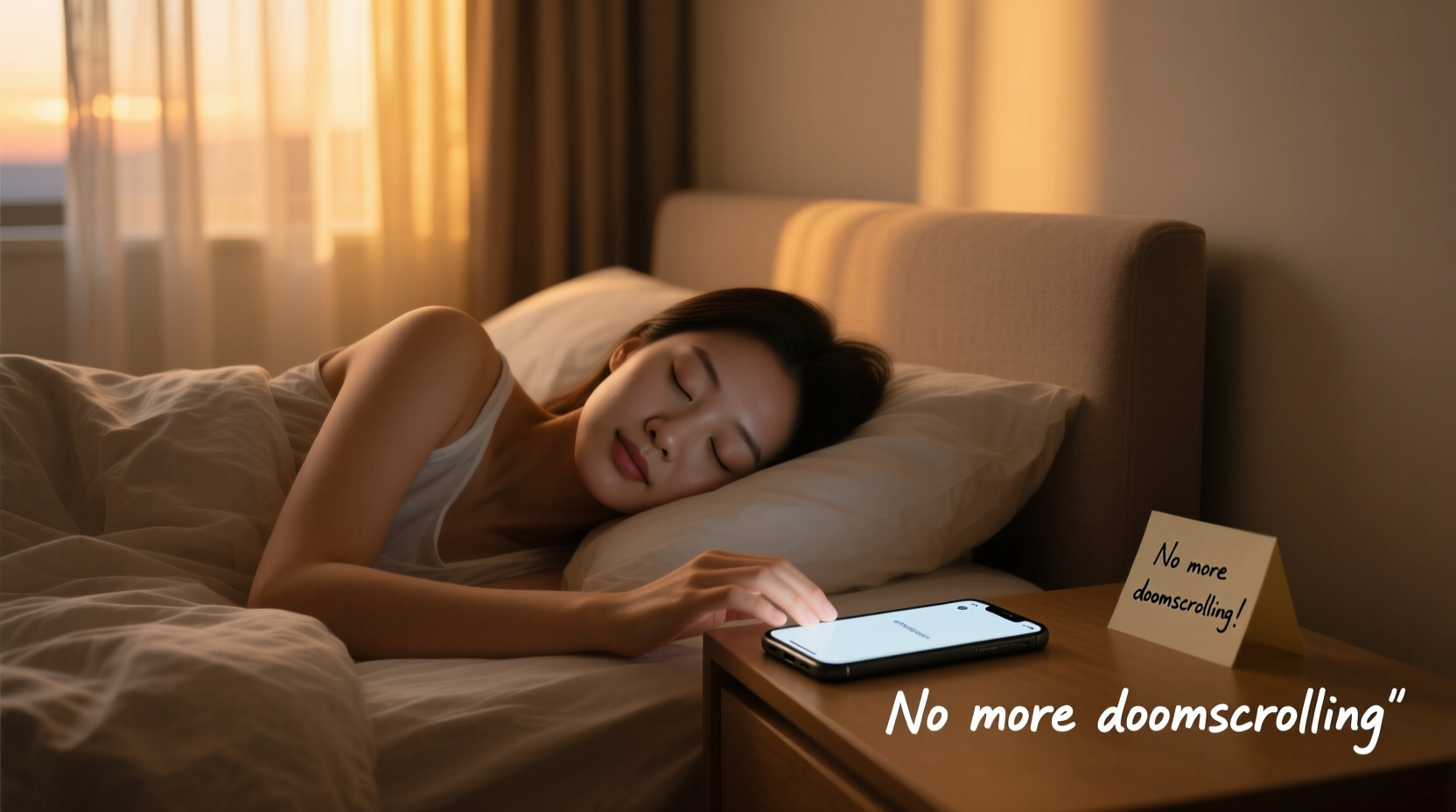
Doomscrolling thrives on psychological triggers. As the day winds down, fatigue sets in, decision-making weakens, and emotional regulation declines. This makes us more vulnerable to emotionally charged content. Platforms are designed to exploit this vulnerability. Algorithms prioritize sensational or negative news because it captures attention longer. A 2023 study from the University of California found that participants exposed to negative headlines before bed experienced significantly reduced REM sleep and increased cortisol levels—the stress hormone.
The consequences extend beyond poor sleep. Chronic doomscrolling has been linked to heightened anxiety, depressive symptoms, and a distorted perception of reality. When we consume a steady stream of worst-case scenarios, our brain starts to believe the world is more dangerous than it is. This cognitive distortion reinforces the urge to keep checking—a vicious cycle where fear drives engagement, which in turn fuels more fear.
“Nighttime screen use, especially with emotionally charged content, signals the brain to stay alert when it should be winding down.” — Dr. Lena Torres, Sleep Neurologist at Stanford Medicine
Step-by-Step Guide to Breaking the Cycle
Changing any habit requires structure, awareness, and consistency. Here’s a practical, six-step approach to end bedtime doomscrolling for good.
- Set a Digital Curfew: Choose a cutoff time—ideally 60 to 90 minutes before bed—when all screens go offline. Use phone settings or smart home systems to automate this. For example, set “Screen Time” on iOS or “Digital Wellbeing” on Android to disable apps after 9 PM.
- Replace Scrolling with Rituals: Fill the void with calming activities: reading a physical book, journaling, light stretching, or sipping herbal tea. These behaviors signal safety and relaxation to the nervous system.
- Relocate Your Phone: Charge your phone outside the bedroom. If you use it as an alarm, invest in a basic alarm clock. Physical distance reduces temptation.
- Unfollow, Mute, or Limit Triggers: Audit your social media feeds. Mute accounts that post distressing news or polarizing content. Use app-specific features like “Not Interested” or “See Less” to train algorithms away from negativity.
- Create a Wind-Down Playlist: Curate a playlist of ambient music, nature sounds, or guided meditations. Play it every night to condition your mind for sleep.
- Track Progress Weekly: Keep a simple log. Note how many nights you avoided doomscrolling, how you felt upon waking, and whether sleep improved. Awareness builds motivation.
Do’s and Don’ts of Nighttime Screen Management
| Do | Don’t |
|---|---|
| Use grayscale mode after 8 PM to reduce visual appeal of apps | Scroll through news or social media in bed |
| Enable “Bedtime Mode” to dim notifications and interface | Watch intense shows or read work emails before sleep |
| Keep a notebook by your bed to jot down thoughts instead of reaching for your phone | Respond to messages immediately if they come in late |
| Practice a 5-minute breathing exercise to transition from screen time to rest | Use your phone as the last thing you touch at night |
A Real Example: How Sarah Reclaimed Her Evenings
Sarah, a 34-year-old project manager in Chicago, used to spend 45–90 minutes each night scrolling through Twitter and Reddit. She’d start with a quick update but end up deep in political debates or pandemic-era health threads. “I knew I should stop, but I felt obligated to stay informed,” she said. Over time, her sleep suffered. She’d wake up groggy, anxious, and mentally drained.
After learning about doomscrolling in a wellness workshop, Sarah decided to experiment. She set a hard rule: no screens after 9 PM. Instead, she began reading fiction novels and practicing gratitude journaling. To support the change, she turned on grayscale mode at 8:30 PM and moved her phone charger to the kitchen. The first few nights were tough—she caught herself walking back to her nightstand twice. But by week three, the urge faded. Within a month, she reported falling asleep faster, waking up refreshed, and feeling less reactive during the day.
“It wasn’t about cutting off information,” Sarah reflected. “It was about choosing when and how I engage with it. Now, I catch up on news during lunch, when I’m alert and grounded.”
Building a Sustainable Anti-Doomscrolling Routine
Long-term success depends on replacing the habit with something equally satisfying but healthier. Consider these elements when designing your new routine:
- Environment Design: Make your bedroom a tech-free sanctuary. Remove TVs, tablets, and chargers. Use soft lighting—like a salt lamp or dimmable bulb—to cue relaxation.
- Behavioral Substitution: Identify what need doomscrolling fulfills. Is it boredom? Fear of missing out? A need to process emotions? Address the root cause. If it’s anxiety, try journaling. If it’s boredom, keep a puzzle or coloring book nearby.
- Social Accountability: Tell a partner or friend about your goal. Better yet, create a shared ritual—like evening tea without devices. Shared habits reinforce commitment.
- Gradual Transition: If quitting cold turkey feels impossible, taper down. Reduce scrolling time by 10 minutes every three days until you reach zero.
“The most effective habit changes aren’t willpower-based—they’re environment-based.” — James Clear, author of *Atomic Habits*
Checklist: Your 7-Day Plan to Stop Doomscrolling
Follow this actionable checklist to build momentum and establish lasting change.
- ✅ Turn on grayscale mode one hour before bed
- ✅ Delete or disable one distracting app (e.g., TikTok, Twitter) during nighttime hours
- ✅ Purchase a standalone alarm clock to remove phone dependency
- ✅ Choose a replacement activity (reading, drawing, meditation)
- ✅ Set up a charging station outside the bedroom
- ✅ Mute three high-stress social media accounts or groups
- ✅ Write down one positive thing from your day before sleep
- ✅ Review your progress every Sunday night
Frequently Asked Questions
Is doomscrolling the same as regular scrolling?
No. Regular scrolling may involve neutral or entertaining content consumed with intention. Doomscrolling specifically refers to compulsively consuming negative, fear-inducing, or anxiety-provoking information, often past the point of enjoyment or usefulness. It’s characterized by a sense of inability to stop, even when aware of its negative impact.
What if I need my phone for work or emergencies?
If your job requires nighttime availability, set strict boundaries. Use “Do Not Disturb” to allow only priority contacts (e.g., family, on-call supervisors). Keep work-related apps in a separate folder labeled “Emergency Only.” Train others to respect your downtime by communicating your off-hours clearly.
Can I still check the news before bed?
It’s best to avoid news consumption within two hours of sleep. If staying informed is important, schedule a 10–15 minute window earlier in the evening—preferably with trusted, balanced sources. Avoid live updates or comment sections, which tend to amplify emotional reactivity.
Conclusion: Reclaim Your Nights, Restore Your Mind
Stopping doomscrolling isn’t just about better sleep—it’s about reclaiming agency over your attention and emotional state. Every night presents an opportunity to choose peace over panic, presence over paralysis. The habits you build now compound over time, shaping not only how you sleep but how you feel each morning and function throughout the day. You don’t need perfection. You need persistence. Start tonight: put the phone down, pick up a book, and breathe deeply. Your future self will thank you for the quiet, the darkness, and the rest you finally allow yourself.




 浙公网安备
33010002000092号
浙公网安备
33010002000092号 浙B2-20120091-4
Comments
No comments yet. Why don't you start the discussion?