
In the quiet hours of the night, you pick up your phone to check the time—only to find yourself 45 minutes deep in a spiral of breaking news, social media updates, and viral controversies. You're not alone. This compulsive habit, known as doomscrolling, has become a modern epidemic. It’s the act of endlessly consuming negative or distressing content online, often late at night, despite knowing it harms your mood and sleep. The result? A frayed attention span, heightened anxiety, and a growing sense of helplessness.
Doomscrolling doesn’t just waste time—it rewires how your brain processes information. Over time, constant exposure to fragmented, emotionally charged content erodes your ability to concentrate, think critically, and engage in deep work. But the good news is that this cycle can be broken. With intentional habits, environmental tweaks, and cognitive awareness, you can regain control over your attention and digital behavior.
Understanding Doomscrolling: Why We Can’t Look Away
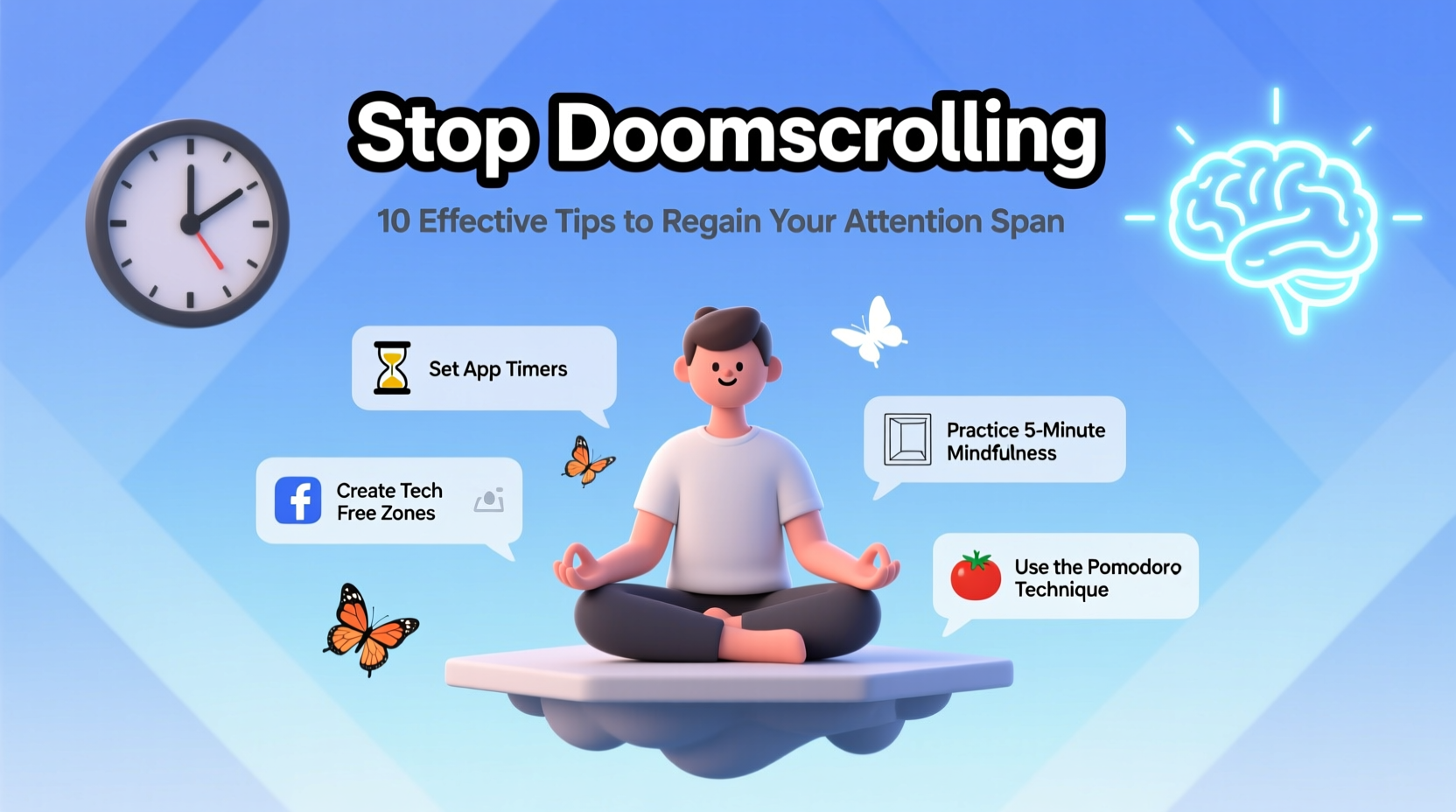
The human brain is wired to respond to novelty and threat. Social media platforms exploit these instincts by using algorithms that prioritize emotionally charged content—especially fear-inducing headlines or conflict-driven posts. Each scroll delivers a micro-dose of dopamine, reinforcing the behavior even when it leaves you feeling worse afterward.
Psychologists refer to this as \"negative reinforcement\": you’re not scrolling because it feels good, but because it temporarily distracts you from discomfort—loneliness, stress, boredom. The more uncertain or anxious the world feels, the more tempting the escape becomes. And once the habit forms, it’s self-perpetuating: doomscrolling disrupts sleep, which impairs emotional regulation, making you more vulnerable to the next binge.
“Doomscrolling is not a failure of willpower—it’s a predictable response to an environment designed to keep us engaged at any cost.” — Dr. Anna Lembke, Stanford psychiatrist and author of *Dopamine Nation*
Practical Strategies to Break the Cycle
Stopping doomscrolling isn’t about sheer discipline. It’s about redesigning your environment, routines, and mindset to reduce temptation and increase intentionality. Below are seven evidence-based approaches to help you regain control.
1. Set Clear Digital Boundaries with Time and Space
One of the most effective ways to curb doomscrolling is to create physical and temporal barriers between you and your devices. The brain follows cues from the environment—if your phone is always within reach, especially at bedtime, resistance becomes nearly impossible.
Designate specific times for checking news or social media—such as 15 minutes after lunch—and stick to them. Outside those windows, keep apps closed or use screen-time tools to block access.
2. Replace the Habit with a Healthier Ritual
Habits are sustained by triggers, routines, and rewards. To break doomscrolling, identify what triggers it (e.g., stress, boredom, insomnia) and replace the routine with something equally satisfying but constructive.
- If you scroll when stressed: try journaling three thoughts or doing five minutes of box breathing.
- If you scroll out of boredom: keep a book, puzzle, or sketchpad nearby.
- If you scroll before bed: establish a wind-down ritual like herbal tea, light stretching, or reading fiction.
The key is consistency. After several repetitions, your brain begins to associate the trigger with the new behavior instead of reaching for the phone.
3. Curate Your Digital Diet
You wouldn’t eat junk food all day and expect to feel healthy. Yet many consume a steady stream of digital “junk”—outrage clips, sensational headlines, endless comment threads—without considering the psychological toll.
Be selective about what you allow into your feed:
- Unfollow accounts that consistently make you feel anxious, angry, or inadequate.
- Mute keywords like “crisis,” “disaster,” or “outrage” in social media settings.
- Follow creators who offer solutions, humor, or beauty—not just problems.
- Subscribe to newsletters that summarize news weekly instead of hourly.
Consider switching from real-time feeds to scheduled, curated updates. For example, read a morning news digest instead of refreshing Twitter throughout the day.
4. Use Technology to Fight Technology
Ironically, some apps can help you disengage from others. Leverage built-in tools to enforce limits:
| Platform | Feature | How to Use It |
|---|---|---|
| iOS | Screen Time + App Limits | Set 10-minute daily limits on social media apps. |
| Android | Digital Wellbeing | Enable Focus Mode during work or sleep hours. |
| All Devices | Freedom / Cold Turkey | Block distracting sites across devices simultaneously. |
| Browser | News Feed Eradicator | Replaces Facebook feed with an inspirational quote. |
Go further by disabling non-essential notifications. Every ping is an invitation to interrupt your focus. Turn off alerts for everything except direct messages and calls from close contacts.
A Real-Life Example: How Sarah Reclaimed Her Evenings
Sarah, a 34-year-old project manager, used to spend two hours every night scrolling through political debates and pandemic updates. She’d fall asleep late, wake up groggy, and feel irritable at work. After learning about doomscrolling, she decided to experiment.
She started by moving her phone charger to the kitchen and replacing bedtime scrolling with 20 minutes of reading fiction. She also set a Screen Time limit of 15 minutes per day for Twitter. The first few nights were hard—she felt restless and “out of the loop.” But by week three, she noticed sharper focus during meetings and improved sleep quality.
After a month, Sarah conducted a self-audit: she hadn’t missed any critical information, her anxiety dropped significantly, and she began using the reclaimed time to learn guitar. “I realized I wasn’t staying informed,” she said. “I was numbing out. Now I feel more present in my own life.”
Step-by-Step Guide to Building a Doomscroll-Free Routine
Breaking free from doomscrolling requires a structured approach. Follow this six-step plan over the course of two weeks:
- Week 1, Day 1: Audit your current habits. Check your phone’s screen time report. Note which apps consume the most time and when you use them.
- Day 2: Identify your top three triggers (e.g., post-dinner boredom, work stress, insomnia).
- Day 3: Choose one replacement activity for each trigger (e.g., walk, journal, stretch).
- Day 4: Set app limits and disable notifications for non-essential apps.
- Day 5: Create a phone-free zone (e.g., bedroom, dining table).
- Week 2: Implement your new routine. Track progress daily. After seven days, reflect: How do you feel? What’s easier? What still needs adjustment?
This gradual method prevents overwhelm and increases long-term adherence. Small wins build momentum.
Checklist: Your 7-Day Doomscroll Detox Plan
Daily Actions:
- Charge phone outside the bedroom ✅
- Limit social media to one 10-minute session per day ✅
- Replace evening scrolling with a calming activity (reading, music, tea) ✅
- Turn off all non-essential notifications ✅
- Spend 15 minutes outdoors or away from screens ✅
- Write down one positive thing that happened today ✅
- Review screen time before bed ✅
Complete this checklist for seven consecutive days. At the end, assess changes in your mood, focus, and energy levels.
Common Pitfalls and How to Avoid Them
Even with the best intentions, setbacks happen. Here are three common mistakes and how to navigate them:
- Pitfall 1: All-or-nothing thinking. Believing you must quit cold turkey sets you up for failure. Instead, aim for reduction and mindfulness. Even cutting doomscrolling from 60 to 20 minutes a day is progress.
- Pitfall 2: Underestimating triggers. Stressful days increase vulnerability. Have a “crisis plan”: a list of alternative actions (call a friend, meditate, take a walk) to deploy when urges strike.
- Pitfall 3: Neglecting the reward system. If scrolling provided distraction or stimulation, your replacement habit must offer similar value. Experiment until you find what truly satisfies.
Frequently Asked Questions
Is doomscrolling the same as regular social media use?
No. While both involve extended screen time, doomscrolling specifically refers to compulsively consuming negative or distressing content, often with feelings of dread or helplessness. Regular social media use may include neutral or positive interactions and doesn’t necessarily impair well-being.
Can doomscrolling affect my physical health?
Yes. Chronic exposure to stress-inducing content elevates cortisol levels, which can disrupt sleep, weaken immunity, and contribute to high blood pressure. Blue light from screens at night also suppresses melatonin, further impairing sleep quality.
What if I need to stay informed for work or personal reasons?
Staying informed doesn’t require constant monitoring. Designate trusted sources and schedule brief, focused check-ins—like 15 minutes each morning with a reputable news outlet. Avoid passive browsing; go in with a purpose and leave when done.
Reclaiming Attention in a Distracted World
In an age of infinite content and shrinking attention spans, resisting doomscrolling is an act of self-preservation. It’s not about rejecting technology, but about using it with intention. Every time you choose to put the phone down, pick up a book, or sit quietly with your thoughts, you strengthen your capacity for focus, presence, and peace.
The goal isn’t perfection. It’s progress. Some days will be harder than others. What matters is developing awareness and building systems that support better choices. Over time, you’ll notice subtle shifts: longer stretches of concentration, deeper conversations, and a quieter mind.




 浙公网安备
33010002000092号
浙公网安备
33010002000092号 浙B2-20120091-4
Comments
No comments yet. Why don't you start the discussion?