
Humidity is the arch-nemesis of smooth, controlled hair. When moisture in the air penetrates the hair shaft, it causes strands to swell, disrupting the cuticle and leading to frizz. While commercial anti-frizz products line store shelves, not everyone has the time or budget to buy them—especially when a solution might already be in your kitchen or bathroom cabinet.
The good news? You don’t need high-end serums or salon treatments to fight humidity-induced frizz. With a few smart swaps and creative uses of everyday items, you can tame unruly locks using what you already have at home. This guide walks through practical, science-backed methods that leverage common household products to restore smoothness, enhance shine, and lock in hydration—all without stepping outside your door.
Why Humidity Causes Frizz: The Science Behind the Fluff
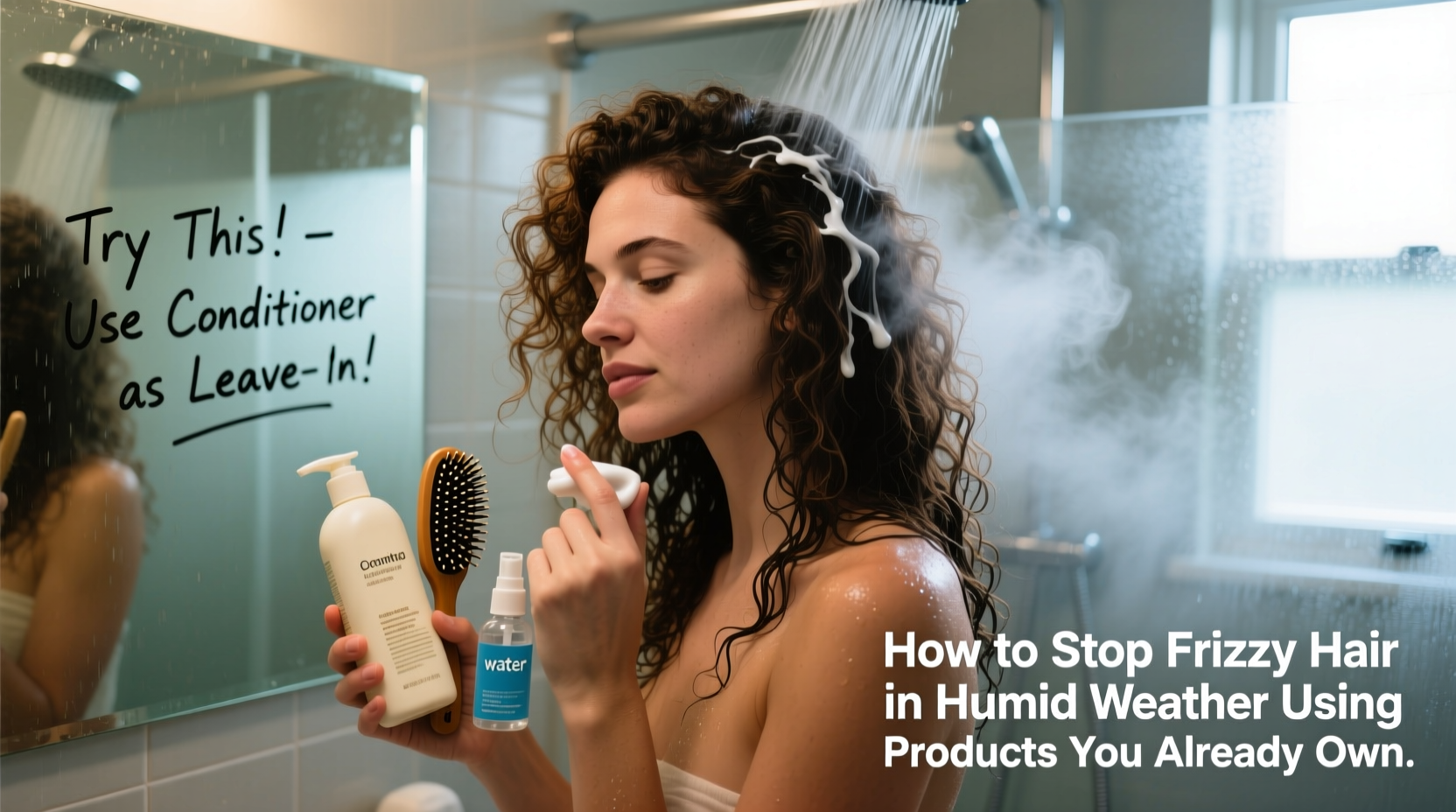
To effectively combat frizz, it helps to understand what’s happening on a structural level. Hair is made primarily of keratin, a protein that bonds in a helical structure. When the air is dry, these bonds remain stable, and hair lies flat. But in humid conditions—typically above 60% relative humidity—water molecules in the air penetrate the hair cortex.
This absorption causes hydrogen bonds within the keratin to break and reform in new configurations, which leads to swelling and distortion of the hair strand. Curly or wavy hair is especially vulnerable because its natural shape creates more gaps for moisture to enter. Even straight hair can puff up slightly under extreme humidity.
Frizz isn’t just about appearance—it often signals dryness or damage. Over-washing, heat styling, chemical processing, and UV exposure weaken the cuticle, making hair more porous and prone to absorbing ambient moisture. That’s why the most effective anti-frizz strategies focus on sealing the cuticle and creating a protective barrier.
“Hair behaves like a sponge in humid climates. The goal isn’t to block all moisture but to control how much gets in—and how quickly.” — Dr. Lena Patel, Trichologist & Hair Research Scientist
Everyday Household Items That Fight Frizz
You likely already have several ingredients at home that offer smoothing, conditioning, and protective properties. These aren’t miracle cures, but when used correctly, they can significantly reduce frizz by hydrating the hair shaft and forming a light seal over the cuticle.
Below are five common household items proven to help, along with instructions for safe and effective use:
- Coconut oil: A natural emollient rich in lauric acid, coconut oil penetrates the hair shaft better than most oils, reducing protein loss and preventing moisture overload from humidity.
- Aloe vera gel (fresh or pure): Soothes the scalp and forms a lightweight, flexible film around each strand, helping to lock in moisture while resisting external humidity.
- Honey: A humectant that draws moisture into the hair—but use sparingly in high humidity, as too much can backfire.
- Apple cider vinegar (ACV): Helps close the hair cuticle after washing, improving smoothness and shine. Also balances scalp pH, reducing static and flyaways.
- Shea butter or cocoa butter (unscented): Thick natural butters provide excellent sealing properties, ideal for defining curls and blocking excess moisture.
Step-by-Step Guide: Create Your Own Anti-Frizz Routine
Using only items commonly found at home, follow this simple three-step routine to minimize frizz during humid weather. Perform this weekly or as needed depending on your hair type and exposure to moisture.
- Cleanse with an ACV Rinse
Mix 1 part apple cider vinegar with 3 parts cool water. After shampooing, pour the mixture over your hair, avoiding the scalp if sensitive. Let sit for 2–3 minutes, then rinse thoroughly. This closes the cuticle and removes buildup that prevents moisture retention. - Hydrate with a Honey-Aloe Mask
Combine 2 tablespoons aloe vera gel with 1 teaspoon raw honey. Apply from mid-length to ends (avoid roots if oily). Cover with a shower cap and leave for 20 minutes before rinsing with cool water. This adds internal moisture and creates a flexible barrier against humidity. - Seal with Natural Oil or Butter
While hair is still damp, apply ½ teaspoon of coconut oil or melted shea butter to the ends and work upward sparingly. For fine hair, use only on the bottom third. This step locks in hydration and blocks environmental moisture from entering the hair shaft.
This routine works best on washed hair but can be adapted for second- or third-day hair by spot-treating frizzy areas with a drop of oil between palms and smoothing over the surface.
Do’s and Don’ts of Home Frizz Control
Misusing even natural products can worsen frizz. The key is moderation and understanding your hair’s porosity and texture. Refer to the table below for quick guidance:
| Action | Do | Don’t |
|---|---|---|
| Oil application | Use small amounts; warm between palms before applying | Apply heavy oil to roots or fine hair—can cause greasiness and attract dirt |
| Honey use | Pair with a sealing agent like oil to prevent tackiness | Leave in hair without rinsing—can become sticky and attract dust |
| ACV rinse | Dilute properly; use once a week for shiny, smooth results | Use undiluted or daily—can dry out scalp and fade color-treated hair |
| Butter application | Melt shea/cocoa butter first for even distribution | Use large quantities—can weigh down curls and look waxy |
| Drying technique | Pat dry with cotton T-shirt or microfiber towel to reduce friction | Rub vigorously with terrycloth towel—causes cuticle damage and frizz |
Real Example: Maria’s Monsoon Hair Rescue
Maria, a graphic designer living in Miami, struggled every summer with her thick, wavy hair turning into a voluminous halo the moment she stepped outside. She avoided commercial products due to allergies and was frustrated by the cost of salon treatments.
After researching natural solutions, she began using a weekly regimen: an ACV rinse followed by a homemade mask of aloe vera and honey from her garden, finished with a pea-sized amount of coconut oil on her ends. She also switched from a regular towel to an old cotton T-shirt for drying.
Within two weeks, she noticed less puffing, improved definition in her waves, and fewer touch-ups needed throughout the day. “I used to carry a travel serum everywhere,” she said. “Now I just reapply a tiny bit of coconut oil if my ends feel dry. It’s cheaper, safer, and actually works better.”
Maximizing Results: Pro Tips for Long-Lasting Smoothness
Even the best DIY treatment won’t last if your habits counteract its effects. Combine product use with behavioral adjustments to extend frizz protection.
- Avoid touching your hair: Hands transfer oil, sweat, and bacteria, which can disrupt the cuticle and increase frizz over time.
- Limit heat styling: Blow dryers and flat irons open the cuticle. If necessary, use the lowest effective heat setting and always apply a heat protectant—even if homemade (e.g., diluted aloe).
- Refresh without rewetting: On day two or three, revive flat sections by spritzing a mix of water and a few drops of oil in a spray bottle, then scrunch gently.
- Protect styles overnight: Loosely braid or twist hair before bed to maintain shape and reduce tangling.
FAQ: Common Questions About Natural Frizz Control
Can I use cooking oils like olive oil instead of coconut oil?
Yes, but with caution. Olive oil is heavier and doesn’t penetrate hair as well as coconut oil. It can leave a greasy residue and may not be suitable for fine or low-porosity hair. Use sparingly and wash out thoroughly.
Will honey make my hair sticky in humidity?
If used alone and left in, yes. Honey is a strong humectant, so it pulls moisture from the air. Always pair it with a sealing oil or butter and rinse it out after a mask. Never use pure honey as a leave-in.
How often should I do the ACV rinse?
Once a week is sufficient for most hair types. Overuse can lead to dryness, especially in curly or chemically treated hair. If your scalp feels tight or itchy, reduce frequency.
Final Checklist: Your At-Home Frizz Defense Plan
- Perform an ACV rinse once a week to clarify and smooth the cuticle.
- Apply a honey-aloe mask every 7–10 days for deep hydration.
- Seal moisture with coconut oil or shea butter after washing.
- Dry hair gently with a cotton T-shirt or microfiber cloth.
- Minimize touching, brushing, or heat styling to preserve smoothness.
- Sleep on silk or wrap hair to reduce friction-induced frizz.
- Store hair tools clean and avoid plastic combs that generate static.
Conclusion: Take Control of Your Hair, Not the Weather
Frizz doesn’t have to rule your routine just because the humidity rises. By understanding your hair’s needs and leveraging simple, accessible products, you can maintain sleek, healthy-looking locks without relying on specialty brands. The power to transform your haircare is already in your pantry.
Start tonight: pull out that jar of coconut oil, dig up the aloe plant, or repurpose the apple cider vinegar in your fridge. Small changes yield visible results—especially when done consistently. Share your favorite home hack in the comments or pass this guide to someone who battles bad hair days. Smooth hair isn’t a luxury; it’s a choice.




 浙公网安备
33010002000092号
浙公网安备
33010002000092号 浙B2-20120091-4
Comments
No comments yet. Why don't you start the discussion?