
Working from home offers flexibility and comfort, but it also introduces a unique set of challenges—chief among them, the temptation to procrastinate. Without the structure of an office environment, distractions multiply: household chores, social media, family members, or even the allure of the couch can derail productivity. Procrastination isn’t just about poor time management; it’s often rooted in emotional regulation, unclear priorities, and environmental triggers. The good news is that with intentional strategies, you can regain control over your focus and build sustainable work habits.
Understand Why You Procrastinate
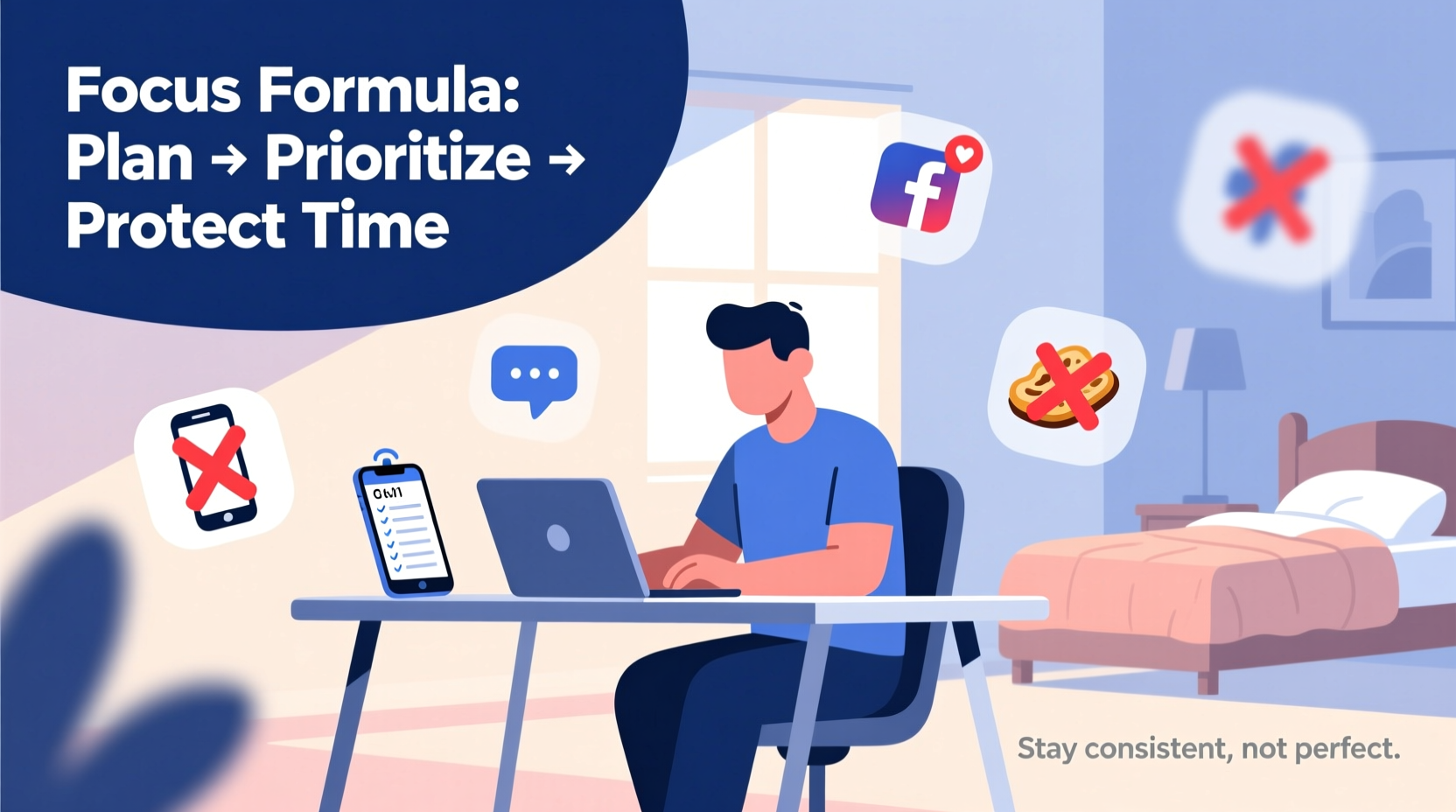
Before tackling distractions, it's essential to understand the root causes of procrastination. Many assume it stems from laziness, but research suggests otherwise. Dr. Piers Steel, author of *The Procrastination Equation*, explains that procrastination is more about emotion regulation than time management. When a task feels overwhelming, boring, or anxiety-inducing, the brain seeks immediate relief through distraction.
In a remote work setting, this tendency is amplified. The absence of external accountability, combined with easy access to digital and domestic distractions, creates a perfect storm for delay. Recognizing that procrastination is often a response to stress—not defiance—shifts the approach from self-criticism to problem-solving.
“Procrastination is not a time management issue—it’s an emotional management issue. We avoid tasks not because we’re lazy, but because they make us feel uncomfortable.” — Dr. Tim Pychyl, Procrastination Researcher, Carleton University
Create a Distraction-Proof Work Environment
Your physical space significantly influences your mental state. A cluttered or multi-purpose workspace blurs the line between work and leisure, making it harder to enter a focused state. Designating a specific area solely for work conditions your brain to associate that space with productivity.
Minimize digital distractions by managing notifications. Turn off non-essential alerts on your phone and computer. Consider using website blockers during work hours to restrict access to social media, news sites, or streaming platforms. Tools like Freedom, Cold Turkey, or Focus To-Do allow you to schedule distraction-free blocks.
Also, reduce auditory interruptions. Use noise-canceling headphones or play background focus music such as lo-fi beats, white noise, or binaural beats. These sounds create an auditory boundary that helps maintain concentration, especially in shared living spaces.
Workspace Optimization Checklist
- Designate a fixed area for work only
- Keep your desk clean and organized
- Position your monitor at eye level to reduce strain
- Use a comfortable, supportive chair
- Limit personal items that trigger non-work thoughts
- Ensure adequate lighting (natural light preferred)
- Remove or silence distracting devices
Structure Your Day with Time-Blocking
One of the most effective antidotes to procrastination is structure. Without a commute or scheduled meetings, the day can blur into one long, unproductive stretch. Time-blocking involves assigning specific tasks to fixed time slots, creating a roadmap for your workday.
Start by identifying your peak focus hours. Are you sharpest in the morning, afternoon, or evening? Schedule high-cognitive-load tasks—like writing, coding, or strategic planning—during these windows. Save routine or low-effort tasks (email, admin, calls) for lower-energy periods.
Break your workday into 90-minute focus blocks followed by 15–20 minute breaks. This aligns with the body’s natural ultradian rhythm, supporting sustained attention without burnout. During breaks, step away from screens: stretch, walk, hydrate, or practice deep breathing.
“Time-blocking turns intention into action. It doesn’t just tell you what to do—it tells you when to do it, reducing decision fatigue.” — Cal Newport, Author of *Deep Work*
Sample Time-Blocked Schedule
| Time | Activity | Focus Level |
|---|---|---|
| 8:00 AM – 9:30 AM | Project development (deep work) | High |
| 9:30 AM – 9:50 AM | Movement break | Low |
| 10:00 AM – 11:00 AM | Email & administrative tasks | Medium |
| 11:00 AM – 12:30 PM | Creative brainstorming | High |
| 12:30 PM – 1:30 PM | Lunch & mental reset | None |
| 1:30 PM – 2:30 PM | Team meeting / collaboration | Medium |
| 2:30 PM – 3:00 PM | Brief walk or mindfulness | Low |
| 3:00 PM – 4:30 PM | Review & wrap-up tasks | Medium |
Break Tasks into Micro-Actions
One major reason people procrastinate is task ambiguity. Facing a broad objective like “write report” or “launch campaign” triggers resistance because the starting point is unclear. The solution lies in task decomposition—breaking large projects into tiny, actionable steps.
Instead of “work on presentation,” define micro-actions such as “open slide deck,” “outline three key points,” or “find two supporting statistics.” These small steps reduce psychological pressure and create momentum. Once you start, inertia works in your favor.
The “Two-Minute Rule” from David Allen’s *Getting Things Done* method is particularly useful: if a task takes less than two minutes, do it immediately. This prevents minor tasks from piling up and becoming overwhelming.
Step-by-Step Guide: Turning Overwhelm into Action
- Define the end goal: What does success look like?
- List all required steps: Brain dump every subtask involved.
- Sequence logically: Arrange steps in order of dependency.
- Identify the first physical action: What’s the smallest move to get started?
- Schedule it: Assign it to a time block.
- Execute immediately: Begin before doubt sets in.
Build Accountability and Reward Systems
Remote work removes the built-in accountability of office oversight. Without someone checking in, it’s easier to justify delay. Reintroduce accountability through external and internal systems.
Share your daily goals with a colleague, manager, or accountability partner. Even a simple morning message like “Today I’ll finish the client proposal draft by noon” increases commitment. At the end of the day, report progress. This peer pressure—when positive and constructive—can be highly motivating.
Pair accountability with rewards. After completing a challenging task, allow yourself a meaningful break: a favorite snack, five minutes of social media, or a short walk. Dopamine release reinforces productive behavior, training your brain to associate effort with reward.
“Human beings are more likely to act when there’s a clear consequence or reward. Structure your work so that completion feels satisfying, not just obligatory.” — Dr. Katy Milkman, Behavioral Scientist, Wharton School
Mini Case Study: From Chronic Delay to Consistent Output
Sarah, a freelance graphic designer, struggled with procrastination despite loving her work. She’d often spend mornings scrolling social media, telling herself she’d “start after coffee,” only to rush deadlines by midnight. Her turning point came when she implemented time-blocking and micro-tasking.
She began each day by listing three priority tasks and breaking each into 15-minute actions. For example, “redesign client logo” became: (1) open design file, (2) review brand guidelines, (3) sketch three concepts. She scheduled these blocks in her calendar and used a timer to stay on track.
Within two weeks, Sarah noticed a shift. Starting felt easier, and momentum carried her through tasks. She also joined a virtual co-working group where members shared daily goals. Knowing others would check in made her less likely to skip work. Her income increased by 30% within two months due to improved consistency and reduced last-minute revisions.
Avoid Common Pitfalls That Fuel Procrastination
Even with the best intentions, certain habits undermine progress. Recognize and correct these common mistakes:
| Do’s | Don’ts |
|---|---|
| Plan the night before or first thing in the morning | Wait until you “feel like working” to start |
| Work in focused sprints with breaks | Try to power through for hours without rest |
| Use a physical or digital task list | Keep tasks in your head |
| Accept imperfect first drafts | Wait for the “perfect moment” or mood |
| Review progress weekly | Ignore patterns of delay |
Perfectionism is a silent productivity killer. Waiting for ideal conditions or flawless execution leads to paralysis. Embrace “good enough” progress. Done is better than perfect—especially when building momentum.
FAQ: Addressing Common Concerns
Why do I still procrastinate even when I know what to do?
Knowing isn’t enough. Procrastination is driven by emotion, not information. If a task triggers anxiety, boredom, or fear of failure, your brain will resist it regardless of logic. Focus on reducing the emotional barrier—start with a tiny step, adjust your environment, or reframe the task as an experiment rather than a test of ability.
How can I stay focused with kids or roommates at home?
Clear communication is key. Set boundaries by sharing your work schedule with household members. Use visual signals like a closed door, a sign, or headphones to indicate “do not disturb” times. Negotiate quiet hours and offer trade-offs—e.g., “I’ll play with you after this call.” If possible, align deep work blocks with their nap or school times.
Is multitasking really that bad?
Yes. The brain doesn’t truly multitask—it switches rapidly between tasks, which depletes focus and increases error rates. Studies show it can take up to 23 minutes to regain deep focus after an interruption. Batch similar tasks and eliminate context-switching to preserve mental energy.
Take Action Today: Build Momentum, Not Perfection
Stopping procrastination while working from home isn’t about willpower—it’s about designing a system that supports consistent action. Start small: tomorrow morning, choose one task and break it into three micro-steps. Schedule them in your calendar. Eliminate one digital distraction. Share your goal with someone. Each of these moves reduces friction and builds confidence.
Momentum compounds. The more you act, the less power procrastination holds. You don’t need to overhaul your entire routine overnight. Focus on progress, not perfection. With deliberate practice, you’ll transform your work-from-home experience from one of constant catch-up to one of calm, capable productivity.




 浙公网安备
33010002000092号
浙公网安备
33010002000092号 浙B2-20120091-4
Comments
No comments yet. Why don't you start the discussion?