
When you're overwhelmed, the instinct to delay tasks isn't laziness—it's your brain trying to protect you from stress. The weight of too many responsibilities, unclear priorities, and looming deadlines can trigger emotional resistance, making even small tasks feel insurmountable. Procrastination in these moments is less about time management and more about emotion regulation. Understanding this shift in perspective unlocks powerful, research-backed psychological tools that don’t rely on willpower alone. These techniques reframe how you engage with work, reduce mental friction, and restore a sense of control—one manageable step at a time.
The Psychology Behind Overwhelm and Delay
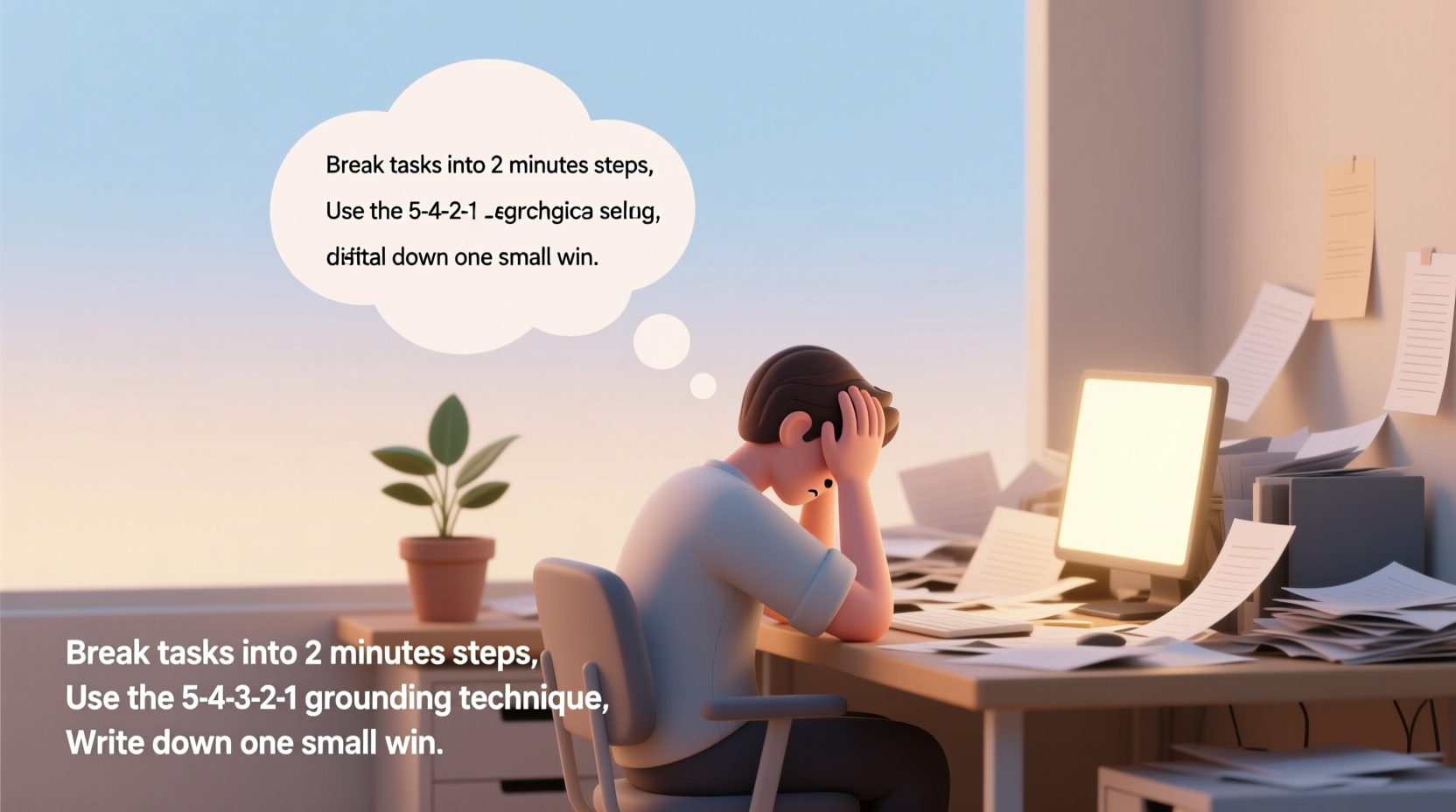
Procrastination under pressure isn’t a failure of discipline. It’s a response to cognitive overload. When the brain perceives too many demands, it activates the limbic system—the emotional center—overriding the prefrontal cortex responsible for planning and decision-making. This neurological hijacking leads to avoidance as a short-term relief strategy, even though it worsens stress long-term.
Dr. Piers Steel, author of *The Procrastination Equation*, explains: “Procrastination is an impulse control issue rooted in how we value immediate mood repair over future rewards.” In overwhelming situations, the emotional cost of starting feels higher than the cost of delaying, so the brain chooses escape.
“Procrastination is not about being lazy. It’s about being in emotional distress and choosing short-term mood repair over long-term goals.” — Dr. Tim Pychyl, Procrastination Researcher, Carleton University
The key isn’t to fight the feeling but to work with it using subtle psychological shifts that lower resistance and create momentum.
Trick #1: The 2-Minute Rule to Break Initial Resistance
One of the most effective ways to bypass mental paralysis is to commit to working on a task for just two minutes. This technique leverages the principle of behavioral activation—starting is often the hardest part, and once begun, continuation becomes easier.
Instead of telling yourself, “I need to finish this report,” say, “I’ll open the document and write one sentence.” This tiny commitment reduces perceived effort and tricks the brain into initiating action without triggering resistance.
This method works because it aligns with how motivation follows action, not the other way around. You don’t need to feel ready; you just need to start.
Trick #2: Reframe Tasks Using Implementation Intentions
Vague intentions like “I’ll work on my project later” fail because they lack specificity. Implementation intentions replace ambiguity with clear if-then plans that automate behavior.
For example:
- Weak intention: “I should study sometime today.”
- Strong implementation: “If it’s 7 PM, then I will sit at my desk and review chapter three for 25 minutes.”
Research shows that people who use implementation intentions are up to three times more likely to follow through. The brain treats these conditional statements as automatic triggers, reducing decision fatigue when energy is low.
How to Create Effective If-Then Plans
- Identify a specific cue (time, location, or event).
- Pair it with a precise action.
- Anticipate obstacles and plan responses.
Example: “If I feel the urge to check my phone while working, then I will take one deep breath and return to my sentence.”
Trick #3: Use the Zeigarnik Effect to Your Advantage
The Zeigarnik Effect, discovered by psychologist Bluma Zeigarnik, reveals that people remember uncompleted tasks better than completed ones. Unfinished actions linger in the mind, creating mental tension. While this can fuel anxiety, it can also be harnessed to build momentum.
Start a task—anything—and leave it slightly incomplete. Your brain will subconsciously stay engaged, increasing the likelihood you’ll return to finish it. For instance, end a writing session mid-sentence or pause a spreadsheet after entering half the data. The unfinished state creates a psychological pull toward closure.
| Traditional Approach | Zeigarnik-Enhanced Strategy |
|---|---|
| Wait until you have time to finish a task completely | Start now, even if you only complete 10%—leave it open-ended |
| Work in long, uninterrupted blocks | Break work into segments with natural stopping points |
| Believe progress only counts when finished | Value initiation and partial completion as momentum builders |
This trick is especially useful when you’re emotionally drained. Just beginning creates a mental “hook” that makes returning easier.
Trick #4: Reduce Cognitive Load with Task Surfacing
Overwhelm often stems not from the tasks themselves but from the mental clutter of remembering them. When everything lives in your head, your brain expends energy just trying to track what needs doing.
Externalize your workload. Write down every single obligation, idea, and pending item—no matter how small. Use a notebook, digital list, or whiteboard. Once visible, these tasks lose their power to create background anxiety.
David Allen, creator of the *Getting Things Done* methodology, emphasizes: “Your mind is for having ideas, not holding them.” Offloading frees cognitive space and allows clearer prioritization.
“Your inbox is not your task manager. Capture everything outside your head first—only then can you organize with clarity.” — David Allen, Productivity Expert
Mini Case Study: Sarah’s Turnaround Week
Sarah, a marketing manager, faced burnout after taking on a new campaign during a team transition. Deadlines piled up, emails went unanswered, and she spent evenings ruminating instead of working. After three days of near-total paralysis, she tried task surfacing.
She spent 20 minutes listing every responsibility—client calls, content drafts, budget reviews, even “buy birthday gift.” Seeing it all on paper, she categorized items into “Do,” “Delegate,” and “Defer.” She then used the 2-minute rule to tackle one email.
That small action broke the logjam. By week’s end, she’d cleared urgent items, scheduled others, and regained confidence. “Just getting it out of my head changed everything,” she said. “I didn’t need more time—I needed less mental noise.”
Trick #5: Leverage Temptation Bundling for Motivation
Temptation bundling pairs something you enjoy with something you avoid. The concept, developed by behavioral economist Katy Milkman, uses immediate rewards to offset the discomfort of starting a dreaded task.
For example:
- Only listen to your favorite podcast while reviewing financial reports.
- Enjoy a special coffee while drafting your presentation.
- Watch an episode of your show only after completing a workout or chore.
This method works because it transforms neutral or negative experiences into anticipated events. Over time, your brain begins to associate the task with pleasure, reducing avoidance.
Step-by-Step Guide to Regain Control in 20 Minutes
When overwhelmed, follow this sequence to reset your mindset and regain agency:
- Minute 0–3: Stop. Breathe. Acknowledge you’re overwhelmed without judgment.
- Minute 4–8: Dump every task, worry, and obligation onto paper. No filtering.
- Minute 9–12: Circle the one smallest, easiest task on the list.
- Minute 13–15: Set a timer for 2 minutes. Start that task immediately.
- Minute 16–20: Reflect. Did you begin? If yes, continue for another 5 minutes or stop guilt-free. Either way, you’ve disrupted inertia.
This process doesn’t require motivation. It relies on structure to override emotional resistance. Repeat daily until momentum builds.
Checklist: Psychological Tricks to Stop Procrastinating When Overwhelmed
- ☑ Use the 2-minute rule to start, not finish
- ☑ Write down all tasks to reduce mental clutter
- ☑ Create if-then plans for when and where you’ll act
- ☑ Begin a task and leave it unfinished to trigger the Zeigarnik Effect
- ☑ Bundle a pleasurable activity with a task you avoid
- ☑ Externalize commitments—don’t keep them in your head
- ☑ Focus on reducing resistance, not achieving perfection
Frequently Asked Questions
Why do I procrastinate more when I’m stressed, even if I know it makes things worse?
Stress activates the brain’s threat response, prioritizing emotional comfort over long-term outcomes. Procrastination offers immediate relief from anxiety, even though it increases pressure later. It’s not irrational—it’s your brain’s flawed attempt to self-soothe.
What if none of these tricks work because I’m too tired or burnt out?
If exhaustion is the root cause, no psychological trick will override physical depletion. In such cases, prioritize rest. Sleep, nutrition, and downtime are foundational. Trying to “hack” productivity without recovery leads to diminishing returns. Address burnout first—productivity follows health.
Can these methods help with chronic procrastination?
Yes, but with caveats. These tricks are effective for situational overwhelm. For chronic patterns linked to anxiety, ADHD, or perfectionism, consider combining them with professional support. Cognitive behavioral therapy (CBT) has proven highly effective for persistent procrastination.
Conclusion: Action Beats Perfection, Always
Overwhelm distorts perception, making tasks seem larger and consequences more dire than they are. The goal isn’t to eliminate stress or achieve flawless execution—it’s to interrupt the cycle of delay with small, strategic actions. The psychological tricks outlined here don’t demand heroic effort. They work quietly, reshaping your relationship with tasks one micro-decision at a time.
You don’t need to feel motivated. You don’t need to solve everything at once. You only need to begin—briefly, imperfectly, and without pressure. Momentum builds not from grand gestures but from consistent, forgiving starts. Pick one technique. Try it today. Let the act of beginning be enough.




 浙公网安备
33010002000092号
浙公网安备
33010002000092号 浙B2-20120091-4
Comments
No comments yet. Why don't you start the discussion?