
Procrastination isn’t a flaw of character—it’s a response to emotional pressure. When tasks pile up, deadlines loom, or expectations rise, the brain often defaults to avoidance as a way to protect itself from discomfort. This becomes especially true when you're overwhelmed. The weight of responsibility can paralyze even the most capable person. But what if the solution wasn’t about willpower, but about psychology? Simple mental shifts—backed by research—can help you bypass resistance, regain momentum, and start moving forward again.
The Overwhelm-Procrastination Loop
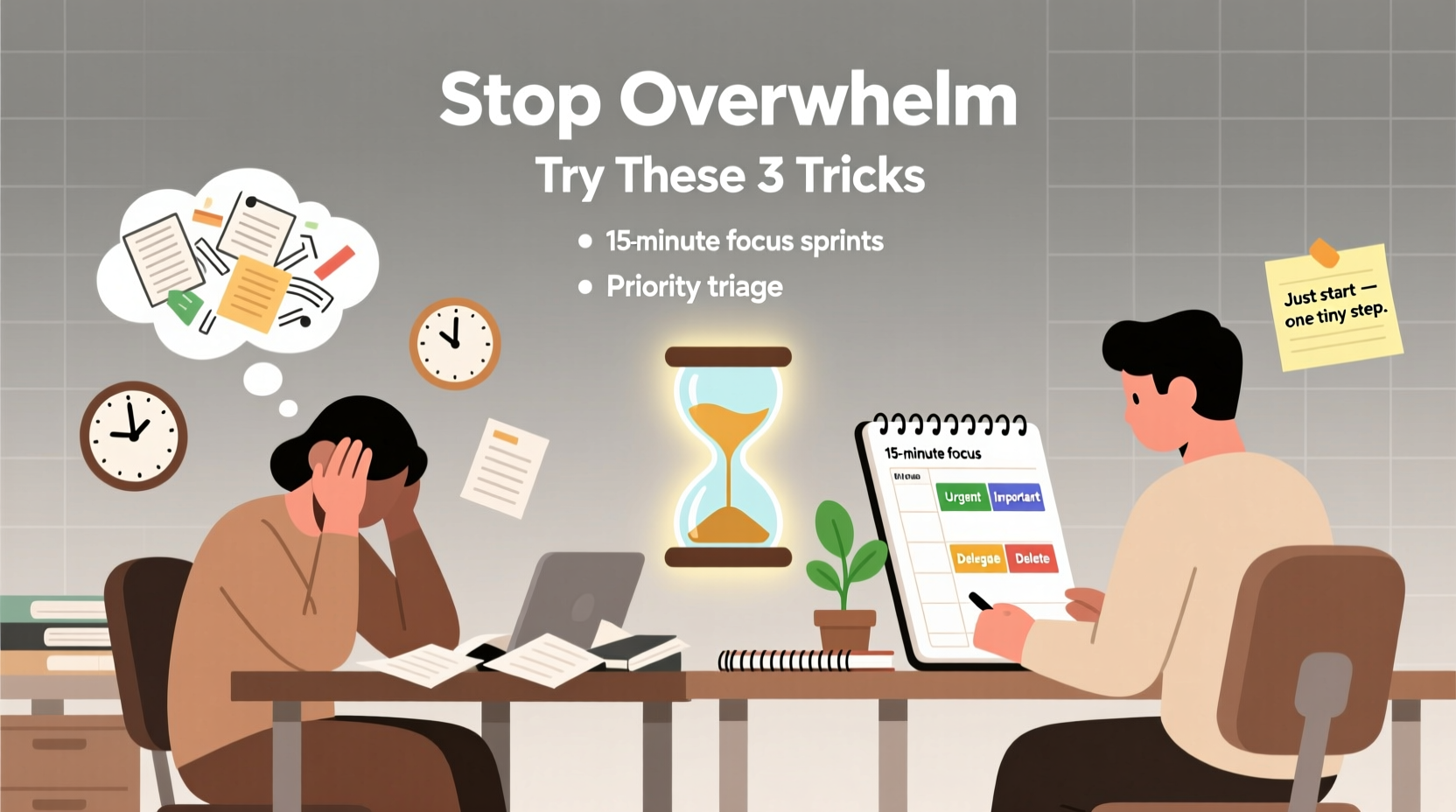
When you’re overwhelmed, your prefrontal cortex—the part of the brain responsible for planning and decision-making—becomes overloaded. In contrast, the limbic system, which governs emotions and survival instincts, takes over. This shift triggers a fight-or-flight response, where avoiding the task feels like self-preservation. You don’t delay because you’re lazy; you delay because your brain perceives the task as a threat.
This creates a feedback loop: the more you avoid, the greater the backlog grows, which increases stress, which deepens avoidance. Breaking this cycle doesn’t require heroic effort. It requires strategy—specifically, psychological techniques that reduce perceived threat and make starting easier.
Trick #1: The 2-Minute Rule to Trick Your Brain into Starting
The biggest obstacle to productivity is not the work itself, but the initiation of it. Once you begin, momentum often carries you forward. The key is to lower the barrier to entry.
The 2-Minute Rule, popularized by productivity expert David Allen, states: If a task takes less than two minutes, do it immediately. But there’s a lesser-known twist: commit to working on a daunting task for just two minutes. No more, no less.
This reframes the task from “I have to finish this” to “I just have to start.” Two minutes is so short it feels harmless. Yet, once you begin, inertia works in your favor. Most people continue well beyond the initial two minutes simply because they’ve already crossed the activation threshold.
Trick #2: Name the Emotion Behind the Avoidance
Overwhelm rarely exists in isolation. It’s usually accompanied by fear—of failure, of imperfection, of judgment. Procrastination masks these feelings by making it seem like you’re “just busy” or “not in the mood.” But naming the real emotion disrupts its power.
Psychologist Dr. Susan David emphasizes emotional agility: “When you label your emotions accurately, you create distance from them. You stop being overwhelmed by the feeling and start managing it.”
Next time you catch yourself delaying, pause and ask: What am I really feeling? Is it anxiety about not doing a good enough job? Fear of disappointing someone? Shame about falling behind? Write it down. Just identifying the emotion reduces its intensity and helps you respond rationally instead of reactively.
Break Tasks Down with the “Chunk and Conquer” Method
One of the primary causes of overwhelm is vagueness. A task like “write report” or “plan project” feels enormous because it lacks definition. The brain dislikes ambiguity and defaults to avoidance when it can’t predict the path forward.
Solution: break everything into micro-tasks. Instead of “work on presentation,” define specific actions like:
- Open PowerPoint
- Create title slide
- List three main points
- Find one supporting statistic
Each step should be small enough to feel trivial. Completing these tiny wins builds confidence and provides a sense of progress, which fuels motivation. Research shows that crossing items off a list releases dopamine—the brain’s reward chemical—which makes you want to keep going.
Visualize the Next Physical Action
David Allen’s Getting Things Done methodology emphasizes focusing on the “next physical action.” Instead of thinking, “I need to reply to that email,” think: “I need to open my inbox, find the message, and type the first sentence.”
This level of specificity eliminates hesitation. There’s no room for debate when the next move is crystal clear.
“Clarity is kindness—to yourself. The more precise your plan, the less your brain resists it.” — Dr. Emily Anhalt, Clinical Psychologist
Use the “5-4-3-2-1” Grounding Technique to Reset Your Nervous System
When overwhelm hits, your nervous system goes into high alert. Your heart races, thoughts spiral, and focus evaporates. Before trying to work, you must first calm your physiology. One of the fastest ways to do this is the 5-4-3-2-1 grounding technique—a sensory-based mindfulness exercise that interrupts panic and brings you back to the present.
Here’s how:
- 5 things you can see (e.g., lamp, notebook, plant, window, pen)
- 4 things you can touch (e.g., desk surface, chair fabric, glasses, phone)
- 3 things you can hear (e.g., AC hum, distant traffic, keyboard clicks)
- 2 things you can smell (or recall a calming scent)
- 1 thing you can taste (sip of water, gum, coffee)
This method forces your brain to shift from abstract worry (“I’ll never finish”) to concrete reality. Within seconds, your breathing slows, and cognitive function improves. Use it before starting work, after a stressful meeting, or whenever you feel paralyzed.
Redefine Success: The “Minimum Viable Action” Mindset
Perfectionism is a major driver of procrastination. When you believe a task must be done flawlessly, the pressure to perform becomes unbearable. The solution? Lower the bar—not permanently, but temporarily.
Adopt the concept of the Minimum Viable Action (MVA): the smallest version of a task that still counts as progress. For example:
| Task | Perfectionist Goal | Minimum Viable Action |
|---|---|---|
| Write an article | Polished 1,500-word draft | Write one paragraph |
| Organize finances | Complete full budget spreadsheet | Gather all bank statements in one folder |
| Exercise | 60-minute workout | Put on workout clothes and stretch for 5 minutes |
| Email a colleague | Perfectly worded, professional message | Type a one-sentence draft |
By aiming for “good enough,” you remove the pressure that fuels delay. And once you start, you’ll often do more than the MVA—naturally. Progress, not perfection, builds lasting momentum.
Case Study: How Sarah Regained Control During a Crisis Quarter
Sarah, a marketing manager at a mid-sized tech firm, faced a critical deadline: launch a new campaign in three weeks while managing team absences and personal burnout. She found herself scrolling endlessly, avoiding her inbox, and sleeping poorly. After a particularly unproductive morning, she tried the strategies above.
First, she used the 5-4-3-2-1 technique to calm her racing thoughts. Then, she wrote down the real emotion: “I’m afraid the campaign will fail, and I’ll be blamed.” Naming it reduced its grip. Next, she broke the project into micro-tasks: “Create campaign name,” “Draft first email subject line,” “Schedule team check-in.”
She committed to just two minutes on the first task. That turned into 25 minutes of focused writing. By week’s end, she’d completed 70% of the campaign—and felt in control for the first time in weeks.
Sarah didn’t rely on discipline. She used psychology to outsmart her brain’s resistance.
Create an “Action Trigger” to Automate Starting
Willpower is unreliable, especially when stressed. A better approach is to design automatic cues that prompt action without decision fatigue.
An action trigger is a simple “if-then” statement that links a routine behavior to a desired task. Examples:
- If I pour my morning coffee, then I will open my task list and do one two-minute task.
- If I sit at my desk after lunch, then I will write one email.
- If I close my laptop at night, then I will write tomorrow’s top three MVAs.
These triggers turn intention into habit. Over time, the cue (coffee, sitting at desk) automatically prompts the behavior (starting work), reducing reliance on motivation.
Checklist: 7 Psychological Tricks to Stop Overwhelm-Driven Procrastination
Keep this checklist handy for moments when you feel stuck:
- Pause and name the emotion behind the avoidance (fear, shame, anxiety).
- Use the 5-4-3-2-1 grounding technique to reset your nervous system.
- Define the next physical action—make it absurdly small.
- Commit to working for just two minutes.
- Break the task into micro-steps and complete the easiest one first.
- Reframe success: aim for a Minimum Viable Action, not perfection.
- Set an action trigger for tomorrow (e.g., “After I brush my teeth, I’ll open my planner”).
Frequently Asked Questions
Why do I procrastinate even when I know what to do?
Knowing what to do isn’t the same as feeling ready to do it. Procrastination is driven by emotion, not information. Even with a clear plan, fear, fatigue, or frustration can block action. The solution is addressing the emotional barrier—not just the task list.
Is procrastination a sign of laziness?
No. Chronic procrastination is linked to emotional regulation challenges, not lack of effort. Studies show that people who procrastinate often work just as hard—but later, under higher stress. They’re not lazy; they’re struggling with anxiety, perfectionism, or unclear goals.
How long does it take to break the procrastination habit?
Habit change varies, but consistent use of behavioral strategies (like action triggers and task chunking) typically leads to noticeable improvement within 2–4 weeks. The key is repetition, not intensity. Small, daily wins rewire your brain’s response to stress and effort.
Conclusion: Start Small, Think Smart
Stopping procrastination when overwhelmed isn’t about pushing harder. It’s about working with your mind, not against it. The strategies outlined here—naming emotions, using micro-tasks, grounding techniques, and action triggers—are simple, science-backed tools that reduce resistance and restore agency.
You don’t need to overhaul your life. You just need to start—anywhere. Open the document. Write one sentence. Make one call. Let momentum build from there. Every time you act despite the urge to delay, you weaken procrastination’s hold and strengthen your sense of control.




 浙公网安备
33010002000092号
浙公网安备
33010002000092号 浙B2-20120091-4
Comments
No comments yet. Why don't you start the discussion?