
Puppies explore the world with their mouths. Nipping and mouthing are natural behaviors driven by curiosity, teething discomfort, and social learning. However, allowing a puppy to bite during play can lead to problematic habits as they grow into adult dogs. The challenge lies in teaching bite inhibition—learning to control the force of their jaws—without suppressing their enthusiasm for engagement. Done correctly, this process strengthens your bond while setting clear boundaries. The goal isn’t to eliminate play or muzzle natural energy but to guide it appropriately.
Many new pet owners mistakenly respond to biting with punishment or isolation, which can damage trust and create fear-based behaviors. Instead, effective training relies on consistency, redirection, and positive reinforcement. With patience and structure, you can teach your puppy that soft mouthing is acceptable, hard biting ends fun, and toys—not hands—are for chewing.
Understanding Why Puppies Bite During Play
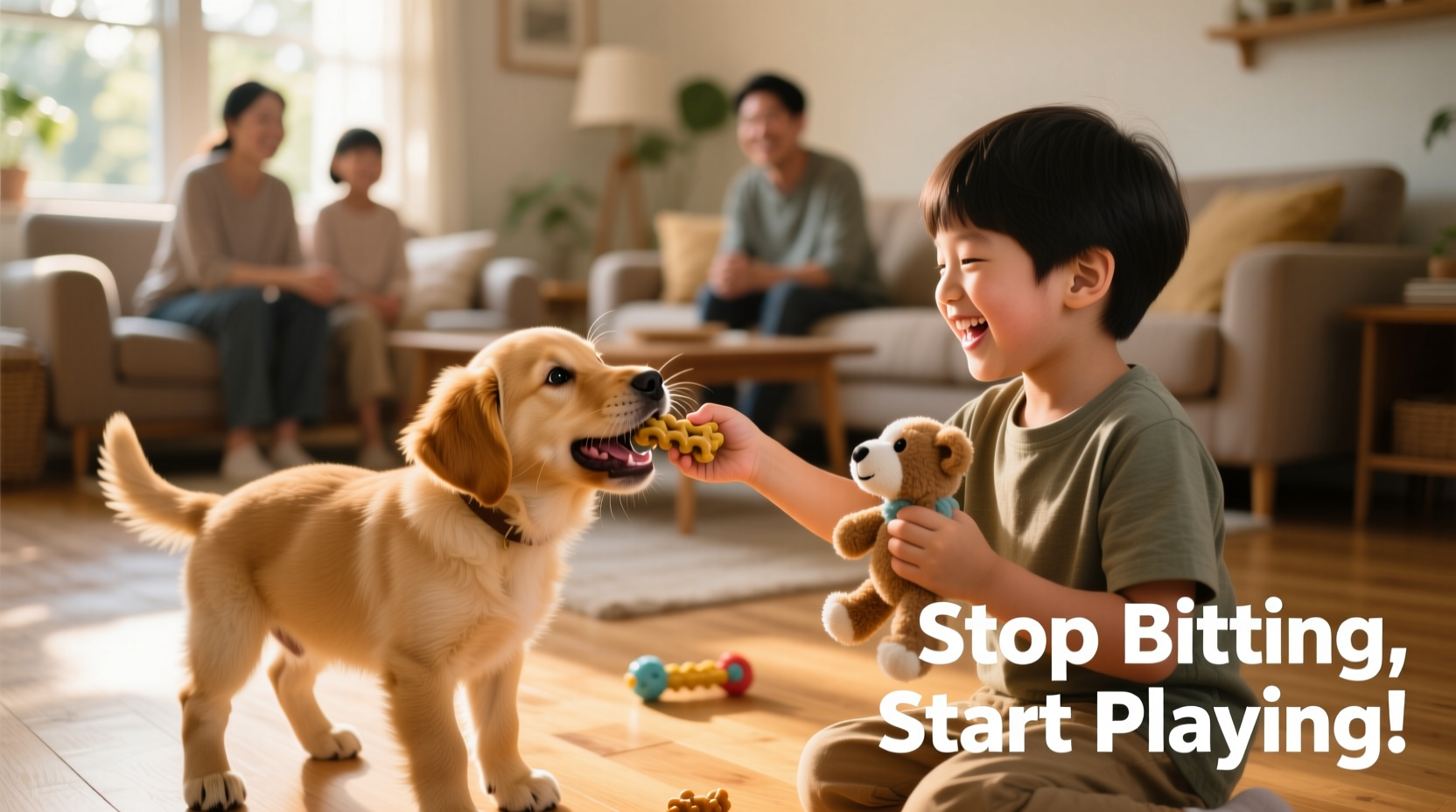
Biting is not aggression—it’s communication. Puppies use their mouths to interact with littermates, test limits, and relieve teething pain. In a litter, puppies learn bite inhibition through feedback: if one bites too hard, the other yelps and stops playing. This social correction teaches them to modulate jaw pressure. When a puppy joins a human household, they lack this built-in feedback system and must be taught through consistent responses.
Teething typically begins around 3–4 months and can last until 7 months, increasing the urge to chew. High-energy breeds may also mouth more due to excess stimulation. Recognizing these underlying causes helps owners respond with empathy rather than frustration.
“Puppies don’t come pre-programmed with human social rules. They learn from consequences—both positive and negative. Our job is to shape those lessons gently.” — Dr. Sophia Yin, DVM, Applied Animal Behaviorist
Step-by-Step Guide to Reducing Play Biting
Stopping puppy biting requires a structured approach that maintains engagement while reinforcing desired behavior. Follow this timeline over several weeks for lasting results:
- Observe triggers: Note when biting occurs—during excitement, fatigue, or specific types of play. Awareness helps prevent incidents.
- Use the yelp-and-withdraw method: When bitten, let out a high-pitched “ouch!” similar to a littermate’s yelp. Immediately stop all movement and attention for 10–20 seconds. This mimics natural puppy communication.
- Redirect to appropriate items: After the pause, offer a chew toy. If the puppy engages with it, praise and resume play. If they return to biting, repeat the sequence.
- End play sessions calmly: If biting persists, end the session by walking away or placing the puppy in a safe timeout area (e.g., exercise pen) for 30–60 seconds. Do not scold; simply remove stimulation.
- Practice daily: Repeat this process consistently across all family members. Inconsistency confuses puppies and slows progress.
Over time, the puppy learns that gentle mouthing keeps play going, while hard biting ends it. The key is immediate cause-and-effect feedback.
Do’s and Don’ts of Managing Puppy Biting
Avoiding common mistakes is crucial to maintaining your puppy’s confidence while teaching boundaries. The table below outlines best practices versus counterproductive actions.
| Do’s | Don’ts |
|---|---|
| Use verbal cues like “gentle” or “ouch” consistently | Yell, slap, or hold the puppy’s mouth shut |
| Redirect biting to appropriate chew toys | Use hands as toys during play |
| Reinforce calm behavior with treats and praise | Play rough games like tug-of-war before bite control is established |
| End play sessions before the puppy becomes overstimulated | Ignore repeated biting hoping it will “grow out of it” |
| Involve all household members in consistent training | Allow some people to tolerate biting while others correct it |
Consistency across caregivers prevents confusion. A puppy should receive the same response whether bitten by a child or an adult.
Real Example: Training Bella, the Labrador Retriever Puppy
Bella, a 14-week-old black Lab, joined her new home full of energy. Her owners loved playing with her but grew concerned when she began nipping at their arms during fetch. Initially, they tried saying “no” firmly and pulling away, but Bella interpreted this as a chase game and bit harder.
Working with a certified trainer, they implemented the yelp-and-withdraw technique. The first few days were challenging—Bella often followed them after being ignored. But within a week, she started pausing after biting, looking at their faces as if waiting for feedback. They introduced a rope toy and used it immediately after the “ouch” cue. By day 10, Bella would grab the toy instead of hands when excited.
By six months, Bella played without biting. Her owners credited success to daily 10-minute training bursts, keeping chew toys accessible, and never using hands during play. Most importantly, they maintained a positive tone—never punishing, always redirecting.
Building Positive Play Habits: A Checklist
To ensure long-term success, integrate these actions into your routine:
- ✅ Carry a soft chew toy in your pocket during active times
- ✅ Use a consistent verbal cue (“ouch” or “gentle”) every time teeth touch skin
- ✅ Pause interaction for 10–20 seconds after a bite, then offer a toy
- ✅ End play sessions before the puppy becomes overly excited
- ✅ Rotate chew toys weekly to maintain interest
- ✅ Reward non-biting play with treats or affection
- ✅ Supervise children’s interactions to prevent accidental reinforcement of biting
- ✅ Enroll in a puppy socialization class to practice bite control with peers
This checklist ensures that training is proactive, not just reactive. Prevention is easier than correction.
Frequently Asked Questions
Is it normal for my puppy to bite so much?
Yes. Mouthing is a developmental stage in puppies between 8 and 16 weeks, often extending into the teething phase up to 7 months. While frequent, it can and should be shaped with consistent training. Excessive biting beyond 6 months may indicate insufficient socialization or overstimulation.
Can I use bitter sprays to stop biting?
Bitter-tasting deterrents are generally not recommended for play biting. These are better suited for inappropriate chewing (e.g., furniture). Using them on hands may confuse the puppy and erode trust. Redirecting to toys is a more effective and relationship-preserving strategy.
What if my puppy bites and won’t let go?
If your puppy clamps down and shakes, avoid pulling your hand away—that mimics prey movement and encourages holding. Instead, insert a chew toy between their teeth or gently push into their mouth slightly to trigger release. Once loose, immediately redirect and praise engagement with the toy. Never physically punish.
The Role of Socialization and Mental Stimulation
Biting often stems from unmet physical and mental needs. A tired puppy is a well-behaved puppy. Ensure your pup receives age-appropriate exercise—short walks, sniffing games, and off-leash play in secure areas. Mental enrichment, such as puzzle feeders or scent games, reduces compulsive mouthing.
Socialization with other vaccinated puppies provides critical feedback. In puppy classes, pups learn from each other’s yelps and body language. Observing a peer walk away after being bitten teaches cause and effect faster than human intervention alone.
However, avoid dog parks or unstructured group settings until vaccinations are complete and basic bite inhibition is established. Unsupervised play can reinforce bad habits if one puppy dominates or gets overwhelmed.
When to Seek Professional Help
Most puppies improve with consistent training within 4–8 weeks. However, consult a certified dog behaviorist if:
- Biting escalates in intensity or frequency after 6 months
- Your puppy shows signs of fear, growling, or guarding during corrections
- There’s no response to redirection or time-outs
- Biting occurs outside of play, such as when approached or handled
These could indicate underlying anxiety, medical discomfort, or improper early socialization. Early intervention prevents long-term behavioral issues.
Conclusion: Building Trust Through Gentle Guidance
Stopping puppy biting isn’t about dominance or suppression—it’s about education. Your puppy isn’t trying to dominate you; they’re learning how to interact in a world full of unfamiliar rules. By responding with calm consistency, you teach them that self-control leads to more play, more affection, and stronger bonds.
The methods outlined here preserve your puppy’s joyful spirit while instilling lifelong manners. Remember: every yelp, pause, and redirected toy is a lesson in empathy and communication. Over time, those sharp little teeth will give way to a dog who chooses to lick your hand instead of bite it.




 浙公网安备
33010002000092号
浙公网安备
33010002000092号 浙B2-20120091-4
Comments
No comments yet. Why don't you start the discussion?