
Squeaky shoes can be more than just an annoyance—they’re often embarrassing, especially in quiet offices, libraries, or during formal events. The sound may seem harmless, but the constant creak with every step draws attention and undermines confidence. Fortunately, most causes of shoe squeaks are fixable at home with simple tools and a bit of patience. Whether your footwear is brand new or well-worn, understanding the root cause of the noise is the first step toward silence.
Squeaking typically stems from friction, moisture, or structural issues within the shoe’s components. It can originate from the sole, insole, heel, or even the upper materials rubbing together. The good news? Most of these problems don’t require professional repair. With targeted techniques and household items, you can eliminate the noise and restore quiet comfort to your stride.
Understanding Why Shoes Squeak
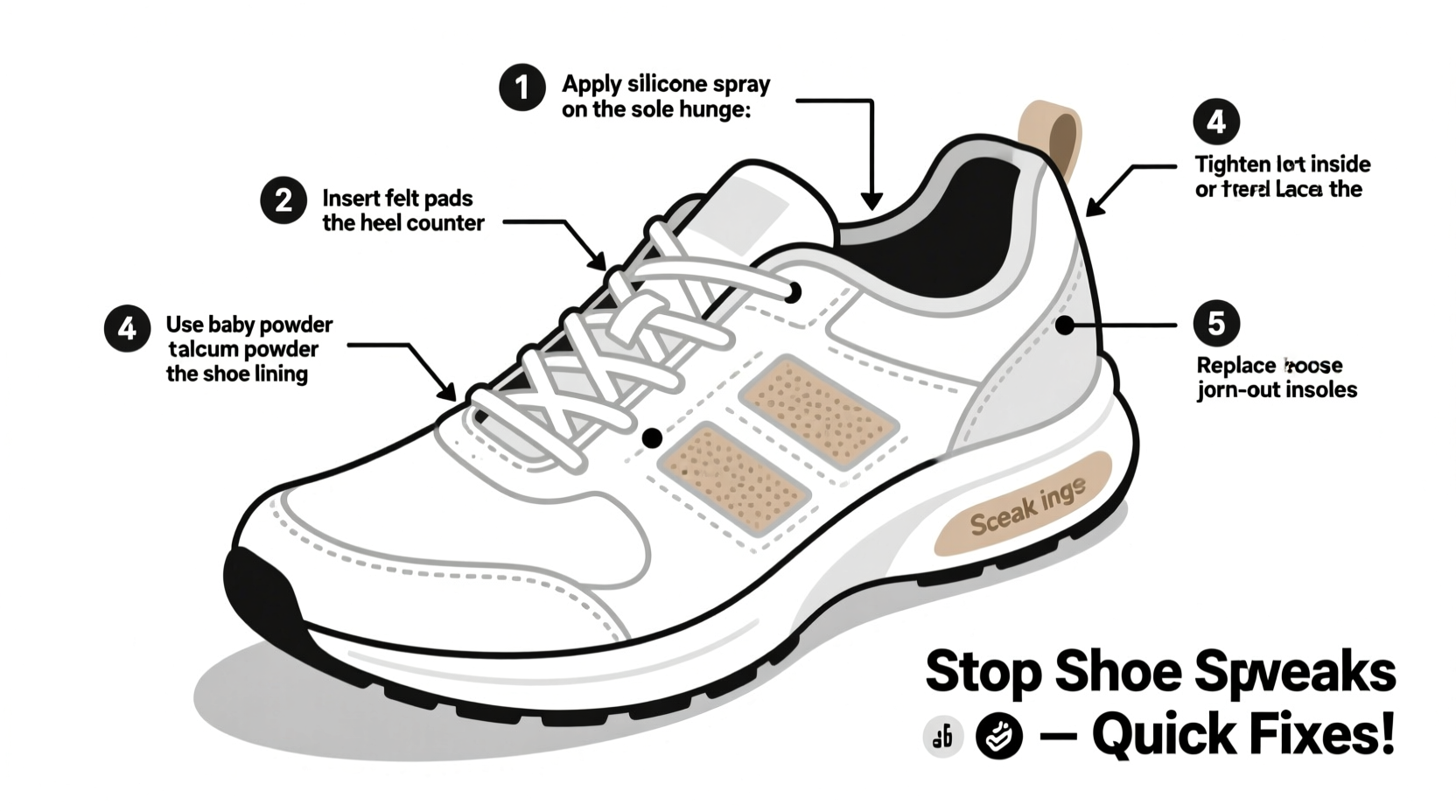
Before applying any fix, it's crucial to identify the source of the squeak. Different parts of a shoe interact in complex ways as you walk, and pinpointing where the sound originates determines which solution will work best.
Insole movement is one of the most common culprits. When the insole shifts slightly against the midsole or outsole, it creates air pockets that compress and release with each step, producing a squeaky or squishing sound. This is especially common in athletic shoes and dress shoes with cushioned footbeds.
Moisture trapped inside the shoe can also lead to squeaking. Wet soles, damp insoles, or humid environments cause materials like rubber, foam, and leather to swell and rub abnormally. As they dry, they contract unevenly, increasing friction and noise.
Sole separation is another frequent issue. Over time, glue deteriorates or stitching loosens, allowing layers of the sole to rub against each other. This produces a rhythmic creaking, particularly noticeable when pressure is applied to the ball or heel of the foot.
Heel mechanisms in certain shoes—especially women’s heels with internal stabilizers or air-cushion systems—can develop squeaks due to worn padding or metal-on-metal contact.
Finally, friction between upper and lining may generate noise, especially in boots or shoes made with synthetic materials that lack breathability.
“Most shoe squeaks aren’t signs of irreversible damage. They’re mechanical responses to wear, moisture, or misalignment—and nearly all are correctable.” — Dr. Alan Zhou, Footwear Materials Engineer
Step-by-Step Guide to Silence Squeaky Shoes
Follow this systematic approach to diagnose and eliminate the squeak for good. Work through each step carefully to avoid unnecessary disassembly or damage.
- Identify the source: Walk slowly on different surfaces—tile, carpet, hardwood—and note when the squeak occurs. Is it under the heel? Near the arch? Try pressing down on various parts of the shoe while stationary to replicate the sound.
- Remove the insole: If possible, take out the insole. Inspect both the underside of the insole and the shoe bed for moisture, debris, or visible wear. Wipe both surfaces dry with a microfiber cloth.
- Dry thoroughly: If either component is damp, let them air-dry completely away from direct heat. Use crumpled newspaper inside the shoe to absorb moisture overnight.
- Apply lubrication: Lightly dust the shoe bed with baby powder, cornstarch, or talc-free foot powder. These reduce friction without damaging adhesives. Avoid oils or sprays unless specified for your shoe material.
- Reinsert and test: Place the insole back and walk around. If the squeak persists, proceed to the next steps.
- Check sole integrity: Examine the outsole for separation, especially along the edges. Gently press to feel for movement between layers.
- Reinforce or reattach: If separation is detected, clean the area with rubbing alcohol, apply a thin layer of shoe-specific adhesive (like Shoe Goo), clamp with binder clips, and let cure for 24 hours.
- Address heel noise: For heels, remove any access panel or tap gently on the base. Insert a small piece of foam or fabric between moving parts to dampen vibration.
Do’s and Don’ts When Fixing Squeaky Shoes
| Do’s | Don’ts |
|---|---|
| Use baby powder or cornstarch to reduce insole friction | Apply oil-based lubricants that weaken glue |
| Air-dry wet shoes naturally | Place shoes near radiators or heaters |
| Use shoe-specific adhesive for sole repairs | Use super glue, which becomes brittle |
| Test fixes on one shoe first | Disassemble glued components unnecessarily |
| Store shoes in ventilated areas | Keep shoes in plastic bags long-term |
Real Example: Fixing a Squeaky Dress Shoe
Mark, a financial analyst, noticed his favorite oxford began squeaking after a rainy commute. The sound was subtle on carpet but loud on marble office floors. Embarrassed during client meetings, he tried spraying the sole with silicone—only to worsen the issue by attracting dirt.
Following the diagnostic steps, he removed the insole and found it slightly damp. After drying both insole and shoe bed for two days using rice-filled socks, he lightly applied baby powder. The squeak disappeared. Three months later, when the noise returned, he discovered minor sole separation near the toe. He cleaned the gap, applied Shoe Goo, clamped it overnight, and walked silently ever since.
This case illustrates how combining moisture control with structural maintenance delivers lasting results.
Quick Tips Checklist
- ✅ Remove and dry the insole if damp
- ✅ Sprinkle baby powder or cornstarch on the shoe bed
- ✅ Press firmly on different parts of the sole to locate movement
- ✅ Clean and re-glue separated soles with proper adhesive
- ✅ Insert foam padding in noisy heels
- ✅ Avoid heat when drying wet shoes
- ✅ Rotate shoes to allow full drying between uses
- ✅ Store in breathable cotton bags, not plastic
Frequently Asked Questions
Why do my new shoes squeak?
New shoes sometimes squeak due to factory lubricants or tight material friction. The insole may not have settled yet, or protective films on soles haven’t worn off. Try walking in them indoors for a few hours. If the noise persists, apply baby powder under the insole.
Can I use hairspray to stop a squeak?
No. Hairspray contains alcohol and resins that can degrade adhesives and discolor materials. While it might temporarily stiffen a loose part, it’s not a safe or lasting solution. Stick to proven methods like powder or proper adhesive.
Will freezing my shoes stop the squeak?
Freezing is a myth popularized online. Placing shoes in the freezer may temporarily shrink materials and mask a squeak, but once they return to room temperature, the noise often returns—and the thermal shock can crack glues or foams. Avoid this method.
Long-Term Prevention Strategies
Preventing squeaks is easier than fixing them. Regular maintenance extends shoe life and maintains quiet performance.
Maintain dryness. Moisture is the enemy of silent shoes. After exposure to rain or sweat, remove insoles and stuff shoes with newspaper. Replace insoles periodically if they retain moisture or lose shape.
Inspect soles monthly. Run your fingers along the edge of the sole to detect early separation. Catching delamination early means a simple glue touch-up instead of a full sole replacement.
Choose quality construction. Shoes with stitched soles (e.g., Goodyear welted) resist separation better than cemented ones. While more expensive upfront, they last longer and are easier to resole.
Use silica gel packs. Store shoes with reusable desiccant packs to regulate humidity. This prevents mold, odor, and material swelling that leads to friction.
Break in shoes gradually. Wearing new shoes for extended periods immediately increases stress on seams and adhesives. Wear them for short durations at first to allow materials to flex evenly.
“The best squeak prevention is proactive care. Treat your shoes like precision instruments—they respond best to consistent, gentle handling.” — Lena Patel, Shoemaking Instructor at Boston Craft Academy
Conclusion
Squeaky shoes don’t have to be a permanent nuisance. With the right knowledge, most causes can be diagnosed and resolved at home using affordable, accessible methods. From drying damp insoles to reattaching soles with proper adhesive, the solutions are straightforward and effective. The key is acting promptly—before minor friction turns into major structural wear.
By incorporating regular inspection and moisture control into your routine, you can keep your footwear quiet, comfortable, and durable for years. Don’t let an annoying creak undermine your confidence or style.




 浙公网安备
33010002000092号
浙公网安备
33010002000092号 浙B2-20120091-4
Comments
No comments yet. Why don't you start the discussion?