
Winter brings cozy sweaters, warm layers, and unfortunately, one of the most annoying wardrobe issues: static cling. That persistent crackle when you take off a sweater, the skirt that clings to your tights, or the shirt that sticks to your back—static is more than just a nuisance. It’s uncomfortable, unflattering, and can ruin an otherwise polished outfit. The root cause? Low humidity. Cold winter air holds less moisture, and indoor heating dries it out further, creating ideal conditions for static electricity to build up on fabrics.
The good news is that static cling isn’t permanent or inevitable. With a few smart adjustments to your laundry routine, clothing choices, and daily habits, you can eliminate static almost instantly—and prevent it from coming back. This guide delivers proven, fast-acting solutions grounded in fabric science and real-world testing, so you can move freely through your day without clinging garments stealing the spotlight.
Understanding Why Static Happens in Winter
Static electricity occurs when electrons transfer between materials through friction—a process called triboelectric charging. When you walk across a carpet or rub synthetic fabrics together, electrons jump from one surface to another, leaving one item positively charged and the other negatively charged. Since opposite charges attract, your clothes stick to each other or to your body.
In humid conditions, moisture in the air helps dissipate this charge before it builds up. But in winter, indoor relative humidity often drops below 30%, sometimes as low as 10–15% in heated homes. At these levels, there's not enough moisture to carry away the electrical charge, so it accumulates on fabrics—especially synthetics like polyester, nylon, and acrylic.
Natural fibers such as cotton, wool, and silk are less prone to static because they retain some moisture even in dry environments. However, many modern blends contain synthetic components, making them susceptible. Layering multiple garments increases surface contact and friction, amplifying the problem.
“Low humidity is the primary driver of static in winter clothing. Increasing ambient moisture by even 10% can reduce static incidents by over 70%.” — Dr. Lena Patel, Textile Physicist at the Institute for Material Science
Immediate Fixes for Static Cling (Under 60 Seconds)
When static strikes mid-day, you need quick remedies that work immediately. These field-tested tricks require items you likely already have at home:
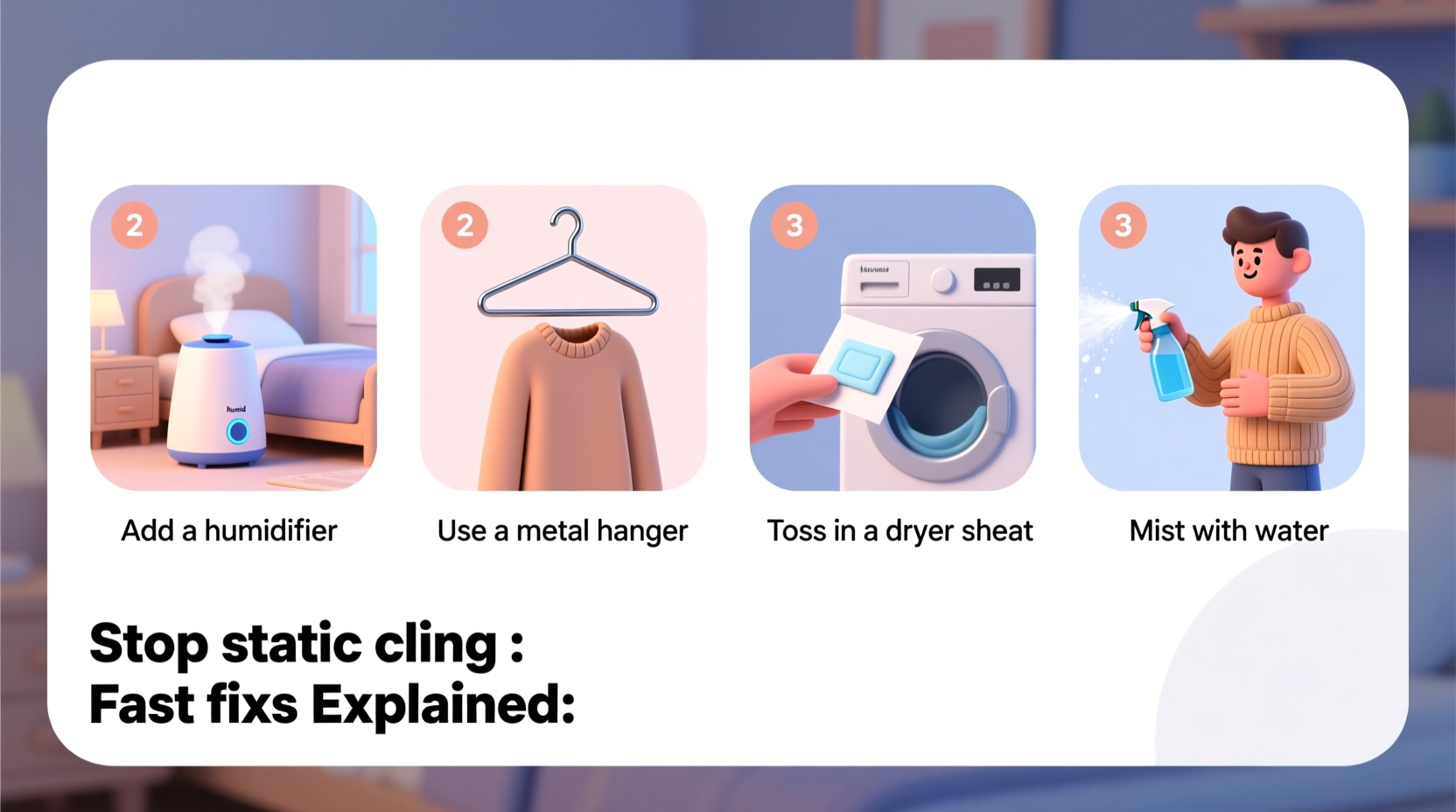
- Run a metal hanger over your clothes: Glide a wire coat hanger over the inside of a clinging dress or skirt. Metal conducts electricity and neutralizes the charge on contact.
- Dampen your hands and smooth them over the fabric: Lightly wet your palms with water and run them down the garment. The moisture disrupts the static field without leaving visible dampness.
- Use hand lotion: Apply a small amount to your legs before putting on tights or skirts. The oil creates a barrier that reduces friction and dissipates charge.
- Carry a dryer sheet in your pocket: Rub it quickly over the inside of your clothes. The anti-static coating transfers to the fabric and neutralizes static on the spot.
- Breathe on the fabric: Exhale warm, moist air onto the clinging area. The tiny bit of moisture is often enough to break the static bond.
Preventative Laundry Strategies That Work
The best way to stop static is to prevent it during washing and drying. Your laundry habits play a major role in how much static your clothes generate. Consider these evidence-based adjustments:
Use Vinegar Instead of Fabric Softener
White vinegar acts as a natural fabric softener and pH balancer. Add ½ cup of distilled white vinegar to the rinse cycle. It removes detergent residue that makes fabrics stiffer and more prone to static, while also helping fibers retain slight moisture.
Avoid Over-Drying Clothes
Tumbling clothes too long in the dryer extracts every trace of moisture, turning garments into static magnets. Remove clothes while slightly damp and hang or lay flat to finish drying. Use the “less dry” or “wrinkle release” setting if available.
Add Wool Dryer Balls
Wool dryer balls reduce drying time by improving airflow and soften fabrics naturally. They also absorb a small amount of moisture and release it gradually during tumbling, which helps prevent charge buildup. For extra anti-static power, add a few drops of essential oil to the balls—but skip this if you have sensitive skin.
Try Aluminum Foil or Safety Pin Trick
Throw a crumpled ball of aluminum foil into the dryer. It discharges static as it tumbles. Alternatively, pin a small safety pin to a seam inside your clothes—the metal acts as a grounding point during drying.
| Laundry Hack | How It Works | Effectiveness (1–5) |
|---|---|---|
| Vinegar in rinse cycle | Removes residue, softens fabric | ★★★★☆ |
| Wool dryer balls | Reduces drying time, adds moisture | ★★★★★ |
| Aluminum foil ball | Conducts and dissipates charge | ★★★☆☆ |
| Reduce drying time | Preserves residual moisture | ★★★★★ |
| Dryer sheets | Coats fibers with lubricating chemicals | ★★★☆☆ (short-term only) |
Long-Term Environmental & Wardrobe Adjustments
To truly conquer static, go beyond temporary fixes and address the environment and materials involved.
Invest in a Humidifier
Maintaining indoor humidity between 40% and 50% dramatically reduces static buildup. A cool-mist humidifier in your bedroom or living area can make a noticeable difference within hours. Models with built-in hygrometers automatically adjust output based on room conditions, ensuring optimal performance.
Choose Natural Fibers When Possible
Cotton, linen, silk, and merino wool are inherently less static-prone. Even blending 30% cotton with polyester significantly reduces cling. When shopping, check labels and prioritize breathable, moisture-wicking fabrics for winter layering.
Use Anti-Static Sprays Strategically
Commercial anti-static sprays (like Static Guard) create a conductive layer on fabric surfaces. Spray lightly on the inside of skirts, dresses, or pantyhose before wearing. For a DIY version, mix 1 part fabric softener with 10 parts water in a spray bottle and mist garments from 12 inches away. Test on an inconspicuous area first.
Ground Yourself Before Getting Dressed
Touch a metal faucet, radiator, or appliance before putting on clothes. This equalizes your body’s charge and prevents immediate attraction between your skin and garments.
Real-Life Example: Solving Static in a Professional Office
Sarah, a marketing executive in Chicago, struggled with static every winter. Her wool-blend skirt would cling to her tights during client meetings, requiring constant readjustment. She tried dryer sheets with limited success. After tracking her routine, she noticed the issue worsened after using the office building’s industrial dryer for gym clothes.
She implemented three changes: first, she switched to air-drying all synthetic workout gear; second, she began applying unscented hand lotion before dressing; third, she placed a compact humidifier on her desk. Within a week, static incidents dropped from daily to once every few weeks. “It wasn’t one big fix,” she said. “It was combining small changes that finally broke the cycle.”
Step-by-Step Daily Routine to Eliminate Static
Follow this simple sequence each morning to minimize static throughout the day:
- Check indoor humidity: If below 40%, turn on your humidifier for at least 30 minutes before getting dressed.
- Moisturize your skin: Apply lotion to legs, arms, and torso—areas most prone to cling.
- Ground yourself: Touch a metal object like a doorknob or faucet to discharge any existing static.
- Dress strategically: Put on natural fiber underlayers first (e.g., cotton briefs, tank top), then add synthetic outer layers.
- Lightly treat garments: Use a DIY anti-static spray or swipe the inside with a dryer sheet.
- Carry a backup tool: Tuck a metal hanger segment or travel-size moisturizer into your bag.
Frequently Asked Questions
Can drinking more water help reduce static in clothes?
No—while staying hydrated benefits your skin and health, it doesn’t increase moisture in clothing. Static is caused by environmental dryness and fabric composition, not personal hydration levels.
Are certain colors more prone to static?
No. Static cling is unrelated to color. However, dark-colored synthetic fabrics may show clinging more visibly against light underlayers, creating the illusion that black or navy clothes are worse.
Is static harmful to my health?
The small shocks from static are generally harmless, though they can be startling. People with pacemakers or sensitive electronic medical devices should consult their doctor, but typical static exposure poses no risk.
Final Tips Checklist
- ✅ Use vinegar in the rinse cycle instead of liquid softener
- ✅ Stop the dryer early and air-dry the last 10%
- ✅ Keep wool dryer balls in rotation
- ✅ Maintain indoor humidity above 40%
- ✅ Apply lotion before dressing in dry weather
- ✅ Carry a metal hanger or dryer sheet for emergencies
- ✅ Choose cotton-lined hosiery or undergarments
- ✅ Avoid rubber-soled shoes, which insulate charge buildup
Take Control of Winter Static Today
Static cling doesn’t have to be a seasonal inevitability. By understanding the science behind it and applying targeted, practical solutions, you can move through winter comfortably and confidently. Start with one or two changes—like adding a humidifier or switching to wool dryer balls—and build from there. Small habits compound into lasting results. Share your favorite tip with a friend who battles static, or leave a comment below with your go-to fix. Together, we can make winter dressing smoother, quieter, and shock-free.




 浙公网安备
33010002000092号
浙公网安备
33010002000092号 浙B2-20120091-4
Comments
No comments yet. Why don't you start the discussion?