
Winter brings cozy sweaters, warm layers, and unfortunately, one of the most annoying wardrobe nuisances: static cling. That persistent crackle when you pull off a sweater, the skirt that sticks to your tights, or the shirt that clings to your back like plastic wrap—static electricity is not just uncomfortable; it can ruin an otherwise polished outfit. The dry air of heated indoor spaces combined with synthetic fabrics creates the perfect storm for static buildup. But the good news is that stopping static cling doesn’t require expensive products or complicated routines. With a few practical adjustments to your laundry process, clothing choices, and daily habits, you can keep your clothes smooth, static-free, and comfortable all season long.
Why Static Cling Happens in Winter
Static electricity occurs when electrons transfer between materials through friction—commonly known as the triboelectric effect. When two fabrics rub together in the dryer or against your skin, electrons move from one surface to another, creating an imbalance that results in static charge. In humid conditions, moisture in the air helps dissipate this charge. However, during winter, indoor heating drastically reduces relative humidity, often dropping levels below 30%. Dry air acts as an insulator, allowing static charges to build up instead of dispersing.
Synthetic fabrics like polyester, nylon, and acrylic are especially prone to generating static because they don’t absorb moisture well. Natural fibers such as cotton, wool, and linen hold more moisture and are less likely to generate static. Layering synthetic materials—like a polyester blouse under a wool sweater—increases friction and worsens the problem.
“Low humidity is the primary culprit behind winter static. When indoor air drops below 40% relative humidity, static becomes almost inevitable without intervention.” — Dr. Lena Peterson, Indoor Air Quality Specialist
Effective Laundry Strategies to Reduce Static
The way you wash and dry your clothes plays a major role in static buildup. Making small changes in your laundry routine can yield big improvements.
Use Vinegar as a Natural Fabric Softener
White vinegar is a powerful, chemical-free alternative to commercial fabric softeners. Add half a cup of distilled white vinegar to the rinse cycle. It helps neutralize odors, removes detergent residue, and softens fibers without leaving behind waxy buildup that can trap static. Unlike synthetic softeners, vinegar doesn’t coat fibers, so it won’t reduce absorbency in towels or athletic wear.
Add Baking Soda to Your Wash
Baking soda helps balance the pH of your wash water, which improves cleaning efficiency and reduces static. Add a quarter cup directly into the drum before loading clothes. It also softens water, allowing detergents to work better and reducing the need for excess product that can contribute to static-prone residue.
Avoid Over-Drying Clothes
Over-drying is one of the biggest contributors to static. When clothes tumble too long in high heat, they lose any remaining moisture, making them more susceptible to static cling. Remove garments while they’re still slightly damp, especially synthetics. If using a dryer, switch to a lower heat setting and use the “less dry” or “cool down” cycle if available.
Tumble Dryer Balls Work Wonders
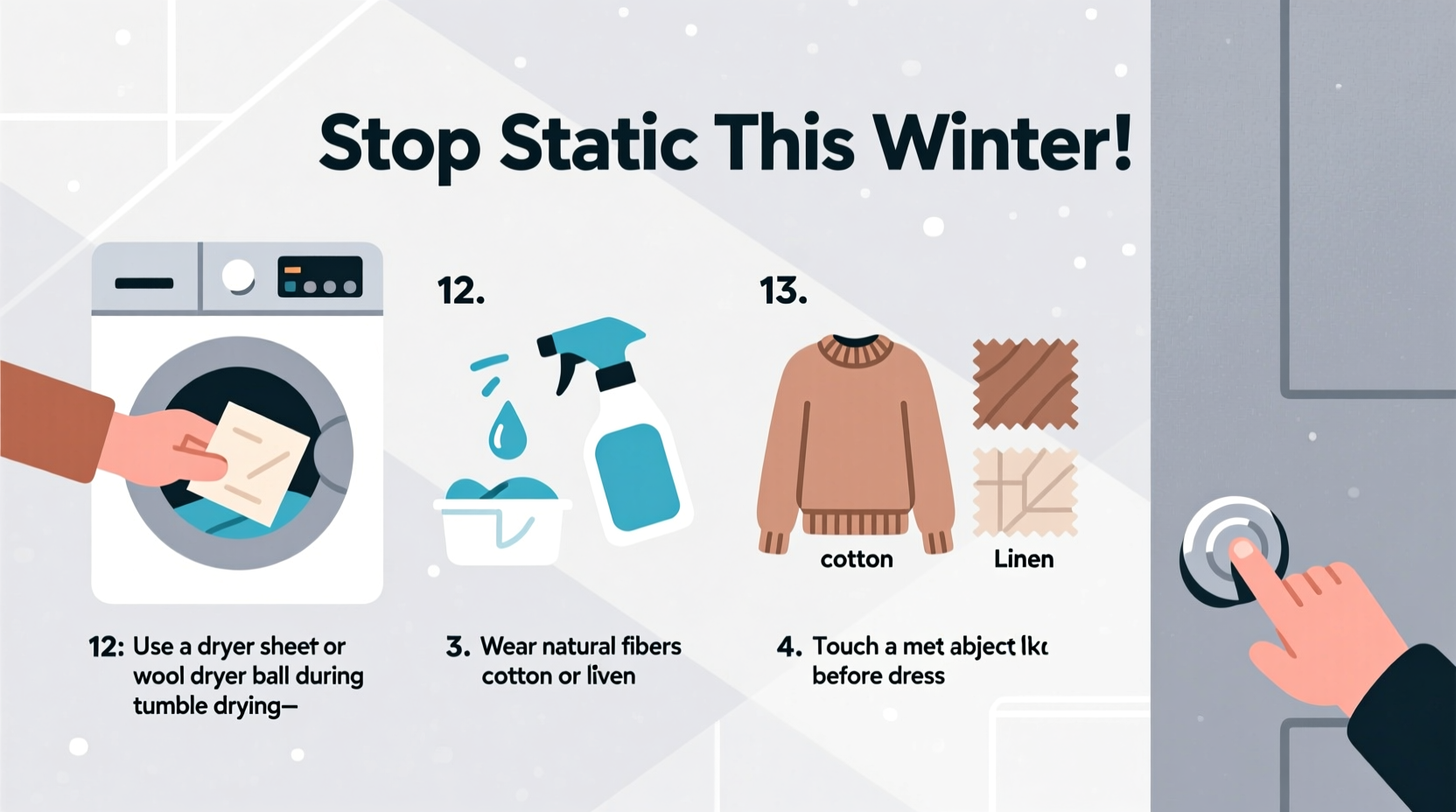
Wool or rubber dryer balls reduce drying time by improving airflow and separating clothes. As they bounce around, they soften fabrics naturally and reduce static buildup. For extra anti-static power, add a few drops of essential oil (like lavender or eucalyptus) to wool balls—they’ll leave clothes smelling fresh without chemicals.
| Laundry Hack | How It Works | Best For |
|---|---|---|
| Vinegar in rinse cycle | Removes residue, softens fibers | All fabrics, especially sensitive skin |
| Baking soda in wash | Softens water, balances pH | Heavily soiled or stiff clothes |
| Wool dryer balls | Separates clothes, reduces drying time | Synthetics, bulky items |
| Damp washcloth in dryer | Adds moisture, cuts static | Quick fix for already-dry loads |
Everyday Fixes You Can Use Instantly
Sometimes you need a fast solution—like when your dress suddenly clings mid-day at work. These on-the-spot tricks are easy, discreet, and highly effective.
Moisturize Your Skin
Dry skin increases static transfer between your body and clothing. Applying lotion immediately after showering locks in moisture and creates a barrier that reduces static cling. Focus on legs, arms, and torso—areas where clothes tend to stick. Opt for thicker creams in winter rather than light lotions.
Carry a Metal Hanger or Safety Pin
Metal conducts electricity and can instantly discharge built-up static. Run a metal hanger over the inside of a clinging garment, or pin a safety pin inside a seam. The pin works by dispersing charge through its conductive material. It’s invisible and surprisingly effective.
Use Hand Lotion on Clothes
If a skirt or blouse is clinging, apply a small dab of hand lotion to your palms, rub them together, then lightly smooth hands over the affected area. The moisture and oils neutralize the charge. Be cautious with dark or delicate fabrics—test on an inconspicuous spot first.
Keep a Spray Bottle Handy
Mix water with a teaspoon of fabric softener in a spray bottle and lightly mist the inside of problematic garments. Alternatively, plain water works in a pinch. A quick spritz adds enough moisture to eliminate static without soaking the fabric. This method is ideal for coats, dresses, and pants before heading out.
Smart Clothing Choices and Wardrobe Adjustments
Prevention starts with what you wear. Being mindful of fabric combinations can dramatically reduce static issues.
Choose Natural Fibers When Possible
Cotton, silk, linen, and bamboo are breathable and less likely to generate static. Even blending natural fibers with synthetics (e.g., cotton-polyester blends) reduces static compared to 100% synthetic materials. Look for labels and prioritize natural content, especially for base layers.
Layer Strategically
Avoid layering two synthetic fabrics together. For example, don’t wear a polyester top under a nylon jacket. Instead, pair a cotton undershirt with a wool sweater, or choose a silk camisole under a synthetic dress. The natural fiber acts as a buffer, minimizing electron transfer.
Anti-Static Sprays and Products
Commercial anti-static sprays can be effective but often contain chemicals like quaternary ammonium compounds. For a DIY version, mix 1 part liquid fabric softener with 10 parts water in a spray bottle. Lightly mist the inside of garments and let dry before wearing. Reapply every few wears or after washing.
Shoe Soles Matter More Than You Think
Rubber-soled shoes insulate your body from the ground, preventing static from discharging naturally. Leather soles or anti-static shoe inserts allow grounding, reducing overall static buildup. If you’re constantly zapping doorknobs, your footwear might be part of the issue.
Step-by-Step Guide to a Static-Free Morning Routine
Follow this practical sequence each morning to minimize static throughout the day:
- Hydrate your skin: Apply body lotion right after your shower while skin is still damp.
- Choose low-static fabrics: Pick outfits with natural fibers, especially for base layers.
- Check your laundry: Ensure clothes aren’t over-dried. If needed, toss them in the dryer with a damp cloth for 5–10 minutes.
- Lightly mist garments: Use a DIY anti-static spray on skirts, dresses, or jackets before putting them on.
- Ground yourself: Touch a metal object (like a faucet or door handle) before dressing to discharge any existing static.
- Carry emergency tools: Keep a travel moisturizer and a safety pin in your pocket or bag.
Mini Case Study: Sarah’s Office Static Struggles
Sarah, a marketing manager in Chicago, dreaded winter because her favorite pencil skirts would cling to her tights every time she stood up during meetings. She tried different brands of tights and even switched detergents, but nothing worked consistently. After tracking her routine, she realized she was using high-heat drying and wearing polyester blouses under acrylic sweaters. She made three key changes: switching to wool dryer balls, applying lotion daily, and replacing one synthetic layer with a cotton shell. Within a week, the clinging stopped. “I didn’t realize how much my laundry habits were affecting my workday,” she said. “Now I feel put together—and I’m not constantly adjusting my clothes.”
Frequently Asked Questions
Can aluminum foil really stop static in the dryer?
Yes. Crumpling a fist-sized piece of aluminum foil and tossing it into the dryer can help reduce static. The foil acts as a conductor, discharging electrons as it tumbles with clothes. It’s reusable for several months and chemical-free. Just make sure it’s tightly rolled to avoid snagging fabrics.
Is static cling harmful to health?
No, the static shocks associated with clothing are generally harmless, though they can be startling or uncomfortable. People with pacemakers or sensitive medical devices should consult their doctor, but for most individuals, static is a nuisance rather than a risk.
Why do some clothes still cling even after using dryer sheets?
Dryer sheets can lose effectiveness if overused or if clothes are over-dried. They coat fibers with a lubricating layer that reduces friction, but excessive heat burns off the coating. Additionally, heavily synthetic fabrics may need additional moisture or alternative methods like vinegar or dryer balls for lasting results.
Final Checklist: Stop Static in 7 Simple Steps
- ✅ Use white vinegar in the rinse cycle instead of liquid softener
- ✅ Switch to wool dryer balls to reduce drying time and static
- ✅ Avoid over-drying—remove clothes while slightly damp
- ✅ Moisturize skin daily, especially after showers
- ✅ Choose natural fiber clothing for base layers
- ✅ Keep a DIY anti-static spray (water + softener) in your closet
- ✅ Carry a metal hanger or safety pin for on-the-go fixes
Conclusion: Take Control of Winter Static Today
Static cling doesn’t have to be an unavoidable winter annoyance. By understanding the science behind it and applying simple, sustainable solutions, you can maintain comfort and confidence in your clothing all season. From smarter laundry techniques to thoughtful fabric choices and quick daily habits, the tools are already within reach. Start with one or two changes—like adding vinegar to your next load or keeping a moisturizer by your dresser—and build from there. Small steps lead to lasting results. Share your favorite anti-static trick in the comments and help others stay static-free this winter.




 浙公网安备
33010002000092号
浙公网安备
33010002000092号 浙B2-20120091-4
Comments
No comments yet. Why don't you start the discussion?