
Cats are naturally curious, agile, and intelligent animals. Their instinct to paw at objects, explore heights, and test their environment often leads to one frustrating habit: knocking things off shelves. Whether it’s a vase, remote control, or photo frame, this behavior can damage belongings and create daily stress for pet owners. While it might seem like mischief, cats don’t knock items down out of malice—they’re responding to instinct, boredom, or environmental triggers. The good news is that with consistent behavior modification techniques, you can reduce and eventually eliminate this behavior. This guide outlines practical, humane strategies backed by animal behavior science to help you manage and redirect your cat’s actions.
Understanding Why Cats Knock Things Off Shelves
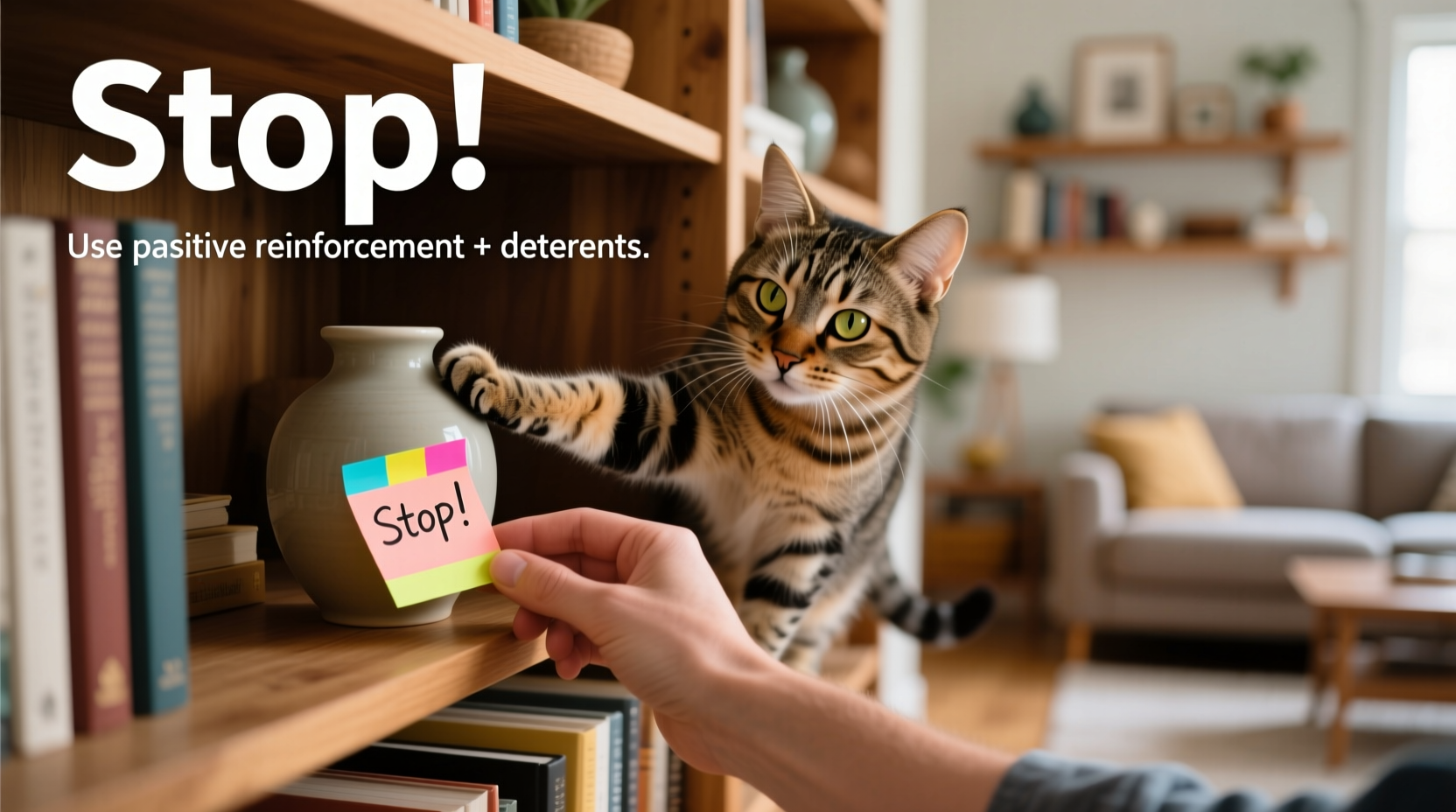
Before addressing the behavior, it’s essential to understand its root causes. Unlike dogs, cats operate on a mix of instinct, sensory feedback, and learned outcomes. When a cat knocks an object off a shelf, it’s rarely random. Common reasons include:
- Hunting simulation: The movement of falling objects mimics prey, triggering predatory instincts.
- Attention-seeking: If the cat receives a reaction—positive or negative—it may repeat the action for engagement.
- Exploration: Cats use their paws to investigate textures, weight, and stability of unfamiliar items.
- Boredom or lack of stimulation: Indoor cats without sufficient mental or physical outlets may resort to destructive play.
- Height preference: Cats love elevated spaces but may not distinguish between safe perches and cluttered surfaces.
Recognizing the motivation behind the behavior allows for targeted solutions rather than temporary fixes.
“Cats don’t misbehave—they behave according to their instincts. Our job is to guide those instincts toward appropriate outlets.” — Dr. Sarah Ellis, Feline Behavior Scientist, University of Lincoln
Behavior Modification Strategies That Work
Punishment-based methods, such as yelling or spraying water, are ineffective and can damage your bond with your cat. Instead, focus on positive reinforcement and environmental management. These techniques promote long-term change by addressing the cause, not just the symptom.
1. Redirect with Appropriate Play
Daily interactive play sessions satisfy your cat’s hunting drive and reduce the need to “hunt” household objects. Use wand toys that mimic birds or insects, engaging your cat in 10–15 minute bursts twice a day.
2. Modify the Environment
Make shelves less tempting by removing attractive objects and adding deterrents:
- Store fragile or valuable items in closed cabinets.
- Use double-sided tape or aluminum foil on edges—cats dislike sticky or crinkly textures.
- Place heavy, uninteresting items (like books) near the front edge to block access.
- Install cat shelves or perches nearby to give your cat a designated high vantage point.
3. Reinforce Desired Behaviors
When your cat ignores an object or uses a scratching post instead, immediately reward with praise or a treat. Over time, this strengthens alternative behaviors. Consistency is key—even small successes should be acknowledged.
Step-by-Step Guide to Reducing Shelf-Knocking
Follow this 4-week plan to gradually modify your cat’s behavior using structured training and environmental adjustments.
- Week 1: Assess and Secure
- Identify high-risk zones (e.g., bookshelves, entertainment centers).
- Remove breakable or valuable items from these areas.
- Begin daily play sessions using wand toys.
- Week 2: Introduce Deterrents
- Apply double-sided tape or motion-activated air sprays (like SSScat) to shelf edges.
- Add cat trees or wall-mounted perches near problem areas to redirect climbing.
- Observe when and why your cat interacts with shelves—note patterns.
- Week 3: Reward Alternatives
- Place puzzle feeders or treat-dispensing toys on stable surfaces away from shelves.
- Whenever your cat approaches a shelf without pawing, offer a treat.
- Avoid reacting when items are knocked over—no eye contact, speaking, or chasing.
- Week 4: Monitor and Maintain
- Gradually reintroduce decorative items if behavior improves.
- Continue play and enrichment routines to prevent relapse.
- Reassess environment monthly for new risks or changes in behavior.
Do’s and Don’ts: A Quick Reference Table
| Do’s | Don’ts |
|---|---|
| Provide daily interactive play with wand toys | Yell at or punish your cat for knocking things down |
| Use double-sided tape or aluminum foil as deterrents | Leave fragile or tempting objects on accessible edges |
| Reward calm behavior near shelves with treats | Ignore the behavior completely—some response is needed |
| Offer vertical space with cat shelves or towers | Use citrus sprays excessively—can irritate sensitive cats |
| Rotate toys weekly to maintain interest | Assume the behavior will stop on its own |
Real-Life Example: Transforming Bella’s Behavior
Sarah, a cat owner in Portland, struggled with her 3-year-old tabby, Bella, who consistently knocked over candles, glasses, and even her work laptop from her desk. After consulting a feline behaviorist, she implemented a multi-pronged approach:
- She installed a cat tree directly beside her desk, giving Bella a legal perch.
- She began two 10-minute play sessions daily using a feather wand.
- She covered the edge of her desk with removable double-sided tape.
- She stopped reacting when Bella pawed at objects, instead rewarding her when she sat calmly.
Within three weeks, Bella stopped targeting the desk. By week six, Sarah was able to safely keep her coffee mug and notebook nearby without incident. The key was consistency and replacing the unwanted behavior with more satisfying alternatives.
Essential Checklist for Cat Owners
Use this checklist to ensure you’re covering all bases in modifying your cat’s shelf-knocking behavior:
- ✅ Remove breakable items from elevated surfaces
- ✅ Provide at least 20 minutes of interactive play daily
- ✅ Install cat-friendly vertical spaces (shelves, towers)
- ✅ Use non-harmful deterrents on shelf edges
- ✅ Reinforce calm behavior with treats or affection
- ✅ Avoid reacting emotionally when items are knocked over
- ✅ Rotate toys weekly to prevent boredom
- ✅ Monitor behavior weekly and adjust strategy as needed
Frequently Asked Questions
Why does my cat only knock things off when I’m watching?
This is often attention-seeking behavior. Even negative reactions—like gasping or rushing over—can reinforce the action. Your cat learns that knocking something down gets your attention. To break this cycle, remain neutral when it happens and instead reward quiet, independent behavior.
Is my cat doing this out of spite?
No. Cats do not act out of spite or revenge. Their behavior is driven by instinct, environment, and learned outcomes. Labeling it as “spiteful” anthropomorphizes the cat and delays effective solutions. Focus on what the cat gains from the behavior (attention, stimulation, sensory feedback) and redirect accordingly.
Can older cats learn new behaviors?
Absolutely. While kittens are more adaptable, adult and senior cats can learn through positive reinforcement and environmental changes. Progress may be slower, but consistency and patience yield results. Older cats may also knock things over due to declining vision or arthritis—consult your vet if sudden behavioral changes occur.
Conclusion: Building a Harmonious Home with Your Cat
Stopping your cat from knocking things off shelves isn’t about dominance or discipline—it’s about understanding feline psychology and guiding natural instincts in constructive directions. Through environmental enrichment, consistent play, and positive reinforcement, you can transform a frustrating habit into an opportunity for deeper bonding and mental stimulation. Remember, every cat is different. What works for one may need adjustment for another. The goal isn’t perfection but progress. With time and patience, most cats can learn to coexist peacefully with your décor and belongings.




 浙公网安备
33010002000092号
浙公网安备
33010002000092号 浙B2-20120091-4
Comments
No comments yet. Why don't you start the discussion?