
Cats are naturally curious, agile, and intelligent animals. Their instinct to paw at objects, explore heights, and test their environment often leads to one frustrating behavior: knocking things off shelves. While it may seem like mischief or defiance, this action is rarely malicious. Instead, it stems from curiosity, hunting instincts, or a need for stimulation. The good news? With consistent, evidence-based training methods, you can reduce—and even eliminate—this habit without compromising your cat’s well-being.
Unlike quick fixes that rely on punishment or deterrents alone, effective solutions address the root causes of the behavior. This guide outlines scientifically supported training techniques, environmental adjustments, and behavioral conditioning strategies that have been successfully used by veterinarians, animal behaviorists, and experienced cat owners alike.
Understanding Why Cats Knock Things Down
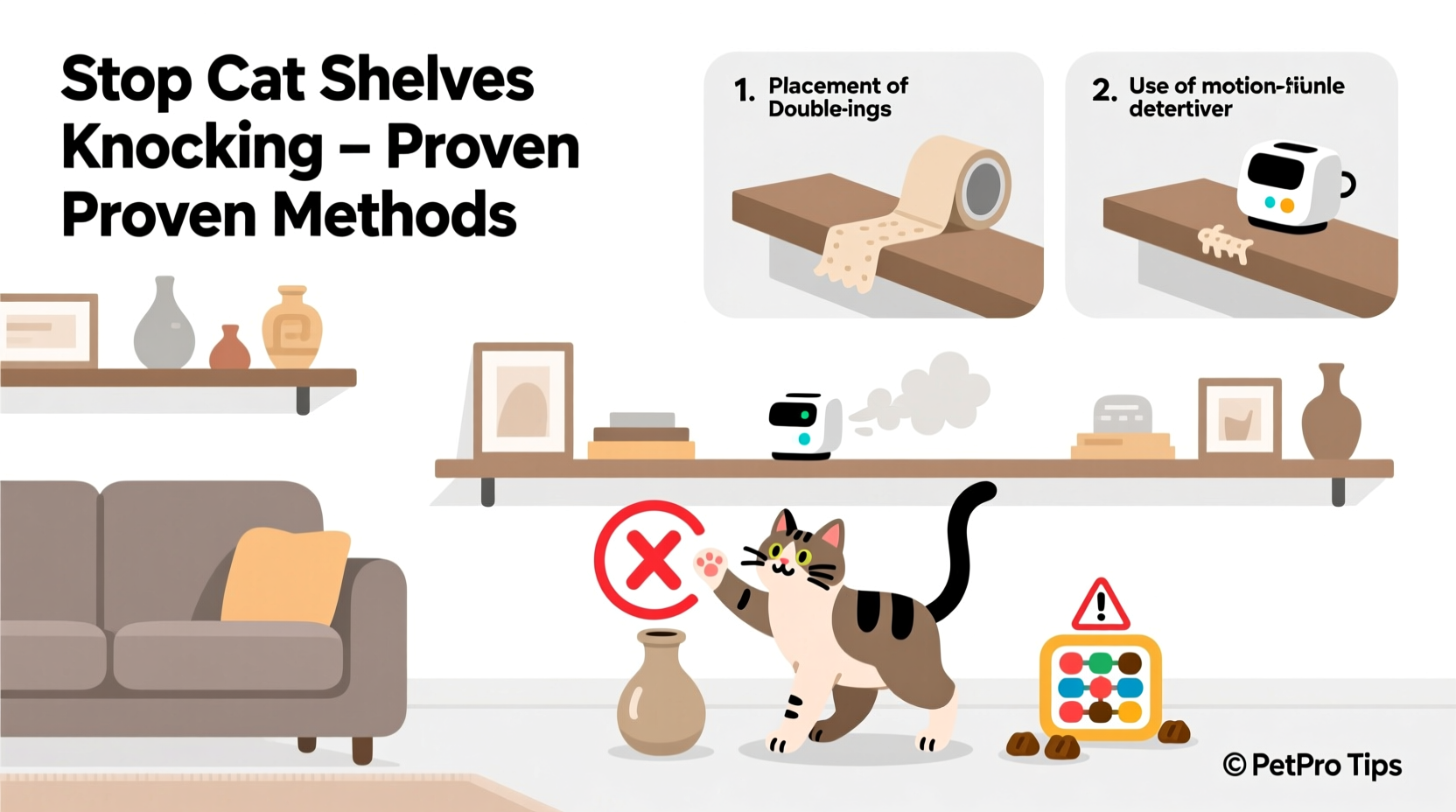
To effectively change behavior, it's essential to understand why it occurs in the first place. Cats don’t knock items off shelves out of spite. Common reasons include:
- Hunting simulation: Swatting at dangling or moving objects mimics capturing prey.
- Sensory exploration: Cats use their paws to investigate textures, movement, and weight.
- Attention-seeking: If knocking something down results in a reaction—even scolding—it reinforces the behavior.
- Boredom or under-stimulation: Indoor cats without sufficient mental engagement may resort to destructive play.
- Height advantage: Elevated surfaces give cats a sense of security, making them more likely to interact with nearby objects.
“Cats are not being ‘naughty’ when they knock things over—they’re following innate instincts. Our job is to redirect those instincts appropriately.” — Dr. Sarah Ellis, Feline Behavior Scientist, University of Lincoln
Proven Training Methods That Work
Effective cat training relies on positive reinforcement, consistency, and environmental management. Below are five evidence-backed techniques shown to reduce shelf-knocking behaviors.
1. Redirect with Targeted Enrichment
Provide alternative outlets for your cat’s natural behaviors. Enrichment tools such as puzzle feeders, motion-activated toys, and interactive wands satisfy predatory drives in constructive ways.
A 2020 study published in *Applied Animal Behaviour Science* found that cats given daily interactive play sessions showed a 67% reduction in unwanted object manipulation within three weeks.
2. Use Positive Reinforcement for Desired Behavior
Reward your cat when they ignore off-limits areas or engage with appropriate toys. Clicker training can be highly effective for marking desired actions.
- Observe your cat near a shelf but not interacting with objects.
- Click (or say “yes”) the moment they look away or walk past calmly.
- Immediately offer a high-value treat (e.g., freeze-dried chicken).
- Repeat consistently—over time, your cat learns that calm behavior earns rewards.
This method strengthens impulse control and builds positive associations with self-restraint.
3. Implement Habituation and Desensitization
If your cat knocks things down due to fear or overstimulation (e.g., reacting to a swaying curtain or creaking shelf), gradual exposure can help. Introduce the trigger at a low intensity and pair it with treats until the cat no longer reacts.
For example, if a hanging plant causes batting behavior, hang it higher initially, then slowly lower it while offering treats during calm observation. Over days or weeks, the cat learns the object is non-threatening and not worth engaging with aggressively.
4. Apply Differential Reinforcement of Alternative Behavior (DRA)
DRA is a behavioral psychology technique where an undesired behavior is reduced by reinforcing a competing, acceptable behavior.
| Undesired Behavior | Alternative Behavior | Reinforcement Strategy |
|---|---|---|
| Knocking vase off shelf | Sitting on designated perch | Treat + verbal praise every time cat uses perch |
| Swatting at hanging lamp | Chasing wand toy on floor | Play session initiated only when cat chooses toy |
| Pawing at bookshelf | Using scratching post nearby | Click and reward after each swipe at post |
Consistency over two to four weeks typically results in measurable improvement.
5. Leverage Remote Deterrent Devices
While direct punishment harms trust, passive deterrents can interrupt the behavior without negative association. Motion-activated air sprayers (like Ssscat) emit a harmless puff of air when triggered, startling the cat just enough to break the habit.
Place these devices near problem shelves for 7–10 days. Most cats learn to avoid the area after a few exposures. Once the behavior stops, remove the device to prevent habituation.
Environmental Adjustments for Long-Term Success
Training works best when combined with smart environmental design. Cats thrive in spaces that support their natural instincts—without encouraging destructive habits.
Secure and Simplify Shelves
- Remove tempting objects (crystals, figurines, dangling cords).
- Use museum putty or adhesive strips to secure lightweight decor.
- Install transparent acrylic barriers along shelf edges.
- Store frequently targeted items in closed cabinets.
Create Vertical Territory Elsewhere
Instead of eliminating access to height, redirect it. Install cat shelves, perches, or tall scratching posts in safe zones. These should be stable, textured, and placed near windows for visual stimulation.
Designate a \"Cat Zone\" for Exploration
Set up a shelf or low table with safe, knockable items—such as empty boxes, crumpled paper balls, or soft plush toys. Allow your cat full permission to bat and toss these objects. This controlled space satisfies their urge to manipulate while protecting fragile belongings elsewhere.
Mini Case Study: Reducing Shelf-Knocking in a Multi-Cat Household
The Thompson family had two indoor cats: Luna, a playful 2-year-old tabby, and Milo, a cautious 4-year-old tuxedo. Both had developed a habit of knocking decorative items off living room shelves, especially when left alone.
After consulting a veterinary behaviorist, they implemented a multi-pronged approach:
- Removed all breakables from accessible shelves.
- Installed floating cat shelves on an adjacent wall with built-in hiding spots.
- Introduced daily 10-minute wand toy sessions before work.
- Used a motion-activated air deterrent temporarily on the original shelves.
- Began clicker training for “leave it” commands using tuna flakes as rewards.
Within 18 days, incidents dropped from 4–5 per day to zero. By week six, the air deterrent was no longer needed, and both cats regularly used their designated climbing zone. Follow-up video analysis confirmed increased resting and grooming behaviors, indicating reduced stress and improved environmental satisfaction.
Common Mistakes to Avoid
Even well-intentioned efforts can backfire if based on misconceptions. Here’s what not to do:
| Don’t | Why It’s Harmful | Do This Instead |
|---|---|---|
| Yell or punish your cat | Creates fear, damages trust, and may increase anxiety-driven behaviors | Stay calm, redirect attention, and reward better choices |
| Use sticky tape or aluminum foil long-term | Cats adapt quickly; texture aversion fades without reinforcement | Combine short-term deterrents with permanent enrichment |
| Ignore the behavior completely | Misses opportunity to reinforce alternatives; behavior may escalate | Actively shape desired habits through structured training |
“Punishment doesn’t teach a cat what to do—it only teaches them to fear you. The goal is education, not suppression.” — Dr. Karen Overall, Veterinary Behavioral Medicine Specialist
Step-by-Step Guide to Stopping Shelf-Knocking (4-Week Plan)
Follow this structured timeline to create lasting change:
- Week 1 – Assess & Modify Environment: Remove fragile items, install deterrents if needed, and set up enrichment zones.
- Week 2 – Begin Positive Reinforcement: Start clicker training or treat-based rewards for calm behavior near shelves.
- Week 3 – Increase Engagement: Add 2–3 daily play sessions of 5–10 minutes to burn energy and build focus.
- Week 4 – Fade Out Deterrents & Monitor: Remove passive devices gradually. Track incidents and adjust rewards as needed.
By the end of week four, most cats show significant improvement. Continue reinforcement monthly to maintain progress.
Frequently Asked Questions
Is my cat doing this to annoy me?
No. Cats lack the cognitive ability to seek revenge or act out of malice. What seems personal is usually curiosity, play, or learned attention-seeking. Responding emotionally reinforces the cycle—stay patient and solution-focused.
Will neutering/spaying stop this behavior?
While spaying or neutering can reduce general hyperactivity and territorial behaviors, it won’t directly stop shelf-knocking unless driven by hormonal aggression. Environmental and training interventions remain essential regardless of reproductive status.
How long does it take to see results?
With consistent effort, most owners notice improvement within 10–14 days. Complete elimination of the behavior typically takes 3–6 weeks. Factors like age, prior reinforcement history, and household stress levels influence speed of progress.
Conclusion: Build Harmony Through Understanding
Stopping your cat from knocking things off shelves isn’t about dominance or discipline—it’s about collaboration. By understanding feline instincts and applying humane, research-supported methods, you create a home where both you and your cat feel safe and satisfied.
Start today by removing hazards, introducing one new toy, and rewarding just one calm moment. Small actions compound into lasting change. Your cat isn’t trying to frustrate you; they’re asking, in their own way, for a world that makes sense to them. Help them find it—on their terms and yours.




 浙公网安备
33010002000092号
浙公网安备
33010002000092号 浙B2-20120091-4
Comments
No comments yet. Why don't you start the discussion?