
Cats scratch—it’s instinctual, necessary, and completely normal. But when that behavior targets your favorite couch, it can feel like a losing battle. The good news is that you don’t need to resort to declawing, sprays that cause distress, or punitive tactics. With patience, understanding, and a few strategic changes, you can redirect your cat’s natural scratching habits in a way that respects their instincts while protecting your furniture.
Scratching serves multiple purposes for cats: it helps them shed the outer layers of their claws, stretch their muscles, mark territory with scent glands in their paws, and relieve stress. Trying to eliminate the behavior entirely is neither practical nor fair. Instead, the goal should be to guide your cat toward acceptable alternatives—ones they actually prefer.
Understand Why Your Cat Scratches the Couch
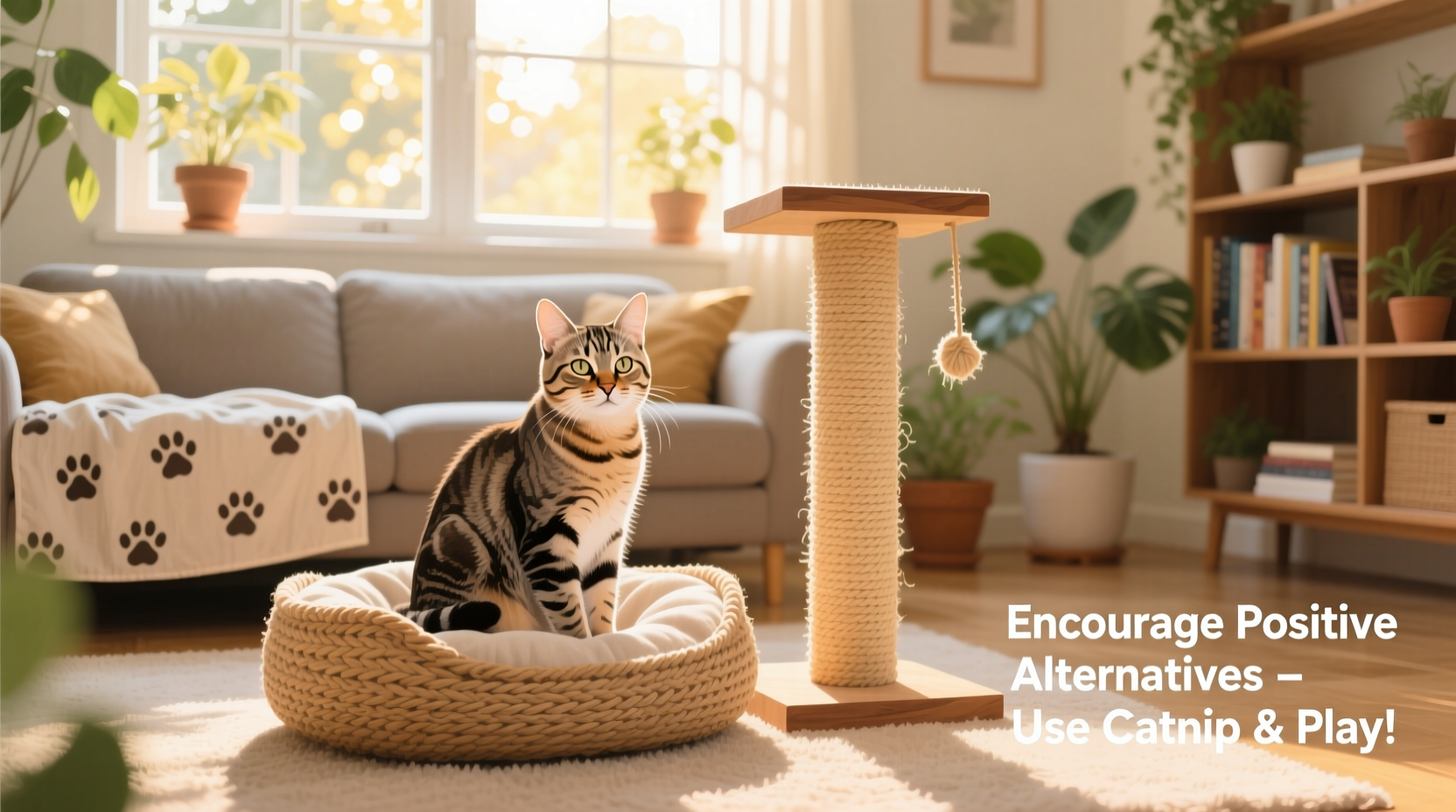
Before implementing solutions, it's essential to understand what makes the couch so appealing. Cats are selective about where they scratch, and certain textures, locations, and angles are more attractive than others.
- Texture preference: Many cats favor vertical surfaces with a slightly coarse texture—like the weave of some upholstery—that allows their claws to get a solid grip.
- Location significance: If the couch is near a window, doorway, or main living area, your cat may see it as prime real estate for marking territory.
- Height and stability: Tall, sturdy furniture allows cats to stretch fully, making it ideal for a satisfying scratch session.
- Habit reinforcement: Once a cat has scratched a spot, scent and visual cues encourage repeat visits.
Addressing these factors head-on gives you a much better chance of success than simply covering the couch and hoping for the best.
Provide Attractive Alternatives: The Right Scratching Posts
The cornerstone of any humane solution is offering better options. A poorly chosen scratching post—one that wobbles, is too short, or made of unappealing material—won’t stand a chance against your sofa.
When selecting a scratching post, consider the following features:
| Feature | Recommended | Avoid |
|---|---|---|
| Material | Sisal rope, corrugated cardboard, natural wood | Polyester fabric, plush carpet (unless already preferred) |
| Height | Tall enough for full stretch (at least 30 inches) | Short posts under 24 inches |
| Stability | Heavy base or wall-mounted for no wobble | Flimsy, tipping models |
| Orientation | Vertical, horizontal, and angled options | Only one orientation type |
Place scratching posts directly next to the couch or in the same high-traffic areas. Cats often scratch right after waking up or when entering a room, so positioning is critical. If your cat likes to scratch the armrest, place a tall vertical post beside it. If they target the seat, try a flat cardboard scratcher on the floor nearby.
“Cats don’t scratch to annoy us—they scratch because it’s biologically important. Our job is to channel that instinct appropriately.” — Dr. Sarah Ellis, Feline Behavior Scientist, University of Lincoln
Make the Couch Less Appealing (Without Harm)
You don’t need to make the couch hostile—just less interesting. The key is to temporarily alter its appeal while reinforcing better choices.
Here are several non-punitive methods:
- Suspend use temporarily: If possible, restrict access to the room or cover the couch with a fitted sheet or slipcover. Cats often lose interest if the texture changes.
- Use double-sided tape: Apply sticky tape (like Sticky Paws) to targeted areas. Most cats dislike the sensation on their paws and will avoid those spots.
- Aluminum foil or plastic mats: These create an unfamiliar texture and sound. Use them selectively during training, not permanently.
- Scent deterrents: Citrus, lavender, or commercial sprays with plant-based bitter scents can deter some cats. Test in a small area first and avoid overuse, which can stress your pet.
These tools work best when combined with positive reinforcement for using the scratching post.
Step-by-Step Guide to Redirect Scratching Behavior
Changing your cat’s habits takes consistency, but the process is straightforward when followed systematically. Here’s a realistic 2–4 week timeline:
- Week 1: Assess and prepare
- Identify exactly where and when your cat scratches.
- Purchase 1–2 high-quality scratching posts that match their preferences.
- Position them near the couch or in frequently used areas.
- Week 2: Introduce and entice
- Sprinkle catnip or silvervine on the new scratcher.
- Use a wand toy to encourage swatting and scratching motions on the post.
- Gently guide your cat’s paws across the surface if they’re open to handling.
- Apply deterrents (tape, foil) to the couch only during this phase.
- Week 3: Reinforce and reward
- Praise or offer a treat immediately after your cat uses the post.
- If they approach the couch, gently redirect them to the scratcher.
- Maintain deterrents but begin phasing out foil or plastic if progress is steady.
- Week 4: Monitor and adjust
- Gradually remove deterrents once consistent use of the scratcher is observed.
- Add a second scratcher in another room to prevent future issues.
- Evaluate whether the current post still meets your cat’s needs—replace if worn.
This method works because it combines environmental modification with positive reinforcement, aligning with how cats naturally learn.
Checklist: Humane Steps to Stop Couch Scratching
Follow this actionable checklist to ensure you're covering all bases:
- ✅ Observe your cat’s scratching patterns (location, time, posture)
- ✅ Buy a sturdy, tall scratching post made of sisal or cardboard
- ✅ Place the post next to the couch or in a high-traffic zone
- ✅ Use catnip, toys, or treats to encourage interaction with the post
- ✅ Apply temporary deterrents (double-sided tape, slipcovers) to the couch
- ✅ Reward your cat every time they use the correct surface
- ✅ Trim your cat’s claws every 2–3 weeks to reduce damage
- ✅ Replace or refresh scratchers when frayed or unappealing
- ✅ Add additional scratchers in other rooms over time
- ✅ Avoid yelling, spraying water, or physical correction
Real Example: How Mia the Cat Learned a New Routine
Sarah adopted Mia, a three-year-old domestic shorthair, six months ago. Within weeks, the arms of her linen couch were shredded. Despite covering the couch with throws, Mia continued to scratch the exposed corners.
After consulting a feline behaviorist, Sarah took a multi-pronged approach:
- She purchased a 32-inch sisal-wrapped post and placed it directly beside the couch.
- She sprinkled silvervine on the post each morning and played with a feather wand nearby.
- She applied double-sided tape to the couch arms and covered them with a tightly fitted cotton slipcover.
- Every time Mia scratched the post—even briefly—Sarah praised her and offered a small treat.
Within 10 days, Mia was consistently using the post. After three weeks, the tape and slipcover were removed, and Mia had stopped targeting the couch entirely. Six months later, she has two scratchers in the living room and one by the bedroom door—and the couch remains intact.
Sarah’s success wasn’t due to a magic product, but to consistency, observation, and respect for her cat’s natural needs.
Frequently Asked Questions
Can I train an older cat to stop scratching the couch?
Yes. While kittens are easier to shape behaviorally, adult and senior cats can learn new habits with patience. The key is consistency and ensuring the alternative is genuinely appealing. Older cats may take longer, but they respond well to routine and positive reinforcement.
Is it okay to trim my cat’s claws?
Absolutely. Regular claw trimming (every 2–3 weeks) reduces the damage caused by scratching and is a humane part of cat care. Use proper clippers and avoid cutting into the pink “quick.” If unsure, ask your vet or groomer to demonstrate.
Are soft claw covers a good option?
Nail caps like Soft Paws are a safe, temporary solution. They prevent damage while allowing natural scratching motions. Applied correctly, they last 4–6 weeks and fall off as the claw grows. They’re especially useful during transition periods while training takes hold.
Final Thoughts: Coexistence Is Possible
Your cat doesn’t need to choose between comfort and your couch. By understanding their instincts and providing appropriate outlets, you create a home where both of you thrive. Humane methods aren’t just kinder—they’re more effective long-term because they address the root cause rather than suppress symptoms.
Remember, scratching isn’t misbehavior. It’s communication, maintenance, and self-care rolled into one. When you meet your cat halfway—with thoughtful tools, smart placement, and gentle guidance—you’re not just saving your furniture. You’re strengthening trust and building a calmer, happier household.




 浙公网安备
33010002000092号
浙公网安备
33010002000092号 浙B2-20120091-4
Comments
No comments yet. Why don't you start the discussion?