
Cats scratch—it’s a natural, instinctive behavior essential to their physical and emotional well-being. They do it to shed the outer layers of their claws, mark territory with scent glands in their paws, stretch their muscles, and relieve stress. Unfortunately, when this instinct targets your favorite sofa, it can lead to frustration, damaged furniture, and strained relationships between pet and owner. The good news? You don’t have to choose between a happy cat and an intact couch. With patience, consistency, and the right strategies, you can redirect your cat’s scratching habits humanely and effectively—without resorting to declawing, sprays that cause distress, or punitive measures.
The key lies in understanding feline behavior and providing acceptable alternatives. Cats aren’t trying to ruin your home; they’re simply following their instincts. By meeting their needs on their terms, you create a win-win situation: your cat stays healthy and content, and your furniture remains unscathed.
Why Cats Scratch Furniture (And Why It’s Not Malicious)
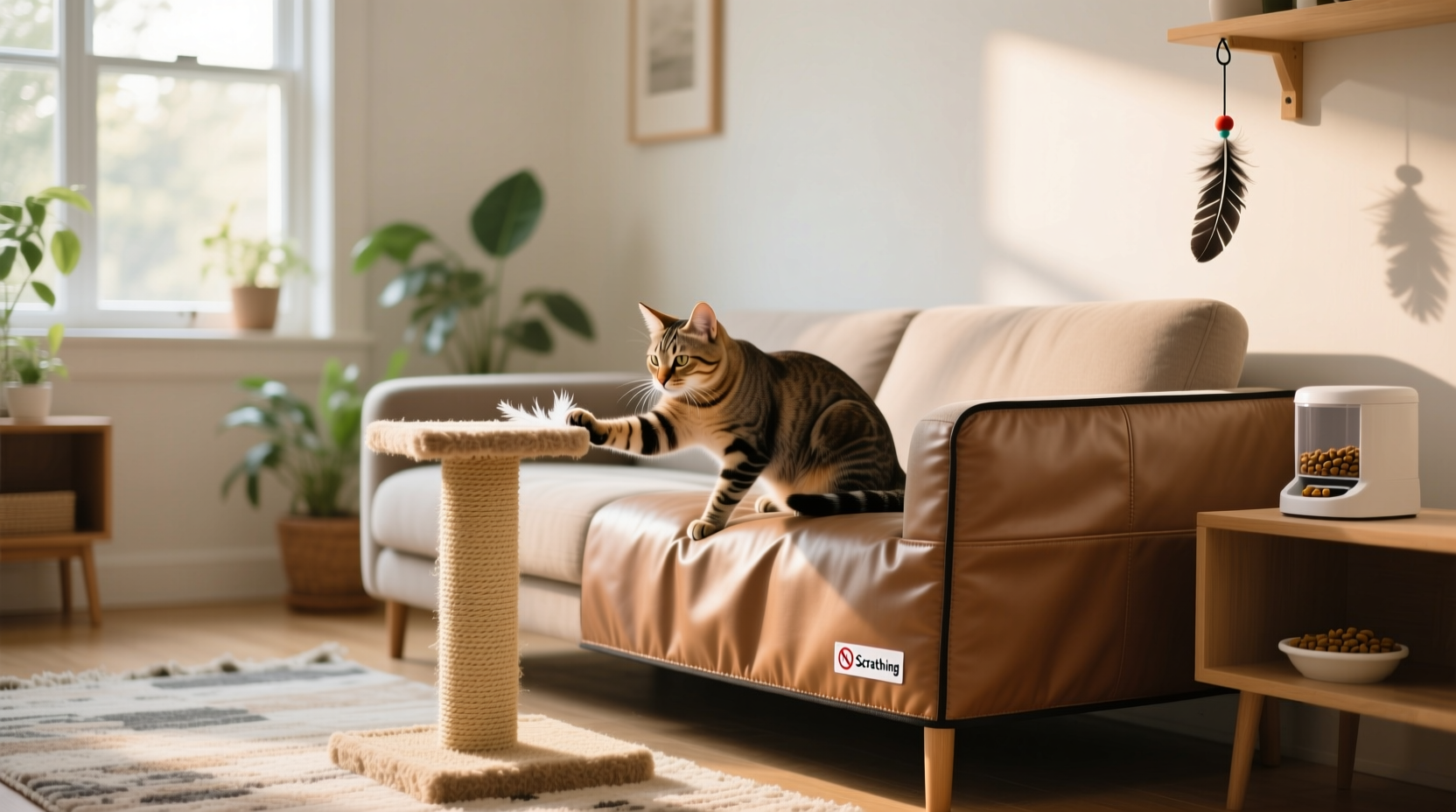
Before addressing how to stop couch scratching, it's important to understand why cats do it. Scratching isn't destructive behavior in the way humans perceive destruction—it's functional and necessary. Here are the primary reasons cats target furniture:
- Claw Maintenance: Scratching helps cats shed the outer sheaths of their claws, keeping them sharp and healthy.
- Stretching and Exercise: The motion engages shoulder, back, and leg muscles, especially after naps.
- Scent Marking: Cats have scent glands between their paw pads. Scratching deposits pheromones, marking territory in a calming, familiar way.
- Emotional Regulation: Scratching can be a response to excitement, anxiety, or territorial insecurity.
- Texture Preference: Many couches offer vertical surfaces with fibrous textures similar to tree bark—the natural scratching surface in the wild.
“Scratching is not a behavioral problem—it’s a species-typical behavior. The issue arises when the environment doesn’t support appropriate outlets.” — Dr. Sarah Ellis, Feline Behavior Scientist, University of Lincoln
Attempting to eliminate scratching altogether is neither humane nor practical. Instead, the goal should be redirection: guiding your cat toward acceptable surfaces while making the couch less appealing—without causing fear or discomfort.
Step-by-Step Guide to Redirect Scratching Behavior
Changing your cat’s scratching habits takes time, but a structured approach significantly increases success. Follow these steps in order for best results:
- Assess Current Scratching Patterns: Observe where, when, and how your cat scratches. Is it after waking up? Near entryways? On specific parts of the couch? This helps identify motivation and timing.
- Provide Appealing Alternatives: Place multiple scratching posts or pads near targeted furniture. Use materials like sisal rope, corrugated cardboard, or natural wood—textures cats prefer.
- Position Strategically: Cats often scratch upon waking or entering a room. Place scratchers next to sleeping areas, doorways, or beside the couch.
- Encourage Use with Positive Reinforcement: Reward your cat with treats, praise, or play when they use the scratcher. Never punish scratching—it creates fear and worsens the issue.
- Make the Couch Less Inviting: Use temporary deterrents like double-sided tape, aluminum foil, or slipcovers with unpleasant textures—not sprays that cause anxiety.
- Trim Claws Regularly: Keeping claws blunt reduces damage and makes scratching less rewarding on soft surfaces.
- Monitor and Adjust: If one type of scratcher fails, try another. Some cats prefer horizontal, others vertical or angled.
Choosing the Right Scratching Solutions
Not all scratching posts are created equal. A flimsy, wobbly tower won’t satisfy a cat’s need to dig in and stretch. The ideal alternative must be stable, appropriately sized, and made from preferred materials. Below is a comparison of common scratching options:
| Type | Best For | Pros | Cons |
|---|---|---|---|
| Sisal Rope Posts (Vertical) | Cats who stretch upward | Durable, mimics tree bark, excellent for claw maintenance | Can unravel over time; requires sturdy base |
| Cardboard Scratcher (Flat or Inclined) | Kittens or older cats with joint issues | Affordable, replaceable, widely accepted | Wears out quickly; may not suit large cats |
| Carpeted Scratching Pads | Cats already used to carpet | Familiar texture, often comes with toys | May encourage carpet scratching elsewhere |
| Wood or Woven Reed Surfaces | Cats needing robust resistance | Long-lasting, natural aesthetic | Higher cost; heavier to move |
| Horizontal Tunnel Scratchers | Playful or anxious cats | Double-duty as toy and scratcher | Limited stretching benefit |
Experts recommend offering at least two types of scratchers in different locations. Rotate them monthly to maintain novelty. Stability is crucial—your cat should be able to lean into the post without it tipping over. A height of at least 30 inches allows full extension for most adult cats.
Humane Deterrents vs. Harmful Methods
Some products marketed to stop scratching rely on fear, discomfort, or aversion. These should be avoided. Humane training respects your cat’s instincts while guiding behavior through positive reinforcement and environmental management.
“Using citrus sprays, loud noises, or physical corrections teaches cats to fear their owners. That damages trust and increases stress-related behaviors like inappropriate elimination.” — Jackson Galaxy, Cat Behavior Consultant
Instead, focus on passive deterrents that discourage without distress:
- Double-Sided Tape: Cats dislike sticky paws. Apply strips to couch arms or corners.
- Aluminum Foil: Temporary covering of scratched areas—texture and sound deter most cats.
- Soft Paws (Nail Caps): Vinyl caps glued over claws last 4–6 weeks and prevent damage. Non-toxic and painless.
- Slipcovers with Textured Linings: Use burlap-backed or tightly woven fabrics cats avoid.
Avoid:
- Sticky sprays with strong scents (citrus, mint)
- Water sprayers used punitively
- Declawing (onychectomy), which is major surgery and banned in many countries
- Confinement or isolation as punishment
Real Example: How One Household Saved Their Sofa
Sophia, a graphic designer in Portland, adopted a rescue tabby named Milo. Within weeks, her linen sectional showed deep gouges along both arms. She tried spritzing water, yelling “no,” and even covering the couch with plastic—but Milo kept returning to his favorite spots.
After consulting a veterinary behaviorist, Sophia changed her approach. She placed a tall sisal post directly beside the couch, wrapped the armrests in double-sided tape, and began daily 5-minute play sessions ending near the scratcher. She also started trimming Milo’s claws every two weeks.
Within three weeks, Milo was using the post consistently. After six weeks, the tape was removed, and the couch remained untouched. “I realized I was fighting biology,” Sophia said. “Once I gave him a better option and stopped reacting negatively, everything changed.”
Essential Checklist for Stopping Couch Scratching
Follow this actionable checklist to implement a humane, lasting solution:
- ✅ Identify your cat’s preferred scratching times and locations
- ✅ Purchase at least two sturdy scratching posts (vary materials and orientation)
- ✅ Place scratchers near current problem areas (especially near resting spots)
- ✅ Use catnip or silver vine to attract your cat to new scratchers
- ✅ Apply temporary deterrents (tape, foil) to couch arms and corners
- ✅ Trim claws every 2–3 weeks
- ✅ Reward desired behavior immediately with treats or affection
- ✅ Avoid yelling, spraying, or physical correction
- ✅ Monitor progress weekly and adjust placement or type if needed
- ✅ Consider Soft Paws if damage persists despite other efforts
Frequently Asked Questions
Will my cat eventually stop scratching the couch on its own?
Unlikely. Without intervention, the behavior usually becomes habitual. However, with consistent redirection, most cats adapt within 4–8 weeks. Early training (especially with kittens) leads to faster results.
Are there specific breeds more prone to furniture scratching?
No breed is inherently worse, but high-energy or highly territorial cats (like Siamese or Bengals) may scratch more frequently. Individual personality and environment play bigger roles than breed.
Is it okay to let my cat scratch one piece of furniture?
Yes—if you designate one item as “scratch-friendly” and make it highly appealing, it can serve as a controlled outlet. Just ensure it’s not something you value highly, and keep it near where your cat spends time.
Final Thoughts: Patience, Not Punishment
Stopping your cat from scratching the couch isn’t about dominance or discipline—it’s about empathy and smart environmental design. Your cat isn’t defying you; they’re expressing a fundamental need. When you meet that need with thoughtful alternatives, the conflict dissolves naturally.
Success doesn’t come overnight. There will be setbacks, moments of frustration, and perhaps a few more claw marks before the new routine takes hold. But every small victory—your cat pausing to scratch the post instead of the sofa, or stretching fully on a new sisal tower—is proof that humane training works.
Start today. Add a scratcher. Trim those claws. Reward the behavior you want to see. Over time, you’ll build a home where your cat thrives and your furniture survives—one scratch at a time.




 浙公网安备
33010002000092号
浙公网安备
33010002000092号 浙B2-20120091-4
Comments
No comments yet. Why don't you start the discussion?