
Cat scratching is a natural behavior. It helps cats shed old claw layers, stretch their muscles, mark territory through scent glands in their paws, and relieve stress. But when that instinct turns toward door frames, baseboards, or furniture, it becomes a costly and frustrating issue for pet owners. The good news: you don’t have to live with shredded woodwork or choose between your cat’s needs and your home’s integrity. With understanding, consistency, and the right tools, you can redirect your cat’s scratching habits permanently.
The key isn’t punishment—it’s redirection. Cats don’t scratch out of spite; they do it because their environment lacks appropriate alternatives. Addressing the root cause while offering better options is what leads to lasting change.
Why Your Cat Scratches Door Frames
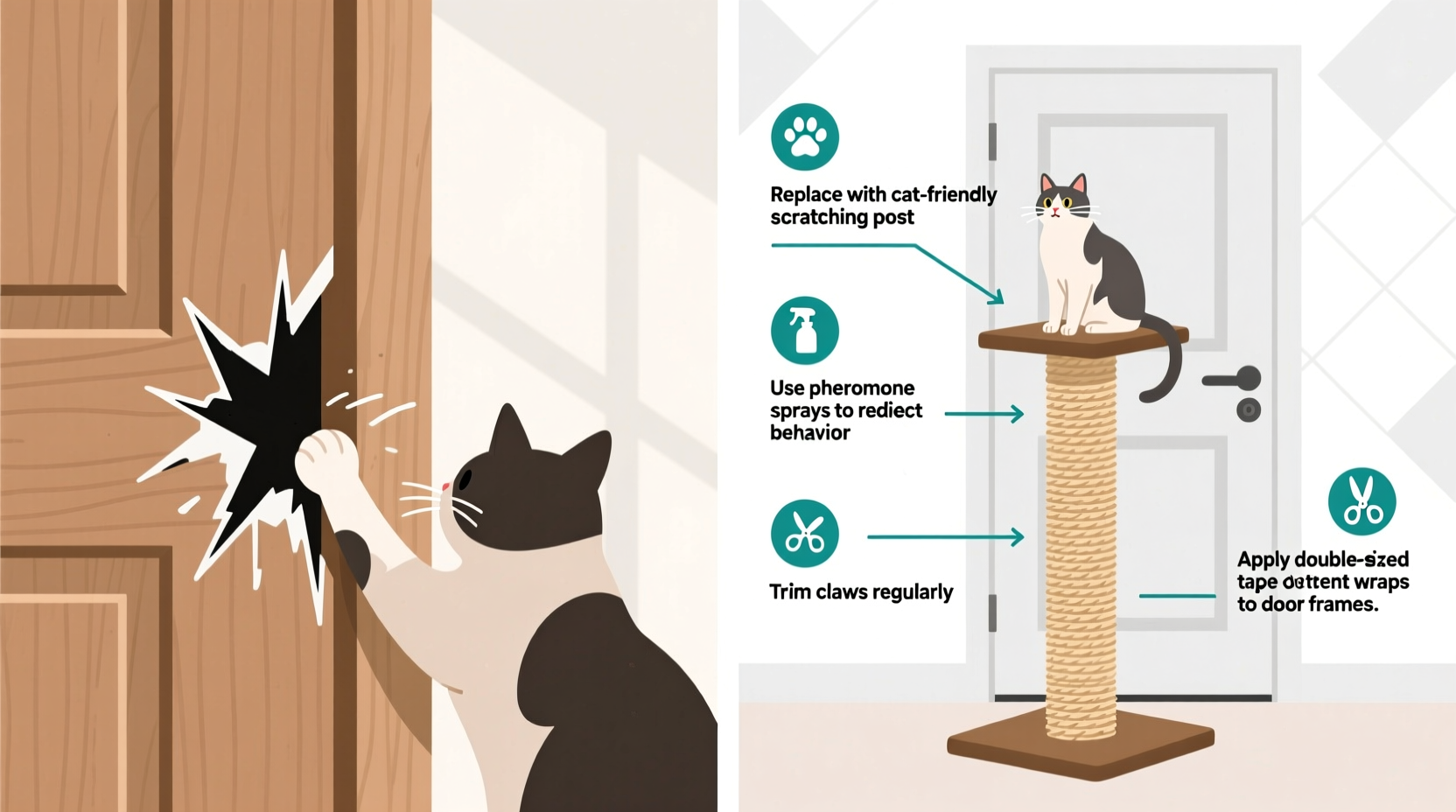
Before solving the problem, it’s essential to understand why your cat targets door frames specifically. These areas are often in high-traffic zones, making them ideal for territorial marking. The vertical surface allows full-body stretching, which cats prefer during morning routines or after naps. Additionally, door frames may be made of wood—a material that offers satisfying resistance under claws.
Common triggers include:
- Lack of acceptable scratching surfaces – If no scratching posts are available or accessible, cats default to nearby structures.
- Location preference – Cats often scratch near sleeping areas, entryways, or places where they greet family members.
- Stress or anxiety – Changes in the household, new pets, or loud noises can increase scratching as a coping mechanism.
- Unneutered males or unspayed females – Hormonal influences may intensify territorial behaviors.
- Poorly placed or unstable scratching posts – A wobbly post won’t satisfy a cat’s need for secure footing during vigorous scratching.
Step-by-Step Guide to Permanent Behavior Change
Stopping destructive scratching requires more than just buying a cardboard scratcher. Lasting success comes from a structured approach combining environmental modification, positive reinforcement, and consistent training.
- Assess current scratching hotspots – Note every location your cat scratches, especially door frames. Track frequency and time of day.
- Install immediate deterrents – Use temporary barriers like double-sided tape, aluminum foil, or plastic guards on damaged areas to make them less appealing.
- Introduce superior alternatives nearby – Place sturdy scratching posts or pads directly beside the targeted door frame. Ensure they’re tall enough for full extension (minimum 30 inches).
- Use scent attraction – Sprinkle catnip or use pheromone sprays (like Feliway) on the new scratcher to draw interest.
- Reinforce with rewards – When your cat uses the correct surface, immediately offer treats, praise, or playtime.
- Gradually phase out the old target – Once the cat consistently uses the new post, slowly move it away from the door frame over several days.
- Maintain long-term access – Keep multiple scratchers in key areas (bedroom, living room, entryways) to prevent relapse.
This process typically takes 2–6 weeks, depending on your cat’s age, personality, and history of reinforcement.
Choosing the Right Scratching Alternatives
Not all scratching posts work equally well. Many commercially available models fail because they’re too short, flimsy, or poorly textured. To replace door frame scratching, your solution must meet feline preferences.
| Scratcher Type | Best For | Material Tips | Lifespan |
|---|---|---|---|
| Vertical Sisal Post | Cats who stretch upward | Minimum 30” height; secured to wall or heavy base | 6–12 months |
| Cardboard Scratcher (Flat or Inclined) | Light scratching or paw kneading | Replace when worn thin; add catnip to renew interest | 2–4 months |
| Horizontal Corrugated Board | Cats who prefer floor-level scratching | Place near resting spots | 1–3 months |
| Wood-Based Structures | Cats already drawn to wooden surfaces | Use unfinished softwood like pine; avoid varnished finishes | Years (if maintained) |
Sisal fabric wrapped around a solid core is widely considered the gold standard. Avoid carpet-covered posts—they encourage digging and are harder to clean. Replace worn scratchers promptly to maintain appeal.
Expert Insight: Understanding Feline Instincts
Dr. Sarah Thompson, DVM and feline behavior specialist, emphasizes that scratching is not a behavioral flaw but a biological necessity.
“Scratching is as vital to cats as grooming. Trying to eliminate it leads to stress and inappropriate elimination. The goal should always be redirection, not suppression.” — Dr. Sarah Thompson, DVM, Feline Behavioral Consultant
She also notes that multi-cat households require proportional resources: one scratcher per cat plus one extra. Competition for resources often drives cats to mark boundaries more aggressively, including on door frames.
Real Example: Fixing a Persistent Scratching Habit
Mark and Lena adopted Luna, a 2-year-old tabby, who quickly developed a habit of scratching the bedroom door frame every morning at 6 AM. Despite using sprays and covering the area with tape, Luna returned each day. Frustrated, they consulted a certified cat behaviorist.
The turning point came when they realized Luna scratched after waking up, needing to stretch and mark her space. The expert recommended placing a 32-inch sisal post directly beside the door, anchored to the wall. They rubbed it with silver vine powder and rewarded Luna with a treat each time she used it—even partial touches were praised.
Within 10 days, Luna shifted 90% of her scratching to the post. After three weeks, the tape was removed from the door frame, and the post was moved slightly into the hallway. Today, six months later, the door frame remains intact, and Luna has two additional scratchers in other rooms.
Their success hinged on timing, placement, and consistency—not force.
Do’s and Don’ts of Cat Scratching Management
| Do’s | Don’ts |
|---|---|
| Provide multiple scratching options in key locations | Yell at or spray your cat with water when caught mid-scratch |
| Trim your cat’s claws regularly to reduce damage | Use sticky traps or shock mats that cause fear |
| Use positive reinforcement when correct behavior occurs | Assume one scratcher is enough for the entire home |
| Repair or cover existing scratch marks to discourage re-marking | Ignore signs of stress or anxiety that may drive the behavior |
| Consult a vet if sudden scratching spikes occur | Declaw your cat as a solution—this is harmful and banned in many regions |
Positive reinforcement builds trust. Punishment damages it—and rarely stops the behavior long-term.
Essential Checklist: Stop Door Frame Scratching for Good
Follow this actionable checklist to ensure comprehensive coverage:
- ✅ Identify all current scratching sites (especially door frames)
- ✅ Install deterrents (double-sided tape, plastic covers) on damaged areas
- ✅ Purchase at least one tall, stable sisal scratching post
- ✅ Place the new scratcher within 1–2 feet of the problem zone
- ✅ Apply catnip, silver vine, or Feliway spray to attract your cat
- ✅ Reward every correct use with treats or affection
- ✅ Trim claws every 2–3 weeks to minimize damage
- ✅ Monitor progress daily for the first month
- ✅ Gradually relocate scratchers to permanent positions
- ✅ Maintain multiple scratchers throughout the home long-term
Completing this checklist significantly increases the likelihood of permanent behavior change.
Frequently Asked Questions
Can I completely stop my cat from scratching?
No—and you shouldn’t try to. Scratching is a natural, healthy behavior. The goal is to redirect it to appropriate surfaces. Eliminating scratching entirely can lead to physical discomfort and emotional stress.
How long does it take to train a cat to stop scratching door frames?
Most cats adapt within 2–6 weeks with consistent effort. Factors like age, prior habits, and environmental stability influence the timeline. Older cats may take longer, but success is still achievable with patience.
Is declawing ever justified to stop scratching?
No. Declawing (onychectomy) is a surgical procedure that removes the last bone of each toe, equivalent to cutting off a human fingertip at the last knuckle. It causes chronic pain, mobility issues, and behavioral problems. It’s banned in over 20 countries and opposed by the American Veterinary Medical Association. Humane alternatives always exist.
Conclusion: A Peaceful Home Is Within Reach
Stopping your cat from scratching door frames permanently doesn’t require extreme measures or expensive gadgets. It demands empathy, observation, and a commitment to meeting your cat’s natural needs in a way that aligns with your living space. By providing appealing alternatives, reinforcing good choices, and removing temptation from off-limits areas, you create an environment where both you and your cat can thrive.
The transformation won’t happen overnight, but every small step builds momentum. Start today by placing a sturdy scratcher next to the most damaged door frame. Add a pinch of catnip. Watch. Reward. Repeat. Over time, those claw marks will become distant memories, replaced by harmony and mutual respect.




 浙公网安备
33010002000092号
浙公网安备
33010002000092号 浙B2-20120091-4
Comments
No comments yet. Why don't you start the discussion?