
Cats scratch. It’s not a behavior born of malice or spite—it’s instinctual. Scratching helps cats shed the outer layers of their claws, stretch muscles, mark territory through scent glands in their paws, and relieve stress. Unfortunately, when this natural behavior targets a prized leather sofa, it can lead to costly damage and frustration for pet owners.
The good news? You don’t need chemical sprays or aversive tactics to protect your furniture. With understanding, patience, and strategic environmental adjustments, you can redirect your cat’s scratching habits humanely and effectively. This guide outlines proven, non-invasive methods to preserve your leather sofa while respecting your cat’s instincts.
Understand Why Cats Scratch (and Why Leather Is Tempting)
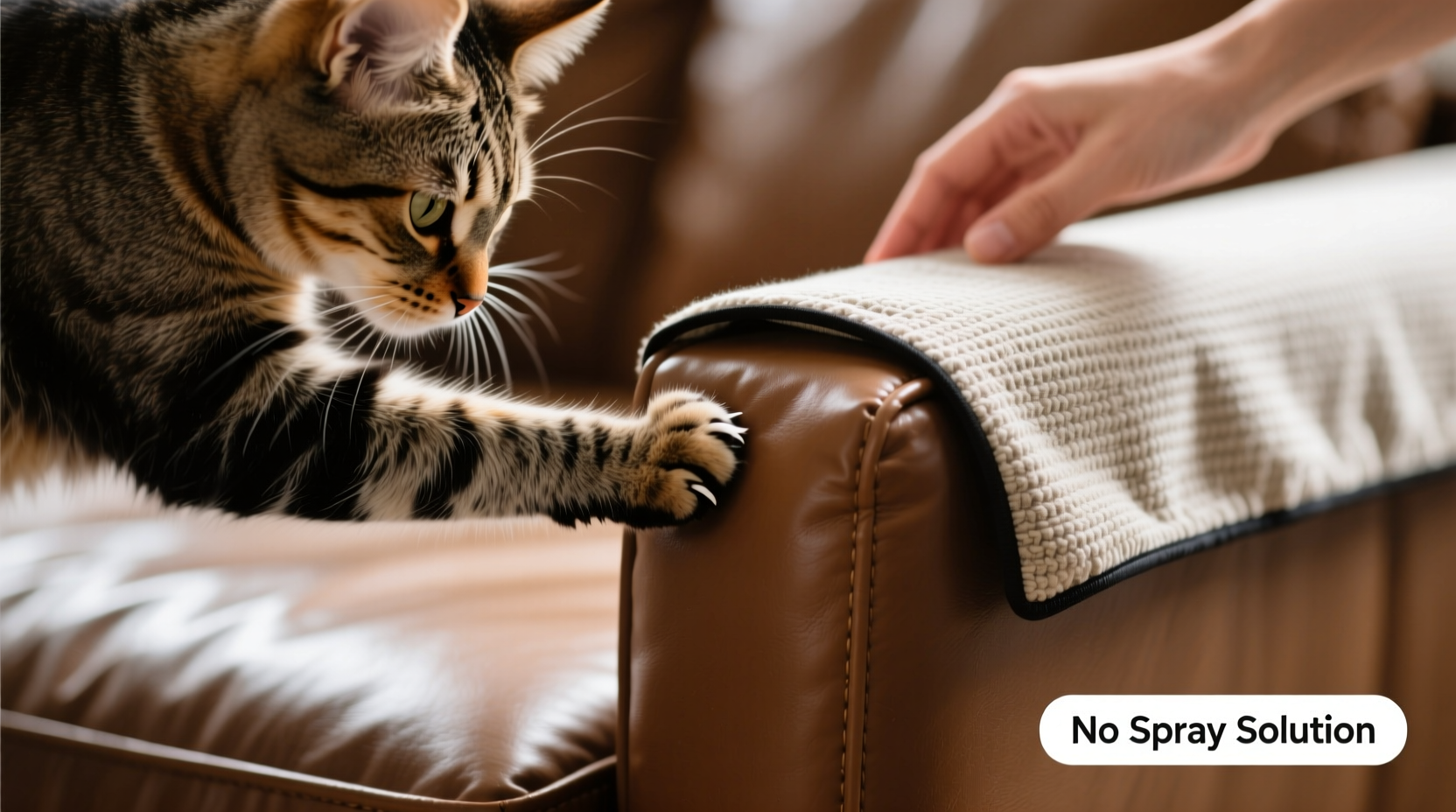
To solve any behavioral issue, start by understanding the root cause. Cats aren’t trying to ruin your furniture—they’re responding to biological and psychological needs. The texture, height, and location of your leather sofa may make it an ideal target.
- Texture appeal: Smooth, tight-grain leather can mimic the resistance some cats prefer when scratching.
- Location convenience: If the sofa is near a window, sleeping area, or entryway, it’s in a high-traffic zone where cats naturally mark territory.
- Height and stability: A sturdy backrest offers vertical support perfect for a full-body stretch.
- Lack of alternatives: If no better options are available, even a suboptimal surface like leather becomes acceptable to a cat with unmet scratching needs.
“Scratching is as essential to a cat’s well-being as eating or grooming. Eliminating the behavior isn't the goal—redirecting it is.” — Dr. Sarah Thompson, Feline Behavior Consultant
Attempting to suppress scratching with sprays may temporarily deter your cat, but it doesn’t address the underlying motivation. Worse, unpleasant scents can stress your cat, damage the leather over time, or leave lingering odors in your home. A better approach focuses on offering superior alternatives and modifying the environment.
Provide Superior Scratching Alternatives
The most effective way to stop unwanted scratching is to give your cat something they like even more. Think of it as outcompeting the sofa—not just blocking access to it.
Choose the Right Type of Scratcher
Cats have preferences based on texture, orientation, and placement. Observe how your cat scratches now: Do they prefer vertical or horizontal surfaces? Are they digging into the side or top of the sofa?
| Scratcher Type | Best For | Tips for Success |
|---|---|---|
| Vertical cardboard | Cats who stretch upward | Place near the sofa; replace every 4–6 weeks |
| Sisal rope posts | Durable, long-term use | Ensure base is stable; 30+ inches tall preferred |
| Horizontal scratchers | Cats who knead or scratch flat surfaces | Use corrugated cardboard; place in resting zones |
| Angle-mounted wall scratchers | Space-saving; modern look | Install at paw level near targeted furniture |
Introduce new scratchers gradually. Rub them with catnip, attach dangling toys, or gently place your cat’s paws on them during calm moments to encourage interaction. Never force contact—positive association is key.
Modify the Sofa Environment
Making the leather less appealing—without sprays—requires subtle changes that discourage use while maintaining comfort for humans.
Change the Texture
Cover the most scratched areas with materials your cat dislikes under paw. These are temporary measures to break the habit while better alternatives take hold.
- Fleece throws: Soft and pleasant to humans, but many cats avoid the slippery texture.
- Plastic carpet runners (nubbed side up): Place them over armrests or corners. Though not attractive, they’re removable and effective.
- Double-sided tape: Apply to high-scratch zones. Cats dislike sticky surfaces underfoot. Use pet-safe versions like Sticky Paws.
Block Access Strategically
If possible, limit access during peak scratching times (e.g., after naps or when you return home).
- Rearrange furniture slightly to obstruct direct pathways.
- Use freestanding barriers like low bookshelves or plant stands nearby (not directly against the sofa, to avoid trapping the cat).
- Close doors to rooms containing the sofa when unsupervised.
Step-by-Step Guide: Redirecting Scratching Behavior in 4 Weeks
Behavior change takes consistency. Follow this timeline to shift your cat’s habits humanely and sustainably.
- Week 1: Assess & Install
Observe when and where your cat scratches. Purchase two types of scratchers (e.g., sisal post and cardboard mat). Place one beside the sofa (within 1–2 feet) and another near a favorite resting spot.
- Week 2: Encourage & Deter
Sprinkle catnip on scratchers daily. Gently guide your cat to them after waking. Apply double-sided tape to the sofa’s most damaged areas. Praise immediately when your cat uses the scratcher.
- Week 3: Reinforce & Relocate
If the cat uses the scratcher, increase rewards: treats, affection, or playtime right after. Move the sofa-side scratcher slightly away each day—toward a more permanent location (e.g., corner or near window).
- Week 4: Evaluate & Maintain
Remove deterrents if scratching has stopped. Keep scratchers clean and intact. Replace worn cardboard. Continue occasional praise to reinforce the habit.
“Cats learn through repetition and reward. Every time your cat chooses the scratcher over the sofa, that decision should feel satisfying.” — Lena Patel, Certified Cat Behaviorist
Mini Case Study: From Chewed Arms to Calm Coexistence
Sophie, a tabby mix adopted from a shelter, developed a strong habit of scratching the corner of her owner’s cream leather loveseat. Her owner, Mark, tried citrus sprays, which only made Sophie avoid the living room altogether—a sign of stress.
Instead of continuing with sprays, Mark consulted a behaviorist who recommended a multi-pronged approach: He installed a 36-inch sisal post right next to the loveseat, wrapped the scratched corner with a soft fleece throw secured by Velcro, and placed a motion-activated toy nearby to draw Sophie’s attention.
Within ten days, Sophie began using the post regularly. By week three, she ignored the sofa entirely. Six months later, the post remains her primary scratching spot, and the loveseat shows no further damage.
The key? Mark didn’t punish Sophie—he gave her a better option and made the old one less convenient. No sprays, no stress, no damaged relationship.
Common Mistakes That Undermine Progress
Even well-intentioned efforts can fail due to common oversights. Avoid these pitfalls:
- Using unstable scratchers: Wobbly posts scare cats and discourage use.
- Placing scratchers in isolated areas: Cats scratch in social zones. Put scratchers where they spend time, not in unused corners.
- Expecting immediate results: Habit change takes weeks. Consistency matters more than speed.
- Only addressing one surface: If your cat scratches multiple spots, provide alternatives for each.
- Neglecting nail maintenance: Regular trimming reduces damage potential and complements redirection.
Checklist: How to Protect Your Leather Sofa (Spray-Free)
Use this checklist to ensure you’ve covered all bases:
- ✅ Observe your cat’s scratching patterns (timing, location, posture).
- ✅ Purchase at least two types of scratchers (vertical and horizontal).
- ✅ Place scratchers near targeted furniture initially.
- ✅ Use catnip, toys, or gentle guidance to introduce new scratchers.
- ✅ Apply tactile deterrents (double-sided tape, plastic mats) to the sofa.
- ✅ Trim your cat’s nails every 2–3 weeks.
- ✅ Reward desired behavior immediately with treats or affection.
- ✅ Gradually move scratchers to permanent locations.
- ✅ Monitor progress weekly and adjust as needed.
- ✅ Replace worn scratchers promptly to maintain appeal.
Frequently Asked Questions
Will covering the sofa with a blanket solve the problem permanently?
Covers can help during the transition phase, but cats may eventually scratch through or under them. They work best in combination with providing appealing alternatives. Once your cat consistently uses a scratcher, you may be able to remove covers safely.
Is it okay to trim my cat’s claws?
Yes. Trimming reduces the risk of deep gouges and makes scratching less damaging. Use proper cat nail clippers and avoid the quick. Most cats tolerate it with gradual training. If unsure, ask your vet or groomer to demonstrate.
What if my cat still goes for the sofa after trying everything?
Reevaluate the quality and placement of your scratchers. Is the post tall enough? Is it in a social area? Some cats need multiple options. Also consider underlying stress—changes in routine, other pets, or lack of stimulation can increase destructive scratching. Environmental enrichment (play, climbing shelves, puzzle feeders) often helps.
Conclusion: Harmony Over Conflict
Protecting your leather sofa doesn’t require conflict or chemical deterrents. By respecting your cat’s instincts and offering better choices, you create a home where both comfort and coexistence thrive. The goal isn’t to stop scratching—it’s to guide it appropriately.
Success comes not from what you prevent, but from what you provide. A sturdy sisal post, a well-placed cardboard pad, and a little patience can transform destructive habits into harmless routines. Your cat gets to express natural behaviors; your sofa stays intact.




 浙公网安备
33010002000092号
浙公网安备
33010002000092号 浙B2-20120091-4
Comments
No comments yet. Why don't you start the discussion?