
Cats scratch—it's a fundamental behavior rooted in instinct, not defiance. They do it to shed old claw sheaths, mark territory with scent glands in their paws, stretch their muscles, and relieve stress. When your cat targets the sofa, it’s not out of malice; it’s because the fabric feels right under their claws or because no better option is available. Rather than relying on chemical sprays that mask the problem or cause discomfort, a more thoughtful, long-term solution lies in understanding feline behavior and redirecting it humanely. This guide explores proven, non-invasive methods to protect your furniture while honoring your cat’s natural needs.
Understanding Why Cats Scratch Furniture
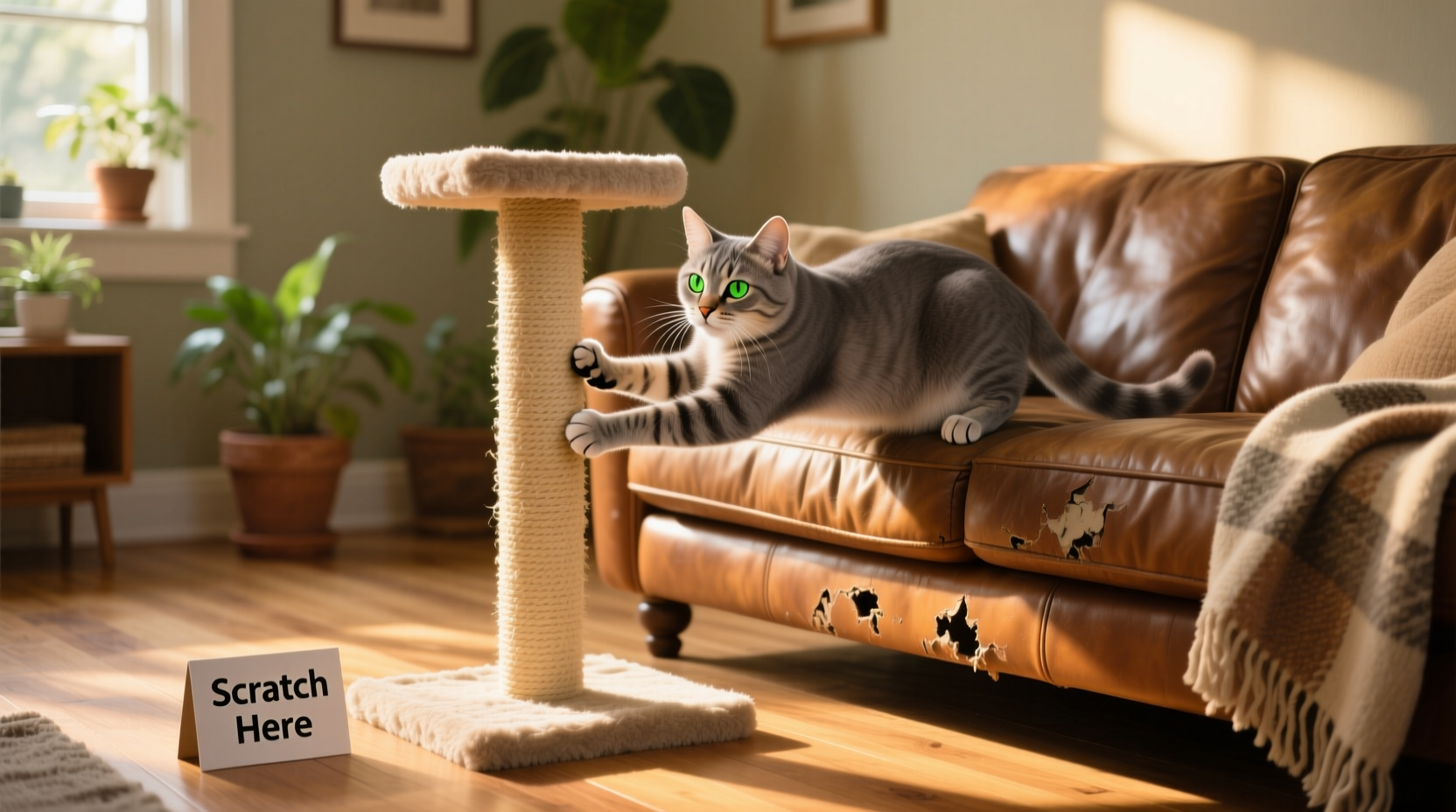
Before addressing how to stop sofa scratching, it’s essential to understand why cats do it in the first place. Scratching isn’t destructive behavior—it’s functional. The act serves multiple biological and psychological purposes:
- Claw maintenance: Scratching removes dead outer layers of the claws, keeping them sharp and healthy.
- Scent marking: Cats have scent glands between their paw pads. Each scratch leaves an invisible olfactory signal, helping them feel secure in their environment.
- Stretching and exercise: A good scratch stretches the spine, shoulders, and legs—especially important after naps.
- Emotional regulation: Scratching can be a response to excitement, anxiety, or territorial awareness.
When a cat chooses the sofa, it’s often because the vertical orientation, fabric texture (like tweed or sisal-like weaves), and central location make it ideal for these purposes. Punishing or repelling them doesn’t teach alternative behaviors—it only creates fear or confusion. The goal is to provide better options that meet the same needs.
Provide Attractive Alternatives: The Right Scratching Posts
The most effective way to stop sofa scratching is to offer something your cat likes even more. But not all scratching posts are created equal. Many commercially available options are too short, wobbly, or covered in soft materials cats ignore. To succeed, focus on three key factors: height, stability, and material.
| Feature | What Works | What to Avoid |
|---|---|---|
| Height | At least 30 inches tall so your cat can fully stretch upward | Short posts that don’t allow full extension |
| Stability | Heavy base or wall-mounted units that won’t tip over | Flimsy stands that shake when scratched |
| Material | Sisal rope, corrugated cardboard, or natural wood | Plush carpet covers (often ignored) |
| Orientation | Vertical posts and horizontal scratchers for variety | Only one type of surface |
Place the scratching post directly next to the sofa—at first. Cats return to the same spot out of habit. By placing a superior option right where they already want to scratch, you increase adoption. Once the cat consistently uses the post, you can gradually shift it a few inches per day toward a less obtrusive location.
“Cats aren’t trying to ruin your furniture—they’re just doing what comes naturally. Our job is to channel that behavior appropriately.” — Dr. Sarah Ellis, Feline Behavior Scientist, University of Bristol
Make the Sofa Less Appealing (Without Sprays)
While offering alternatives is key, reducing the sofa’s appeal reinforces the shift. The goal isn’t to punish but to gently discourage use through texture and positioning changes.
Start by altering the surface. Cats dislike certain textures under their paws. Try covering the scratched area with:
- Double-sided tape (non-toxic, temporary)
- Aluminum foil (temporary, noisy and crinkly)
- A tightly fitted slipcover made of smooth microfiber or leather-look vinyl
These materials disrupt the familiar tactile feedback the cat enjoys. Over time, as the new scratching post becomes the default, you can remove the deterrents.
Another approach is strategic rearrangement. If possible, slightly reposition the sofa so it’s no longer against a wall—a prime spot for stretching vertically. Even a few inches of space between the back of the sofa and the wall can reduce its appeal as a scratching site.
Step-by-Step: Transition Your Cat Off the Sofa
- Observe your cat’s preferred scratching zone on the sofa (e.g., left armrest).
- Place a sturdy sisal post immediately beside that spot.
- Rub catnip or silvervine on the post to encourage investigation.
- Use interactive play—drag a wand toy up the post to simulate climbing prey.
- Cover the sofa area with double-sided tape or a temporary slipcover.
- Reinforce success with treats or praise when your cat uses the post.
- Gradually move the post several inches every 3–4 days toward a permanent location.
This process typically takes 2–4 weeks. Consistency is critical—everyone in the household must avoid reinforcing the old behavior by allowing occasional scratches.
Enrich the Environment to Reduce Stress-Driven Scratching
Some cats scratch excessively due to environmental stress. Changes like new pets, loud noises, or lack of vertical space can trigger increased marking behavior. Addressing the root cause reduces the urge to scratch destructively.
Ensure your home includes:
- Vertical territory: Cat trees, shelves, or window perches satisfy climbing instincts.
- Safe hiding spots: Covered beds or cubbies help anxious cats feel secure.
- Daily play sessions: 10–15 minutes twice a day with wand toys mimic hunting and burn energy.
- Predictable routines: Feeding, play, and quiet times should follow a consistent schedule.
In multi-cat households, provide one scratching post per cat plus one extra. Competition for resources can lead to over-marking. Place posts in different zones—near sleeping areas, entryways, and lounging spots—to support natural patrol patterns.
Mini Case Study: From Sofa Shredder to Post Pro
Maria adopted Luna, a two-year-old tabby, six months ago. Within weeks, the arms of her linen sofa were frayed and unraveling. She tried citrus sprays, which only drove Luna to scratch the rug instead. Frustrated, Maria consulted a certified cat behaviorist.
The expert advised removing all sprays and introducing a 36-inch sisal-wrapped post next to the sofa. Maria rubbed silvervine on the post and dangled a feather toy up its length each evening. She also covered the damaged armrest with a washable microfiber throw.
Within ten days, Luna was using the post regularly. After three weeks, Maria moved the post near the window—Luna’s favorite lookout. Today, the sofa remains intact, and Luna has three scratchers throughout the apartment. “I thought I had to choose between my cat and my furniture,” Maria said. “Turns out, I just needed to speak her language.”
Common Mistakes That Undermine Progress
Even well-intentioned owners sometimes sabotage their efforts. Watch out for these pitfalls:
- Using unstable or undersized posts: A wobbly tower teaches the cat that scratching leads to collapse—discouraging use.
- Placing scratchers in isolated areas: Cats prefer high-traffic zones where they can monitor activity.
- Trimming claws too aggressively: Over-trimming causes pain and may lead to avoidance of scratching altogether.
- Allowing inconsistent rules: If one family member lets the cat scratch the sofa “just this once,” progress stalls.
Remember: declawing is not a solution. It’s a painful surgical procedure that removes the last bone of each toe, akin to cutting off a human fingertip at the last knuckle. Banned in many countries, it can lead to chronic pain, arthritis, and behavioral issues like biting or litter box avoidance.
Checklist: How to Stop Sofa Scratching Without Sprays
- ✅ Identify your cat’s preferred scratching spots on the sofa
- ✅ Purchase a tall, stable scratching post made of sisal or cardboard
- ✅ Place the post directly next to the targeted area
- ✅ Use catnip or silvervine to attract your cat to the post
- ✅ Engage in daily play that encourages upward swatting and stretching
- ✅ Cover the sofa with temporary deterrents (tape, foil, slipcover)
- ✅ Reinforce correct behavior with treats or affection
- ✅ Gradually relocate the post to a permanent, convenient spot
- ✅ Provide additional scratchers in other rooms
- ✅ Maintain regular claw trims every 2–3 weeks
Frequently Asked Questions
Can I train an older cat to stop scratching the sofa?
Yes. While kittens learn faster, adult and senior cats can adapt with patience and consistency. Focus on making the new option more rewarding than the old habit. Older cats may also benefit from softer scratch surfaces if they have arthritis.
What if my cat ignores the scratching post completely?
Try switching materials—some cats prefer cardboard scratch pads over sisal. Also, ensure the post is in a socially relevant area, not tucked away in a corner. Rubbing silvervine or using a motion-activated laser toy nearby can spark interest.
How often should I replace scratching posts?
Inspect monthly. Replace when the sisal is frayed down to the core or the cardboard is flattened. Worn surfaces lose appeal. Most posts last 6–12 months with heavy use.
Conclusion: A Harmonious Home Is Possible
Stopping your cat from scratching the sofa isn’t about suppression—it’s about redirection. By respecting your cat’s instincts and providing better outlets, you create a home where both comfort and coexistence thrive. Ditch the sprays, invest in quality scratchers, and build habits through positive reinforcement. Your furniture will thank you, and your cat will feel more secure, engaged, and understood.




 浙公网安备
33010002000092号
浙公网安备
33010002000092号 浙B2-20120091-4
Comments
No comments yet. Why don't you start the discussion?