
Dogs bark. It’s natural. But when that barking becomes a daily outburst every time a delivery driver approaches the door, it can strain your nerves, upset neighbors, and even scare service workers. The good news: you don’t need to resort to shock collars, yelling, or other punitive measures. With patience, consistency, and humane training techniques, you can teach your dog to remain calm when someone arrives at your doorstep.
The root of the problem is usually not aggression—it's protection. Your dog sees themselves as the guardian of their territory. A knock on the door, footsteps on the porch, or the sudden appearance of a stranger triggers an instinctive alert response. The goal isn't to suppress this behavior through fear, but to reframe it through positive reinforcement and environmental management.
Understanding Why Dogs Bark at Delivery Drivers
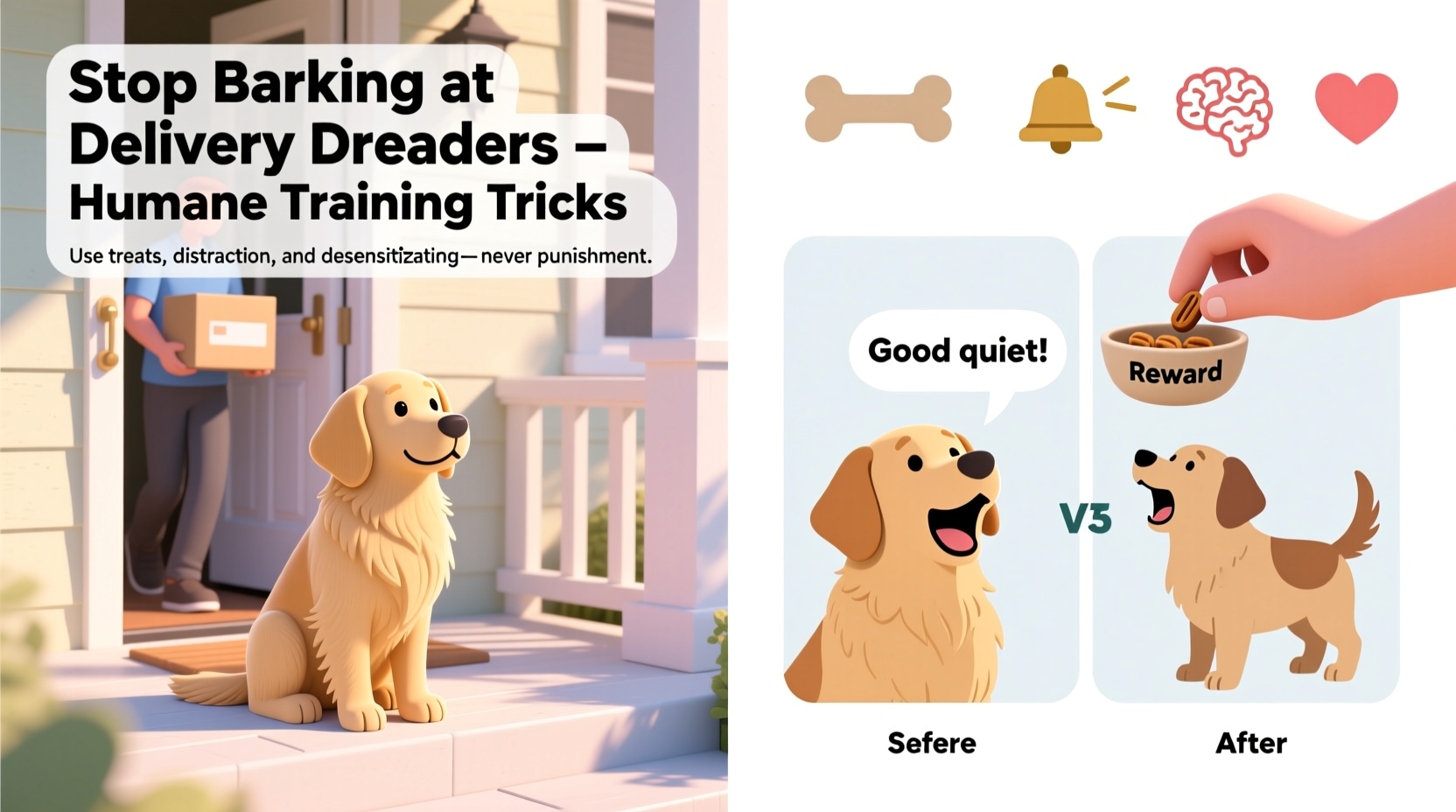
Dog barking at delivery personnel stems from a mix of territorial instinct, lack of exposure, and learned behavior. Most dogs are not inherently aggressive toward visitors; they’re reacting to what they perceive as a potential threat entering their safe zone. This is especially common in breeds with strong guarding tendencies, such as German Shepherds, Rottweilers, or even small watchdogs like Chihuahuas and Terriers.
Over time, if barking successfully drives the person away (which it often does—delivery drivers leave quickly), the dog learns that barking works. This reinforces the behavior, making it harder to reverse without intervention.
“Barking at strangers isn’t defiance—it’s communication. Our job is to help dogs find quieter ways to express themselves.” — Dr. Sarah Hartman, Certified Applied Animal Behaviorist
Humane training focuses on changing the emotional response behind the bark. Instead of fear or reactivity, we aim to build calmness and trust through structured learning.
Step-by-Step Guide to Reduce Doorstep Reactivity
Changing your dog’s reaction to delivery drivers takes time, but the process is straightforward when broken into phases. Below is a timeline-based approach that gradually desensitizes your dog to the trigger while reinforcing calm behavior.
- Phase 1: Identify Triggers (Days 1–3)
Observe exactly what sets your dog off. Is it the knock? The doorbell? Footsteps? A uniformed person approaching? Keep a log for three days to pinpoint the exact moment reactivity begins. - Phase 2: Create Distance and Manage Environment (Days 4–7)
Prevent rehearsal of unwanted behavior. Use baby gates, closed doors, or leashes to keep your dog away from the front entrance during deliveries. If possible, have packages left at the side gate or back porch. - Phase 3: Train the “Look at Me” Cue (Days 8–14)
Teach your dog to make eye contact on command using high-value treats. Say “Look” and reward attention. Practice in low-distraction areas until your dog responds instantly. - Phase 4: Simulate the Trigger (Days 15–21)
Use recordings of doorbells or knocks. Play them softly at first while rewarding calm behavior. Gradually increase volume over sessions. Pair the sound with treats so your dog associates it with something positive. - Phase 5: Real-World Exposure (Day 22 onward)
Coordinate with a friend or schedule non-urgent deliveries. Start with the person standing far away while you reward calmness. Slowly decrease distance across multiple sessions.
This method uses counter-conditioning and positive reinforcement—two pillars of ethical dog training. The key is moving slowly enough that your dog never feels overwhelmed.
Effective Humane Training Techniques
Not all training methods are created equal. The most effective strategies focus on building new habits rather than suppressing old ones.
1. Positive Reinforcement for Calm Behavior
Reward your dog for being quiet and relaxed when the doorbell rings. Use treats, praise, or toys immediately after calm behavior occurs. Over time, your dog will learn that silence pays better than barking.
2. The “Go to Mat” Command
Teach your dog to go to a designated spot (like a bed or mat) when someone approaches. This creates a predictable routine and gives your dog a clear alternative behavior. Practice regularly, then add distractions gradually.
3. Noise Desensitization
Use audio clips of doorbells, knocks, or UPS truck sounds at low volume. Pair each sound with a treat. Increase volume only when your dog remains relaxed. Apps like “Dog Sounds” or YouTube playlists offer realistic audio cues.
4. Redirect Attention
Keep a favorite toy or puzzle feeder near the entryway. When a delivery is expected, engage your dog in a distracting activity. Mental stimulation reduces arousal and redirects focus.
5. Controlled Socialization
Invite delivery drivers (with permission) to drop off packages slowly. Ask them to pause at the curb, then walk up gradually. Reward your dog for staying calm. This builds familiarity and reduces fear-based reactions.
| Technique | Best For | Time to See Results |
|---|---|---|
| Positive Reinforcement | All dogs, especially food-motivated ones | 1–3 weeks |
| “Go to Mat” Training | Dogs with high energy or anxiety | 2–4 weeks |
| Noise Desensitization | Dogs reactive to sounds | 3–6 weeks |
| Attention Redirection | Young or easily distracted dogs | 1–2 weeks |
| Controlled Socialization | Fearful or territorial dogs | 4+ weeks |
Common Mistakes That Worsen the Problem
Even well-meaning owners can accidentally reinforce barking. Avoid these pitfalls:
- Yelling at your dog to stop – This often sounds like joining in, which can encourage more barking.
- Punishing after the fact – Dogs don’t connect delayed punishment with past actions, leading to confusion and stress.
- Allowing barking sometimes – Inconsistency teaches your dog that barking occasionally works, making it harder to eliminate.
- Ignoring the behavior completely – Without guidance, your dog assumes their alarm response is correct.
- Using aversive tools – Citronella or shock collars may suppress barking but damage trust and increase anxiety.
Mini Case Study: Turning Reactive Rex into Relaxed Riley
Riley, a 3-year-old Australian Shepherd, lived in a busy suburban neighborhood where Amazon, UPS, and FedEx made frequent stops. His owner, Maria, was frustrated by his intense barking every time a vehicle pulled up. Neighbors had complained, and Maria feared Riley might lunge at someone one day.
She began by installing a privacy film on her front window so Riley couldn’t see people approaching. Then she taught him the “Go to Mat” command using chicken treats. Each time the doorbell rang (she used a recording at first), she asked Riley to go to his mat and rewarded him generously for staying.
After two weeks, she invited a friend to simulate a delivery. Her friend walked slowly toward the door while Maria kept Riley on a leash and reinforced calm sitting. Over six sessions, Riley learned to stay quiet and even look at Maria for treats instead of fixating on the visitor.
Within eight weeks, Riley no longer barked at real deliveries. He still goes to his mat when the bell rings—a habit that has brought peace back to the household.
Checklist: How to Stop Doorstep Barking Humanely
Follow this actionable checklist to get started today:
- ✅ Observe and identify your dog’s specific trigger (sound, sight, motion).
- ✅ Block visual access to the front door with curtains or gates.
- ✅ Teach a reliable “Look at Me” or “Sit” command using treats.
- ✅ Introduce recorded delivery sounds at low volume with positive rewards.
- ✅ Train the “Go to Mat” behavior in quiet settings, then add distractions.
- ✅ Use puzzle toys or chews during expected deliveries to redirect focus.
- ✅ Schedule practice sessions with friends playing delivery drivers.
- ✅ Stay consistent—train daily, even when no deliveries are expected.
- ✅ Celebrate small wins and avoid rushing the process.
- ✅ Consult a certified dog trainer if progress stalls after 4–6 weeks.
Frequently Asked Questions
Can older dogs learn to stop barking at delivery people?
Yes. While puppies are easier to train due to greater neuroplasticity, adult and senior dogs can absolutely learn new behaviors. The process may take longer, but consistency and patience yield results at any age.
What if my dog is aggressive, not just barking?
If your dog growls, lunges, or shows teeth, do not attempt DIY training. Seek help from a certified professional (CPDT-KA or IAABC accredited). Safety should always come first—for your dog, your family, and others.
Are bark collars ever acceptable?
Most animal behaviorists discourage bark collars, especially shock or spray types. They suppress symptoms without addressing the cause and can increase fear. If used at all, only under the guidance of a vet behaviorist—and never as a first-line solution.
Conclusion: Building Peace One Calm Moment at a Time
Stopping your dog from barking at delivery drivers isn’t about dominance or control—it’s about communication and compassion. By understanding your dog’s instincts and guiding them with kindness, you create a home that’s calmer, safer, and more harmonious for everyone.
The techniques outlined here don’t just reduce noise—they strengthen your bond. Each treat given for calmness, each successful “Go to Mat,” each quiet moment shared builds trust. And over time, that trust transforms reactivity into relaxation.




 浙公网安备
33010002000092号
浙公网安备
33010002000092号 浙B2-20120091-4
Comments
No comments yet. Why don't you start the discussion?