
Dogs bark for many reasons—territorial instinct, alertness, fear, or excitement. When the doorbell rings or a delivery person approaches, your dog may react with loud, persistent barking. While this behavior comes from a place of protection, it can become disruptive, stressful for you and your neighbors, and even reinforce anxiety in your dog over time. The good news is that with patience, consistency, and the right strategies, you can teach your dog to remain calm when visitors arrive. This guide outlines practical, humane methods grounded in positive reinforcement and behavioral science to help you create a peaceful home environment.
Understanding Why Dogs Bark at Delivery People
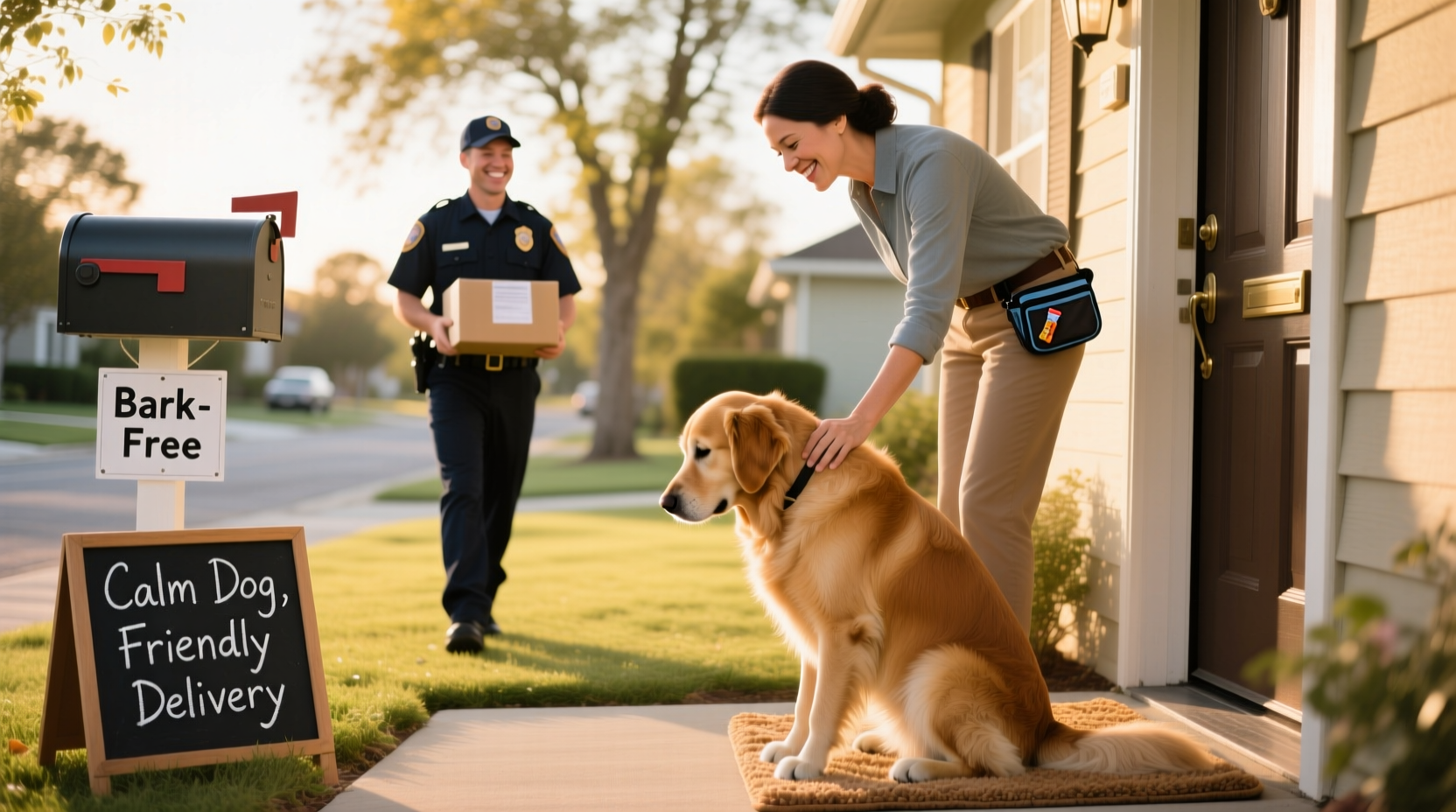
Dog barking at delivery personnel is not misbehavior—it’s communication. Most dogs perceive unfamiliar people approaching their territory as potential threats. Even if they’ve never been harmed by a courier, their instincts drive them to alert their pack (you) to an intrusion. This response is amplified by:
- Lack of exposure: Dogs not socialized to frequent visitors may see every knock as an emergency.
- Reinforced behavior: If barking makes the person leave (as most do after dropping off a package), the dog learns that barking works.
- High arousal threshold: Some breeds are naturally more vigilant and reactive to movement near their home.
- Environmental triggers: A clear line of sight to the front door or gate increases visual stimulation.
Addressing the root cause—fear, territoriality, or overexcitement—is essential. Punishing the bark only suppresses the symptom and can increase anxiety. Instead, focus on changing your dog’s emotional response to the trigger.
“Dogs don’t misbehave out of defiance—they react based on how they feel. Calmness must be taught, not demanded.” — Dr. Sarah Thornton, Veterinary Behaviorist
A Step-by-Step Guide to Reducing Doorstep Barking
Changing your dog’s reaction to delivery people requires structured training over time. Below is a progressive plan designed to build confidence and self-control.
- Control the Environment First
Prevent rehearsal of unwanted behavior. Use curtains, opaque window film, or baby gates to block your dog’s view of the front door. If possible, designate a “quiet zone” in another room where your dog stays during peak delivery hours. - Teach an Alternative Behavior
Train your dog to go to a specific mat or bed and stay there on cue. Start in low-distraction environments using treats and praise. Use a command like “place” or “settle.” Gradually add distractions until your dog reliably goes to their spot and remains calm even when someone walks past the window. - Simulate the Trigger Safely
Have a friend ring the doorbell or knock without entering. Reward your dog heavily for staying quiet and remaining on their mat. If they bark, calmly redirect them back to the spot. Begin at a distance where your dog notices but doesn’t react intensely. - Gradual Exposure with Positive Association
Pair the sound of the doorbell with something positive—like a high-value treat or toy. Ring the bell (or play a recording), then immediately toss a treat away from the door. Repeat multiple times per day. Over weeks, your dog will begin to associate the doorbell with rewards, not threats. - Practice with Real-Life Scenarios
Coordinate with a neighbor or delivery driver (if safe and appropriate) to approach slowly. Start with them walking far from your property, then gradually closer, rewarding your dog for calm behavior. Never force confrontation—go at your dog’s pace.
Effective Training Tools and Techniques
Not all training tools are created equal. Choose those that support positive reinforcement and reduce stress.
| Tool/Method | How It Helps | Best For |
|---|---|---|
| Clicker Training | Precise marking of desired behavior (e.g., looking at you instead of barking) | Dogs responsive to sound cues |
| Treat Dispenser Toys | Keeps dog occupied during deliveries (e.g., stuffed Kong) | High-energy or anxious dogs |
| White Noise or Calming Music | Reduces auditory sensitivity to doorbells and footsteps | Sensitive or noise-reactive dogs |
| Remote Treat Release Devices | Allows reward delivery without owner presence | Homes with frequent deliveries |
| Desensitization Recordings | Plays doorbell or knocking sounds at low volume | Beginner training stages |
Consistency is key. Practice daily, even when no deliveries are expected. Short sessions (5–10 minutes) are more effective than infrequent long ones.
Real-Life Example: Transforming Max’s Reactivity
Max, a 3-year-old Australian Shepherd, lived in a busy urban neighborhood where packages arrived daily. His owners reported he would sprint to the front window, bark nonstop, and lunge at the glass whenever anyone approached. Walks became tense, and guests were hesitant to visit.
Working with a certified trainer, Max’s owners implemented a three-phase plan:
- Management: They installed frosted window film and set up a cozy den in the bedroom with a chew toy and calming music.
- Training: They taught Max a “go to place” command using chicken treats. Every time the doorbell rang (simulated), Max was rewarded for going to his mat.
- Counter-Conditioning: They played doorbell recordings while feeding meals, gradually increasing volume over two weeks.
Within six weeks, Max no longer rushed to the window. He now goes to his mat voluntarily when he hears a knock and stays relaxed. Occasional deliveries still draw a glance, but barking has reduced by over 90%.
Common Mistakes That Undermine Progress
Even well-meaning owners can accidentally sabotage training efforts. Avoid these pitfalls:
- Yelling “Quiet!” – Your raised voice may sound like you’re joining the barking, reinforcing the behavior.
- Letting the dog practice the behavior – Allowing barking at the door, even occasionally, strengthens the habit.
- Inconsistent rules – One family member lets the dog bark while another tries to train—confusion slows progress.
- Expecting immediate results – Behavioral change takes weeks or months. Patience is non-negotiable.
- Neglecting exercise and mental stimulation – An under-stimulated dog is more likely to fixate on environmental triggers.
Checklist: How to Stop Doorstep Barking (Action Plan)
Use this checklist to ensure you're covering all bases in your training approach:
- ✅ Identify your dog’s trigger zone (window, door, gate)
- ✅ Block visual access to the front entrance when unsupervised
- ✅ Designate a “calm zone” with a bed, toys, and water
- ✅ Teach a reliable “go to place” or “settle” command
- ✅ Use high-value treats (e.g., boiled chicken, cheese) during training
- ✅ Practice doorbell desensitization daily (recorded or real)
- ✅ Reward calm behavior instantly and consistently
- ✅ Involve all household members in consistent training
- ✅ Schedule regular exercise and mental enrichment
- ✅ Track progress weekly (note frequency and intensity of barking)
Frequently Asked Questions
How long does it take to stop a dog from barking at delivery people?
Most dogs show improvement within 2–4 weeks of consistent training. Full transformation may take 6–12 weeks, depending on the dog’s temperament, history, and how often the trigger occurs. Older or more anxious dogs may require longer timelines.
Can I use a bark collar to stop this behavior?
Bark collars (especially shock or spray types) are not recommended. They suppress barking through discomfort or fear, which can worsen anxiety and damage trust. Positive reinforcement methods are safer, more ethical, and produce lasting results.
What if my dog only barks when I’m not home?
This suggests separation-related anxiety or lack of routine. Use remote cameras to monitor behavior. Consider leaving a food puzzle or calming audio track when you’re out. You may need to adjust your training to include absence conditioning—teaching calmness even when alone.
Conclusion: Building a Calmer Home, One Delivery at a Time
Stopping your dog from barking at delivery people isn’t about silencing them—it’s about helping them feel secure. With structured training, environmental adjustments, and empathy for your dog’s instincts, you can replace fear and reactivity with calm confidence. The process strengthens your bond and creates a more peaceful living space for everyone, including the hardworking couriers who just want to do their job.
Start today. Block the view, pick a command, grab some treats, and begin building new associations. Small steps lead to big changes. Your dog doesn’t need to be perfect—just a little calmer each week. That’s the mark of real progress.




 浙公网安备
33010002000092号
浙公网安备
33010002000092号 浙B2-20120091-4
Comments
No comments yet. Why don't you start the discussion?