
Dogs bark at delivery personnel for a variety of reasons—territorial instincts, excitement, fear, or simply because they’ve learned it gets attention. While some barking is normal, constant outbursts can stress both you and your dog, disrupt neighbors, and even escalate into aggression over time. The good news: this behavior is manageable with consistent, humane training. This guide offers actionable strategies rooted in canine psychology and real-world application to help you teach your dog calmness when the doorbell rings.
Understanding Why Dogs Bark at Delivery People
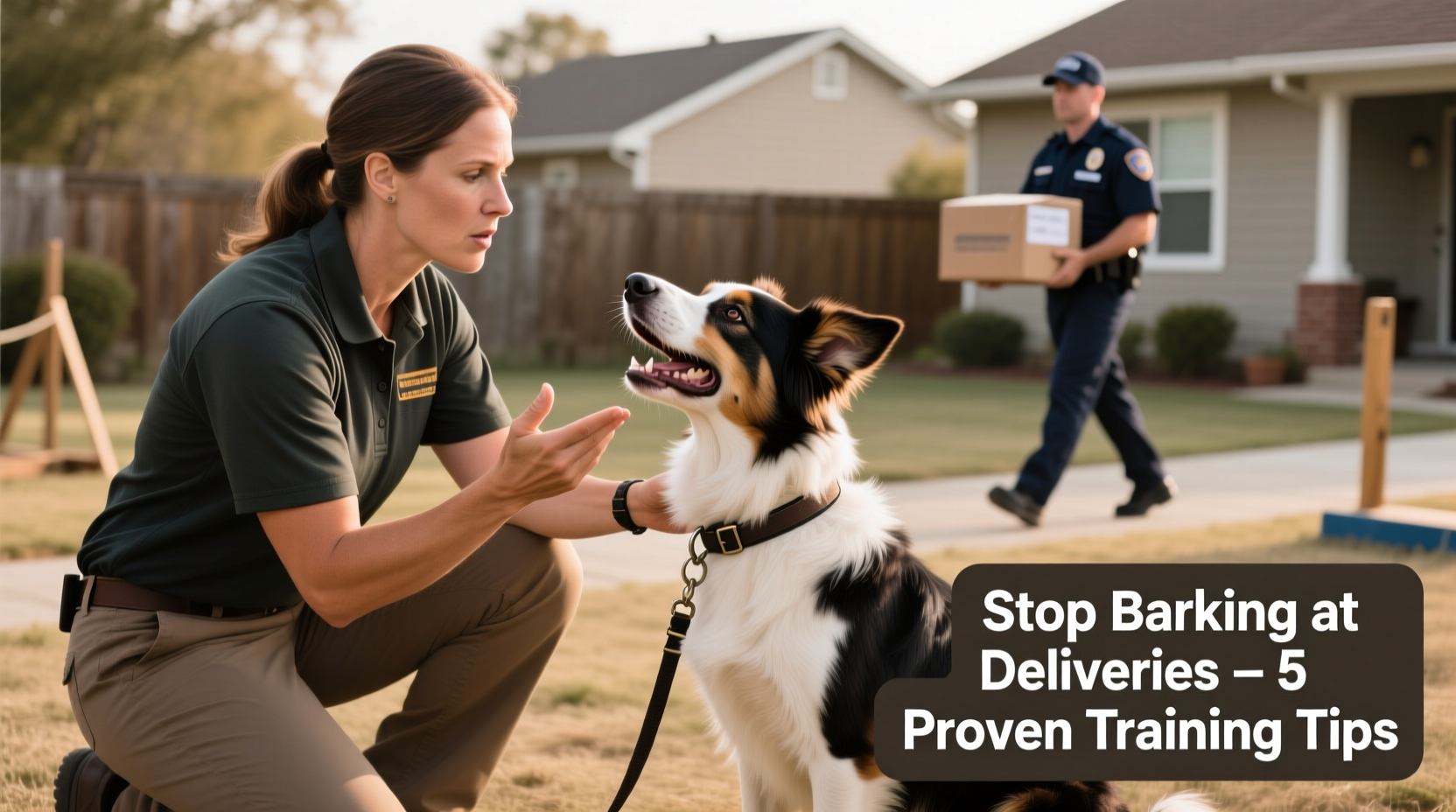
Barking at strangers approaching your home is instinctive for many dogs. Historically bred as guardians, dogs perceive unfamiliar people near their territory as potential threats. A knock at the door, a buzzing doorbell, or someone walking up the driveway triggers alertness. For dogs that spend time near windows or the front door, this becomes a daily ritual—one that reinforces itself each time the person leaves, reinforcing the idea that barking made them go away.
Common triggers include:
- Sudden movement or sound (doorbell, knock)
- Unfamiliar uniforms or packages
- Perceived intrusion into their space
- Lack of exposure to frequent visitors
Without intervention, this reactive behavior becomes habitual. The key isn’t to suppress barking entirely but to replace it with a more appropriate response—like going to a designated spot and sitting quietly.
“Dogs don’t misbehave out of defiance—they react based on what works for them. If barking makes the stranger leave, they’ll do it again.” — Dr. Karen Overall, Veterinary Behaviorist
Step-by-Step Training Plan to Reduce Barking
Effective training requires patience, consistency, and positive reinforcement. Below is a 4-week timeline to reshape your dog’s reaction to delivery personnel.
Week 1: Build Focus and Impulse Control Indoors
- Teach your dog a “go to place” command using a mat or bed away from the front door.
- Practice with low distractions: Say “Go to your spot,” lure with a treat, and reward when they arrive and sit.
- Gradually increase duration (sit-stay for 10–30 seconds) before rewarding.
- Introduce a cue like “Quiet” while they’re calm on their mat.
Week 2: Simulate Doorbell Scenarios
- Use a recorded doorbell or knock sound at low volume.
- When the sound plays, cue “Go to your spot” before your dog reacts.
- Reward calm behavior immediately. If they bark, calmly redirect and restart.
- Repeat 3–5 times per session, 2x daily. Gradually increase volume.
Week 3: Controlled Real-World Exposure
- Have a friend simulate a delivery: ring the bell, then step back.
- Pre-cue “Go to your spot” as soon as you hear or see the person approach.
- Reward heavily for compliance. Ignore barking; don’t yell—it adds energy.
- Keep sessions short and end on a success.
Week 4: Generalize and Maintain
- Practice with actual deliveries when possible (ask carriers ahead if safe).
- Maintain the routine: cue, reward, reset.
- Phase out treats gradually, replacing them with praise and life rewards (e.g., letting them watch from a window after being calm).
- Continue random practice to prevent relapse.
Environmental Management and Preventative Measures
Training works best when combined with environmental control. You can’t train effectively if your dog is constantly rehearsing the wrong behavior.
Limit Visual Access
Dogs that can see the front walkway are more likely to bark. Close blinds, use frosted window film, or block line-of-sight with a baby gate. Consider crating or confining your dog to a quiet room during peak delivery hours if supervision isn’t possible.
Use Background Noise
White noise machines or calming music can mask outside sounds. Some pet owners find success with specially designed audio tracks like “Through a Dog’s Ear,” which reduce auditory sensitivity.
Desensitize the Doorbell
If your doorbell is overly loud or sudden, consider switching to a gentler chime. Pair the new sound with something positive—like a treat toss—so your dog associates it with good things, not threats.
| Strategy | How It Helps | Implementation Tips |
|---|---|---|
| Block visual access | Reduces trigger exposure | Close curtains, use opaque film, reposition beds |
| White noise | Minimizes startling sounds | Use fan, radio static, or pet-specific audio |
| Alternative doorbell | Less startling entry signal | Choose melodic tone; pair with treats initially |
| Designated safe zone | Creates positive association with retreat | Use a crate, mat, or room with toys and water |
Real Example: Transforming Max, the Reactive Beagle
Max, a 3-year-old beagle living in a busy urban neighborhood, barked frantically at every delivery person, often triggering chain-reaction barking from neighboring dogs. His owner, Sarah, was embarrassed and exhausted. She began by blocking Max’s view of the street with a privacy screen on the front window. Then, she taught him to go to his bed in the living room when she said “Place.”
She used a YouTube doorbell recording to practice daily. At first, Max lunged toward the sound, but Sarah stayed calm and redirected him with a treat. After two weeks, he began moving to his bed automatically when he heard the chime. When real deliveries came, she pre-cued the command and rewarded heavily. Within five weeks, Max still perked up at the doorbell—but instead of barking, he trotted to his bed and waited for his treat. Occasional slip-ups occurred, but Sarah remained consistent. Today, Max rarely barks at visitors, and their building is noticeably quieter.
Essential Do’s and Don’ts
Avoid common mistakes that undermine progress. Use this checklist to stay on track.
| Do | Don't |
|---|---|
| Reinforce calm behavior immediately | Yell “Quiet!”—it often sounds like joining the bark |
| Use high-value treats during training | Punish barking—this increases anxiety |
| Manage the environment proactively | Allow unsupervised rehearsal of barking |
| Practice regularly, even when no deliveries come | Expect overnight change—behavior modification takes time |
| Involve all household members in training | Inconsistently respond—someone must always manage the dog |
Checklist: How to Stop Doorstep Barking
Follow this actionable list to get started today:
- ✅ Identify your dog’s bark trigger (sound, sight, motion)
- ✅ Choose a “safe zone” or “place” command location
- ✅ Train “Go to place” with treats in a distraction-free setting
- ✅ Record or simulate doorbell/knock sounds for practice
- ✅ Practice cueing “place” before the trigger occurs
- ✅ Block visual access to the front door or walkway
- ✅ Use white noise or calming audio during delivery hours
- ✅ Enlist a friend to simulate deliveries safely
- ✅ Reward calm behavior every time—consistency is critical
- ✅ Monitor progress weekly and adjust difficulty as needed
Frequently Asked Questions
What if my dog only barks at certain delivery people?
This is common. Dogs may react more strongly to people in uniforms, carrying large packages, or moving quickly. The solution is the same: desensitize through controlled exposure and reward calmness. Uniforms can be introduced gradually—ask a friend to wear one during training sessions.
Can older dogs learn to stop barking at delivery people?
Yes. While puppies are easier to shape, adult dogs can absolutely learn new behaviors. The process may take longer due to established habits, but with consistency, even senior dogs improve. Focus on small wins and celebrate progress.
Are anti-bark collars a good option?
Generally, no. Spray, shock, or ultrasonic collars can increase fear and anxiety, potentially worsening aggression. They suppress symptoms without addressing the cause. Positive reinforcement methods are safer, more effective long-term, and strengthen your bond with your dog.
Conclusion: Calm Starts with Consistency
Stopping your dog from barking at every delivery person isn’t about silencing them—it’s about teaching them a better way to respond. With structured training, environmental adjustments, and daily practice, most dogs can learn to stay calm when the doorbell rings. The transformation won’t happen overnight, but each small success builds toward lasting change. Your dog isn’t trying to annoy you; they’re reacting to what they perceive as a threat. By guiding them patiently, you’re not just reducing noise—you’re helping them feel safer and more secure in their home.




 浙公网安备
33010002000092号
浙公网安备
33010002000092号 浙B2-20120091-4
Comments
No comments yet. Why don't you start the discussion?