
Dogs eating feces—known as coprophagia—is one of the most distressing behaviors for pet owners. While it may seem repulsive to us, it’s not uncommon among canines and often rooted in instinct, boredom, or learned behavior. The good news: you don’t need harsh corrections or aversive tools to fix it. With patience, consistency, and a commitment to positive reinforcement, you can teach your dog to leave feces behind for good.
Positive reinforcement focuses on rewarding desired behaviors instead of punishing unwanted ones. This approach strengthens your dog’s trust, enhances learning, and avoids fear-based reactions. When applied correctly, it’s one of the most effective ways to reshape behavior—especially with persistent issues like poop eating.
Understanding Why Dogs Eat Poop
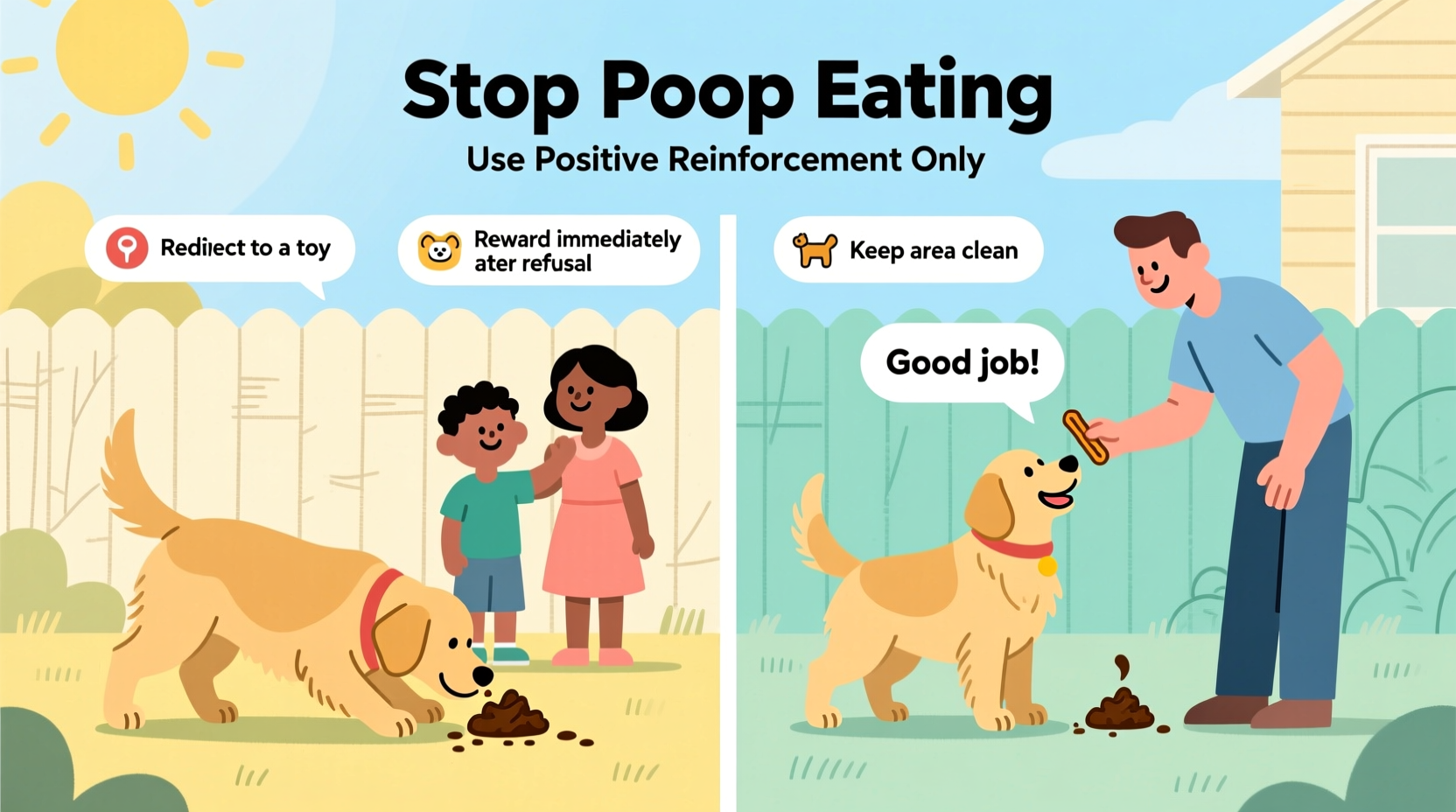
Before addressing how to stop the behavior, it helps to understand why it happens. While no single cause explains every case, common reasons include:
- Instinctual behavior: Mother dogs clean their puppies’ area by consuming waste—a natural hygienic instinct.
- Nutritional deficiencies: Though rare with quality diets, some dogs may seek nutrients they feel are missing.
- Boredom or attention-seeking: Dogs left alone for long periods may develop destructive or unusual habits.
- Stress or anxiety: Changes in environment, routine, or confinement can trigger compulsive behaviors.
- Learned behavior: If a dog is rewarded (even accidentally) by getting attention or finding food near waste, the habit can persist.
Medical causes should be ruled out first. Consult your veterinarian if the behavior is sudden, excessive, or accompanied by weight loss, vomiting, or lethargy. Once health concerns are addressed, behavioral training becomes the primary solution.
“Dogs don’t eat poop because they’re ‘bad’—they do it because it has been reinforced in some way, whether by instinct, curiosity, or accidental rewards. Our job is to redirect that motivation.” — Dr. Sophia Yin, DVM, Applied Animal Behaviorist
The Power of Positive Reinforcement in Behavior Change
Positive reinforcement works by increasing the likelihood of a desired behavior through rewards. Every time your dog makes a good choice—like ignoring poop or coming when called—they receive something valuable: a treat, praise, play, or affection.
Unlike punishment-based methods (such as scolding, leash jerks, or taste deterrents), positive reinforcement builds confidence and cooperation. It teaches your dog what *to do*, rather than just what *not* to do. This is crucial for long-term success, especially with complex behaviors like coprophagia.
The key principles include:
- Timing: Rewards must follow the correct behavior within 1–2 seconds to create a clear association.
- Consistency: Everyone in the household must respond the same way every time.
- Motivation: Use high-value treats (e.g., small pieces of chicken or cheese) during training, especially in distracting environments.
- Gradual progress: Break down the behavior into manageable steps and reward incremental improvement.
Step-by-Step Guide to Prevent Poop Eating Using Positive Reinforcement
Changing this behavior requires proactive management and structured training. Follow these steps consistently over several weeks for best results.
- Control the Environment
Remove access to feces whenever possible. Pick up waste in your yard immediately after your dog eliminates. During walks, use a leash to maintain control and prevent scavenging. - Teach a Strong “Leave It” Command
Begin indoors with low distractions:- Hold a treat in your closed hand and let your dog sniff and paw at it.
- Wait quietly. As soon as they stop trying to get the treat and pull away—even slightly—say “Yes!” and give them a different treat from your other hand.
- Repeat until they consistently back away when they hear “Leave it.”
- Gradually increase difficulty: place the treat on the floor under your hand, then fully exposed, then in real-world settings.
- Reinforce Focus and Attention
Train your dog to check in with you during walks. Use their name followed by a treat when they look at you. Build this into a habit so they naturally turn to you instead of scanning the ground. - Redirect Before They Engage
Watch for signs your dog is about to eat poop—sniffing intently, lowering their head, moving toward waste. Interrupt gently by calling their name or using a cue like “Look!” Then reward heavily when they disengage and make eye contact. - Practice the “Trade-Up” Game
If your dog picks up feces, stay calm. Say “Drop it” cheerfully and offer a high-value treat in exchange. Never chase or yell. Over time, your dog learns that letting go leads to something better. - Build a Reliable Recall
Practice “Come” in safe areas using enthusiastic praise and treats. A strong recall allows you to call your dog away from temptation before they act. - End Walks on a Positive Note
Finish each walk with a game or treat after successful focus. This reinforces the idea that good behavior leads to rewards.
Progress may be slow, but consistency is key. Some dogs improve in a few weeks; others take months. Celebrate small wins—like glancing away from waste or responding to a cue—and keep reinforcing them.
Do’s and Don’ts: What Works and What Doesn’t
| Do’s | Don’ts |
|---|---|
| Do pick up waste immediately in your yard and during walks. | Don’t yell, punish, or physically force your dog to drop feces. |
| Do use high-value treats to reinforce leaving waste alone. | Don’t use bitter sprays or aversive collars—these can create fear and worsen behavior. |
| Do practice “Leave it” and “Come” daily in low-distraction areas. | Don’t ignore early warning signs or assume they’ll grow out of it. |
| Do manage the environment to prevent rehearsal of the behavior. | Don’t allow off-leash access to yards with uncleaned waste. |
| Do reward attention and engagement on walks frequently. | Don’t repeat commands multiple times—this weakens their effectiveness. |
Real-Life Example: Turning Around a Persistent Habit
Meet Luna, a two-year-old Border Collie mix adopted from a shelter. Her owner, Mark, noticed she began eating rabbit droppings during hikes. Despite trying lemon juice on the waste and verbal corrections, the behavior continued.
After consulting a certified dog trainer, Mark shifted to positive reinforcement. He started by teaching “Leave it” indoors using chicken bits. Within a week, Luna responded reliably at home. He then practiced in the backyard with fake poop (using rolled-up paper), rewarding her for looking away.
On walks, Mark used a shorter leash and carried treats. Whenever Luna glanced toward droppings, he said her name and marked “Yes!” when she looked at him, immediately giving a treat. Over six weeks, her interest in waste dropped significantly. Today, Luna checks in with Mark automatically on trails and earns treats for ignoring temptation.
The turning point wasn’t a single moment—it was consistent repetition of the right response. Mark never punished Luna. Instead, he made choosing him more rewarding than choosing poop.
Essential Checklist for Success
Use this checklist to stay on track during your training journey:
- ☑ Rule out medical issues with a vet visit
- ☑ Pick up all feces in your yard daily
- ☑ Carry high-value treats on every walk
- ☑ Train “Leave it,” “Come,” and “Look” daily for 3–5 minutes
- ☑ Use a leash to prevent access to waste during training
- ☑ Reward your dog for ignoring poop or making eye contact
- ☑ Stay patient and avoid punishment or frustration
- ☑ Involve all family members in consistent training
- ☑ Track progress in a journal or app (e.g., note triggers, successes)
- ☑ Celebrate small improvements—every step counts
Frequently Asked Questions
Can I stop my dog from eating poop without using any tools or treats?
While possible in theory, it’s far less effective. Dogs learn fastest when desirable behaviors are clearly rewarded. Without treats or other incentives, there’s little motivation for your dog to choose an alternative. Positive reinforcement relies on rewards—you can eventually fade treats by using life rewards (like play or freedom), but they’re essential in early stages.
What if my dog only eats other animals’ poop, like deer or rabbit droppings?
This is actually common and often easier to manage since exposure is limited. Use the same training principles: prevent access where possible, train “Leave it” and recall, and reward disengagement. Because wildlife droppings aren’t in your yard, you have more control during walks. Stick to cleared paths initially and gradually expand as your dog improves.
How long does it typically take to stop coprophagia with positive reinforcement?
Results vary. Some dogs show improvement in 2–4 weeks; others may take 3–6 months. Factors include your dog’s age, history, level of distraction, and consistency of training. The most important factor isn’t speed—it’s persistence. Even occasional access to poop can reset progress, so management and consistency are non-negotiable.
Final Thoughts: Building Trust, One Choice at a Time
Stopping poop-eating behavior isn’t about dominance or discipline—it’s about communication and reinforcement. Your dog isn’t being defiant; they’re responding to what they’ve learned works. By using positive reinforcement, you’re not just eliminating a bad habit—you’re building a stronger, more trusting relationship.
Every time you reward your dog for walking past waste, for making eye contact, or for coming when called, you’re shaping a new default behavior. Over time, those choices become automatic. There will be setbacks—dogs are learners, not robots—but each mistake is an opportunity to retrain, not to punish.
You don’t need shame, guilt, or harsh tactics. You need a plan, patience, and positivity. With these tools, your dog can learn to leave poop behind—not out of fear, but because better things await.




 浙公网安备
33010002000092号
浙公网安备
33010002000092号 浙B2-20120091-4
Comments
No comments yet. Why don't you start the discussion?