
Dogs do many things that puzzle their owners, but few behaviors provoke as much disgust and concern as coprophagia—the act of eating feces. While it may seem unnatural, this behavior is surprisingly common across breeds, ages, and sizes. For some dogs, it’s a phase; for others, it becomes a persistent habit. One of the most effective, non-invasive ways to address this issue is through taste aversion. By making stool less appealing, you can help your dog lose interest in consuming it. Unlike punishment-based techniques, taste aversion works with your dog’s natural instincts, offering a humane and long-term solution.
This approach doesn’t rely on yelling or startling the dog after the fact. Instead, it focuses on prevention by altering the taste of the waste itself. When done correctly, taste aversion reduces the appeal of feces at the source, helping break the cycle without causing stress or confusion. The key lies in consistency, timing, and choosing the right deterrents.
Understanding Why Dogs Eat Poop
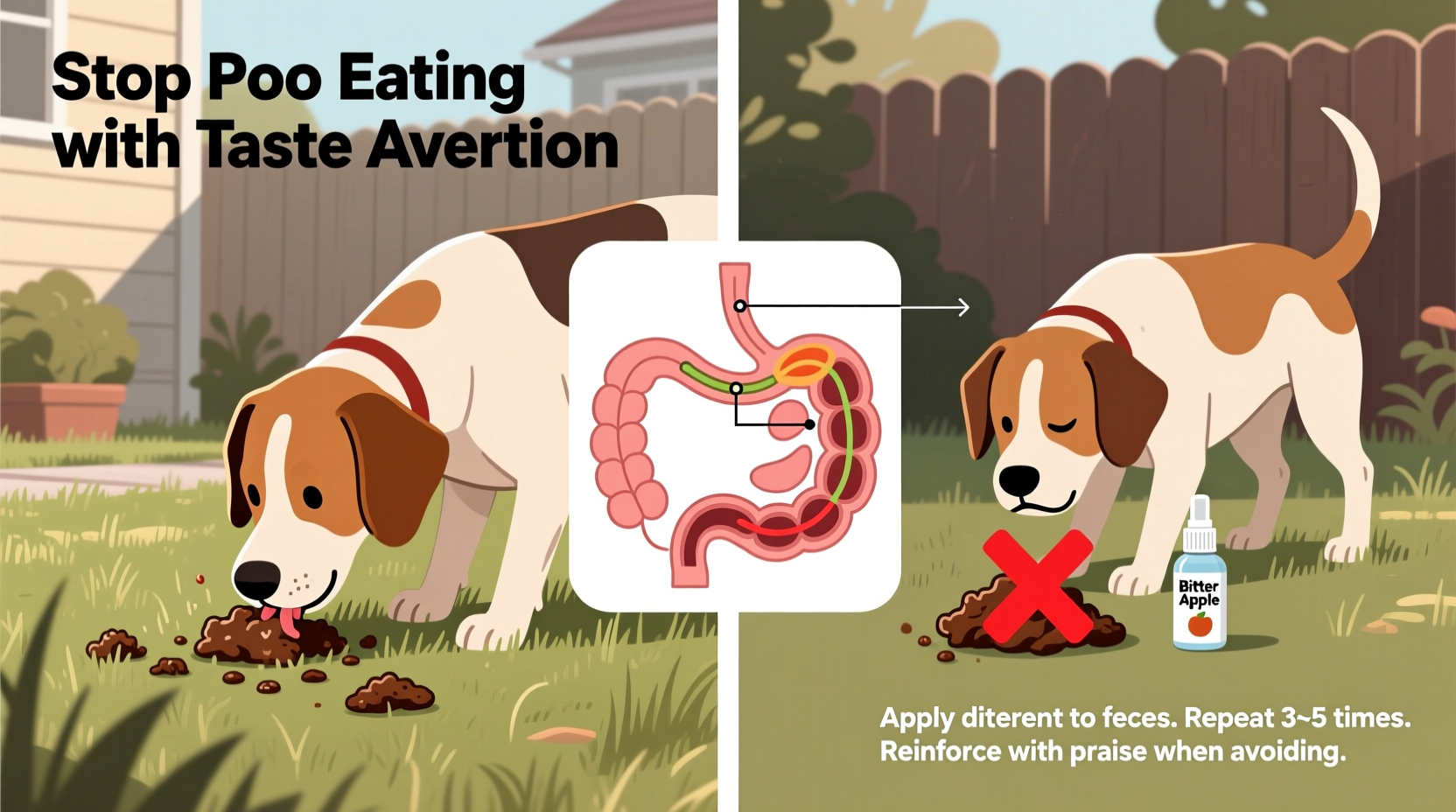
Before applying any corrective technique, it's important to understand why dogs engage in this behavior. Coprophagia isn't always rooted in poor training or bad habits. In many cases, it stems from biological, environmental, or medical causes.
- Nutritional deficiencies: If a dog isn’t absorbing nutrients properly, their body may signal them to consume feces in an attempt to reclaim undigested food particles.
- Puppies imitating mothers: Young dogs often see their mother clean them by licking and ingesting waste, which can normalize the behavior early on.
- Attention-seeking: Some dogs learn that eating poop gets a strong reaction from their owners—even negative attention reinforces the action.
- Boredom or confinement: Dogs left alone in small yards or crates with nothing to do may resort to coprophagia out of mental stagnation.
- Instinctual scavenging: Wild canines eat feces to eliminate scent trails from predators. This instinct still exists in domesticated dogs.
While taste aversion won't resolve underlying health issues, it can be highly effective when used alongside veterinary evaluation and behavioral enrichment. It’s particularly useful for otherwise healthy dogs who simply find feces palatable.
How Taste Aversion Works in Dogs
Taste aversion relies on a principle known as conditioned food aversion—a learned response where an animal avoids a substance after associating it with an unpleasant taste or mild gastrointestinal discomfort. This method is widely used in wildlife management (e.g., preventing wolves from attacking livestock) and has been adapted for household pets.
In dogs, the process involves adding a safe, bitter-tasting substance to their food that passes into the stool. When the dog attempts to eat the feces, they experience an off-putting flavor, which over time discourages repetition of the behavior. The goal isn’t to make the dog sick, but to create a consistent negative association with the act of consumption.
For taste aversion to work effectively, three factors must align:
- Consistency: The deterrent must be administered daily, without gaps.
- Palatability transfer: The substance must survive digestion and remain detectable in feces.
- Timing: The unpleasant taste must coincide directly with the act of eating stool—no delay.
Unlike verbal corrections, which occur after the fact and confuse the dog about cause and effect, taste aversion creates a direct sensory link between action and consequence.
“Dogs learn best through immediate consequences. Taste aversion provides real-time feedback that helps them connect the dots faster than reprimands.” — Dr. Laura Simmons, DVM, Canine Behavior Specialist
Effective Taste-Based Deterrents You Can Use
Not all products marketed for coprophagia are equally effective. Some rely on scent rather than taste, which dogs can easily ignore. Others contain ingredients that don’t survive digestion. Below is a comparison of commonly used options, based on efficacy, safety, and veterinary recommendations.
| Deterrent Type | How It Works | Effectiveness | Safety Notes |
|---|---|---|---|
| Commercial Enzyme Supplements (e.g., For-Bid, CoproBan) | Alters stool enzymes to make it unpalatable | High – 70–80% success rate | Generally safe; vet-approved |
| Pumpkin (canned, pure) | Increases fiber, alters stool texture and taste | Moderate – indirect effect | Safe in moderation; up to 1 tbsp per 10 lbs |
| Pineapple (fresh chunks) | Bromelain enzyme changes stool composition | Low to moderate – anecdotal support | Safe in small amounts; avoid juice with sugar |
| Meat tenderizer (containing bromelain) | Breaks down proteins, adds bitterness | Moderate – mixed results | Use only pet-safe brands; avoid MSG or garlic |
| Vinegar or lemon juice (added to food) | Acidic taste transferred to stool | Low – inconsistent results | Risk of stomach upset; not recommended long-term |
The most reliable choice remains FDA-reviewed commercial supplements specifically formulated for coprophagia. These are designed to withstand digestion and release bitter compounds in the lower intestine, ensuring the taste carries through to the feces.
Step-by-Step Guide to Implementing Taste Aversion
Success depends on proper execution. Follow this timeline to maximize effectiveness:
- Week 1: Veterinary Check-Up
Rule out parasites, malabsorption syndromes, or endocrine disorders like diabetes or thyroid disease. Your vet may run bloodwork or a fecal exam. - Week 2: Start Supplement Routine
Begin administering a vet-recommended taste deterrent with meals. Follow dosage instructions precisely. Choose one product—don’t mix multiple supplements. - Week 3–4: Monitor and Reinforce
Pick up waste immediately after defecation to prevent access. Observe whether your dog sniffs but walks away from stool—this indicates developing aversion. - Week 5–6: Evaluate Progress
If incidents drop by 70% or more, continue for another 30 days. If no change occurs, revisit your vet to reassess possible causes. - Month 3: Fade Out Gradually
After two months of zero incidents, taper the supplement slowly. Resume if relapse occurs.
Real Example: How Max Stopped Eating Poop
Max, a three-year-old Labrador Retriever, had been eating his own stool since puppyhood. His owner, Sarah, tried scolding, leashing him during potty breaks, and even smacking his nose—but nothing worked. Frustrated, she consulted her veterinarian, who ruled out medical issues and suggested a taste aversion protocol.
Sarah started Max on a commercial supplement containing yucca extract and digestive enzymes. She gave it with every meal and picked up waste within seconds of him defecating. Within ten days, Max began sniffing the stool but walking away. By day 21, he hadn’t eaten a single pile. After two months, Sarah discontinued the supplement. Eight months later, Max remains coprophagia-free.
“I was skeptical at first,” Sarah said. “But once I stopped reacting emotionally and focused on prevention and taste, everything changed.”
Complementary Strategies for Long-Term Success
Taste aversion is powerful, but it works best when combined with other supportive measures. Coprophagia is rarely solved by a single fix—it usually requires a multi-pronged approach.
Behavioral Training
Teach your dog a strong “leave it” command during walks and potty breaks. Practice regularly in low-distraction environments before moving to real-world scenarios. Reward compliance with high-value treats.
Environmental Management
Keep your yard free of feces. If you have multiple pets, clean litter boxes and dog areas daily. Consider installing motion-activated sprinklers in problem zones to deter lingering.
Mental and Physical Enrichment
Bored dogs are more likely to develop compulsive behaviors. Increase daily exercise, introduce puzzle feeders, and rotate toys to keep your dog mentally stimulated.
“Addressing coprophagia means looking beyond the stool. Is your dog getting enough activity? Are they stressed? Nutrition and environment matter just as much as taste.” — Karen Patel, Certified Dog Trainer
Frequently Asked Questions
Is eating poop dangerous for dogs?
Yes, in some cases. Consuming feces—especially from other animals—can expose dogs to parasites like roundworms, giardia, or bacteria such as salmonella. Even their own waste can harbor pathogens if they’re ill. Chronic coprophagia increases health risks and should be addressed promptly.
Can I use hot sauce or pepper on the stool?
No. Applying irritants directly to feces is unsafe and potentially harmful. Spices can burn your dog’s mouth or digestive tract. Always use internal, food-based deterrents approved for canine consumption.
Will neutering stop my dog from eating poop?
There’s no direct link between neutering and coprophagia. While neutering can reduce certain hormonally driven behaviors, it does not impact stool-eating habits. Focus instead on diet, training, and aversion techniques.
Final Checklist: Stopping Poop-Eating for Good
- ✅ Rule out medical causes with a vet visit
- ✅ Choose a vet-approved taste deterrent
- ✅ Administer daily with meals for at least 60 days
- ✅ Clean up feces immediately after elimination
- ✅ Train “leave it” and reinforce with rewards
- ✅ Increase physical and mental stimulation
- ✅ Monitor progress weekly and adjust as needed
Conclusion: Break the Habit with Patience and Science
Stopping your dog from eating poop isn’t about shame or punishment—it’s about understanding their instincts and guiding their behavior humanely. Taste aversion offers a proven, science-backed method that respects your dog’s learning process. When paired with good hygiene, training, and enrichment, it can lead to lasting change.
Every dog is different. What works quickly for one may take weeks for another. Stay consistent, avoid frustration, and remember that progress—even small steps—is still progress. With the right tools and mindset, you can help your dog overcome this unsavory habit for good.




 浙公网安备
33010002000092号
浙公网安备
33010002000092号 浙B2-20120091-4
Comments
No comments yet. Why don't you start the discussion?